Healthy eating? Piece of cake

One of my priorities — which I reaffirm every New Year’s Day … and the beginning of every Lenten season … and every birthday — is to start adhering to a healthy eating plan.

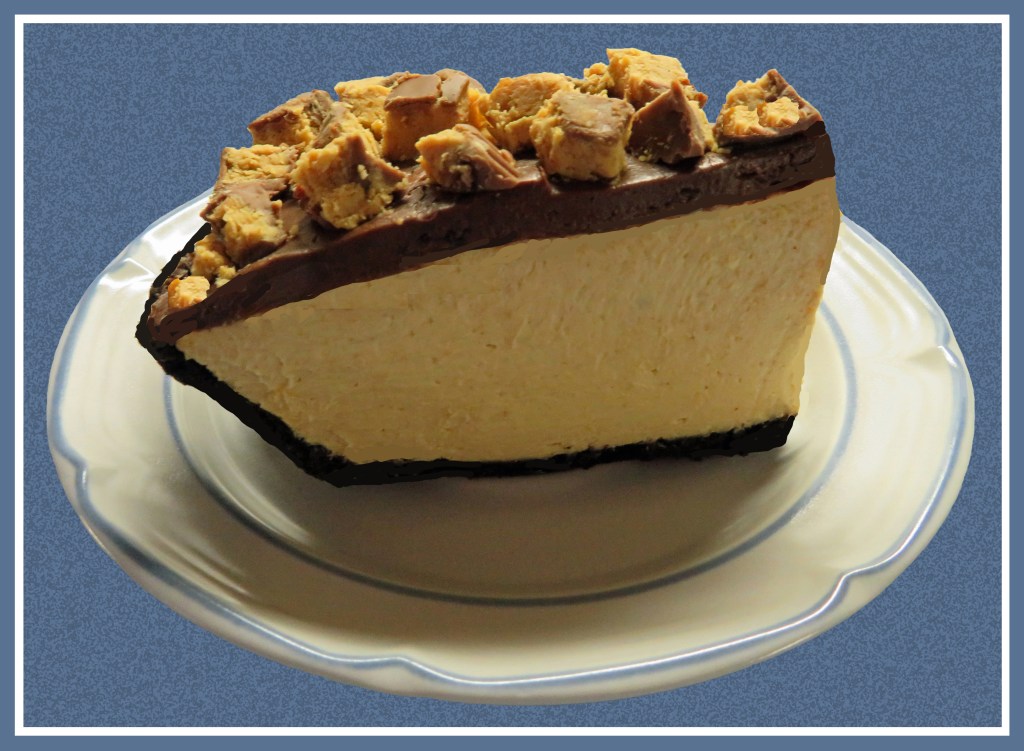
Alas, since I prefer chocolate-covered peanut butter cookie bars to celery, it is even more challenging for me to adhere to a healthy eating plan than it was for me to quit smoking nearly 20 years ago. 

So I appreciate the abundance of memes that express empathy for my struggle.

I’ve pretty much stopped drinking soda, but I have to admit, I did this for years.

This is my story and I’m sticking to it.

Story of my life.

Note to my sweetie: Don’t even think about it.

Works for me.

They’re right … I’ve never seen this.

What if they figure out a way to make the fries out of cauliflower?

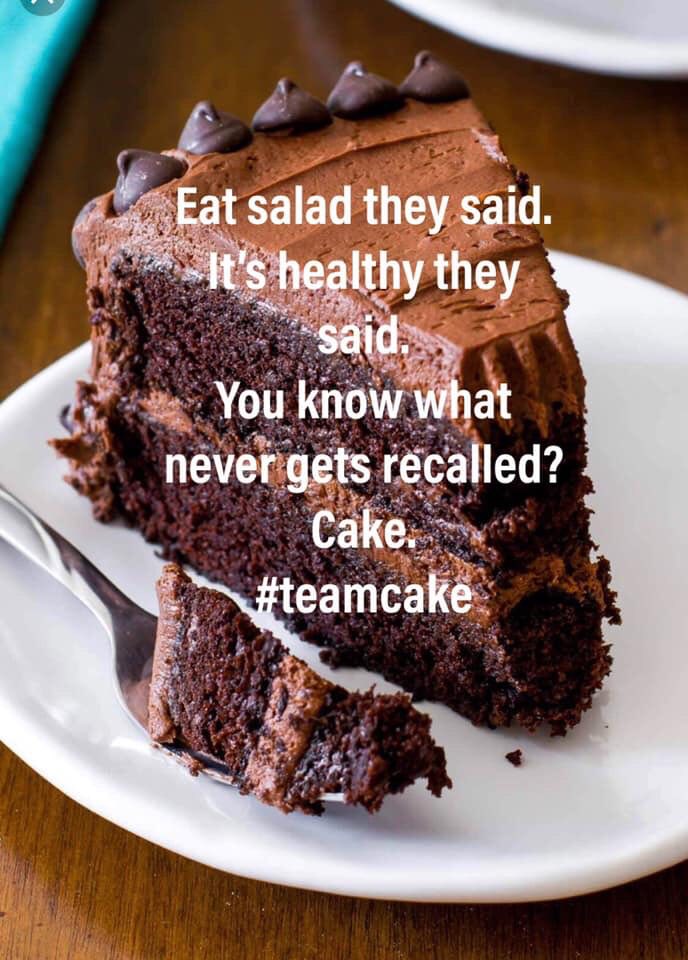
So chocolate is good for you and lettuce will kill you? I’ve been waiting for this moment all my life!

Believe me, I’m tempted. All. The. Time.

If anyone figures out how to do this, they’ll be rich enough to retire within a week.

Book excerpt: Political correctness, tone policing and censorship – oh my!

Note: This is an excerpt from We Need to Talk, my book in progress, which examines the polarization ripping apart our society and shares my personal search for an appropriate Christian response. For an overview of the book and to read my previous excerpts, link HERE.

Implore people to stop the name-calling, gratuitous insults, demonizing of opponents and overall nastiness dividing our society, and culture warriors of all stripes rush to silence us.

“This political correctness is getting out of hand,” conservatives complain. 

“Enough with the tone policing,” progressives lecture. 

“Censorship!” everyone cries.

I understand political correctness, tone policing and censorship exist. But both progressives and conservatives have hopelessly twisted these concepts.

Left-of-center activists first used the term politically correct to satirize their own tendency to adopt uniform opinions and causes, thus poking gentle fun at a rigid insistence on ideological purity. Alas, in recent years, some conservatives have hijacked this term and hurl it indiscriminately at anyone who dares to suggest that common decency and respect for others are still virtues worth cultivating. 

I’ve been told I overdosed on political correctness when I forgot to laugh at a patently offensive joke or sought to debunk a stereotype. The accusations go something like this:

Excu-u-u-u-se me if someone thought that joke was racist. I guess nobody could accuse me of being politically correct.

Well excu-u-u-u-se me, but racism isn’t politically incorrect. It’s immoral.

Or this:

We can’t open our mouths anymore without some member of the politically correct thought police yelling, “Racist! Sexist! Homophobic!” People are so oversensitive these days.

Hmmm. If it walks like a duck and quacks like a duck, guess what it is? I’m not saying oversensitive people don’t exist. However, most people I know would prefer that ethnic slurs not become socially acceptable.

Progressives can be equally guilty of hijacking a legitimate concept and distorting its original meaning.

Wikipedia defines tone policing as an attempt to detract from the validity of a statement by attacking the way it’s presented rather than the message itself. One example is to tell people they’re being “divisive” for merely raising an issue that others may be reluctant to talk about, such as discrimination in the workplace. 

But lately, the term gets thrown at us like a hand grenade by some progressives who feel oppressed if we fail to listen while they call us names or scream profanities at us. A Facebook post circulating among several progressive groups illustrates this trend: 

Hearing ‘I hate men’ shouldn’t make men stop being feminist. Hearing ‘f*** white people’ shouldn’t make white people stop opposing racism. Your opposition to oppression should be moral and immovable. Your belief that all humans should be treated with equal respect shouldn’t be conditional based on whether or not individual people are nice to you.

Okay, let’s unpack this. I wholeheartedly agree that we should treat all human beings with equal respect, whether or not every single individual in a particular group acts like a nice person. And I’m not going to stop opposing racism because one person of color says something hateful about white people. But if someone drops the F bomb on me, I reserve the right tell them I find this behavior abusive, regardless of their race/gender or mine.

Here’s another example, making the rounds on Facebook: 

If you use that “background color” shit, STOP! It blocks EVERYONE who relies on screen readers and/or text-to-speech programs from accessing your posts! These programs, for some reason, CANNOT read the text in those backgrounds and thus your blind/low-vision friends CANNOT find out what you have to say! This is an official “yelling at your friends to not be assholes” post.

Whoa! If someone out there really does lie awake nights thinking up ways to exclude and oppress blind people, I seriously don’t want to know them. But I’m pretty sure most people who use the background color feature on Facebook don’t even know this poses a problem, and there are far less abrasive ways to spread the news. 

Regarding censorship, some people – conservatives and progressives alike – simply do not tolerate disagreement well, even honest disagreement, and will consider any expression of opposing views to be a violation of their free-speech rights. I’ve heard variations of the following more times than I can count: 

It’s my First Amendment right to state my honest opinion of [Dumbocrats, Rethuglicans, fill in the blank]. My freedom of speech trumps your hurt feelings.

These people seem to forget the same First Amendment protects our own right to say, “I don’t agree with you” or “I find that joke offensive.” While the U.S. Constitution does indeed guarantee one’s right to say pretty much whatever one pleases, it doesn’t force the rest of us to listen. And dissent in and of itself does not constitute censorship.

Calling a woman a fat broad is not “politically incorrect.” It is just plain rude. Refusing to listen while someone calls us names or engages in other abusive behavior toward us is not “tone-policing.” It is setting a healthy boundary. Deleting rants full of ad hominem attacks from the comments section after our Facebook or blog posts is not censorship. It is exercising our right to set standards for our own publications or social media accounts.

To anyone who thinks their passionate beliefs entitle them to spew hostility, here’s the deal: If you want me to listen to you, please remove your middle finger from under my nose. Then state your concern minus the name-calling, insults and profanity. My attention span will improve dramatically. 

Questions for readers: How has our society’s polarization impacted you personally? (If you live outside the U.S., is there similar polarization going on your country?) How do we become part of the solution rather than part of the problem? I’d love to hear your responses to these questions, as well as your comments on this article. Just hit “Leave a Reply” below. When responding, please keep in mind the guidelines I’ve outlined on my Rules of Engagement page (link HERE).

Photography as prayer

Can photography be a form of prayer? Howard Zehr, author of The Little Book of Contemplative Photography, thinks so. 

Photography can serve as a medium for reflection and meditation, and encourages mindfulness, he says. “By slowing down to reflect and meditate, by heightening our visual awareness and our imaginations, by cultivating receptivity and a more holistic way of knowing, we can renew ourselves while gaining new insights into ourselves, the creation, and the Creator.”

Some photographic subjects present themselves in an obvious way. An amazing sunrise practically screams, “Quick! Grab your camera.”

As do the brilliant fall colors in this park scene.

However, mindfulness is also about “being aware of and appreciating the ordinary, of being open to beauty and insights in the commonplace,” Zehr says. 

For example, who knew that chives going to seed could be so pretty?

“We often overlook things that we experience as ordinary or everyday,” Zehr says. “We tend to make preconceived judgments about what is worth looking at or photographing, valuing the ‘picturesque’ or ‘spectacular’ and failing to recognize many of the visual possibilities around us.”

How about a coneflower blossom?

Throughout his little book, Zehr gives us exercises designed to increase our awareness of the visual richness of ordinary objects and scenes. One exercise: Set out to photograph without a specific subject in mind, remaining open to whatever seems to present itself. 

Like a leaf that has floated to the ground.

A pair of acorns.

Or a single perfect rose.

“To me, photography is an art of observation. It’s about finding something interesting in an ordinary place,” Zehr says. “I’ve found it has little to do with the things you see and everything to do with the way you see them.”

Like bright red berries against a deep blue sky.

Or a starkly bare tree with a cloudy sky shortly before sunset serving as a backdrop.

“Ordinary things, when really seen, make extraordinary photos,” Zehr says. “Such photos seem to make themselves. They seem like presents that were given.”

I snapped this photo of icicles dripping from a twig on a bush next to my porch.

These fall leaves still flashed their brilliant colors as they peeked out from under a very early snowfall.

“One must always take photographs with the greatest respect for the subject and for oneself,” Zehr says.

Of course, one can’t help but respect this goose walking straight toward me in the park, who just begged to be noticed … and photographed.

“A contemplative approach to photography is an expression of wonder grounded in respect and humility,” he says. “As such, it calls us to live in right relationship with our Creator, the creation, and our fellow human beings.”

An attitude of wonder “requires that we look anew at the familiar, that we stop taking the world around us for granted,” he adds. “An attitude of wonder is essential if we are truly to experience the creation and the Creator.”

Recipe: Chicken and vegetable pozole

Pozole is a traditional Mexican soup made with hominy, meat (usually pork or chicken) and lots of delicious seasonings.

As anyone who regularly follows my blog knows, I’m always looking for ways to sneak more wholesome stuff like vegetables and fiber into my diet while ditching the bad stuff like added salt and sugar.

So I’ve created a variation on this favorite that reduces both calories and carbs, features extra veggies and eliminates added salt without sacrificing a bit of the flavor. It’s also gluten-free (be sure to check the label on the hominy). If you omit the chicken and substitute low-sodium vegetable broth for the chicken broth, it can even be made vegetarian.

This recipe makes about 10-12 cups of soup and is perfect for batch cooking. The soup can be frozen for up to three months.

Ingredients

  • 2 large boneless, skinless chicken breasts, diced
  • 1 32-ounce carton low-sodium chicken broth
  • 1 tablespoon oregano
  • 1 tablespoon ground cumin
  • 1 teaspoon basil
  • 1/2 teaspoon black pepper
  • 3 tablespoons lime juice
  • 3 bay leaves
  • 3 whole cloves
  • 2½ teaspoons chopped garlic cloves
  • 2 small zucchini or yellow squash, sliced and quartered 
  • 4-5 stalks of celery, sliced
  • 4-5 carrots, sliced
  • Medium green pepper, quartered and sliced
  • Medium onion, quartered and sliced
  • 1 16-ounce can white or golden hominy (pozole)

Directions

Stir together the oregano, cumin, basil and black pepper in a small bowl.

Add the chicken, blended spices, lime juice, bay leaves, garlic and cloves to the broth and bring to a boil. Reduce heat and allow to simmer.

While the soup is simmering, chop/slice the squash, celery, carrots, onion and pepper and add to the mixture.

Add 4-5 cups of water, or until the soup is of desired thickness.

Continue to simmer for about a half hour, or until vegetables reach desired softness (slightly al dente) and chicken is completely cooked.

Add the hominy when the vegetables are nearly cooked through.

Nutrition information

Serving size: 1 cup | Calories: 75 | Carbohydrates: 8 g | Protein: 9 g | Fat: 1 g | Saturated Fat: 0 g | Cholesterol: 25 mg | Sodium: 130 mg | Potassium: 372 mg | Fiber: 2 g | Sugar: 3 g | Vitamin A: 85% | Vitamin C: 30% | Calcium: 2% | Iron: 3% 

Book excerpt: One small step

Note: This is an excerpt from We Need to Talk, my book in progress, which examines the polarization ripping apart our society and shares my personal search for an appropriate Christian response. For an overview of the book and to read my previous excerpts, link HERE.

As I’ve studied the polarization problem and its negative impact on both ourselves and our society, I’ve begun asking myself these questions: 

  • How do we engage people who disagree with us, while keeping in mind God’s commandment to love our neighbors as ourselves? 
  • How can we be part of the solution and avoid becoming part of the problem as our society grows ever more partisan and angry?

I’ve decided one of the first small steps I can personally take is to examine my relationship with social media. As I’ve begun doing so, I’ve come to an inescapable conclusion: I need to pay much more conscientious attention to what I post, share and “like” on sites like Facebook and Twitter. 

If there’s one thing many conservatives and progressives agree on, it’s that social media have played a huge role in keeping the culture wars going. In a recent survey by the Pew Research Center (link HERE), 55 percent of adult social media users said they felt “worn out” by how many combative political posts and discussions they see on these platforms. 

Seven in 10 respondents also said they found it “stressful and frustrating” to communicate on social media with people they disagree with about politics. The sense of exhaustion and frustration held true across political parties, according to the report. 

Several culprits contribute to social media’s role in dividing us. Algorithms that create “echo chamber” bubbles of one-sided information and opinions. Viral spread of false or misleading information in “fake news” stories with click-bait headlines. Political “discussions” that amount to little more than judgmental blaming and shaming, name-calling, insults, character assassination and demonization of opponents. Endless memes promoting hateful and inflammatory messages.

The worst part? I have to admit I’ve been part of the problem from time to time. Too often in recent years, I’ve found myself getting sucked into social media fights – even with people I ordinarily like – over politics and contentious “hot-button” ideological issues.

Whenever a Facebook skirmish erupts – whether the trigger is a Supreme Court decision, a political candidate’s suitability for office, or a crisis playing out on the news – my first instinct is to try and stay out of the fray. 

Alas, I tend to have strong opinions about a lot of issues (imagine that!) and sooner or later, someone will post a meme that I just can’t seem to resist sharing against my better judgment. Okay, I know it’s a bit snarky. Maybe a bit judgmental or even mean. But it’s SO clever. Then, of course, someone on “the other side” will beg to differ with my assessment of the meme’s cleverness, and before I know it, I’m bogged down in another argument.

One evening, I realized I had just spent the better part of a whole day arguing with total strangers on a Christian Facebook page over this question: “Is it racist to make jokes about lutefisklefse and jello at Lutheran potlucks?” (No, I’m afraid I’m not making this up.) I further realized it wasn’t the first time something like this had happened.

So what can I start doing differently?

I’m not ready to go “off the grid” when it comes to social media. With family and friends scattered over two continents, I would not be able to stay connected so well without Facebook. This has been especially true during the current pandemic. 

However, I can take some constructive steps to avoid getting lured into flame wars and to be part of the solution rather than part of the problem when it comes to divisive social media behavior.

  • I can fact-check articles I want to share before posting them. I personally see nothing wrong with sharing thoughtful, well-researched articles about issues I care about. But I have a responsibility to double-check these for accuracy. Some good sites for fact-checking my sources include Snopes.com (link HERE), FactCheck.org (link HERE) and PolitiFact (link HERE).
  • I can respect people who don’t agree with me. I’ve learned it’s best to resist lecturing people on their lack of personal integrity or intelligence, even if I think what they’ve shared is just plain wrong. I can’t remember ever changing anyone’s mind about an issue because I sufficiently shamed them. If a Facebook friend posts an inaccurate or misleading article, meme or video, I can skip the snark and simply respond with a link to a Snopes.com article debunking the item in question. 
  • I can practice selective attention. If I don’t agree with someone’s post, I always have the option to keep on scrolling and not respond at all. (What a thought!) 
  • I can set my own standards of behavior for my own posts. When the vitriol starts, I’ve begun deleting comments from people who choose not to respect others, and even blocking some of the worst offenders. I have blocked or “snoozed” both conservative and progressive Facebook friends who insist on insulting my other Facebook friends.
  • I can be aware of what I enable. What am I encouraging others to post by hitting the “like” button? Am I inadvertently rewarding name-calling, character assassination or polarizing comments? 
  • I can resist “click bait.” Sometimes I can tell from the headline that an article is pure negative spin. (Watch Politician A school Politician B on life in the real world.) Given the fact that clicks generate ad revenue, do I really need to contribute one more click to that scurrilous article? 
  • I can avoid using memes to convey complex ideas. One of the problems that keeps us all from resolving issues appropriately is our modern emphasis on brevity. It is nearly impossible to give an issue the depth it deserves when our communication is limited to 15-second sound bites, 280-character tweets, bumper sticker and t-shirt slogans – and all those endless memes.
  • I can reduce mindless surfing. If I go online with a specific purpose in mind – to check emails, research a blog article or catch up with the latest updates from Facebook friends – and limit my time on social media, I’m less likely to absent-mindedly click on headlines like Did Michelle File for Divorce over Barack’s Pregnant Mistress?

Finally, I can use Facebook for its original purpose – to help me keep up with family and friends. How are all my nieces and nephews and dozens of cousins doing? Who’s getting married? Who just had a baby? Which friend got a promotion at work or went on a fabulous vacation? Who just went to the emergency room and needs prayers?

Or I can share cute photos of my adorable pets. I’m happy to report I have never had anyone threaten to block or “snooze” me because I posted too many photos of these little guys. 

Fortunately, my Facebook friends love Olaf DaVinci and Champaign Le Chat as much as my camera and I do.

Questions for readers: How has our society’s polarization impacted you personally? (If you live outside the U.S., is there similar polarization going on your country?) How do we become part of the solution rather than part of the problem? I’d love to hear your responses to these questions, as well as your comments on this article. Just hit “Leave a Reply” below. When responding, please keep in mind the guidelines I’ve outlined on my Rules of Engagement page (link HERE).

Cleaning house

When I review my priorities each year on my birthday, one lofty goal remains the same: Maintain our home as a sanctuary for ourselves, our family and our friends.

On each birthday, I promise this will be the year I finally sort through all the accumulated STUFF in our house, recycle or give away anything we don’t need, and find a place for whatever we decide to keep. And get some more pictures up on the walls.

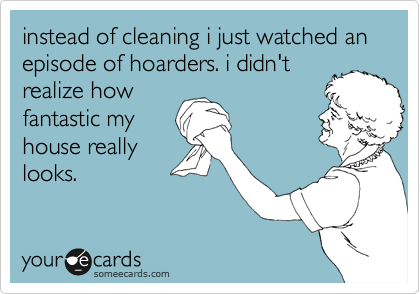
Alas! The goal of a spotlessly clean house with a place for everything and everything in its place, even in the garage and basement, continues to elude me. So I especially love the abundance of housekeeping memes that remind me I’m not alone in my never-ending struggle.

I mean, this seems like a perfectly reasonable question:

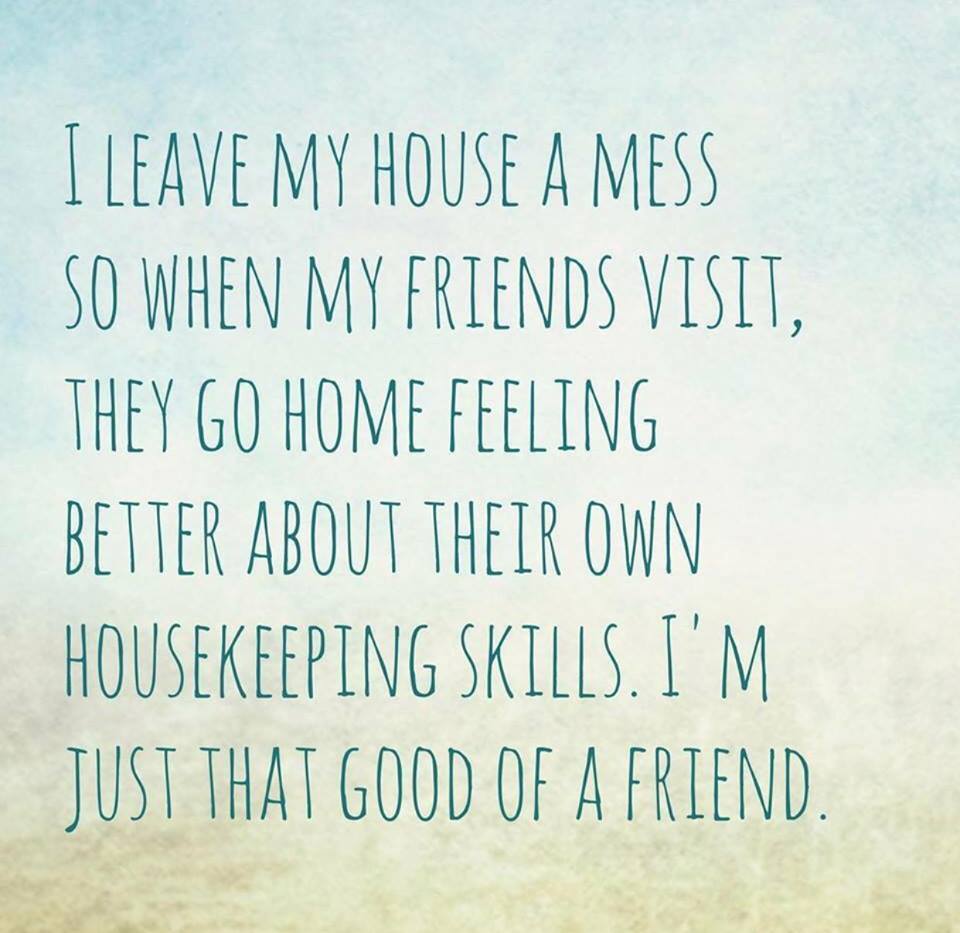
This is my story and I’m sticking to it.

Love our cleaning ladies! Can’t wait to get them back once this crazy pandemic is over.

Ah yes! I’ll plead guilty and Pete likes to tease me about it.

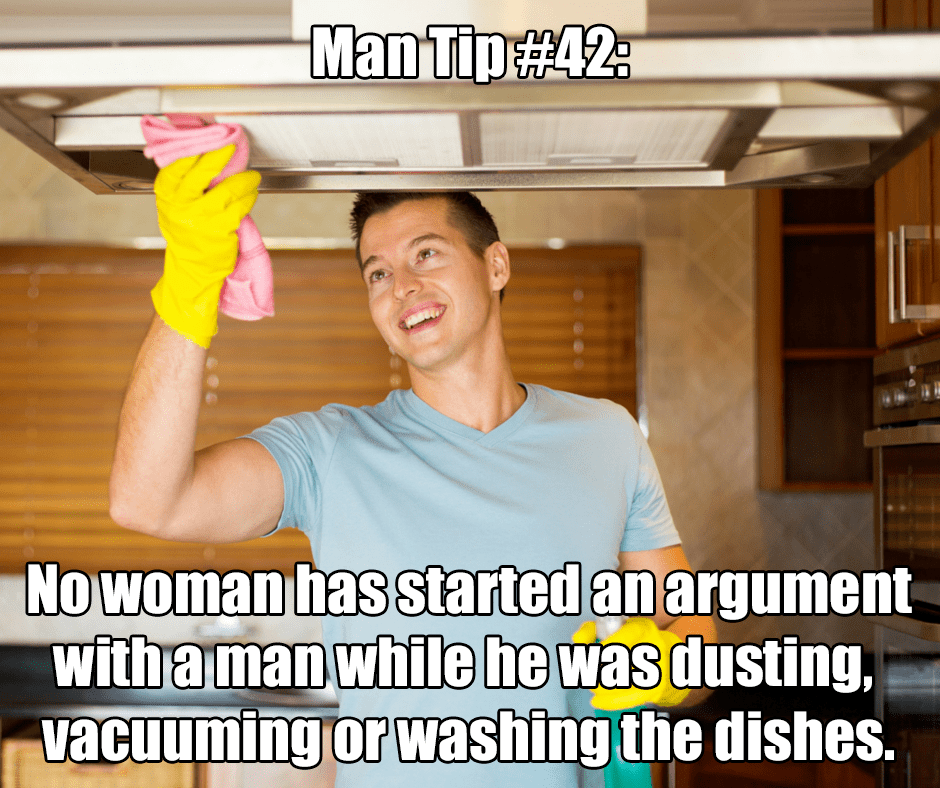
I do have to make sure my sweetie Petey sees this one.

Happens to Pete and I every time …

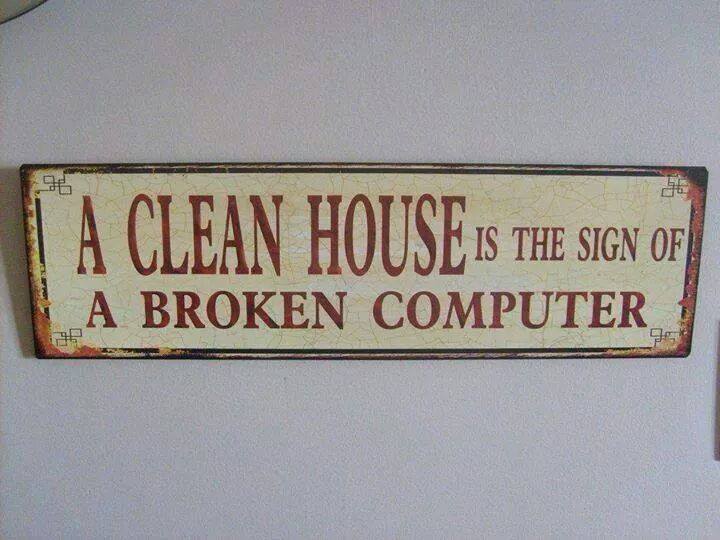
Before I retired, a clean house was also a sign I had a looming project deadline that triggered my procrastination tendencies even worse than housework.

No truer words ever spoken.

I yearn for the magic dustpan that actually does its job.

But, of course, what we really need is some perspective!

Meeting my 3-5 Challenge

One of my priorities is to stay healthy for as long as possible and help my husband do the same. Toward this end I’m working to develop the habit of eating 3-5 servings of fruits and vegetables each day, as recommended by nutrition experts. 

I must confess that, for too many years, our eating habits resembled those of a rebellious 10-year-old. (Vegetables are gross! Give me ice cream!)

Add to that, the challenge of finding veggies my husband and I can both stand. We each have veggies we like and veggies we loathe. Problem is, the ones I like are too often on his “loathe list” and vice versa.

Fortunately, I’ve discovered all kinds of relatively painless ways to sneak more fruits and vegetables past our lips:

  • Add a glass of juice or a small bowl of fresh fruit to our breakfast (one fruit serving).
  • Add a small salad to other meals (one or two veggie/fruit servings, depending on the salad ingredients).
  • Turn a ho-hum sandwich into a Dagwood by piling on shredded lettuce, tomato slices and thinly sliced purple onion (one veggie serving).
  • Cook up enough vegetables for each meal to ensure leftovers. This means I can create a veggie plate from time to time (several veggie servings in one sitting!).
  • Add vegetables like spinach, broccoli or mushrooms to pasta dishes such as lasagna or mac and cheese (one veggie serving).
  • Munch on raw vegetables rather than potato chips. Baby carrots and celery sticks dipped in hummus make a great snack when I have that irresistible urge to nibble, and I usually consume enough of them to equal at least one vegetable serving.
  • Add cut-up fresh fruit and a couple spoonfuls of granola to a bowl of fat-free plain yogurt for another healthy snack (one fruit serving).
  • Replace my afternoon soda with an 8-ounce glass of V-8 juice (two veggie servings!).
  • Throw chunks of frozen fruit and yogurt into a blender – adding some Splenda if necessary – for a dessert that looks and tastes like soft-serve ice cream (one fruit serving, plus a bit of protein).
  • Order a la carte at restaurants. Although restaurant meals tend to include only one vegetable, I can often order a second one on the side for a small “upcharge.” 
  • Ask for substitutions, if this is allowed. When I mention my dietary restrictions, I can usually persuade food servers to replace fries or chips with a serving of coleslaw, fresh fruit or no-sugar-added applesauce (one fruit or veggie serving). 
  • Bring healthy snacks to gatherings. I’ve found that bringing a bountiful veggie platter with dip gives me something to nibble on instead of the fat and sugar-laden hors d’oeuvres usually on offer. This helps me add an extra veggie serving to my daily quota as well.

For more ideas and recipes, see the new “Recipes” page I’ve created. Link HERE.

God’s other book: Backyard friends

Several members of our church congregation have t-shirts with the following slogan: “God’s work, our hands.” I like to think of the habitat-building work my husband and I have done in our backyard as an example of this philosophy in action.

I adore the wildlife that shares our backyard space. Pete and I have done a number of things to make our yard more critter-friendly, from installing goodie-filled bird feeders to planting flowers loved by pollinators to letting our lawn go “wild.”

For several years, we’ve been luring a variety of feathered friends to our yard with sunflower seeds, suet and other assorted munchies. Of course, the squirrels never got the memo that all these enticing treats were for birds and not for them. I finally gave up trying to keep the squirrels out of our bird feeders. I mean, why? I could watch their antics for hours. They are SO much fun.

The birds are patient, waiting their turn until the squirrels have had their fill. One day as I watched the birds and squirrels during morning meditation, I counted at least a dozen different kinds of birds who visited our feeders, ranging from cardinals and bluejays to woodpeckers, doves and sparrows.

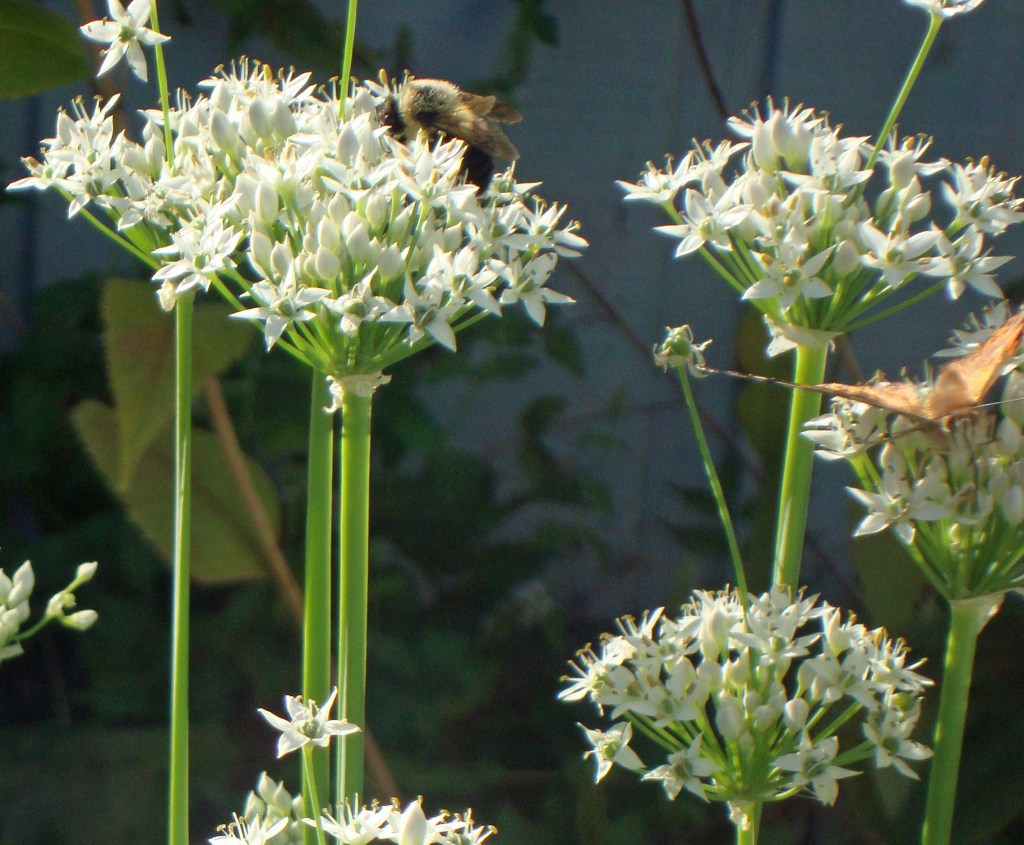
We’ve been adding pollinator-friendly perennial flowers and herbs little by little each year. Here, a butterfly and bee (you can see them both if you look close) feast on some blooming chives.

We’ve traded in a neatly manicured lawn for a wildflower meadow since we stopped using chemicals of any kind in our yard. Now the grass is interspersed with violets, white clover, dandelions and assorted small wildflowers that provide both nectar and pollen. This chipmunk seems to like our new lawn as much as the bees and butterflies do.

For several years we even had a fox living under our deck. She would have the cutest babies each spring.

I had become accustomed to sharing my lettuce, tomatoes and other “salad crops” with my furry backyard friends. However, the rabbits have for the most part stayed out of my flowers and veggie beds since I started sowing white clover for them. (Shhhh! Don’t tell the neighbors.) The clover also does a nice job of filling in bare patches in our lawn.

Small mammals may not be so glad to see this guy, but we think our resident hawk is magnificent! Pete likes to joke that we’ve provided a nice backyard deli for him by attracting all the other critters. I don’t like to think about that part. I just admire the hawk.

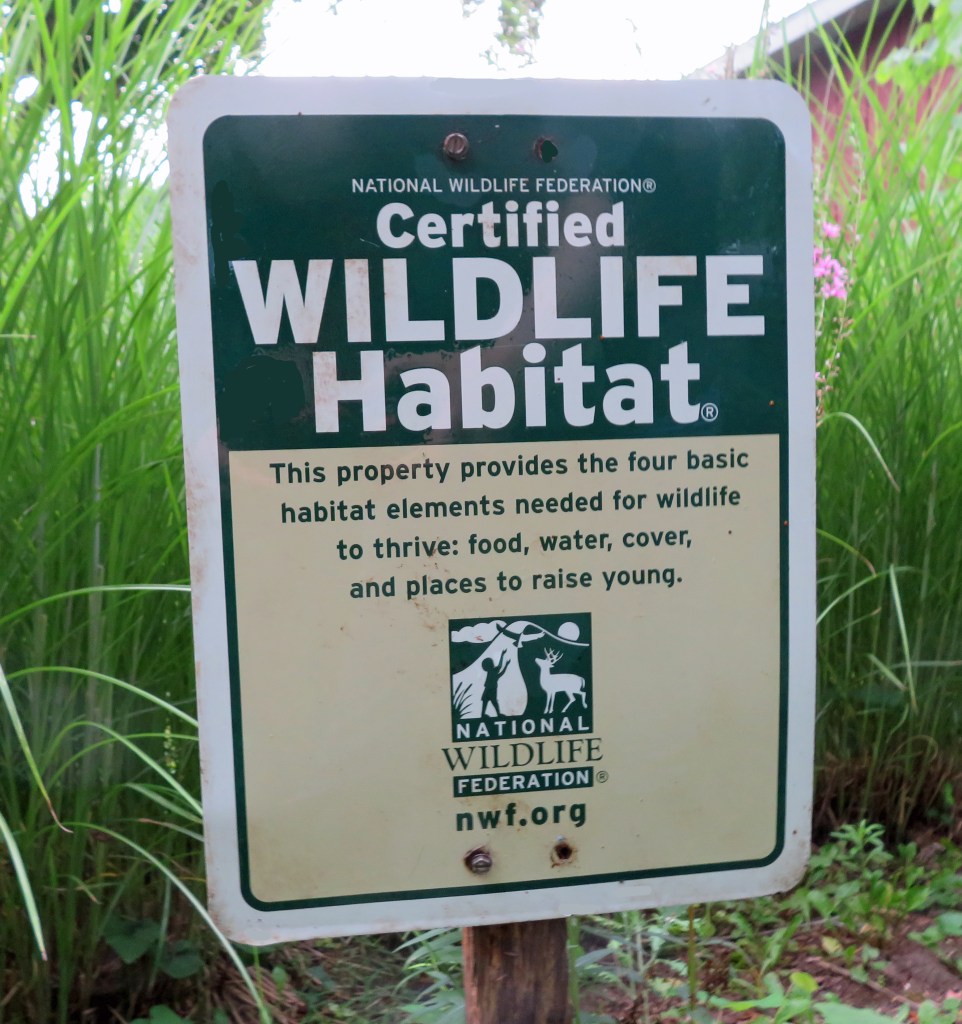
We proudly display this sign in our backyard. Anyone can create a welcoming haven for local wildlife, says the National Wildlife Federation. This is true whether you own 100 acres of land or live in a small apartment that only has room for a container garden.

To find out how you can make your green space of any size more wildlife friendly, and turn it into a certified wildlife habitat, go onto the National Wildlife Federation web site (link HERE).

Recipe: Spinach quiche

What a delicious way to sneak an extra veggie serving into our meals and meet our daily 3-5 fruits and vegetables challenge! By using Egg Beaters and fat-free feta cheese, I cut out most of the fat and cholesterol usually found in this kind of recipe. 

I use store-bought pie crusts – much easier! If you’re looking for a healthy alternative or have dietary restrictions, Wholly Wholesome makes whole wheat, as well as gluten-free ready-made crusts (link HERE).

One thing I love about this quiche is its versatility. I may have a slice for breakfast, for lunch or for a light evening meal. Depending on the meal, pair it with either a fresh fruit cup or a salad.

Another thing I like is that this quiche freezes well for up to three months, which means the recipe lends itself to batch cooking.

Ingredients

2-3 large cloves garlic, minced
1 tablespoon olive oil
1 10-oz. package frozen chopped spinach
Dash of black pepper
1/2 cup fat free feta cheese
1½ cups plain Egg Beaters or similar product
9-inch frozen pie crust

Directions

Allow pie crust to thaw for about 20 minutes before adding filling. Using a fork, poke holes evenly throughout the pie crust to prevent bubbling. 

Thaw spinach in microwave for about 5-10 minutes or leave in refrigerator the night before to thaw out. Make sure spinach is thoroughly thawed and drained. It is important to press out all the moisture from the spinach before using.

Sauté the garlic in olive oil. When the garlic is lightly browned, add the spinach. Lightly sprinkle black pepper over the mixture and continue to sauté until the mixture is heated through.

Remove from heat. Add the eggs and feta cheese, stirring only until blended.

Spoon the spinach mixture evenly into the pie crust.

Bake in pre-heated 350-degree oven for approximately 75 minutes, or until a knife inserted into the center comes out clean.

I usually top a slice of the quiche with a dollop of Hollandaise sauce, which I make from a pre-packaged sauce mix. Knorr makes a sauce mix that is very quick and easy. 

If heating up leftover quiche, pop single servings into the microwave for approximately 90 seconds to two minutes.

Makes 6 servings.

Nutrition information

Calories: 225 | Carbohydrates: 16 g | Protein: 11 g | Fat: 12 g | Saturated fat: 3 g | Cholesterol: 0 mg | Sodium: 396 mg | Potassium: 93 mg | Fiber: 1.5 g | Sugar: 0 g | Vitamin A: 9% | Vitamin C: 0% | Calcium: 5% | Iron: 20% 

Oley and Champaign

During our time in lockdown, Pete and I have been blessed with the company of two adorable companions. They’ve certainly made our extended quarantine much easier to bear!

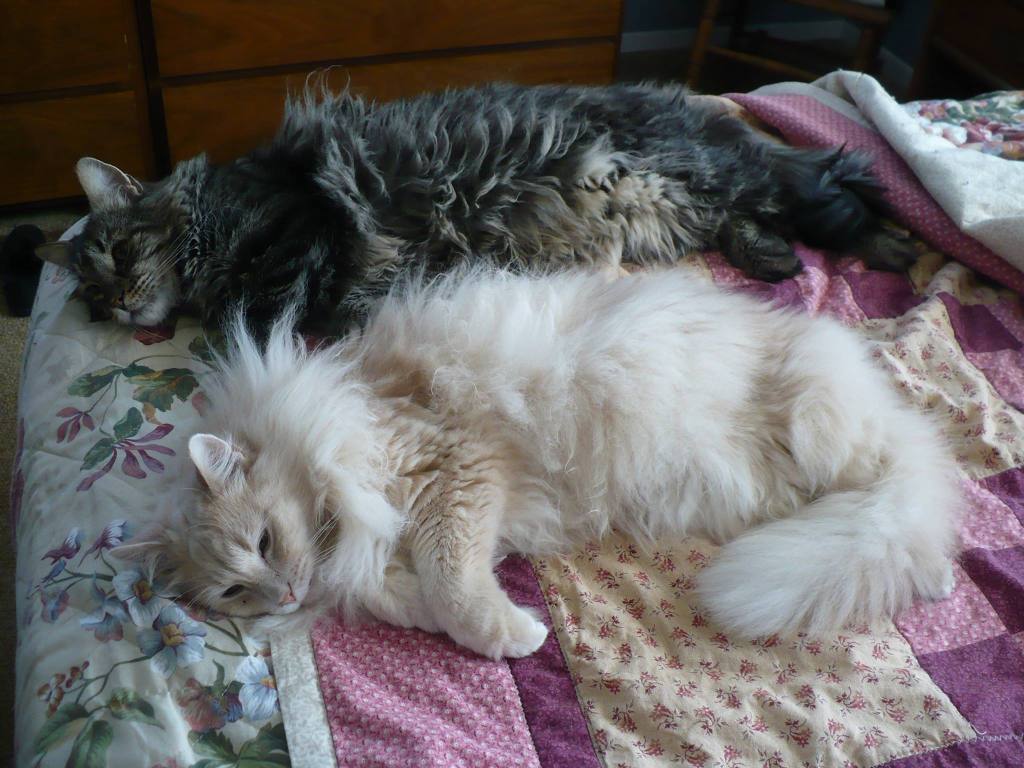
We adopted Olaf DaVinci and Champaign Le Chat as a pair from a shelter back in 2007. They’ve given us an abundance of love and cuddles ever since. And kept us thoroughly entertained.

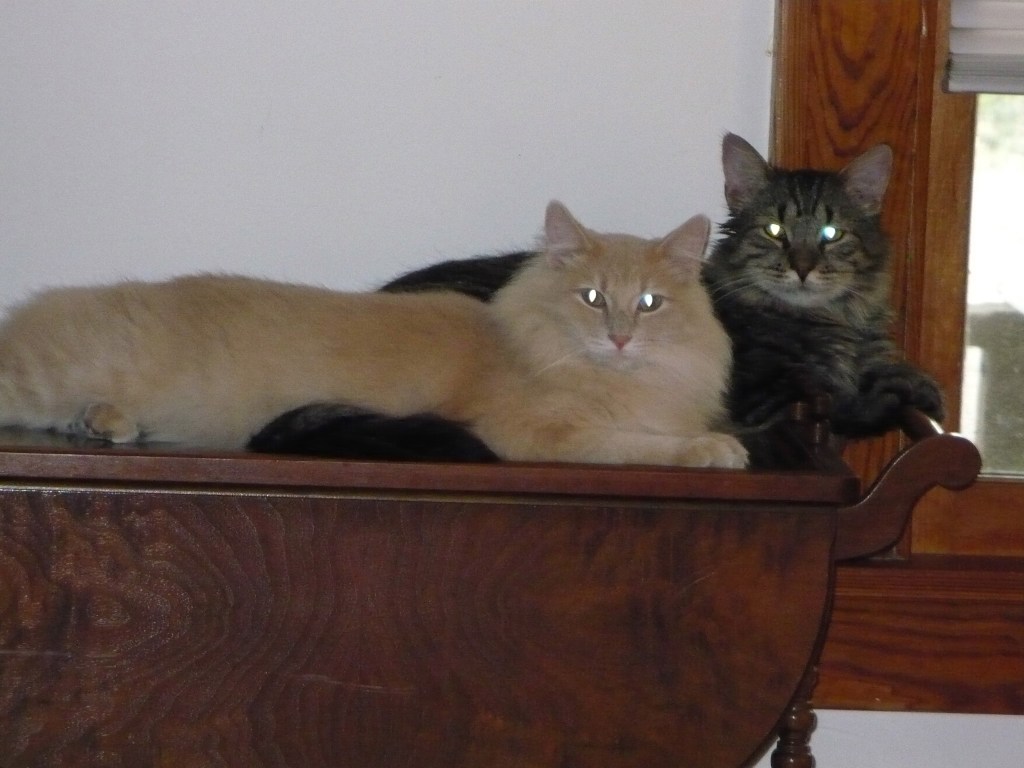
Oley is the tabby-striped Maine Coon and Champaign is the yellow domestic longhair.

Here’s the King on his throne.

Or is it the Prince and the pea?

That water in the dish on the floor? Boring …

Our boys love our sunroom. Or maybe I should say their sunroom. Just chillin’.

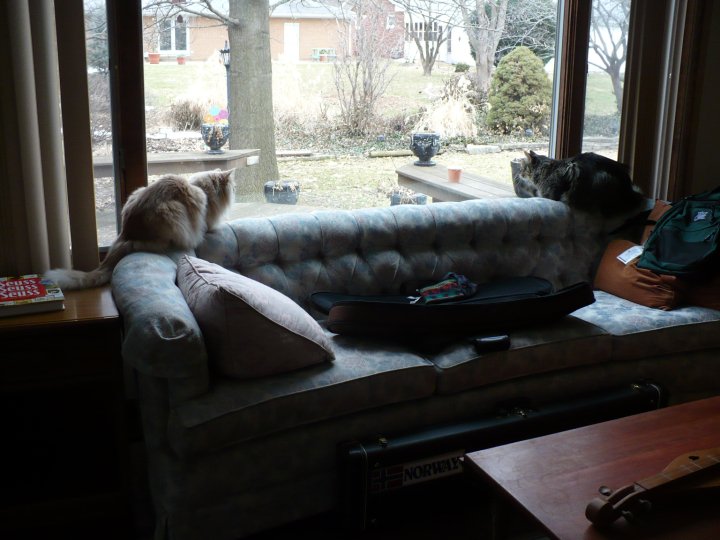
Good thing there’s a window separating these two and the critter outside …

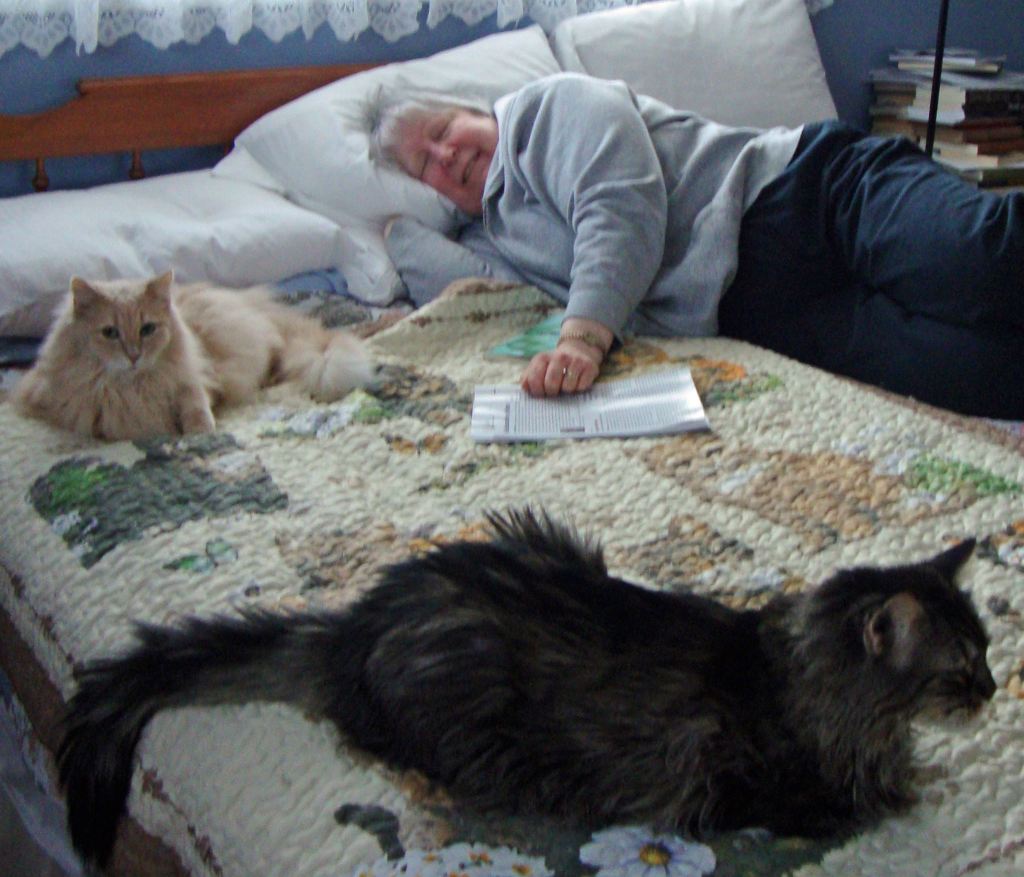
Helping grade papers is a tough job, but somebody’s got to do it.

Champaign will have us know: “It’s not a dulcimer case. It’s a cat bed.”

Boundaries, kitten. Boundaries.

Chasing each other around the house at 3 a.m. while yowling at the top of their furry little lungs can be tiring. The boys need their rest.

The kitties teach us how to live in the moment …

… While keeping us focused on our priorities.

We love them to pieces. That’s for sure.