Our Holy Land pilgrimage: the Old City of Jerusalem

Ten years ago this month, Pete and I took the trip of a lifetime – a tour of the Holy Land. (Hard to believe it’s been that long ago!)

In previous posts, I’ve shared photos of the famous archeological and historical sites we visited (link HERE), the cities and towns where Jesus walked (link HERE), and the memorable experiences we had such as sharing communion on a boat in the middle of the Sea of Galilee (link HERE).

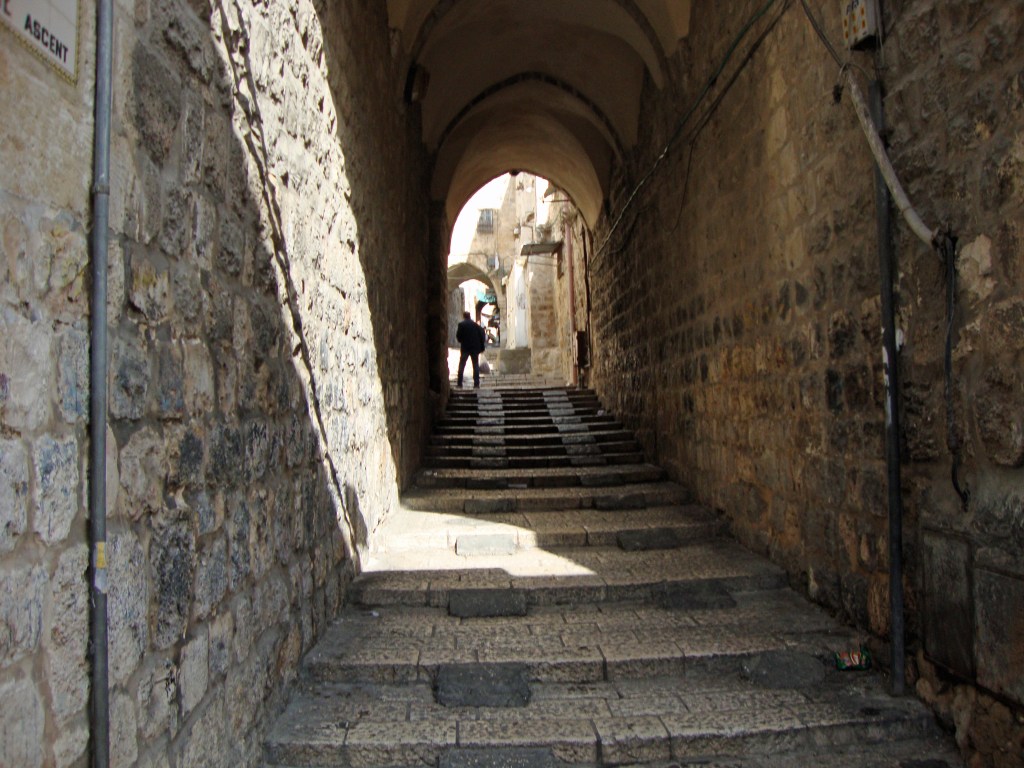
One of the more fascinating parts of the trip was touring the Old City of Jerusalem. Walking through its narrow streets and alleys felt like stepping back in time.

Surrounded by ancient walls, the Old City is home to sites considered holy by three major religions – Christianity, Judaism and Islam. The Church of the Holy Sepulchre, the Western Wall, and the Dome of the Rock Islamic shrine are all located there.

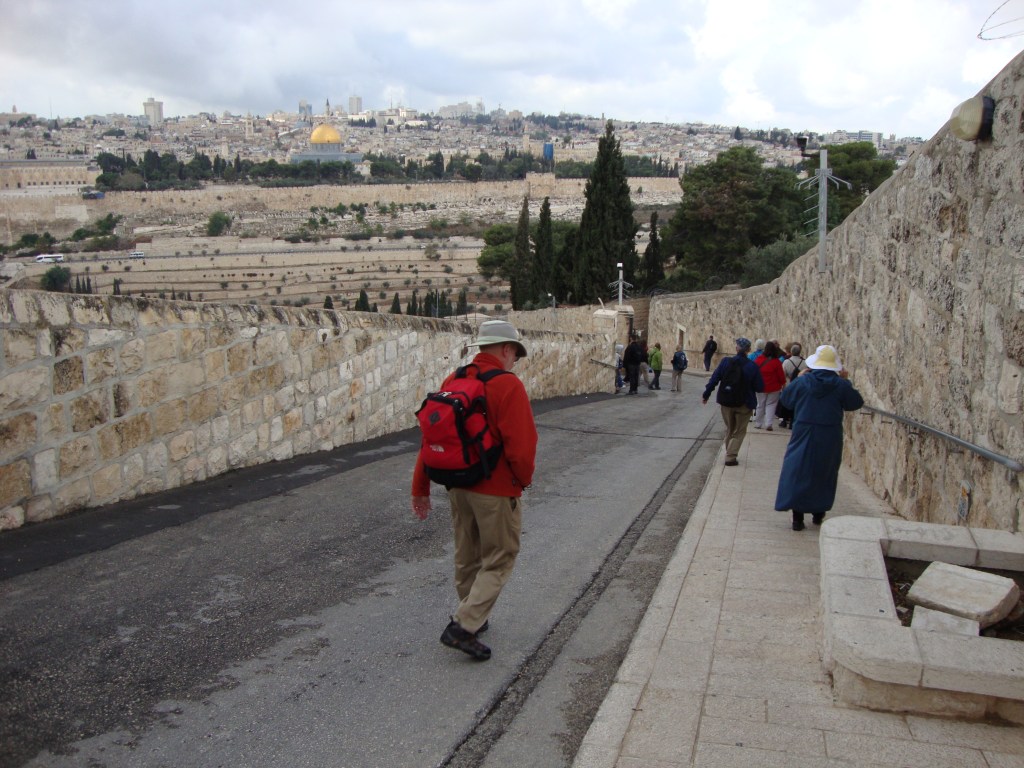
Here is a panoramic view.

Via Dolorosa – Latin for “Sorrowful Way” or “Way of Suffering” – is a processional route through the Old City. Believed to be the route that Jesus walked to his crucifixion, the path has been followed by Christian pilgrims for centuries.

Fourteen “stations” along the Via Dolorosa’s roughly half-mile path signify events mentioned in the New Testament and Christian tradition, and many pilgrims stop at each station for a short session of prayer and reflection.

Among the events commemorated are the places where Jesus was condemned to death, where he fell while carrying his cross, and where he was stripped of his garments.

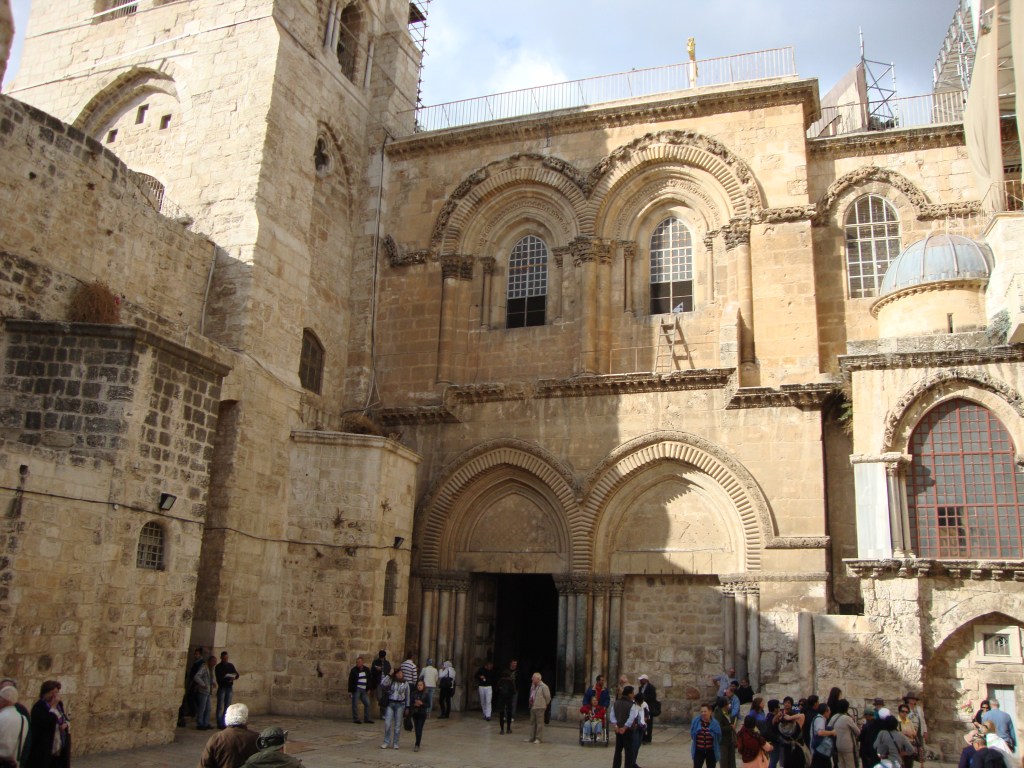
Some of the stations are located in the Church of the Holy Sepulchre, pictured here, including a site believed to be the place where Jesus was crucified and another site believed to be Jesus’ empty tomb.

The Western Wall is a place of prayer and pilgrimage sacred to the Jewish people. The wall is believed by devout Jews to be the last remnant of a retaining wall that surrounded the Second Temple of Jerusalem, which was destroyed by the Romans in 70 CE.

The Western Wall has a men’s entrance and a women’s entrance (above). Below, people stand next to the wall to pray. Again, there is a men’s section and a women’s section.

The Dome of the Rock (pictured below) is an Islamic shrine revered by Muslims as the spot from which they believe the Prophet Mohammed ascended to heaven.

The Foundation Stone and its surroundings which lie at the center of the dome are also considered the holiest site in Judaism. The Dome of the Rock is situated in the center of the Temple Mount, the site of Solomon’s Temple and the Second Jewish Temple.

Below is a close-up of the Dome of the Rock’s tiled facade.

The Cardo in Jerusalem’s Old City was the city’s main commercial avenue for 500 years. Cardos were generally lined with shops and vendors, and served as a hub of economic life, making them the “heart” of ancient cities.

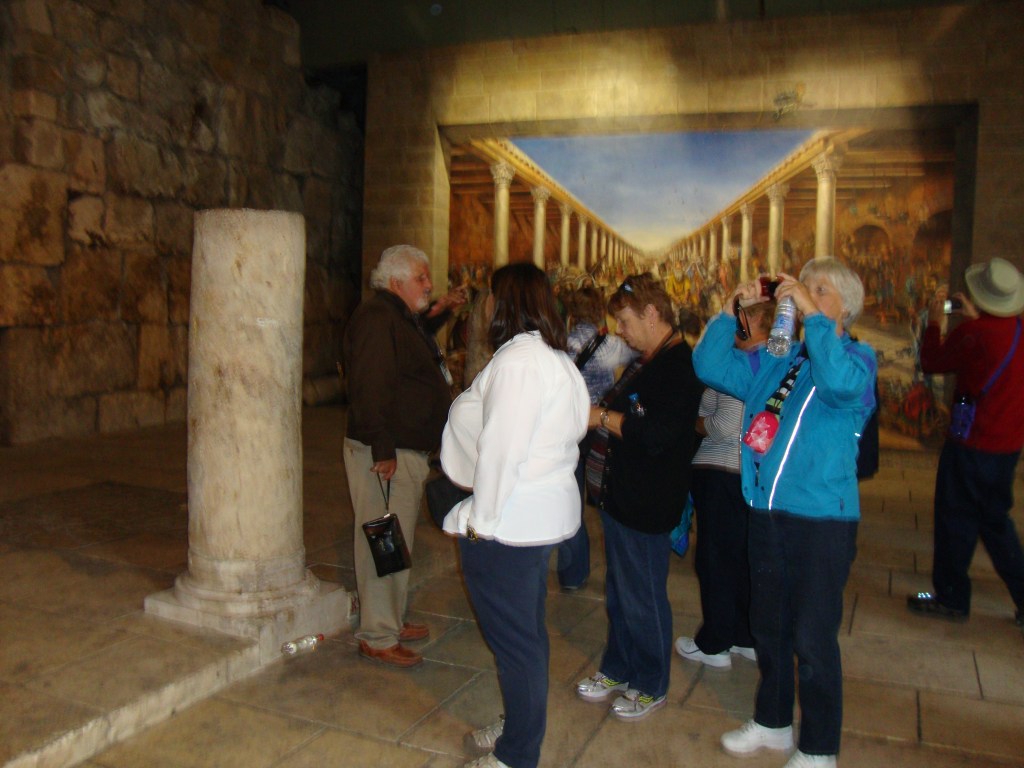
Pictured above are ruins of the Cardo, and below is a mural depicting what the Cardo would have looked like in its heyday.

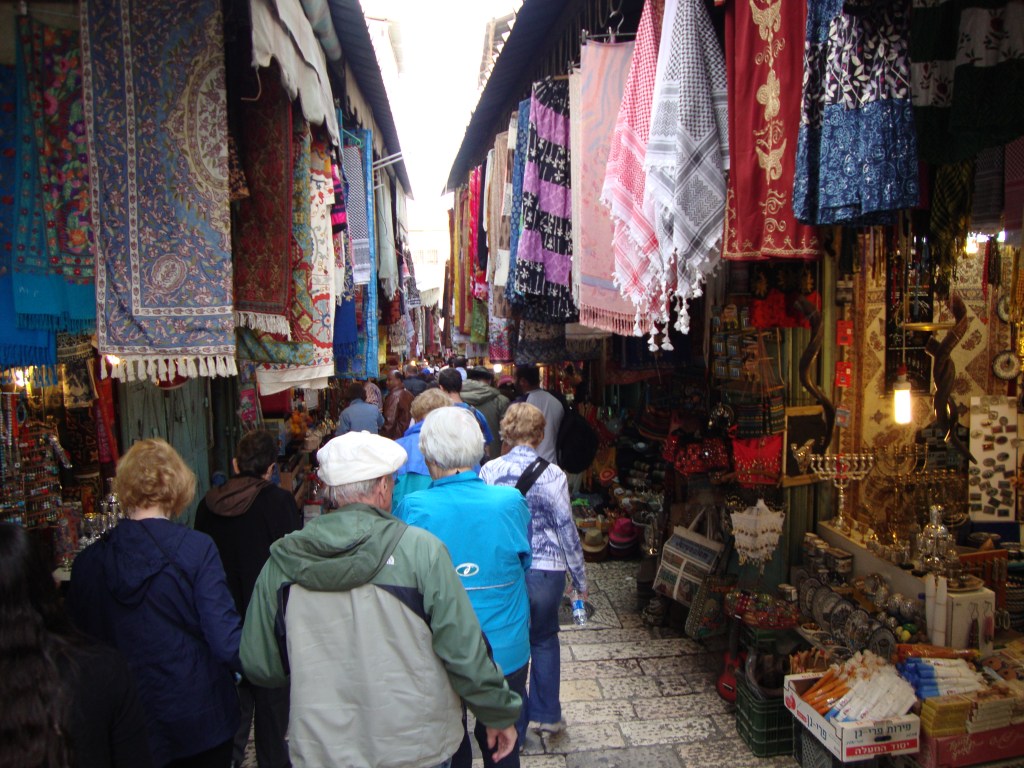
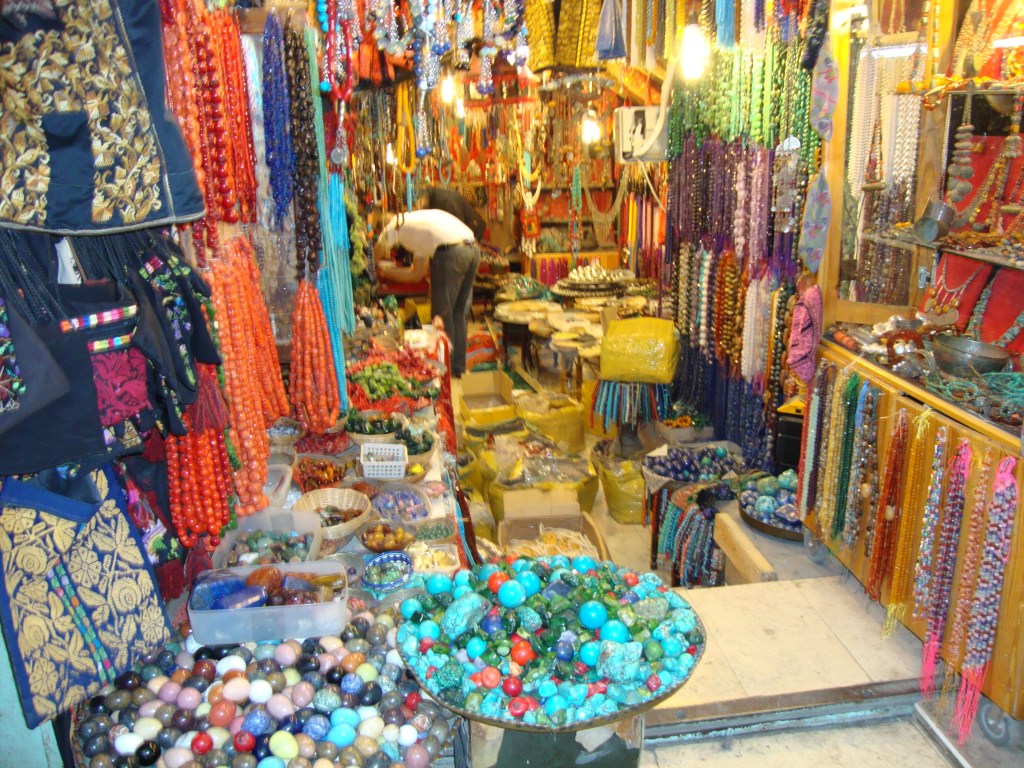
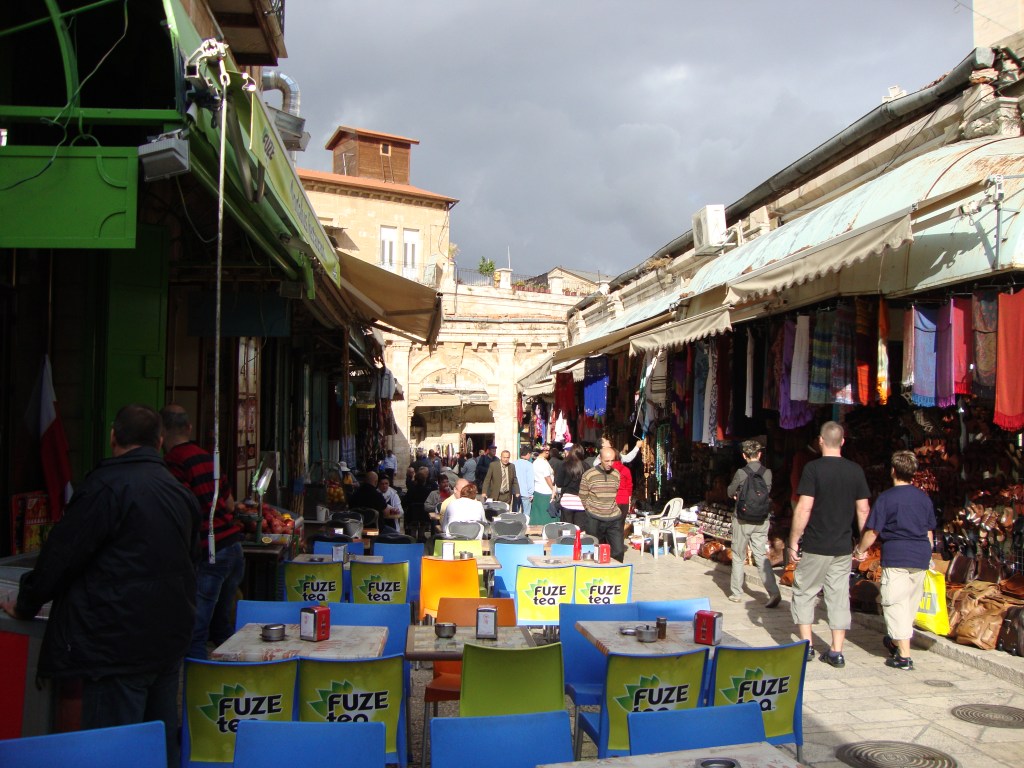
Today’s marketplaces in the Old City remain colorful. Tiny shops, open-air markets and food stalls fill the crowded alleyways. Throngs of tourists from all over the world make for some fascinating people-watching.

Some of the little shops are truly amazing.

Outdoor cafes offer delicious local favorites such as falafel and hummus.

A gentleman sitting in an alley with his very colorful pet bird attracts lots of attention from passersby.

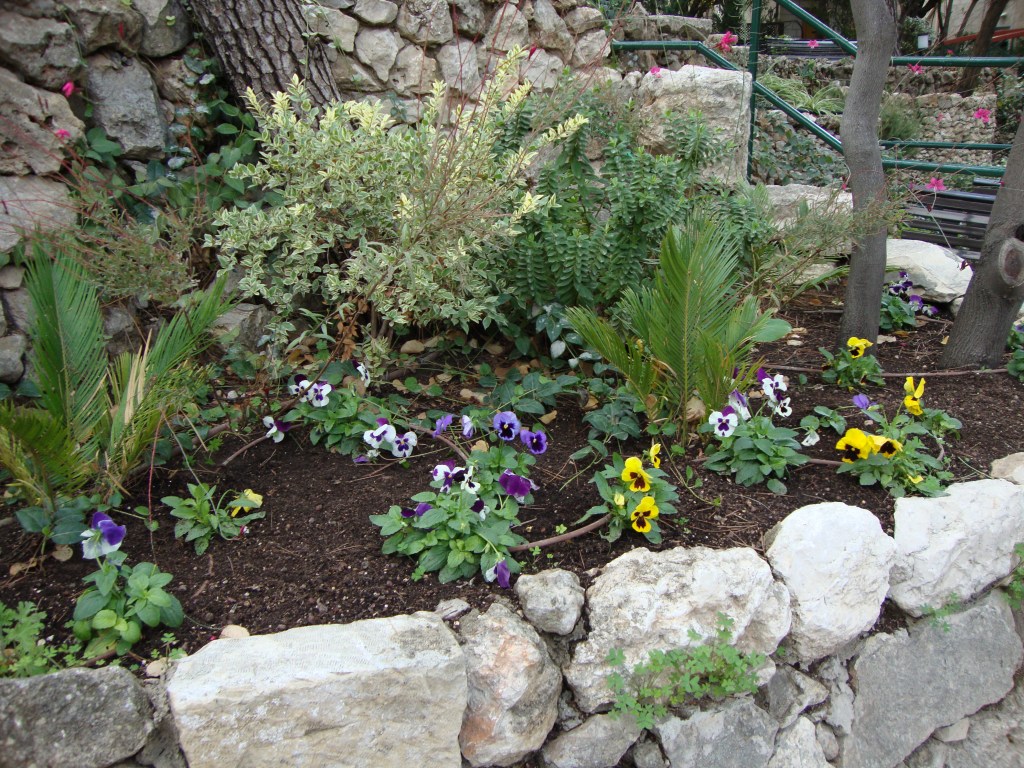
Little gardens are tucked into the landscape everywhere.

When we were there, one of the flower beds contained a prayer I imagine millions of people have sent up over the years.

Memes to share: Bad puns

My sweet hubby has been pretty miserable this past week while recovering from surgery, and he’s solicited prayers, healing wishes, good vibes and bad puns from friends and relatives.

I’ve already been sending up lots of prayers, but the bad puns also cheer him up and he’s got lots of friends and relatives happy to oblige. So I decided to help in the effort.

As they say, laughter is the best medicine …

It’s a Dickens of a thyme to feel sick, with all the gorgeous weather outside, and I’m missing my walking companion, so I hope this helps!

Meanwhile, continued prayers from everyone are appreciated.

Book excerpt: Confessions of a spiritual mutt

Note: This is an excerpt from my book in progress, which examines the polarization ripping apart our society and shares my personal search for an appropriate Christian response. For an overview of the book and to read my previous excerpts, link HERE.

My church’s adult faith formation class has been discussing Christianity’s Family Tree, a fascinating exploration of how several denominations came into being and what their members believe. One thing I like about the book is that author Adam Hamilton refrains from criticizing the denominations he writes about. Instead, he compares members of various faith traditions to relatives we might meet at a family reunion, and invites us to enrich our own faith by learning what we can from our “cousins” in Christ who belong to the other traditions.

Studying the book has also helped crystallize for me why I’m increasingly at peace with the convoluted nature of my own spiritual journey. Hamilton’s personal faith experience somewhat resembles mine in its twists and turns – he started life as a Roman Catholic, joined a Pentecostal church as a teenager, then ended up a member of a United Methodist Church, where he is now a minister. I’ve done some hopping around myself and, like him, I’ve come to see my rather zig-zaggy spiritual path in a positive light.

My journey through the spiritual/religious kaleidoscope began early. The church my family attended on a given weekend often depended on where we had Sunday dinner. One week we might attend the mainline Protestant church we and several members of Dad’s family belonged to, while the next Sunday might find us at the more conservative church Mom’s side of the family attended.

Being of different denominations, the two churches presented contrasting teachings on everything from baptism (sprinkling or immersion?) to communion (wine or grape juice?) to how one gets “saved” (baptism or personal decision?). But Dad regularly assured us, “In the end, we all worship the same God.” And the extended-family feasts that followed church and Sunday School are among my favorite childhood memories.

In college, I joined Campus Crusade for Christ (now known as Cru), a nondenominational student organization whose main attraction for me was that these classmates didn’t pressure me to participate in the drug scene or the sexual revolution. (In the early 1970s, both proliferated on campus.) Some of the classmates invited me to attend services with them at a local evangelical free church, where congregation members encouraged us to join them for Sunday dinner – a great outreach effort for homesick students, I must say.

After college, I followed the trajectory of a growing number of today’s young adults and became a “None.” I didn’t stop believing in God altogether, but I was preoccupied with chasing professional brass rings and worshipping at the altar of career success. I referred to the endless round of political fund-raisers, Chamber of Commerce cocktail parties and Happy Hour gatherings with colleagues as “networking” and convinced myself these alcohol-soaked events were essential to my job … until I wound up in detox.

When I embarked on my recovery journey in the early 1990s, I immersed myself in the 12-Step movement, which labeled itself “spiritual but not religious.” The people I met “around the tables” came from a wide variety of spiritual/religious backgrounds with wildly diverse understandings about God. Folks at the meetings advised me, “Take what you need and leave the rest.”

Meanwhile, my husband and I joined a church that shall remain mercifully nameless. Members seemed obsessed with pointing out how smart they were in comparison to most Christians. The toxic organizational culture – marked by constant bullying, backbiting, infighting and power struggles between rival cliques – ultimately drove us out of the congregation. After that, I took another hiatus from church, though I continued to attend 12-Step meetings.

In my late 40s – after a huge medical scare during which I prayed fervently and made promises to a God I hoped would still listen to me – I started going to a mainline Protestant church with my husband and mother-in-law and periodically sneaked into a couple of Evangelical/Pentecostal churches my parents, other family members and friends now attended.

Shortly after I started going to church again, I began working for a faith-based prison re-entry program that encouraged congregations to “adopt” incarcerated mothers reintegrating into the community. Part of my job description involved recruiting and training a team of volunteers from each congregation to work intensively with their “adopted” mother and her children. The recruitment process required me to attend services at a dazzling array of churches – from Roman Catholic, Lutheran, Methodist and Presbyterian to Baptist, Evangelical and Pentecostal. Every month or two would find me attending a different congregation’s church service.

In addition to sampling the denominational smorgasbord as part of my new job, I read the entire Bible from front to back for the first time in my life and discovered passages that prompted me to observe, “So that’s where the Pentecostals get their belief about speaking in tongues … where the Catholics get their belief about purgatory … where the Evangelicals get their belief about the Rapture.” And I found myself agreeing with Dad’s long-ago observation: “In the end, we all worship the same God.”

I now belong to the mainline Protestant church I began attending nearly 20 years ago with my husband and mother-in-law. I like that the people at my current church do their best to practice what they say they believe. I like their involvement in serving the larger community. I like that I’ve been able to ask questions in our adult faith formation class that probably would have gotten me burned at the stake in a previous era, and I haven’t been excommunicated or struck by lightning. At least not yet. So even though I’m still questioning a lot of things, my current church is where I’ve settled and plan to stay.

But I haven’t stopped exploring ideas or getting spiritual support from a variety of sources.

Over the years, I’ve continued to attend Evangelical and Pentecostal services when visiting family and friends. Members of my parents’ congregation never failed to make me feel welcome when I went to church with them and I absolutely appreciate how supportive they were of my parents during their final years when I lived too far away to be as involved in their day-to-day care as I would have liked.

More recently, my husband and I have been receiving spiritual direction from a pair of Dominican teaching Sisters and this year we joined their “associates” program. Spiritual direction is a partnership in which one Christian helps another grow in a personal relationship with God, and serves as a supplement to – rather than a substitute for – church. During monthly sessions, I have been examining my relationship with God, prayer, my personal values, and various lifestyle choices. As associates my husband and I assist, among other things, with the Sisters’ social justice activities such as their anti-racism and environmental efforts.

I’m an insatiably voracious reader as well. I subscribe to both Christian Century (mainline Protestant) and Christianity Today (Evangelical), as well as America Magazine (Catholic). I devour books by authors from a variety of faith traditions – some of the more interesting titles I’ve been reading lately include Falling Upward by Franciscan priest Richard Rohr, Do I Stay Christian? by Emerging Church leader Brian McLaren, Thou Shalt Not Be a Jerk by Evangelical pastor Eugene Cho, Creation as Sacrament by Greek Orthodox theologian John Chryssavgis and Holy Envy: Finding God in the Faith of Others by Episcopal priest Barbara Brown Taylor.

During a recent session of my congregation’s adult faith formation class, I shared some details about my rather eclectic spiritual background. “I guess you could call me a spiritual mutt,” I joked. One of the other participants responded, “I’m not sure that’s such a bad thing,” and I would be inclined to agree.

Some might consider my spiritual journey – with its hopelessly squiggly lines – confusing. (At best!) But I’ve come to believe that experiencing a variety of traditions has had benefits. I certainly don’t claim to have a corner on the truth about religious/spiritual matters. I refuse to demonize people whose beliefs differ from mine. I’m less likely to get drawn into squabbles with other Christians over the long list of issues Martin Luther would label “adiaphora.” And I get thoroughly impatient when either conservative or progressive culture warriors imply that people who belong to a denomination other than their own “aren’t real Christians.”

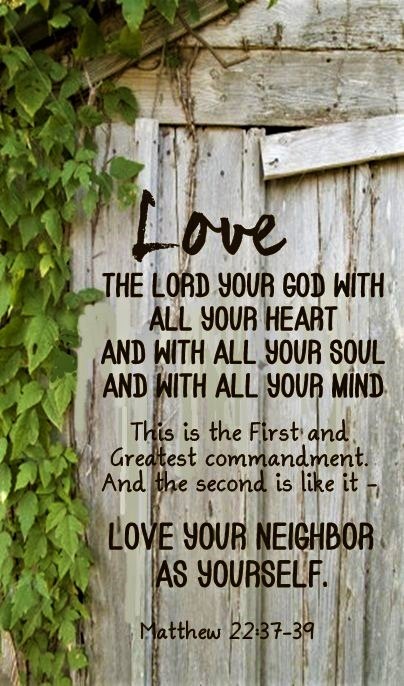
Instead, like Hamilton, I prefer to learn from my “relatives” in Christ and to look for areas of agreement. What I really care about these days is how well a church encourages its members to fulfill these commandments:

  • Love God with all your heart, all your soul and all your mind.
  • Love your neighbor as yourself.

“When we view the body of Christ as a tree, there are several things we begin to realize,” says Hamilton, in Christianity’s Family Tree. “We are reminded that all the branches share the same roots and trunk. Our roots are Judaism. Our trunk is Jesus Christ. Permeating the entire tree is the Holy Spirit, which feeds the leaves and allows the tree to grow.”

Hamilton reminds us that in the beginning, Christianity did not have denominations. There were no Lutheran, Orthodox, Roman Catholic, Baptist, Methodist or Pentecostal churches. Christians were known as “followers of The Way” or simply followers of Jesus Christ.

And I still trust my father’s advice: “Remember, in the end, we all worship the same God.”

Question for readers: What has your spiritual journey been like, and has it changed over the years? I’d love to hear your response to this question, as well as your comments on the article. Just hit “Leave a Reply” below. When responding, please keep in mind the guidelines I’ve outlined on my Rules of Engagement page (link HERE).

A prayer of thanksgiving for an amazing man

Dear God:

Today the love of my life is celebrating a major milestone: He just turned 80 years old.

I definitely consider Pete to be one of your all-time best gifts to me, God, so here is a prayer of thanksgiving for this wonderful human being you sent to me so many years ago.

I’m thankful for his sense of fun, which has kept me entertained and laughing since the early days of our marriage.

Here we are in front of our first home, posing – at his suggestion – as characters in a Grant Wood painting. (Goodness, we were so young and slender then, but I digress.)

His sense of humor has only gotten more entertaining over the years.

A couple years ago, we volunteered to work in the campaign of a local candidate running for Congress, and Pete decided Mr. Lincoln himself needed a campaign button.

Another thing I love about my Sweetie Petey is how well he gets along with our cats. We like to joke that they have him well-trained.

Below is the first cat we had, a yellow “Morris” lookalike named Torbjorn (Norwegian for “Thunder Bear”), who decided Pete made a really good cat bed.

Pete cheerfully allowed our beloved Olaf DaVinci to photo bomb as I snapped a picture of him playing his dulcimer. This is still his profile pic on Facebook.

He even lets our Champie Cat wash his face.

Before retiring, he was an English and journalism professor at our local Catholic university and his students loved him almost as much as the cats and I do.

One of his artist students would sit in class and draw humorous portraits of him that captured his personality exceptionally well. This drawing made it onto the 10th anniversary cover of The Sleepy Weasel, the college’s literary magazine for which Pete was an advisor.

Since we retired, one of our favorite activities has been traveling. We’ve been to Alaska several times, plus Ireland, Germany, Sweden, Denmark, Norway, Israel and Palestine.

Here he is, in front of a pretty little bridge in Uppsala, Sweden.

He is a fine musician who loves collecting instruments. I’ve been known to ask, “Do we really need another instrument?” (There wasn’t enough room in our luggage for a new one from a shop we visited in Ireland, below.)

But Pete’s hobby does have a definite upside. How many wives get to be serenaded with dulcimer tunes while doing evening meditation in front of the fireplace?

One of the things I’ve admired about Pete for years is his enviable ability to speak and perform in front of a group.

Here, he is giving a presentation at Jenny Lind Chapel in Andover, Illinois about the psalmodikon, a single-stringed instrument developed in Scandinavia for simplifying sacred music in churches that didn’t have pianos or organs.

He also loves historical research and his writing has been published in several academic journals. Link HERE for an excerpt from the article below that appeared in the May-June 2015 issue of Illinois Heritage magazine.

He’s fond of calling himself an “old dog,” but he’s still open to learning new tricks. He managed to give a presentation for a history conference via Zoom during the pandemic.

Note the cute ponytail that was visible to my camera but not to the audience “attending” the conference.

Always up for a challenge, he helped me make a few videos for our congregation’s online church services during the pandemic.

Here, we are shouting “Hallelujah!” as we wave palm branches in front of my computer’s camera for a Palm Sunday service.

Good sport that he is, he’s agreed more than once to be drafted at the last minute to participate in our congregation’s annual Christmas pageant. Doesn’t he make a great Wise Guy?

One of my favorite photos of my handsome gentleman was taken in early 2020 at Barnes & Noble Bookstore, where we met with friends for Starbucks coffee and pastries just before the pandemic came along and locked everything down.

If I must be stranded on a desert island (or in my home during a months-long quarantine), I can’t think of a better person to be marooned with.

After 37 years of marriage, Pete is still at the very top of my gratitude list. He’s kind, generous, decent and caring, my best friend, the wind beneath my wings, proof positive that there are good men, and the best thing that ever happened to me.

I love that man to the moon and back.

Please watch over him and take care of him, because I want us to have many more years together!

With love and gratitude,

God’s other book: Summer flowers

For several summer seasons, one of my favorite meditation activities has been walking through my backyard and gazing upon God’s handiwork.

This year we had extensive landscaping work done in the spring. I planted lots of native perennials, as well as an abundance of annuals. I’ve found gardening to be therapeutic, and the yard is looking beautiful! 

So, as the summer draws to a close, I thought I’d share some photos.

What I love about astilbe is its outrageous showiness. Those plumes! I like to think of them as God showing off…

I’ve been slowly but surely adding native plants to my beds. Not only do they attract pollinators, but once they get established, they require next to no watering or other care, since they’re suited to our local climate. Among my favorites are purple coneflowers and black-eyed susans.

Besides being wonderfully showy, the bee balm that grows along the south side of our house attracts hummingbirds. I just love those tiny creatures! I still haven’t gotten my camera to focus fast enough to catch one flitting from blossom to blossom, but I’m working on it.

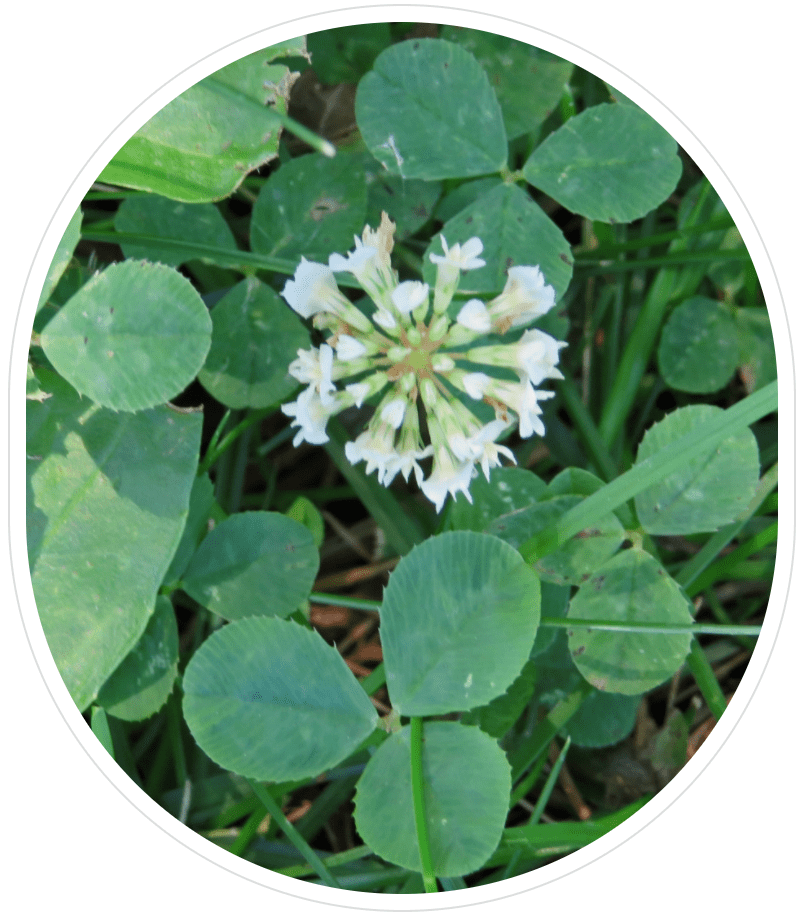
Our resident rabbits love the white clover that covers our lawn. And they don’t have to worry about ingesting chemicals along with the yummy clover flowers. Our lawn has been chemical-free for as long as we’ve lived here.

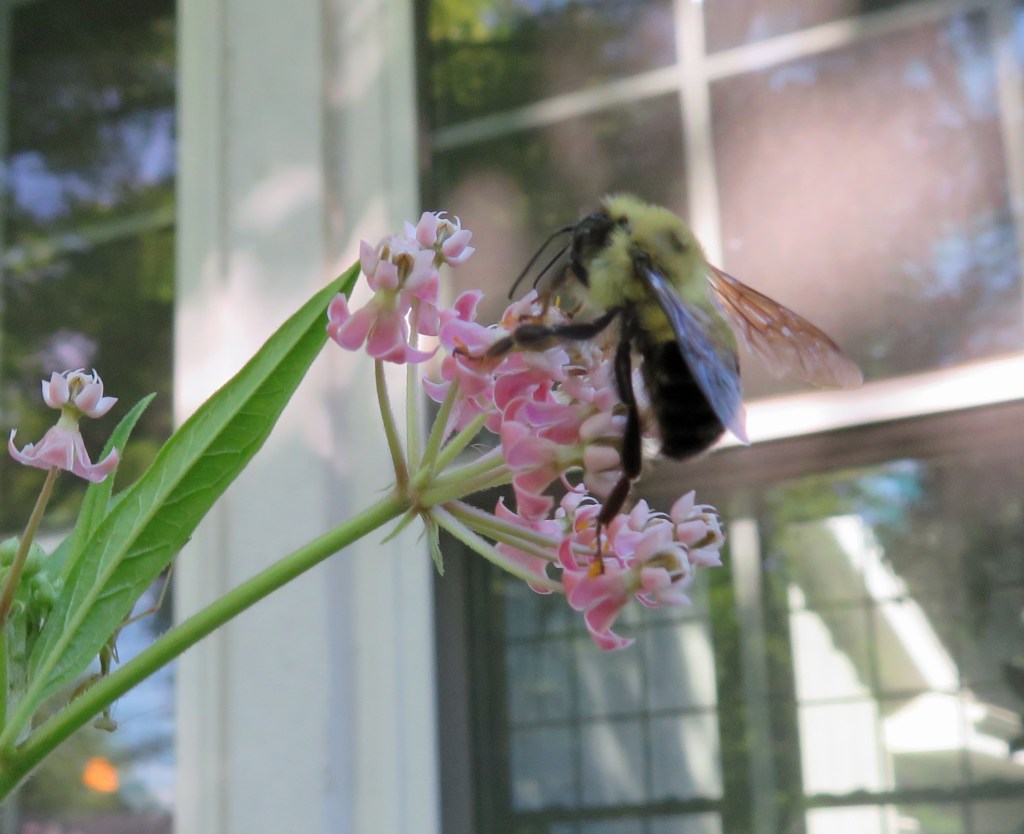
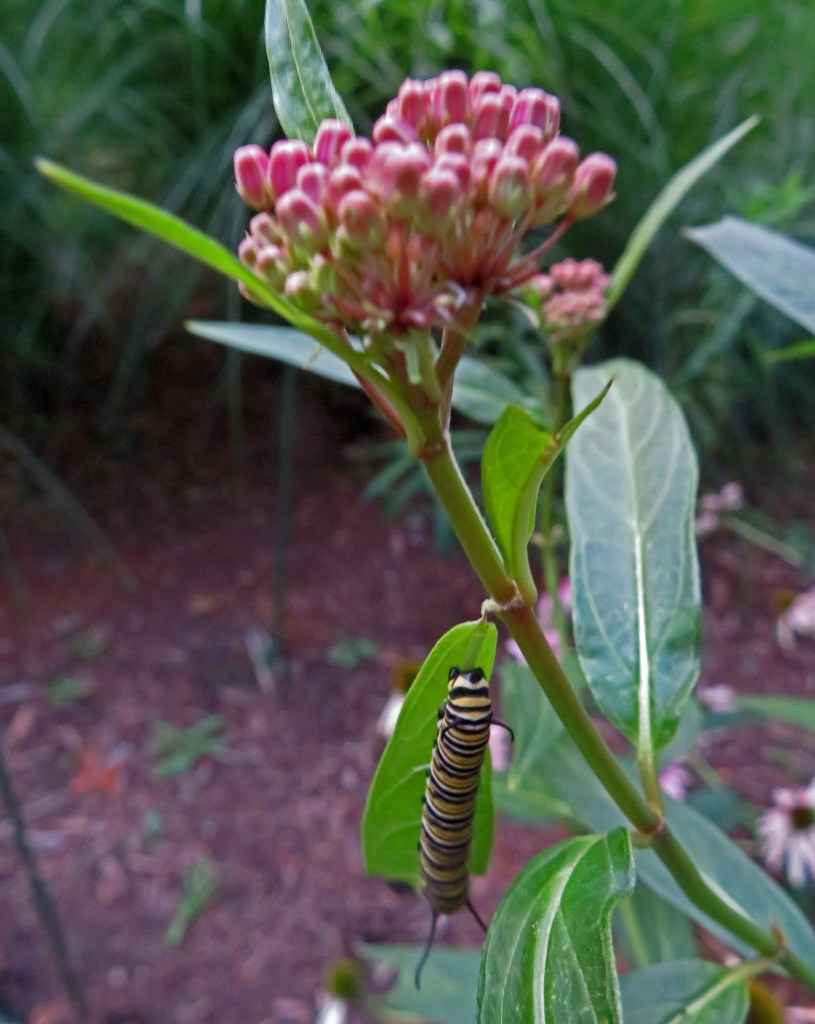
Some welcome visitors have been gorging on our milkweed. I planted lots of it this year, so there’s enough to feed some very hungry caterpillars, along with the bees and butterflies. Since both the monarch and bee populations are dwindling, I’ve encouraged everyone I know to let this “weed” grow in their yards.

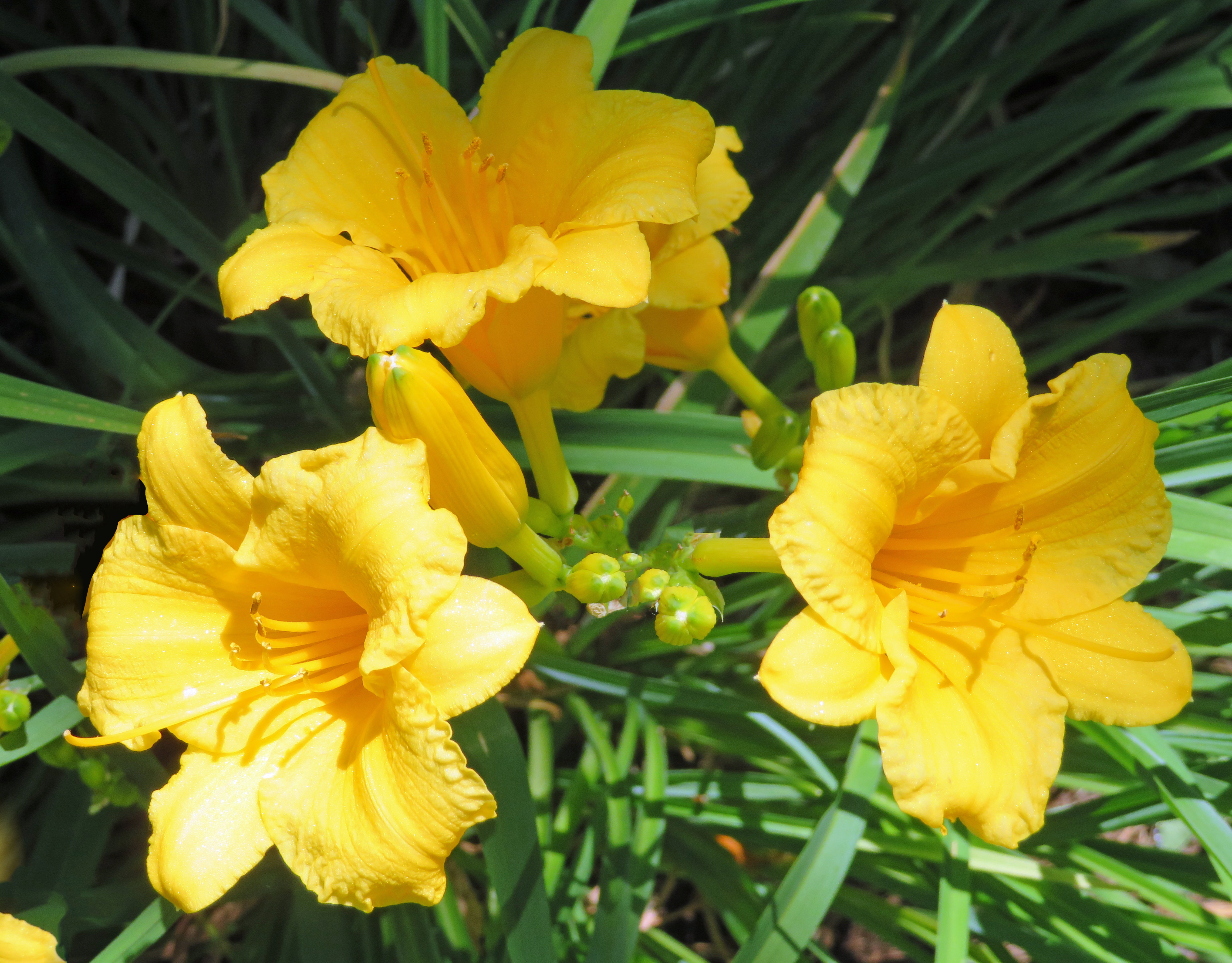
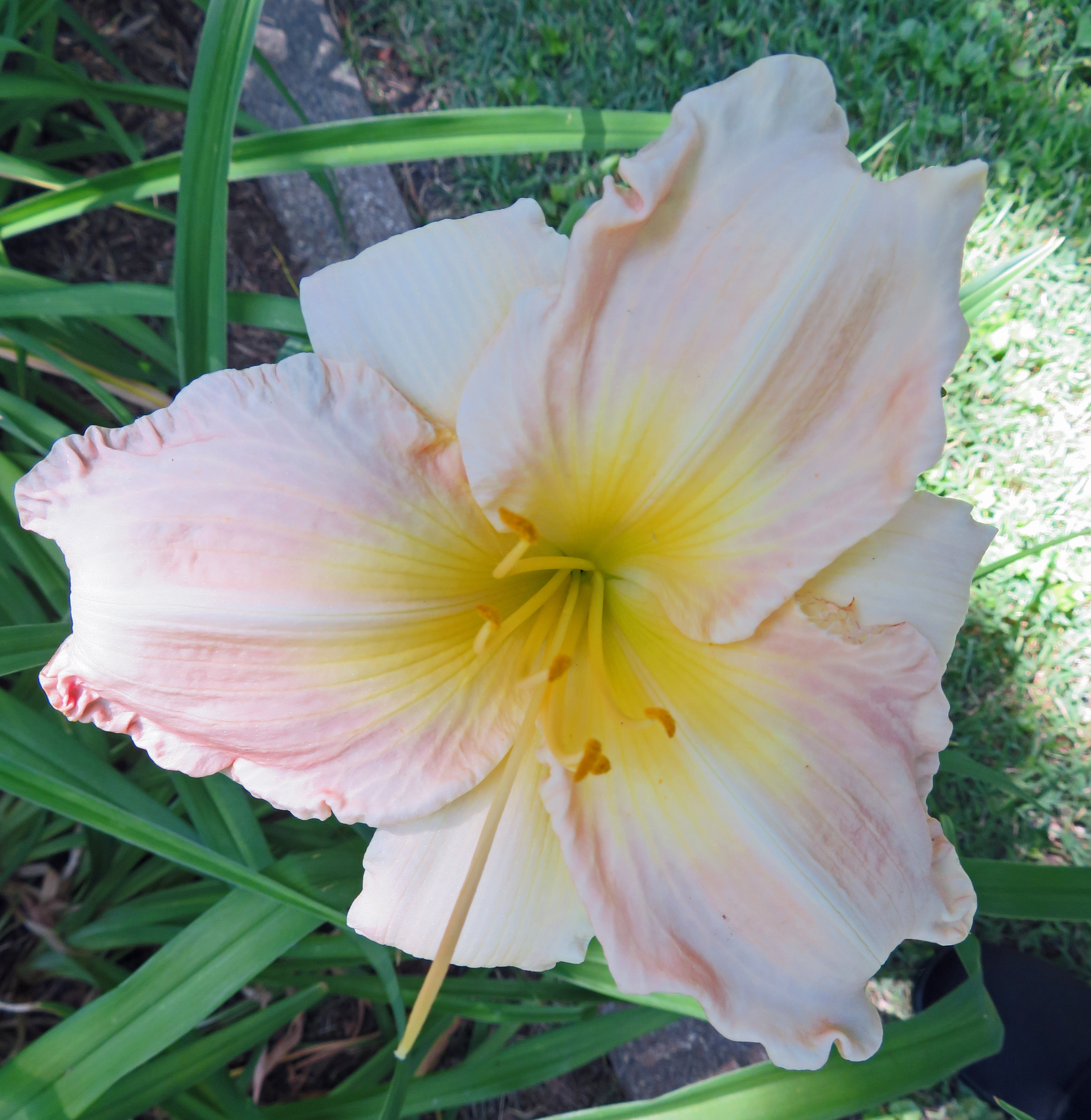
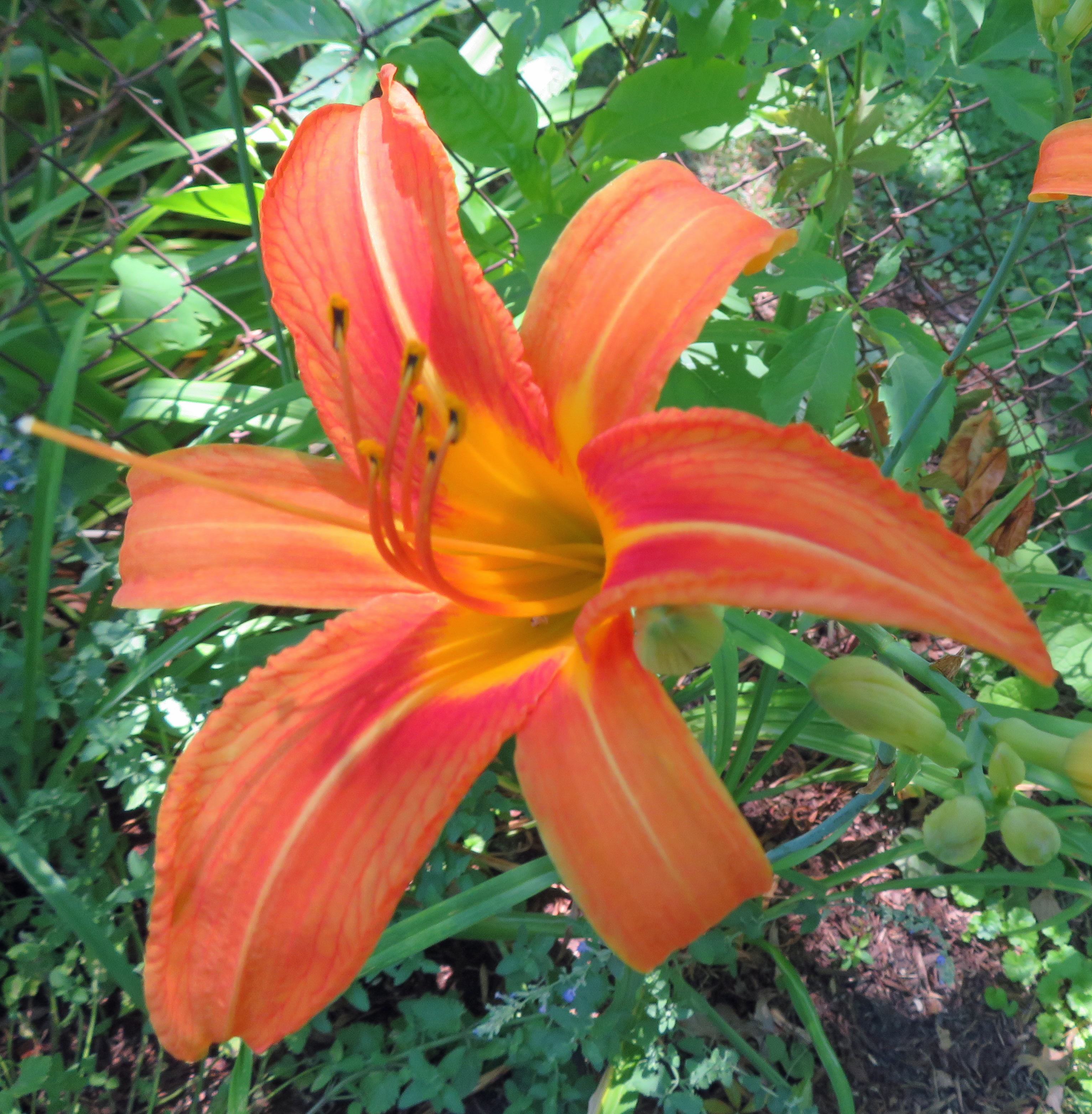
While not considered native flowers, my day lilies are so easy to grow and come in so many pretty colors that I now have lots and LOTS of them scattered around both my back and front yards. The good news is, they aren’t invasive, so it’s safe for me to plant them anywhere.

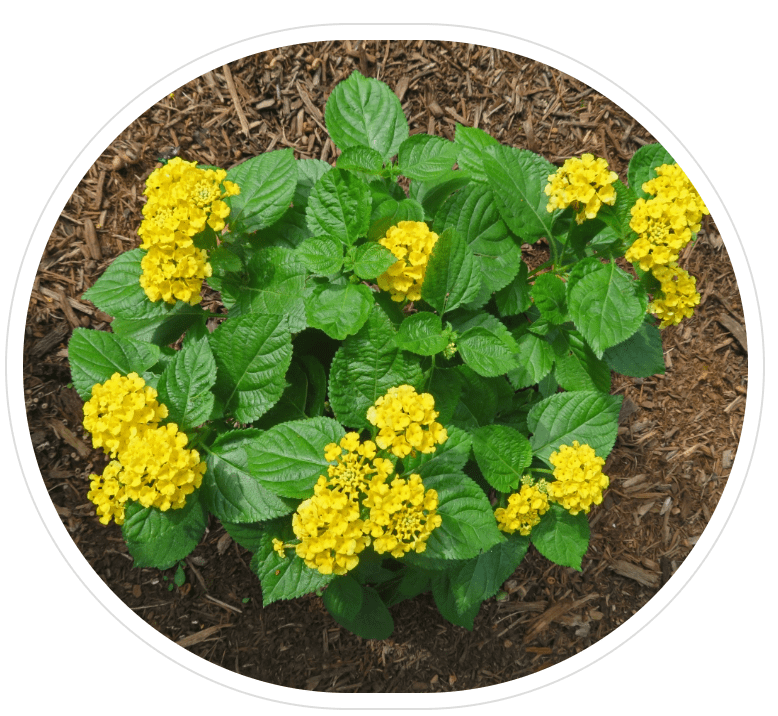
I like to scatter a few annuals throughout my flower beds, so that something is always blooming from mid-spring until frost. Petunias, begonias and lantana are among my favorites.

I have always gotten a kick out of the way I can make my hydrangeas change color just by pouring some leftover coffee around the base of the bush. These blooms started out blue, but some have turned pink after I started the coffee treatment.

What is even prettier (and tastier!) than these blossoms? The vine-ripened tomatoes I’ve just now begun to harvest! And the cayenne pepper will be yummy cooked with a pot of greens.

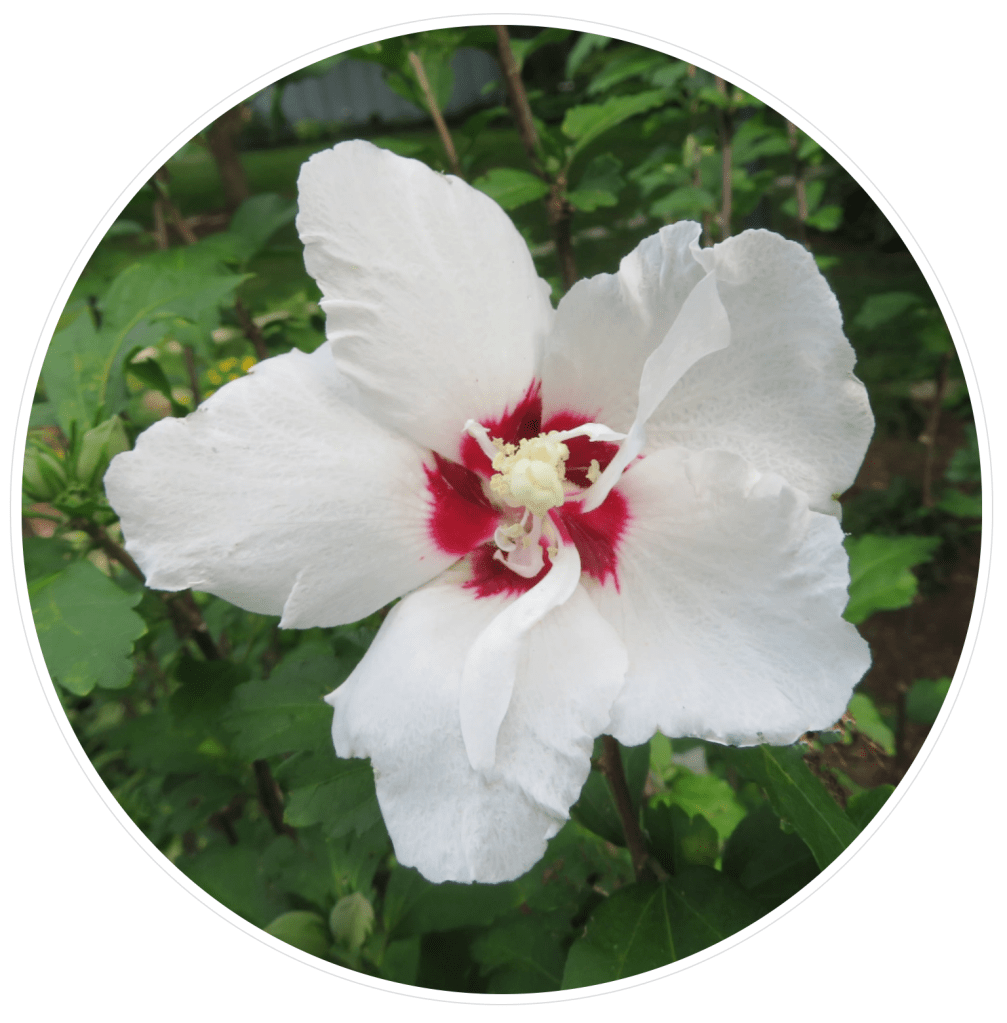
We also planted a Rose of Sharon tree in memory of our beautiful Olaf da Vinci.

We wanted something with blossoms as flamboyant as our sweet kitty’s personality, and I think we found the perfect little tree to honor him. From mid-summer until frost the Rose of Sharon puts forth an abundance of showy white blossoms with red centers.

Walking meditation

This year I celebrated my birthday with a three-day weekend dedicated to prayer, meditation and reflection. Only instead of sequestering myself indoors, I tried to stay outside as much as possible.

A highlight of the weekend was a trip to Jubilee Farm, where my husband Pete and I walked their labyrinth for the first time.

Jubilee Farm was established in 1999 by the Dominican Sisters as a center for ecology and spirituality, according to their web site (link HERE).

The labyrinth – one of the farm’s more amazing and popular features – allows us to follow a defined pathway to the center of the circle and back out again, praying and meditating as we go.

Many labyrinths are located in churches or other buildings, but the one at Jubilee Farm is outside.

For more than three millennia, millions of people have used labyrinths as an aid for prayer, according to the Jublilee Farm web site (link HERE for an article about the labyrinth itself).

One of the most famous labyrinths – and the one replicated at Jubilee Farm – is embedded in the stone floor of the Cathedral of Notre Dame in Chartres, France. 

At the entrance to (or exit from) the Jubilee Farm labyrinth is a bench where we can sit for a moment to gather our thoughts.

The labyrinth is a single circular path which takes us to a center place and back out again,

At Jubilee Farm, the labyrinth path is mowed right into the pasture grass, as pictured above and below.

There are no wrong turns or dead ends in a labyrinth, the Dominican Sisters assure us. There is one way in and one way out. 

There is also no right or wrong way to pray while walking the labyrinth, a Sister who lives at the farm assured us the first time we visited Jubilee Farm in the spring.

We can pray for people or situations that are on our mind. We can ask a question and leave space for the Holy Spirit to respond. We can give thanks for the blessings in our lives.

Or we can walk in silence, observing the scenery around us and drinking in God’s presence.

All along the path at Jubilee Farm’s labyrinth, Pete and I encountered an abundance of milkweed, red clover and wildflowers.

We also encountered this little guy, who reminds us God wants us to pay attention! Is he magnificent or what?!

Finally we came to the center of the labyrinth, which had a couple of stumps where we could once again sit for rest or contemplation if we wished.

Walking to and from the labyrinth was an experience in itself. On the way back to our car, we walked past this pretty little pond.

Below is a close-up of the water lilies and lily pads in the middle of the pond.

Millions of people around the world use labyrinths as a spiritual practice.

At Jubilee Farm, walking their labyrinth turned out to be nature prayer at its finest! And a great way to start my personal new year.

God’s other book: A new peek at our amazing universe

My inner Nerd Girl got to experience some real excitement this week!

The James Webb Space Telescope has produced the deepest and sharpest images of the distant universe to date, according to a special web site created by NASA, who released the first of the images to the public earlier this week (link HERE).

These images of our amazing universe serve to remind me that religion and science need not be seen as opposed to each other. Who can look at these astonishing images and not see evidence of a Creator?

At any rate, I couldn’t resist sharing some of them in a blog post.

First, here is an artist’s rendition of the telescope. Launched in December 2021, the telescope is about the size of a tennis court, according to NASA, and will operate nearly a million miles beyond Earth’s orbit around the sun. (And I thought my little camera with the 40X zoom lens was fabulous.)

Webb will spend the next 20 years or so collecting data to help scientists study the farthest reaches of the known universe.

The image of galaxy cluster SMACS 0723, known as Webb’s First Deep Field, gives us a sense of the sheer vastness of the universe. Just think: Each speck of light in the image below is an entire galaxy, except for the brighter specks with spikes, which are stars in our own galaxy.

Each galaxy, in turn, may contain billions of stars, moons and planets. Compared to the universe as a whole, the slice of universe shown in this image is equivalent to the size of a grain of sand held at arm’s length by someone on the ground, according to NASA.

Sort of boggles the mind, doesn’t it?

When I look at this photo, I’m immediately reminded of Genesis 1:3: “Then God said, ‘Let there be light.’ And there was light.”

The next image is the Carina Nebula, the largest nebula in our own Milky Way galaxy. The nebula is the part of the image which resembles a mountaintop.

It looks solid, but is actually a giant cloud of gas and dust where stars are born, according to NASA. The stars are formed from the dust in the nebula.

Read Psalm 19:1: “The heavens declare the glory of God; the skies proclaim the work of his hands.” Then look at this image. Wow. God certainly is an artist!

What looks like a cosmic fireworks display in the image below is Stephan’s Quintet, a visual grouping of five galaxies. Some of the galaxies are so close they bump into each other, forming new stars, according to NASA.

If we think our Fourth of July fireworks are spectacular, just look at God’s fireworks …

The galaxy group is visible from Earth in the constellation Pegasus. Stephan’s Quintet is perhaps best known for being prominently featured in the classic Christmas film “It’s a Wonderful Life.”

The next image, of the Southern Ring Nebula, shows how a star similar to our sun looks as it is dying. The star has been sending out rings of gas and dust for thousands of years, according to NASA.

Does this image look like a giant cosmic eye, or what? It brings to mind Job 28:24: “For he looks to the ends of the earth, and sees everything under the heavens.”

NASA has made its entire collection of images, sounds and video available and publicly searchable online, including more than 140,000 photos and other resources we can download and use any way we like.

The images are available to everyone free of charge and free of copyright restrictions – NASA simply asks to be acknowledged as the source of the material. Their entire collection can be accessed via NASA’s Image and Video Library (link HERE).

And I’m not the only one who thinks our amazing universe points to the existence of a Creator. Turns out many of the the astronauts and other scientists who work at NASA share a strong faith as well.

According to an article in the Houston Chronicle (link HERE), Webster Presbyterian, just down the road from NASA’s mission control center in Houston. is spiritual home to dozens of NASA scientists, engineers, astronauts, lunar mission contractors and their families.

The church, now known as the Church of the Astronauts, has stained glass windows featuring images of the moon, the stars and distant nebulae. How cool is that?

Recipe: Loaded Brussels sprouts

When it comes to my daily quota of vegetable servings, a couple of my favorite restaurants have definitely succeeded in getting Brussels sprouts onto my plate.

Since I’m ALWAYS looking for ways to make veggies more enticing, I have of course sought to duplicate these delicious gussied-up sprouts at home.

As I’ve experimented, I’ve discovered a couple of secrets to making the Brussels spouts turn out crisp and caramelized rather then soggy.

First, bake at a high-enough temperature (I set my oven at 450 degrees). Second, add a small amount of cornstarch to the mixture I use to coat the sprouts.

After much tinkering with possible ingredients, I’ve finally succeeded in creating a reasonable facsimile of the delicious entree served at my favorite eateries.

Even better, the recipe is fairly easy, at least the way I make it.

Unfortunately, the “loaded” version of this recipe is not exactly calorie-free. Sorry!

But even if I leave off the bacon, french fried onion rings and sriracha mayo (or include only one of these as a garnish), the basic sprouts baked with the coating mixture are still pretty yummy.

In the plain version, most of the fat and calories come from the olive oil, which is a “good” fat, so I don’t worry about the calorie and fat content as much.

This recipe makes about 4 servings.

Ingredients

  • 1-pound package frozen halved Brussels sprouts
  • 3 tablespoons olive oil
  • 1 teaspoon balsamic vinegar
  • 1 teaspoon dijon mustard
  • 1 teaspoon honey
  • 1-1/2 teaspoons cornstarch
  • 2 slices crisp bacon, crumbled (optional)
  • 6 tablespoons french fried onion rings (optional)
  • Sriracha mayo to taste (optional)

Directions

Cook the bacon until crisp. Crumble and set aside.

Rinse frozen Brussels sprouts in warm water to thaw slightly and remove ice crystals. Drain and place in plastic container with a lid.

Combine olive oil, balsamic vinegar, dijon mustard, honey and cornstarch and blend well. Drizzle the mixture over the Brussels Sprouts, place the lid on the container and shake gently to thoroughly coat the Brussels Spouts.

Spread Brussels sprouts in a single layer on large cookie sheet

Bake at 450 degrees for 25-30 minutes, or until golden brown and crisp, flipping sprouts with a metal spatula every 10 minutes or so.

When Brussels sprouts are nearly browned, top with french fried onion rings and bake about 5 more minutes until onion rings are browned and crisp.

Sprinkle bacon bits evenly over Brussels sprouts and drizzle sriracha mayo over the top of everything.

If you want to reduce the fat and calorie content, use only one of the last three ingredients. Still totally yummy!

Nutrition information

Loaded version

Serving size: 3/4 cup | Calories: 240 | Carbohydrates: 11 g | Protein: 5 g | Fat: 18 g | Saturated Fat: 3.5 g | Cholesterol: 7 mg | Sodium: 256 mg | Potassium: 280 mg | Fiber: 3 g | Sugar: 3.5 g | Vitamin A: 0% | Vitamin C: 0% | Calcium: 22% | Iron: .5%

Plain version (without last three ingredients)

Serving size: 3/4 cup | Calories: 135 | Carbohydrates: 9 g | Protein: 3 g | Fat: 9 g | Saturated Fat: 1 g | Cholesterol: 0 mg | Sodium: 44 mg | Potassium: 280 mg | Fiber: 3 g | Sugar: 3.5 g | Vitamin A: 0% | Vitamin C: 0% | Calcium: 22% | Iron: .5%

Meal kit ideas

In a previous post, I wrote about the micro food pantries that are popping up outside churches, schools and businesses in communities around the country (link HERE).

Then I added a couple of posts about stocking your local micro pantries or food pantries with the same kind of meal kits or recipe kits offered by meal delivery services such as Sunbasket, HelloFresh and Blue Apron (links HERE and HERE).

Meal kits or recipe kits are great for micro pantries and food pantries because it is often hard for people using the pantries to find all the ingredients they need to make a particular recipe. So from time to time, as I think of ideas for meal kits or recipe kits, I will continue to share them.

One of the challenges in creating the kits is the need for the recipe kits or meal kits to use only nonperishable ingredients. Here are some ideas for complete meal kits that meet this requirement – one for chicken a la king, one for tamales with rice and beans, one for chicken alfredo and one for a sack lunch.

These kits can usually fit nicely into a gallon-size zip-lock bag.

For the chicken a la king meal, I include a biscuit mix that only requires adding water. For a family-size meal kit, you might want to consider including two cans of the Chicken a la King for more generous servings. You can also add a can of vegetables such as peas or green beans to complete the meal.

One of the popular Tuna Helper offerings is Tuna Fettuccini Alfredo. I find this boxed recipe works very well with chicken as well as tuna. To complete the meal, add a can of veggies such as zucchini in tomato sauce.

For the tamales with rice and beans, the heat & eat Spanish rice works nicely because one can simply heat it in the microwave rather than needing the additional ingredients often required for the boxed mixes. A plastic container of salsa or taco sauce can also be included in this meal kit.

Sack lunches are also a popular item in either micro pantries or food pantries. Include a protein item such as jerky, a protein granola bar, trail mix, or crackers with peanut butter or cheese, a fruit cup and a container of vegetable juice for a complete and balanced meal. Including a plastic silverware and napkin packet is a nice touch.

Question for readers: Do you have any great ideas for recipe kits for food pantries or micro pantries? Please share your suggestions in the comments section below.

Book excerpt: Memes worth sharing

Note: This is an excerpt from We Need to Talk, my book in progress, which examines the polarization ripping apart our society and shares my personal search for an appropriate Christian response. For an overview of the book and to read my previous excerpts, link HERE.

As I search for an appropriate Christian response to the polarization ripping apart our society, one question in particular confronts me: What can I do personally to be part of the solution rather than part of the problem?

I’ve decided one small step I can take is to examine my relationship with social media. As I’ve done so, I’ve come to an inescapable conclusion: I need to pay more conscious attention to what I post, share and “like” on sites such as Facebook. 

My research suggests that several culprits contribute to social media’s role in dividing us. Algorithms that create “echo chamber” bubbles of one-sided information and opinions. Viral spread of false or misleading information in “fake news” stories with click-bait headlines. Political “discussions” that amount to little more than judgmental blaming and shaming, name-calling, insults, character assassination and demonization of opponents.

But one of the biggest culprits? Endless memes promoting hateful and inflammatory messages.

On any given day when I go on Facebook, I can count on seeing at least a dozen memes from progressives and conservatives hurling insults and accusations at each other. The typical fare has become as predictable as rain in April.

Republicans are people too: Mean, selfish, greedy people.

It was so cold this morning I actually saw a Democrat with his hands in his own pockets.

Folks on both sides of the divide seem to relish in-your-face rudeness.

Excu-u-u-use me if my posts offend you, but the future of my country is more important than your precious feelings.

Misanthropes of all stripes show off their generalized contempt for anyone anywhere who disagrees with them about anything.

I lose track of how many times per day I want to say, “You can’t seriously be that stupid.”

The worst part? I have to admit I’ve been part of the problem from time to time. 

Until recently, I often found myself getting sucked into social media fights – even with people I ordinarily liked – over politics and contentious “hot-button” ideological issues.

Whenever a Facebook skirmish erupted – whether the trigger was a Supreme Court decision, debates about a political candidate’s suitability for office, or a crisis playing out in the news – my first instinct was to try and stay out of the fray. 

Alas, I tend to have strong opinions about a lot of issues (imagine that!) and sooner or later, someone would post a meme I couldn’t seem to resist sharing against my better judgment. Okay, I knew it was snarky. Maybe a bit judgmental or even mean. But it was SO clever.

Then, of course, someone on “the other side” would beg to differ with my assessment of the meme’s cleverness, and before I knew it, I was bogged down in another argument.

Finally, I made a decision: I would no longer post memes that “called out” or in any way disparaged other individuals or groups of people – even public figures considered to be fair game. I’ve been pretty disciplined about sticking with that resolution for the past couple of years.

I’ve also started to ask myself this question: What am I encouraging others to post by hitting the “like” button? Am I inadvertently enabling and rewarding name-calling, character assassination or polarizing comments? With that in mind, I no longer react to others’ memes that do any of these things.

On the other hand, I’m not totally against memes in and of themselves. Some make me laugh out loud, and we can all use a bit of humor after a stressful day – especially if we can have a good laugh without it being at someone else’s expense.

Here’s one of my all-time favorites.

So, in addition to avoiding negativity, I’ve decided to take a proactive approach to the meme-war issue. I’ve begun collecting positive memes and posting them on my own Facebook page’s newsfeed when the feuding gets especially fierce or obnoxious.

If I feel I must respond to a political meme (for example, one that I believe promotes dangerous misinformation), I make a conscientious effort not to insult the person who posted it.

For example, I love this meme. Unlike those that try to shame people who resist COVID safety measures, it uses humor to get the point across about the importance of masking without calling anyone names or assaulting their character.

When the meme wars on Facebook get particularly heated or nasty, I occasionally like to drop this favorite into my news feed, with some words of wisdom “attributed” to our 16th president.

However, I’ve come to believe that part of the problem fueling our culture wars is our modern emphasis on brevity.

It is hard to give a complex issue the depth it deserves when our communication is limited to 15-second sound bites, 280-character tweets, bumper stickers and t-shirt slogans. Or memes. And most hot-button issues are complex or they wouldn’t be “hot button.”

With that in mind, I usually prefer to post memes that have nothing whatsoever to do with political/ideological hot-button issues.

Cute animals are one of my favorite go-to subjects when I’m looking for something innocuously funny to share. I mean, who can resist this adorable kitten?

I can also change the subject to the weather. When I post this meme, Facebook friends like to dicker with me over whether the caption should read “Weather in Kansas” or “Weather in Colorado” rather than “Weather in Illinois.” But at least it’s a friendly argument.

I’ve found that Bible-verse memes can be a bit tricky – such a meme in direct response to someone else’s post can come across as hitting people with a “clobber verse.” (And we certainly wouldn’t want to do that, would we??)

But an occasional meme posted to my personal newsfeed – on its own rather than in response to anyone else’s post – can be a subtle, unobtrusive way to share Biblical wisdom in a society that needs to hear it.

Or I can demonstrate love of neighbor by posting a cheery feel-good message.

Religious memes can also be seriously funny. (Who says Christians don’t have a sense of humor?)

If I want to avoid Facebook nastiness, I’ve found I can’t go wrong with a bad pun – especially with some of my friends and relatives of all political stripes (they know who they are).

For a twofer, how about a bad pun that doubles as religious humor – with a cute animal tossed in for good measure?

I’ve found memes that help us laugh at our own foibles are great for sharing – like this one that gently ribs my urge to correct other peoples’ grammar.

Or my “old-timer” frustration with technology.

Finally, there’s always this piece of sage advice, which I may preface with the words “Note to Self.”

Just to clarify: When I say I no longer plan to “like” or share memes that keep the culture wars going, this doesn’t mean I plan to retreat from the political arena altogether.

I don’t plan to stop discussing hot-button issues in appropriate settings such as personal conversations, Bible study sessions or religious education classes. And I certainly don’t plan to look the other way in the face of injustice or forsake my favorite causes.

However, I do plan to stop enabling the trolling, the name-calling, the insults, the character assassination, the demonizing and scapegoating, and the gratuitous rudeness that have become a mind-numbingly routine part of our social media interactions. 

Fear-mongering, blame-gaming, and self-righteous outrage may be the norm on social media these days, but I have a choice whether to participate. Increasingly, I’m choosing not to.

The good news: If I want to share something on Facebook, I’m finding there are all kinds of memes that can make us laugh – or brighten our day or provide a bit of inspiration – without ridiculing or insulting or otherwise bashing anyone.

More good news: I now waste a lot less time arguing about politics with total strangers on Facebook.

Question for readers: What are some positive steps you’ve taken to avoid being part of the culture wars problem? I’d love to hear your response to this question, as well as your comments on the article. Just hit “Leave a Reply” below. When responding, please keep in mind the guidelines I’ve outlined on my Rules of Engagement page (link HERE).