Book excerpt: Books to help us navigate the culture wars

Note: This is an excerpt fromΒ We Need to Talk,Β my book in progress, which examines the polarization ripping apart our society and shares my personal search for an appropriate Christian response. For an overview of the book and to read my other excerpts, clickΒ HERE.

As I’ve been conducting research for my book, I have come across some great resources for understanding and navigating the culture wars, ranging from books and academic research to web sites created by organizations working for change in the way we relate to each other.Β 

Following are some books I’ve found especially thought-provoking. The authors include ministers and theologians, academic researchers, historians and journalists. They span the ideological spectrum from those who lean conservative to those who lean progressive to those earnestly trying to remain nonpartisan.

Culture Wars: The Struggle to Define America, by James Davison Hunter. This is the book that introduced the phrase β€œculture wars” to our vocabulary when it was first published in 1991. Reading it now reminds us that the polarization tearing apart our society has actually been developing for decades. Hunter, a sociologist, uses the term to describe how conservative Christians (Protestant and Catholic) and Orthodox Jews joined forces in a battle against their progressive counterparts – secularist, reform Jews and liberal Catholics and Protestants – to gain control over the family, art, education, law and politics. The term not only captures a political struggle over cultural issues, but a conflict over β€œthe meaning of America,” he says. 

The Argument Culture: Moving from Debate to Dialogue, by Deborah Tannen. This eye-opening book is, if anything, even more relevant today than when it was originally published in 1998. Tannen, a linguistics professor, describes β€œa pervasive warlike atmosphere” that makes us approach public dialogue, and just about anything we need to accomplish, as if it were a fight: The best way to discuss an idea is to set up a debate; the best way to settle disputes is litigation; the best way to begin an essay is to attack someone; and the best way to show you’re really thinking is to criticize. The author demonstrates how our use of language reflects this mindset (the war on drugs, the war on cancer) and shows how our determination to pursue truth by setting up a fight between two sides keeps us from recognizing and remaining open to other options.

Why We’re Polarized, by Ezra Klein. Using insights from political scientists, media commentators, and cultural critics, this book aims to show how America’s political system is polarizing us β€” and how we are polarizing it β€” with disastrous results. In the past, says the journalist and political analyst, parties separated over their ideas for dealing with specific issues. But now the name of the game is β€œnegative partisanship,” where we hate the other party more than we like our own. Klein describes the feedback loops between polarized political identities and polarized political institutions that he believes are driving our system toward crisis, and shows how these feedback loops reinforce each other.

Uncivil agreement: How politics became our identity, by Lilliana Mason. Political polarization has moved beyond disagreements about matters of policy, says Mason, a political scientist and professor. The author explains how the growing social gulf across racial, religious, and cultural lines has recently come to divide neatly between the two major political parties, then shows how our current β€œus versus them” conflicts are rooted in partisan β€œmega-identities” that tap into a powerful current of anger and resentment. She warns that, although the polarizing effects of social divisions have simplified our electoral choices and increased political engagement, these divisions have not been a force that is, on balance, helpful for American democracy. 

Love Your Enemies: How Decent People Can Save America from the Culture of Contempt, by Arthur C. Brooks. Today in the U.S., there is an β€œoutrage industrial complex” that prospers by setting American against American, says Brooks. This has created a β€œculture of contempt” – the habit of seeing people who disagree with us not as merely incorrect, but as worthless and defective. Brooks, a social scientist, uses a combination of behavioral research and his experience as head of a policy think tank to argue that our only choices are not to simply play along or be left behind. Instead, he offers suggestions for how to love and respect one another despite our differences.

Thou Shalt Not Be A Jerk: A Christian’s Guide to Engaging Politics, by Eugene Cho. According to Cho, an evangelical pastor and president/CEO of the Christian advocacy organization Bread for the World, Christians should never profess blind loyalty to any political party, but should engage with politics because politics inform policies which impact people. Cho urges readers to stop vilifying those they disagree with – especially the vulnerable – and to remember that hope arrived not in a politician or system or great nation, but in the person of Jesus Christ. β€œWhen we stay in the Scriptures, pray for wisdom, and advocate for the vulnerable, our love for politics, ideology, philosophy, or even theology, stop superseding our love for God and neighbor,” he says.

God’s Politics: Why the Right Gets It Wrong and the Left Doesn’t Get It, by Jim Wallis. This book focuses on what Wallis considers to be the role of religious hypocrisy in politics, and critiques both the β€œreligious right” and the β€œsecular left.” Clearly, God is not a Republican or a Democrat, says the theologian and founder of Sojourners magazine. He argues that America’s separation of church and state does not require banishing moral and religious values from the public square. But he also believes the best contribution of religion is precisely not to be ideologically predictable or loyally partisan but to maintain the moral independence to critique both the Left and the Right. 

Beyond Racial Gridlock: Embracing Mutual Responsibility, by George Yancey. Christians have struggled with racial issues for centuries and often inadvertently contribute to the problem, Yancey says. He adds that the situation is made more complex by the fact that Christians of different races see the issues differently. A sociologist and consultant for a variety of churches on racial diversity, Yancey analyzes secular models of addressing race promoted by conservatives (colorblindness, Anglo-conformity) and progressives (multiculturalism, white responsibility) and explains what he sees as the advantages and limitations of each. He then offers a new model for moving forward, urging people of all races to walk together on a shared path – not as adversaries, but as partners.

Resisting Throwaway Culture: How a Consistent Life Ethic Can Unite a Fractured People, by Charles Camosy. Camosy, a professor of theological and social ethics, promotes a Consistent Life Ethic that goes beyond a narrow focus on abortion to include such issues as poverty, immigration, mass incarceration and treatment of the environment. He believes a new moral vision, especially one which embraces Pope Francis’ challenge to resist β€œthrowaway culture,” has the capacity to help us find common ground and move beyond stale and lazy arguments which artificially pit progressives and conservatives against each other. He calls for a culture of encounter and hospitality to replace a consumer culture in which powerful people profit from ideological conflict and the most vulnerable get used and discarded like so much trash.

Christianity: The First Three Thousand Years, by Diarmaid MacCulloch. This epic saga may be more than 1,000 pages long, but it turns out to be a fascinating read. MacCulloch – an ecclesiastical historian – traces in stunning detail the origins of the Hebrew Bible, how Jesus’ message spread through the ancient world, how the New Testament was formed, and how the three main strands of the Christian faith (Catholic, Orthodox and Protestant) developed and spread through every continent. In his section about Christianity in the U.S., he charts the surprising beliefs of the founding fathers, the rise of Evangelicalism and Pentecostalism, and religion’s role in the present culture wars. In the process, he helps us discover Christianity’s essential role in shaping human history. We also gain an understanding of how Christianity came to have so many denominations, and an appreciation for the fact that our recent splits and schisms are certainly not a new phenomenon.

Question for readers: Have you read any good books on navigating the culture wars constructively?Β I’d love to hear your recommendations. Just hit β€œLeave a Reply” below. When responding, please keep in mind the guidelines I’ve outlined on myΒ Rules of EngagementΒ pageΒ (linkΒ HERE).

Recipe: Cheesy veggie casserole

This casserole meets a couple of my criteria for an ideal recipe: It’s not only tasty, but super easy to make. Throw together frozen vegetables, a can of soup and pre-made topping and pop in the oven.

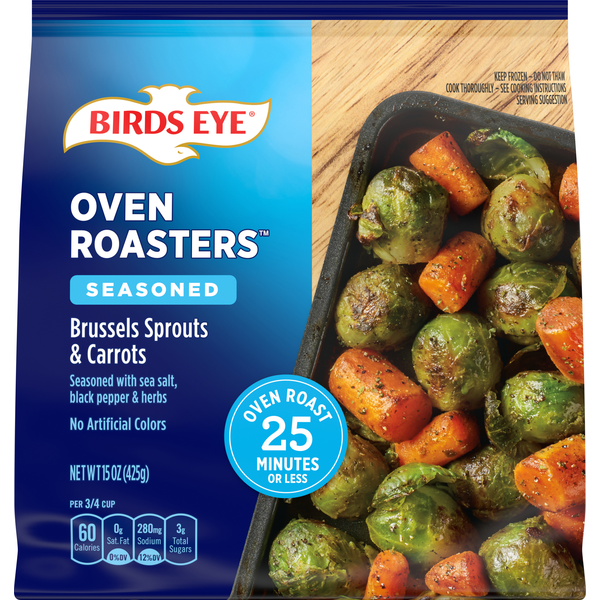
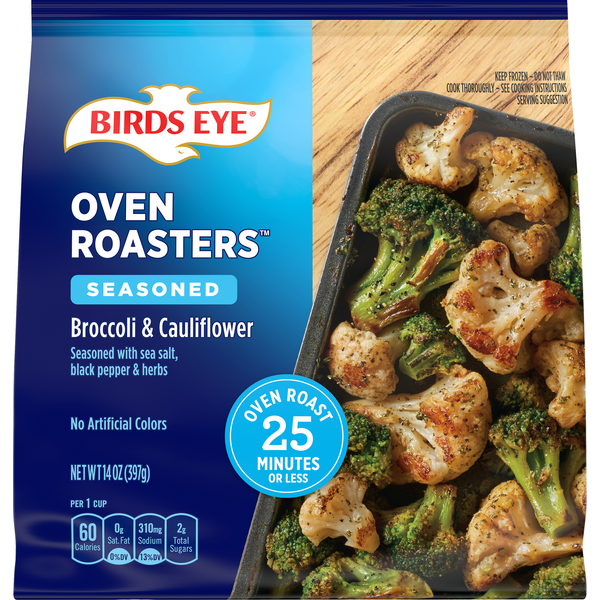
I use the Birds Eye Oven Roasters vegetables because they are pre-seasoned and thoroughly delicious, the Campbell’s Healthy Request cheese soup because it has half the fat and sodium content of regular cheese soup, and the smallest possible can of French-fried onions so the calorie count doesn’t create too many shock waves.

The recipe makes approximately 6 servings. Leftovers will last in the fridge for up to 4 days or can be frozen for up to 3 months.

Ingredients

  • 15-ounce bag Oven Roasters seasoned brussels sprouts and carrots
  • 14-ounce bag Oven Roasters seasoned broccoli and cauliflower
  • 10-ounce can Campbell’s Healthy Request cheddar cheese soup
  • 2.8-ounce can French fried onions

Directions

Thaw frozen vegetables in the microwave by heating the brussels sprouts and carrots on HIGH for 4 minutes, then adding the broccoli and cauliflower and heating on HIGH for another 4 minutes.

Add cheese soup and stir until all vegetables are thoroughly coated.

Pour into baking dish and bake in 375-degree oven for 25-30 minutes, or until vegetables are of desired softness when tested with a fork. (For slightly al dente vegetables, bake for the shorter period of time.)

Top with French fried onions and bake for an additional 5 minutes, or until onions are golden brown.

Nutrition Information

Serving size: 3/4 cup | Calories: 210 | Carbohydrates: 18 g | Protein: 5 g | Fat: 12 g | Saturated Fat: 2 g | Cholesterol: 0 mg | Sodium: 750 mg | Potassium: 550 mg | Fiber: 4 g | Sugar: 4 g | Vitamin A: 18% | Vitamin C: 0% | Calcium: 2% | Iron: 2% 

God’s other book: Roses, roses

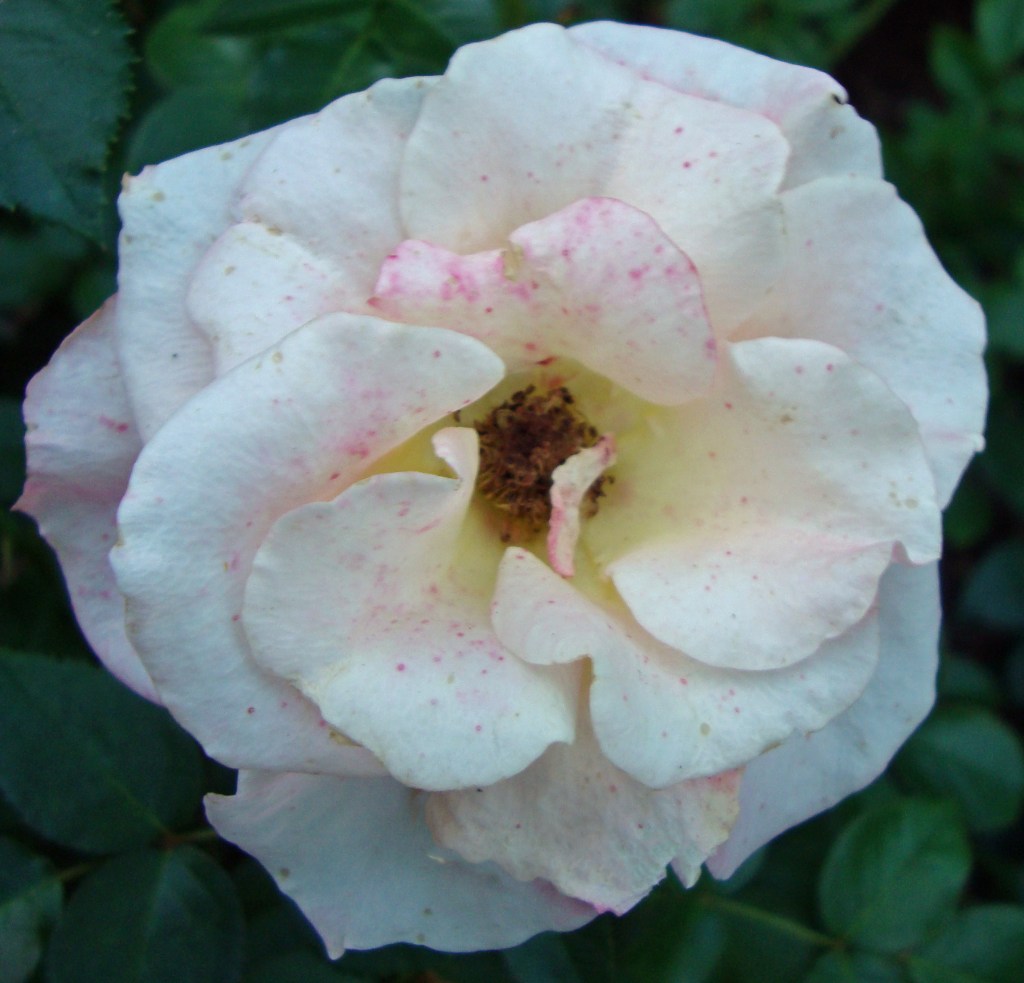
One of the things I’ve missed most about in-person Sunday services at our church is my weekly stroll in the rose garden just outside the back door during our after-service fellowship hour.

The rose garden was lovingly created by two men in our congregation, in memory of wives gone much too soon. A wonderful tribute!

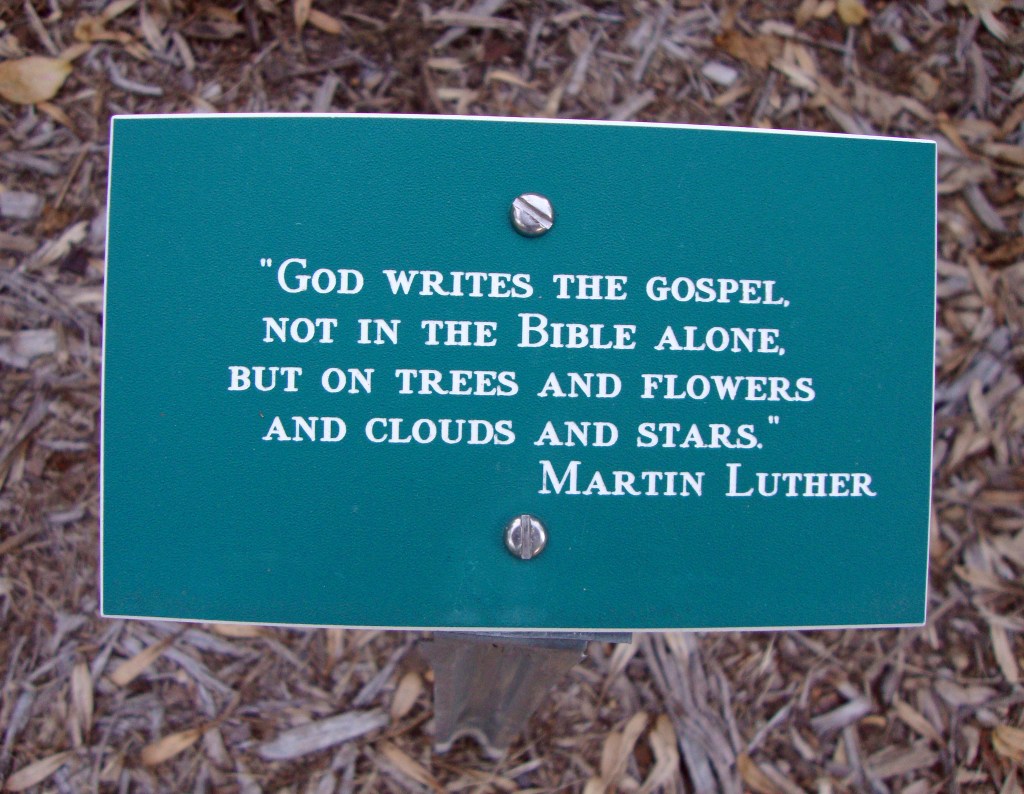
Tucked in among the roses is a plaque reminding us of who is really responsible for all this beauty, and another quoting Martin Luther, who seemed to share my perception about God being immanent in all of creation.

A de facto theist

Note: I’m taking a short break from writing in July to focus on another project, so for this month, I will re-post some of my personal favorites from earlier days when I only had a dozen or so people following my blog. This was first posted in June 2018.

Science has not been able to prove there is a God, but it hasn’t proven there isn’t one either.

Modern science says the universe started with a Big Bang. But if the universe indeed started that way, who or what caused the Big Bang to happen? Who or what created the original matter involved in the Big Bang?

Scientists promote the theory of evolution to explain how life on earth in all its amazing forms developed. But if evolution is indeed a valid concept, who or what created the initial life form that evolved into other life forms?

One geneticist even claims there’s specific gene, VMAT2, that predisposes some people to have spiritual or mystical experiences. But if we have a β€œGod gene,” who or what put it there?

According to astronomers at Ohio State University, the Milky Way contains more than 200 million stars, and there are more than 100 billion galaxies in the observable universe. Science Daily reports that the earth contains more than 8.7 million species of plants, animals and other living organisms. Could all of that have really happened through a coincidental fluke?

I often feel the presence of a God in the changing seasons.

I’ll never forget riding along a thoroughfare through Atlanta one Easter Sunday with my husband and his parents. A profusion of trees and vines bloomed simultaneously: dogwoods, redbuds, wisteria, peach trees. Each side street treated us to a riot of color: white, pink, purple, yellow, red. Nature’s fireworks, I thought. Each time we encountered another side street, we’d say in unison, β€œOoo! Ahh!”

In the summer, I can sit in our backyard swing and gaze upon a lush green carpet of grass, interspersed with the vibrant hues of my flower beds. Hummingbirds hang suspended in mid-air, their tiny wings moving so fast they appear to not be moving at all while they sip nectar from bright red bee balm blossoms. Cicadas sing in harmony in the twilight. Fireflies flick their tiny lights on and off. Butterflies flit from bloom to bloom. Life asserts itself even in the face of lingering drought.

I recall taking a twilight walk one beautiful fall day when I suddenly stopped short. Before me stretched a scene that prompted me to gasp. The leaves had turned yellow-brown-orange-crimson, and light from the setting sun bounced off the tops of the trees in even more vivid colors. The sky competed with the leaves for sheer outrageousness, with the sun painting the clouds red, orange, yellow and pink. A still-warm breeze blew across my face. I had to extend my walk by several blocks so I could drink it all in.

Even the winter can be pretty. As I sit in front of the fireplace in my β€œswaddling clothes” (flannel nightgown, sweatpants and blanket), feeling warm and protected, a delicate coat of snow covers the tree branches. Perched in the middle of the pear tree in our backyard, a pair of cardinals add tiny splashes of color to a black and white landscape. One of my cats settles in my lap, purring loudly as I stroke his fur.

In my mind, Someone or Something had to create all this extravagant seasonal beauty.

I think about the miracle of birth. We start with one cell, then two, then four, then eight. At some point these cells know to differentiate into brain cells, heart cells, blood cells, muscle cells. How do these cells know to do this? If our cells are programmed this way, then who or what programmed them?

I think about the magnificent way our bodies are made. According to the Scientific American Book of the Brain, an adult brain, which weighs about 3 pounds, has more than 100 billion cells. The Franklin Institute says that in an average person’s lifetime, the heart beats more than two and a half billion times, pushing blood through more than 60,000 miles of blood vessels. There are 206 bones in the adult body, according to Wikipedia, including 54 bones in the hands, 52 bones in the feet and 6 tiny bones in our middle ears. According to the Human Genome Project Information Page, a human genome, which carries all of an individual’s DNA, contains anywhere from 20,000 to 25,000 genes.

As Shakespeare declared in Hamlet, β€œWhat a piece of work is man!”

β€œI will praise you, for I am fearfully and wonderfully made,” says Psalm 139:14.

I see all this as evidence of God.

From the macro (galaxies, endless galaxies) to the micro (human cells, atoms, quarks) – the universe seems too intricate and too perfect for there not to be a Creator of some kind behind it. Logic tells me the original matter involved in the Big Bang and the original life form that evolved into all the life forms we have today had to come from somewhere. Logic tells me Somebody or Something had to create the sheer splendor, beauty and intricate orderliness.

To me, the idea that everything started with a random Big Bang and that life and matter all evolved by chance is more of an intellectual stretch than the idea that there is a Creator behind it all. Who, after all, created all those laws of nature?

Albert Einstein has been quoted as saying, β€œScience without religion is lame, religion without science is blind.”

Blaise Pascal said, β€œIf there is a God, He is infinitely incomprehensible, since, having, neither parts nor limits, He has no affinity to us. We are then incapable of knowing either what He is or if He is. [So] you must wager. Let us weigh the gain and the loss in wagering that God is. Let us estimate these two chances. If you gain, you gain all; if you lose, you lose nothing. Wager then without hesitation that he is.”

That’s Pascal’s Wager, and I’m inclined to go with it.

Richard Dawkins, the author of The God Delusion, proclaims himself a β€œde facto atheist” and writes, β€œI think God is very improbable, and I live my life on the assumption that he is not there.” (I want to ask how something that doesn’t exist can have a gender. But I digress.)

I’d call myself a β€œde facto theist.” I’m inclined to believe that God exists, and I’ve decided to live my life as if there is a God and life is not absurd, but rich in meaning.

Super Me

Note: I’m taking a short break from writing in July to focus on another project, so for this month, I will re-post some of my personal favorites from earlier days when I only had a dozen or so people following my blog. This was first posted in January 2018.

My spiritual director gave me this assignment: Imagine myself in my ideal spiritual state. What does this ideal state look like?

Actually, I’ve been imagining my β€œidealized state” for most of my life. I have daydreams that would rival Walter Mitty’s about an amazing woman who, for lack of a better name, I’ll call Super Me. This marvelous creature is a slightly older version of myself, and she has her life totally under control. The Super Me fantasy is particularly potent when I’m working on New Year’s resolutions.

Not only can Super Me leap tall buildings in a single bound, she has a meticulously ordered household, with a place for everything and everything in its place – even in the garage and the basement. She frequently invites family and friends to splendid gatherings at her spotlessly clean house. She has managed to achieve a svelte figure by adhering to an eating plan that is both healthy and painless because she has re-educated her palate to prefer vegetables over chocolate covered peanut butter cookie bars and she never misses her Stay Fit exercise class even during an ice storm. She volunteers for various organizations that work to make the world a better place, and she even serves on the board of directors for a couple of them, but she never gets burned out because she’s learned how to set appropriate boundaries without people getting mad at her. Her recently published book sits atop the New York Times bestseller list. And she never loses sleep at 3 a.m. wondering who God is and what God wants from her, because she has finally discerned all the answers to life’s β€œultimate” questions.

As I write this, it occurs to me that if I really did manage to achieve this level of perfection, people might not necessarily like me. After all, I personally find other people intimidating when their lives seem too perfect.

On the other hand, I don’t think I have a thing to worry about here: I’m in no danger of achieving that exalted state anytime soon. Fortunately, I’ve learned that God loves me the way I am – not because I’m perfect, but because God is perfect. Good news, indeed, even if I have to remind myself of this from time to time.

A poem

Note: I’m taking a short break from writing in July to focus on another project, so for this month, I will re-post some of my personal favorites from earlier days when I only had a dozen or so people following my blog. This was first posted in November 2017.

3 A.M. Questions

did i remember to turn off the oven after supper

what should i wear to church tomorrow … how do we know there is only one true religion … will we go to hell if we make the wrong choice … how can i find out in time … is there a god … what if there isn’t … would that mean life is absurd … i have lived half my life already or is it two-thirds … what do i have to show for it … will i ever be satisfied with who i am … will i have regrets when my life is over … who will come to my funeral … will anyone remember me after i’m gone … why am i here … is my life absurd

how long would the oven need to be on before it catches fire and burns down the house

is the pain in my neck and shoulders from stress or am i having a heart attack … what is that noise … when did i start feeling so anxious all the time … why am i so afraid of what people think of me … what can they do to me anyway

if the house does catch on fire is the smoke alarm working

when are we going to get some rain … has climate change already begun … what can we do about it … have we already passed the point of no return … do we really need electricity and cars … do the amish have the right idea after all … is there a way to eat meat without enabling cruelty to animals … speaking of critters, will the cats be okay by themselves while we’re out of town

when was the last time i changed the battery in the smoke alarm

will social security still be around when I’m 90 or will the government allow wall street to gamble it all away … will the 1 percent grab our pensions as well … what will it feel like to be homeless when i’m 90 … does anyone else lie awake in the middle of the night asking questions like these or am i just weird … is it generalized anxiety disorder … bag lady syndrome … should i see a shrink

maybe i should just get up and check the oven

3 P.M. Question

Why can’t I be this tired at 3 o’clock in the morning??!!

Book excerpt: Clarification and some definitions

Note: This is an excerpt fromΒ We Need to Talk,Β my book in progress, which examines the polarization ripping apart our society and shares my personal search for an appropriate Christian response. For an overview of the book and to read my other excerpts, clickΒ HERE.

When I express my desire to step back from the culture wars and find less-polarizing ways of addressing societal problems, I get a pair of common responses.

Some folks who identify as progressive will say sarcastically, β€œOh, I see. You think we should all be NICE.” They practically spit out the word nice, then accuse me of wanting to look the other way in the face of injustice. Some who identify as conservative will suggest that what I really want is for everyone to simply ignore sinful behavior.

My spiritual director – a wise woman who had a talent for posing questions most people don’t think to ask – challenged me with this question: β€œWhat, exactly, do you mean by culture wars?” And this one: β€œWhat would you consider to beΒ polarizing behavior?” She made an important point. Those words may not mean the same thing to everyone who hears them.

So I’d like to clarify: When I speak of the culture wars and the resulting polarization in our society, I’m not talking about honest disagreements between people of good will who just happen to have differing ideas about the best way to resolve issues. I’m not saying we should look the other way in the face of injustice or cease discussing sin in sermons, Bible study sessions and religious education classes. I not suggesting we should retreat from the political arena, refrain from sharing opinions on social media about issues we feel strongly about, forsake our favorite causes or stop working to resolve problems such as poverty and hunger.

When I speak of the culture wars and the resulting polarization in our society, I am talking about the trolling, the name-calling, the insults, the character assassination, the demonizing and scapegoating, and the gratuitous rudeness that have become a mind-numbingly routine part of our daily conversations and social media interactions. I’m talking about activist groups doctoring videos and jerking quotes out of context to make ideological opponents look sinister, candidates for public office deliberately playing on fears and divisions to score political points and get votes, ordinary folks combing through comments on Facebook or Twitter looking for β€œgotcha” opportunities so they can pounce, and extremists phoning in death threats to people who say or do something they disagree with.

Dictionary.com definesΒ culture war as β€œa conflict or struggle for dominance between groups within a society, or between societies, arising from their differing beliefs and practices.” Wikipedia points out that β€œin American usage the termΒ culture war may imply a conflict between those values considered traditionalist or conservative and those considered progressive or liberal.” Dictionary.com definesΒ polarization as β€œa sharp division, as of a population or group, into opposing factions.” Urban Dictionary definesΒ culture warrior as β€œa member of one of the two major political tribes who have come to dominate political discussion in the U.S. with their divisive, polarizing conflict.”

A key concept for me in these definitions isΒ dominance. The competing factions in our culture wars aren’t so much concerned with actually resolving issues as they are withΒ winning – at any cost – by humiliating and annihilating people perceived to be their opponents. These β€œopponents” are no longer simply misguided or mistaken, they are stupid, crazy or just plain evil.

When I express my desire to step back from the culture wars, I also get another common response. Some equally exhausted folks enthusiastically nod their heads and suggest I should turn off the TV, log off the Internet and disengage from the larger society. Some will argue that even talking about politics or hot-button social issues is poor etiquette. That getting involved in causes is the province of people afraid to look too closely at their personal problems. That marches, rallies and boycotts are inherently divisive. That civil discussion is a waste of time since most of us already have our minds made up. That special interests control our government to the point where voting is futile, so why bother?

I would respectfully disagree with the idea of simply β€œdropping out.” The Constitution guarantees our right to petition our government for the redress of grievances. Participating in the political process is not only a right, but one of our responsibilities as citizens. Supporting a good cause with our time or money beats sitting in front of our screens mindlessly surfing the Internet or playing one video game after another. Too many problems need addressing for us to move in the direction of apathy and disconnection. WeΒ do need to stay engaged.

But could we please, please, please stop the vitriol? If we really want to change hearts and minds, we must stop the name-calling, the scapegoating and the demonizing. It’s one thing to write a politely-worded letter to an elected official. It’s another to send a profanity-laced screed containing death threats. It’s one thing to attend a candidate forum or town hall meeting and ask an intelligent question when it’s our turn to do so. It’s another to shout down a lawmaker or candidate who is trying to speak. It’s one thing to participate in a march or rally in which organizers have obtained all the proper permits. It’s another to vandalize property, set fire to a police station or bomb a clinic.  

Name-calling and other rude behavior stop genuine discussion and problem solving in their tracks. Lashing out gives others an excuse to ignore our concerns, discount us and dismiss our issues. For those of us who claim to be people of faith, spewing snarky insults gives people ammunition to call us hypocrites and declare they want nothing to do with either us or our religion. And violence only begets more violence.

In my own case, I actually have changed my mind now and then over the years, even on some fairly important issues. When I did so, it was because someone presented factual information in such a way that I could listen without becoming defensive. It also helped if the other person was willing to hear my side of the story, shared their personal experience of the issue in question, or showed me how I could come around to their way of thinking without sacrificing important values.

But I can promise I have never, EVER changed my mind about anything because someone called me names, insulted me or tried to convince me they were morally superior to me. All yelling and character assassination ever did for me was encourage me to dig in my heels or walk away. People of all political stripes have let me know I’m not alone in this regard.

In our current environment, we are so often presented with only two alternatives – be β€œin-your-face” reactionary or be apathetic. I’d like to see a third option. I’d like to see all of us eliminate the name-calling, the trolling and the flaming, and have a respectful discussion about serious issues. We need to replace our desire to be right and come out on top with a desire to solve problems. That way, instead of our side winning, perhaps we can all win.

Questions for readers: Have you found a constructive way to address pressing social issues without getting caught up in the vitriol that characterizes the culture wars?Β I’d love to hear your response to this question, as well as your comments on this article. Just hit β€œLeave a Reply” below. When responding, please keep in mind the guidelines I’ve outlined on myΒ Rules of EngagementΒ pageΒ (linkΒ HERE).

Recipe: Chicken salad

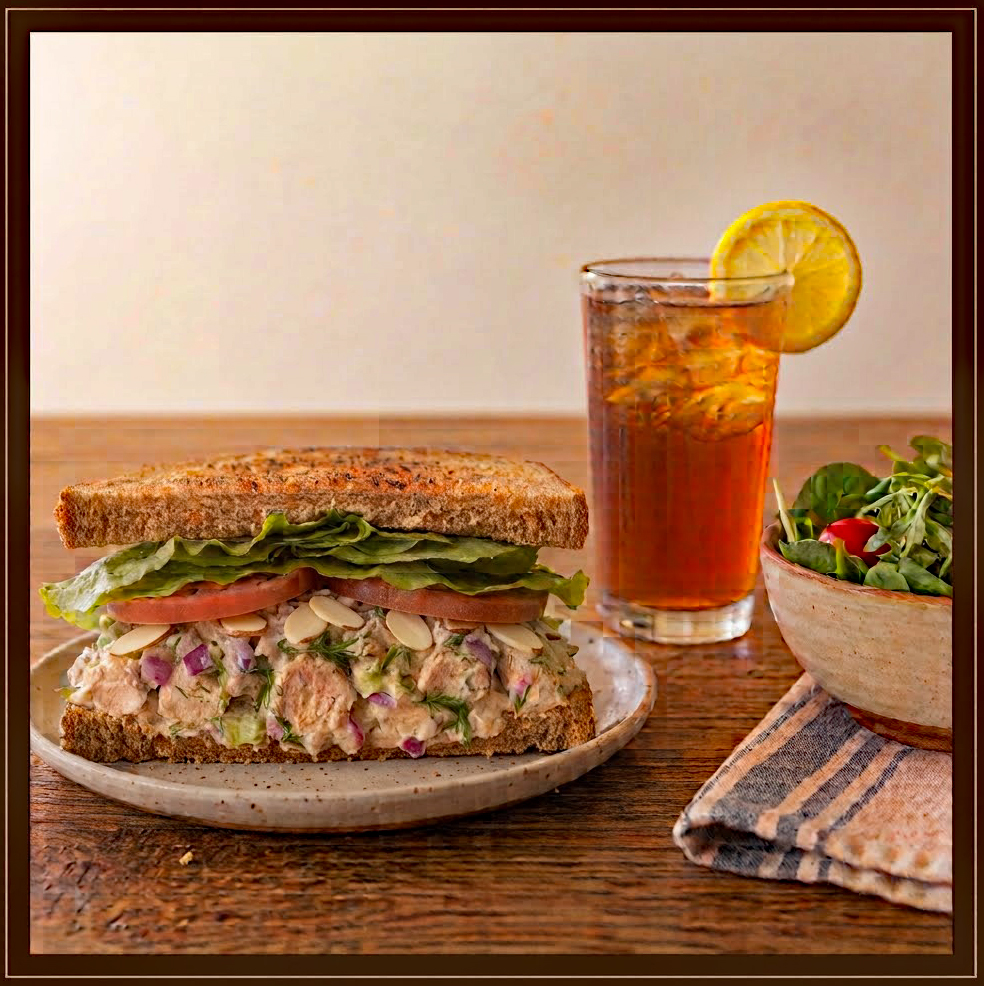
This classic comfort food is perfect for either a picnic lunch or a quick-but-healthy meal at home. It’s also a great use for leftover chicken.

I use reduced-fat mayonnaise to cut calories and fat content, and add Dijon mustard and lemon juice for a burst of extra flavor. Celery, green onions and almonds add both crunch and fiber.

I may pile a generous portion of the chicken salad onto whole grain bread or a whole grain bun for a delicious sandwich. Or I may enjoy a scoop with salad greens.

Leftovers can be frozen for up to two months or will keep in the refrigerator for up to four days.

This recipe makes four 3/4-cup servings.

Ingredients

  • 2 cooked boneless skinless chicken breasts
  • 3/4 cup reduced-fat mayonnaise
  • 2 teaspoons Dijon mustard
  • 1 tablespoon lemon juice
  • 2 stalks celery
  • 2 green onions
  • 1/4 cup unsalted sliced almonds
  • Ground black pepper to taste

Directions

Dice or shred the chicken, dice the celery and thinly slice the green onions. Combine, add almonds and stir until well blended.

In a small dish, combine the mayonnaise, mustard, lemon juice and black pepper and stir until well blended before adding to the chicken mixture and blending well.

If you wish, chill in the refrigerator for an hour or so before serving.

Nutrition information

Serving size: 3/4 cup | Calories: 240 | Carbohydrates: 9 g | Protein: 17 g | Fat: 14 g | Saturated Fat: .5 g | Cholesterol: 45 mg | Sodium: 350 mg | Potassium: 230 mg | Fiber: 2 g | Sugar: 0 g | Vitamin A: 4% | Vitamin C: 6% | Calcium: 2% | Iron: 4% 

God’s other book: Emerald magnificence

In 2010, my husband and I took an unforgettable trip to Ireland.

The first thing I thought as Pete and I traveled through the extravagantly lush countryside: “I can sure see why they call this place the Emerald Isle.”

The green seemed unusually vivid as we rode in a fabulous jaunting car in Killarney National Park.

We gawked at lovely lakes and rolling hills outside Killarney.

Castles like this one in County Kerry were tucked into the green landscape everywhere.

Of course we visited Blarney Castle (below).

Here’s the view from a window inside Blarney Castle.

We got to drink in plenty of other gorgeous colors as well. Like yellow. Whole fields of yellow. These flowers, called furze or gorse, were thick on the landscape all over Ireland.

Purple and white heather also added color to the countryside.

Even the horse farm we visited was lush.

The horse farm included a Japanese garden.

Alas, there was not as much green in Dublin, but we did get to meet this pigeon. Some things are the same everywhere.