Unknown's avatar

About seriouslyseekinganswers

I am on a spiritual journey in which I'm questioning everything I think I know.

God’s other book: February friends

We hadn’t gotten much snow at all for most of this winter. Just a dusting or two. But the month of February made up for lost time – two major snowstorms just a few days apart.

What I really love, in addition to the beautiful scenery, are those hardy wildlife friends who stick around for the winter rather than flying south or hibernating out of sight.

They are brave …

Good thing God gave all those little birds some warm feathers and outfitted the squirrels with fur coats. Brrrrr!!

Book excerpt: Creating God in our own image

Note: This is an excerpt from We Need to Talk, my book in progress, which examines the polarization ripping apart our society and shares my personal search for an appropriate Christian response. For an overview of the book and to read my previous excerpts, link HERE.

During my participation in Bible study groups, 12-Step meetings and spiritual direction sessions, I have frequently been encouraged to evaluate different concepts of God. Most discussions have tended to focus on a pair of competing images – Loving God versus Angry God.

The benevolent Loving God provides for our every need and wants us to love and care for each other. John 3:16 tells us God “so loved the world, that he gave his only begotten Son, that whosoever believes in him should not perish, but have everlasting life.”

The Angry God of my childhood understanding, on the other hand, was a short-tempered bully who frankly hated people and regretted having created us. This ‘God’ reserved an especially hot place in you-know-where for kids who asked “Why?” when told by an adult to do something.

Critically evaluating the ideas we hold about God can be a valuable exercise. Many of us who grew up with the image of a perpetually angry and capricious bully have benefitted from advice often heard around the tables at 12-Step meetings: “It may be time to fire the ‘God’ of our childhood understanding and meet the real one.”

Lately, I’ve noticed another “God” wreaking havoc in the U.S.: The Culture Warrior God. This false god, I’ve come to believe, is responsible for fueling much of the toxic polarization in both our churches and our secular society.

CULTURE WARRIOR GOD appeals to our self-righteous instincts and our resentments, as well as our desire to fit in with peers. This god has many faces:

  • The god who plays favorites. Culture Warrior God favors one special group of people over all others, and – by some stroke of luck, coincidence or superior righteousness – the favored group just happens to be the group we belong to or identify with. This group may be our own church congregation or denomination. (Not to worry: Culture Warrior God assures us that members of those other denominations aren’t real Christians anyway.) But the favored group may also be a nation, a racial or ethnic group, a political party or followers of an ideological movement.
  • The god who dabbles in politics. Culture Warrior God just happens to be a card-carrying member of our own political party or ideological camp and – to make it easier for us to conflate our religious beliefs with our political agenda – has personally authored a creed that includes 650 boxes for us to check. We may suspect parts of the “creed” were developed by bending and twisting Biblical teachings until they conform to our political party’s platform. But if this editing process makes us nervous, it’s best not to say anything, lest we be cast into the outer darkness for eternity. Or canceled by our peers in Culture Warrior God’s chosen group. (Peer pressure is certainly not limited to junior high school.)
  • The god who hates Those People. Culture Warrior God encourages us to reject and condemn anyone who votes for the wrong candidate in an election, refuses to check every single one of the above-mentioned 780 boxes, or otherwise fails to look, act and think the way we do. One way to hold these nefarious transgressors accountable is to publicly call out their sins on a social media site such as Facebook or Twitter and invite others to pile on. Yes, we know the Bible says that all have sinned and fall short of God’s glory, and only those who haven’t sinned should cast stones. But Culture Warrior God assures us that Those People’s sins are WAY more egregious than our own. Besides, stone-casting helps signal to our peers how virtuous we are.
  • The god whose “messengers” mustn’t be questioned. If the leaders of Culture Warrior God’s chosen group say something is true, then it’s true. Period. Never mind if the Bible says something a bit different. We must never challenge even one of the 870 boxes we are asked to check as a condition of sitting at the popular kids’ table. (Ever notice how the number of boxes keeps growing? Best not to mention that little detail either.) Unlike the members of all those hundreds of other Christian denominations, we can trust we have the corner on the Ultimate Truth because Culture Warrior God has told us repeatedly our group is the only one that really “gets it.”

I HAVE TO ADMIT  that the contrarian in me often finds it easier to articulate what I don’t believe than to discern what I do believe. But I think I can safely say it’s time to fire the Culture Warrior God of our adult creation, right along with the Angry Bully God of our childhood nightmares.

What the many faces of Culture Warrior God add up to is a god created in our own image.

It’s tempting to believe this particular form of idolatry is limited to fringe cults like Westboro Baptist Church or white Christian nationalist movements. But if we’re completely honest, we must admit this thinking can pose a challenge for all of us, even if we identify ourselves with a traditional brand of Christianity such as mainline Protestant, Catholic, Evangelical, Pentecostal or Orthodox. And Culture Warrior God’s siren song can appeal to us whether we lean toward the conservative or progressive side of the political spectrum.

One problem is that many of us subconsciously anthropomorphize God – that is, give God human characteristics. (Does an elderly white man with a long beard and flowing robes come to mind?) We also tend to cherry-pick Biblical teachings that match our biases – whether intentionally or not – while reflexively ignoring those inconvenient passages that challenge our cherished worldview.

Given the combination of our human limitations and our human egos, is there a way for us not to create God in our own image, at least to some extent? Is there a way to avoid putting our own spin on Biblical teachings? How do we know when we – or the group we belong to – might be doing these things?

Here are some clues I’ve come to recognize as red flags:

  • When any belief system claims God favors one group of people exclusively. (If I’m interpreting Romans 10:12, Galatians 3:28 and Colossians 3:11 correctly, God does not favor any one group of people over any others.)
  • When God starts sounding too much like a conservative Republican, a progressive Democrat or a member of any other secular political party or ideological movement. (We’d do well to focus on following the Lamb, not an elephant or a donkey.)
  • When we secretly believe in our heart of hearts that our own little group of believers – out of the thousands in existence – is the only one that gets everything completely right.
  • When we choose our congregation based on how closely its interpretation of Biblical truth aligns with our political beliefs – or at least refrains from challenging them. (For the time is coming when people will not put up with sound doctrine,” warns 2 Timothy 4:3-4. “But having itching ears, they will accumulate for themselves teachers to suit their own desires.”)
  • When a group or leader discourages questions. (A group whose leaders or truth claims can’t be scrutinized or challenged is not a religion – or even a legitimate political party or ideological movement. It’s a cult.)
  • When we feel a bit too much glee at the prospect of God punishing someone who doesn’t share our views. (A former pastor at my church once observed that some people take as much comfort in the idea of certain other peoples’ eternal damnation as they do in the idea of their own salvation.)
  • When God agrees with us on every single controversial issue and disapproves of all the same people we do. (This should be a dead giveaway.)
  • When a group hands us one of those lists titled “People God Hates.” (We can confidently pitch said list in the recycle bin. ’Nuff said.)

PERHAPS ONE ANTIDOTE to our tendency to create God in our own image is a dose of humility. While I do believe there is an Ultimate Truth, no mere human being, including me, will ever have a corner on it – at least not on this side of eternity. “For now we see through a glass darkly,” 1 Corinthians 13:12 reminds us.

We can also use the mind God gave us to develop our critical thinking skills. When people say we mustn’t question God’s will, I suspect what some of them really mean is, “Don’t question my interpretation of God’s will.” Whether or not we question God’s will, we can certainly question another human being’s interpretation of it. Sometimes this is exactly what we need to do.

If we want to take the first step toward healing the divisions in our churches and our larger society, we need to stop asking, “Is God on our side?” Instead, we need to ask, “Are we on God’s side?”

Question for readers: What helps you avoid the pitfall of creating God in your own image? I’d love to hear your response to this question, as well as your comments on the article. Just hit “Leave a Reply” below. When responding, please keep in mind the guidelines I’ve outlined on my Rules of Engagement page (link HERE).

Spiritual direction: The journey continues

As I begin the new year, one of my priorities is to resume the spiritual direction journey I began nearly five years ago.

Spiritual direction is a partnership in which one Christian helps another grow in a personal relationship with God. Several factors led to my own decision to seek such direction: the transition in focus and priorities prompted by my retirement; the “time is limited” epiphany that comes with being 60-something, losing loved ones and developing chronic health problems myself; and the internal tug-of-war over my own values brought on by the increasing divisiveness and polarization in our society.

For three years, I met monthly with my spiritual director for one-hour sessions in which we discussed everything from trying new prayer techniques to eliminating clutter to improving creativity. Sister M. offered a variety of suggestions for homework assignments, allowing me to choose which ones I might find most helpful. Sometimes she would have me write my thoughts about a topic. Other times she might have me create an image, or take my camera and go for a walk. She recommended various reading materials as well.

Then the COVID-19 lockdown commenced in March of 2020 and put a stop to any face-to-face meetings. Six months after that, sadly, Sister M. died. While I found her homework assignments and reading suggestions enormously helpful, what I found most valuable of all was her completely nonjudgmental attitude as I grappled with questions some would say I shouldn’t even be asking. And I know she would want me to continue my journey.

So a month ago – after a hiatus of more than a year – I had my first session with Sister K., my new spiritual director. To help us get started, I’ve written an overview of what I worked on with Sister M., where I am right now and where I want to go from here.

These are some of the main issues Sister M. and I worked on:

  • Doubt. For most of my life, I had been pretty sure there was a God. Yet, nagging doubts about God’s existence continued to creep in from time to time. Sister M. allowed me to discuss this issue frankly and honestly – without passing the slightest hint of judgment.
  • Prayer. We explored a variety of prayer techniques, some familiar and others new to me. Among them were meditation, prayers of petition and intercession, prayers of thanksgiving, writing and journaling as a form of prayer, nature prayer, and practicing better mindfulness in church. For more detailed descriptions of our work on prayer, click HERE and HERE.
  • Clutter. We discussed how to eliminate clutter of all kinds, from the physical clutter in my house to my overloaded and chaotic schedule to the various kinds of spiritual clutter that distracted me from my priorities and threatened to crowd attention to God out of my life. Click HERE to see a fun and illuminating homework assignment Sister M. gave me.
  • My writing. From age 10 onward, I’d dreamed of writing a book. More than 50 years later, that goal was … still on my bucket list. So, with encouragement from Sister M, I decided it was time. My book – with the working title We Need to Talk – will examine the polarization ripping apart our society and share my personal search for an appropriate Christian response.
  • A toxic situation. For several years I had dedicated an average of 5-10 volunteer hours per week to a local not-for-profit organization and contributed hundreds of dollars. While not church-related, the organization served a cause dear to my heart, and I had previously thought nurturing its development might be a significant part of God’s plan for my retirement years. However, warring factions within the organization seemed more focused on vanquishing each other than they were on the mission, and I needed to make a decision about my continued involvement.

For a while, my spiritual progress felt agonizingly slow – at least to me. But when I step back and look at the whole three years, I realize I’ve actually made quite a few strides. I’ve also gotten much more comfortable with the idea of incremental progress. Baby steps, Sister M. would say.

Here’s where I am right now:

  • Reassurance. I’ve discovered that going outside is something I can easily do whenever I encounter those pesky doubts about God’s existence. I can watch sunsets. Listen to cicadas. Smell flowers. Take a walk and feel the breeze against my face. Experience evidence of God with all my senses. (Click HERE to read my post about nature prayer.) For me, finding a way to effectively address my occasional doubts has been huge.
  • Regular meditation. I had already developed a morning meditation ritual – sitting in my recliner in front of the fireplace with a cat in my lap and a cup of coffee by my side while I journaled about my priorities for the coming day. I’ve now added evening meditation as well, and I’ve become much more disciplined about including at least one meditation session per day. Click HERE to read my post about meditation.
  • A clean house. Sister M. recommended I devote one hour – and only one hour – each weekday to sorting through “stuff.” While I haven’t yet tamed all the clutter (I still have several boxes marked “miscellaneous” in the basement waiting to be sorted), my house at least looks presentable most of the time.
  • An abundance of writing. Since beginning my spiritual direction journey, my creativity has soared. I’ve posted more than a hundred entries to my blog and have written several book excerpts. To read about my book project, along with some excerpts, click HERE.
  • Photography. As I engaged in nature prayer, I also acquired a new hobby – photography. I even invested in a new camera with a 40X zoom, which has allowed me to capture stunning close-up photos of birds and other wildlife. For the past couple of years, I’ve been posting some of my favorites on my blog under the heading “God’s Other Book.” For examples, click HERE and HERE.
  • Freedom from abuse. After five years of relentless conflict and escalating abuse at the above-mentioned organization where I volunteered, I had to admit the organization’s dynamics were never going to change. And no matter how worthy the cause, I was doing untold damage to both myself and my other relationships by continuing to participate. With much sorrow, and after consulting with my spiritual director, my pastor and a valued mentor, I walked away. Summoning the self-respect and courage to walk away from an abusive situation was an enormous step for me.

So what’s next, as I resume my spiritual direction journey? Mostly, I’d like to maintain and build on my progress. Here are some things I’d like to focus on:

  • Surviving COVID-19. I need to figure out how to live with this never-ending pandemic. I’m slowly beginning to grasp the reality that things aren’t getting “back to normal” anytime soon – if ever – so we all might as well adjust to “the new normal.” What should that look like? How do my husband and I continue to have useful, worthwhile and abundant lives while at the same time protecting our own health and the safety of others?
  • Self-care. 1 Corinthians 6:19 reminds us that our bodies are the temple of the Holy Spirit, and my medical adventures of the past few years have sent an unmistakable message that I need to take better care of mine. Toward that end, I’ve been experimenting with recipes designed to make healthy eating more enticing. After much adjusting and tweaking of ingredients, I’ve managed to come up with a few recipes that I share on this blog from time to time (examples HERE).
  • Values clarification. From the beginning, I have been questioning all kinds of dogma, from the spiritual and religious to the political and ideological, and I would like to continue this discernment process. For me, this has started with questioning a lot of things I thought I knew, along with values other people – whether liberal or conservative – want me to hold. I want to develop a value system that both my rational mind and my conscience can accept, rather than simply parroting a set of values that will let me fit in chameleon-like with my peers and surroundings.
  • My writing. I want to keep working on my book. The excerpts I’ve written so far have outlined why I think our society’s culture wars are so damaging. As I keep writing, I want to focus on additional questions: How do we engage people who disagree with us, while keeping in mind God’s commandment to love our neighbors as ourselves? Even if we think someone’s values are totally wrong, how do we change hearts and minds if we demonize certain people and won’t have anything to do with them? And perhaps more importantly, how do we as Christians avoid becoming part of the problem as our society grows ever more partisan and angry?
  • Service to others. For the past couple of years, I’ve participated in our church’s community service committee, and my husband and I will soon begin teaching an adult faith formation class. We are also training to become part of the Associates Program for the Dominican Sisters in our community. Associates assist, among other things, with the Dominicans’ social justice activities. One of the things we’ll focus on as part of our training is discerning where God wants to use us next.

I’m ready to get started!

Recipe kits for your neighborhood micro pantry

About a month ago, I shared a post (link HERE) about the micro food pantries that are popping up outside churches, schools and businesses in communities around the country. The post included a list of nonperishable foods, cleaning supplies and personal hygiene items that people like to put in these miniature food pantries.

Here’s another idea for stocking your church’s or community’s micro pantry: Create the same kind of meal kits or recipe kits offered by meal delivery services such as Sunbasket, HelloFresh or Blue Apron.

I absolutely adore Sunbasket’s nifty little kits, which contain all the ingredients needed to prepare a recipe, thereby eliminating the need to run to the grocery store at the last minute for that one ingredient we need and don’t have in our fridge or cupboard.

So I got to thinking: Might a person using one of our community’s micro pantries appreciate finding a kit like this as well?

Of course, a major challenge when creating a recipe kit for a micro pantry is that only nonperishable ingredients can be used, which rules out ingredients like milk, eggs, fresh meats and most produce. But with a little ingenuity, it is possible to create a reasonably nutritious and tasty recipe using only nonperishables.

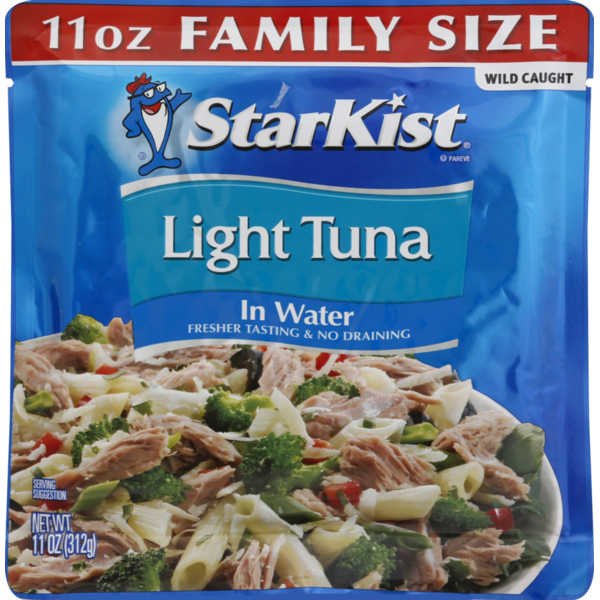
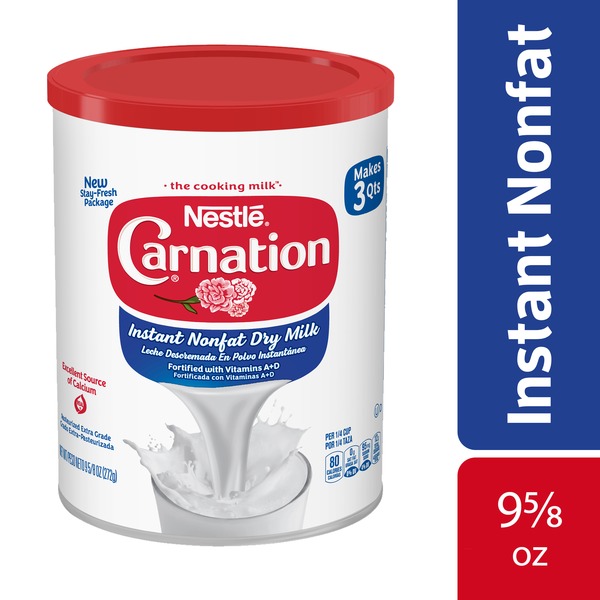
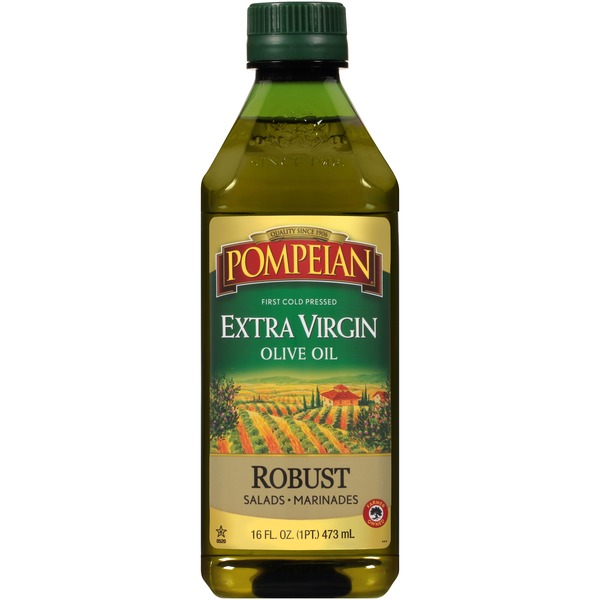
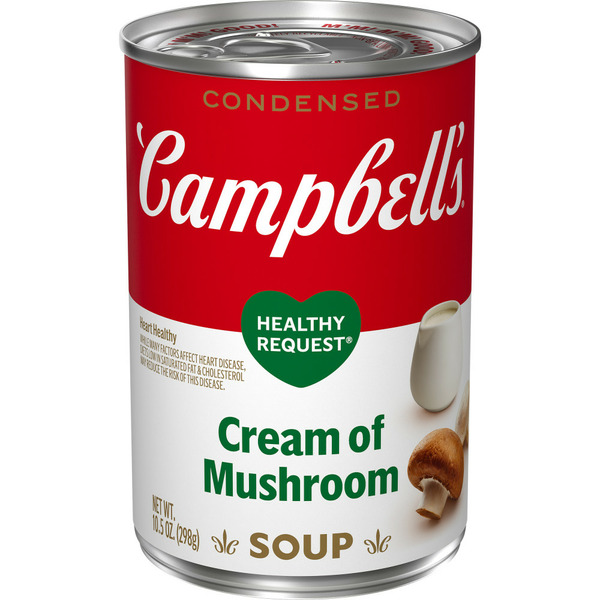
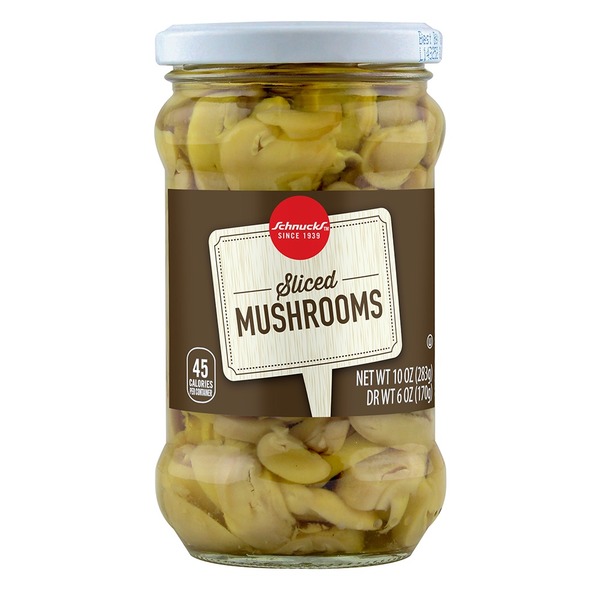
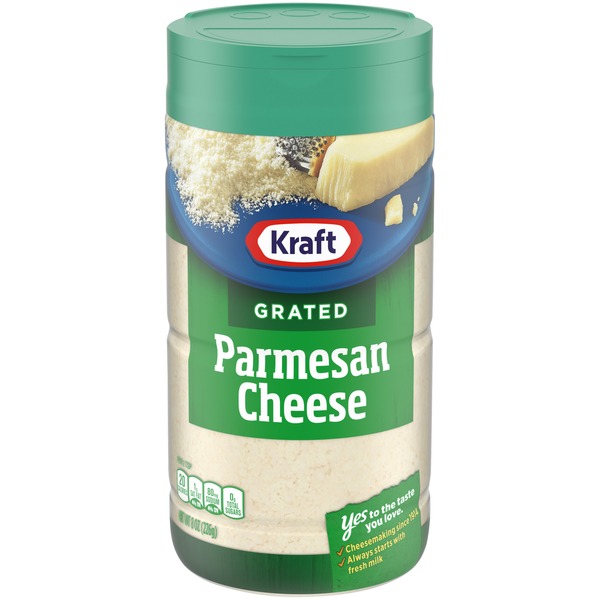
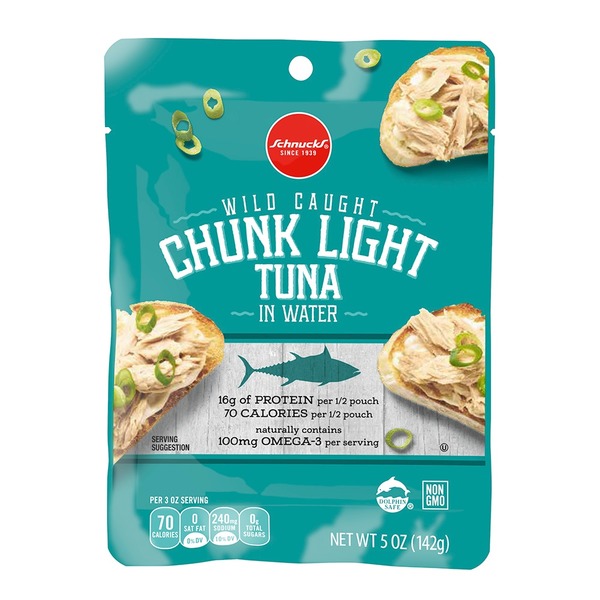
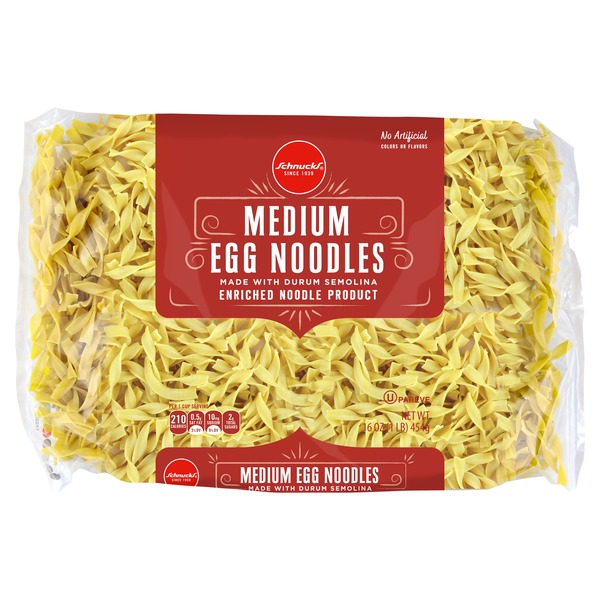
One of my favorite quickie meals at our house is tuna noodle casserole. All the ingredients for this super easy and filling recipe are nonperishable items, which makes it ideal for a micro pantry kit: a packet or can of tuna, a bag of egg noodles, a can of cream of mushroom soup, a can or jar of mushrooms and a container of parmesan cheese.

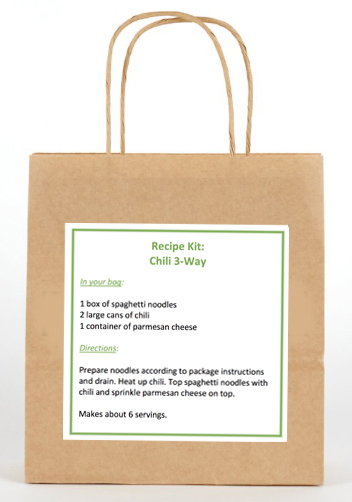
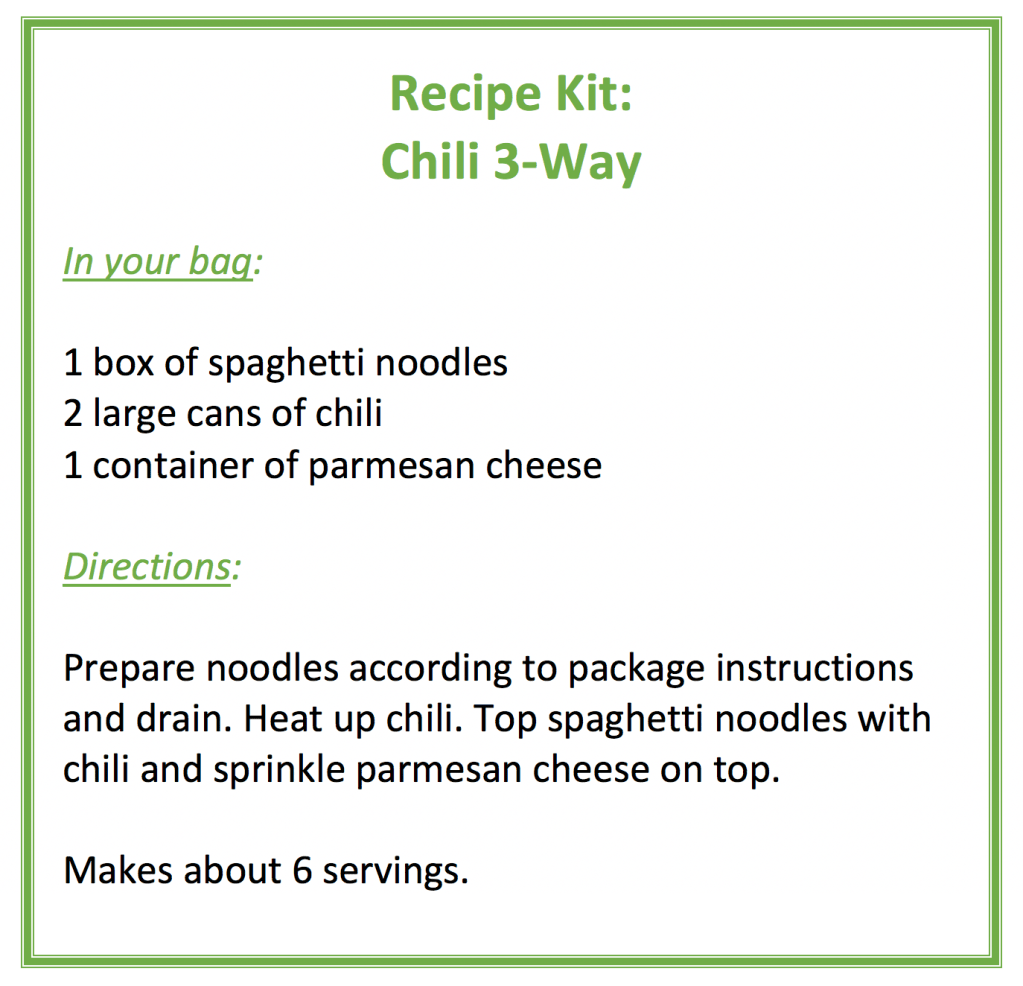
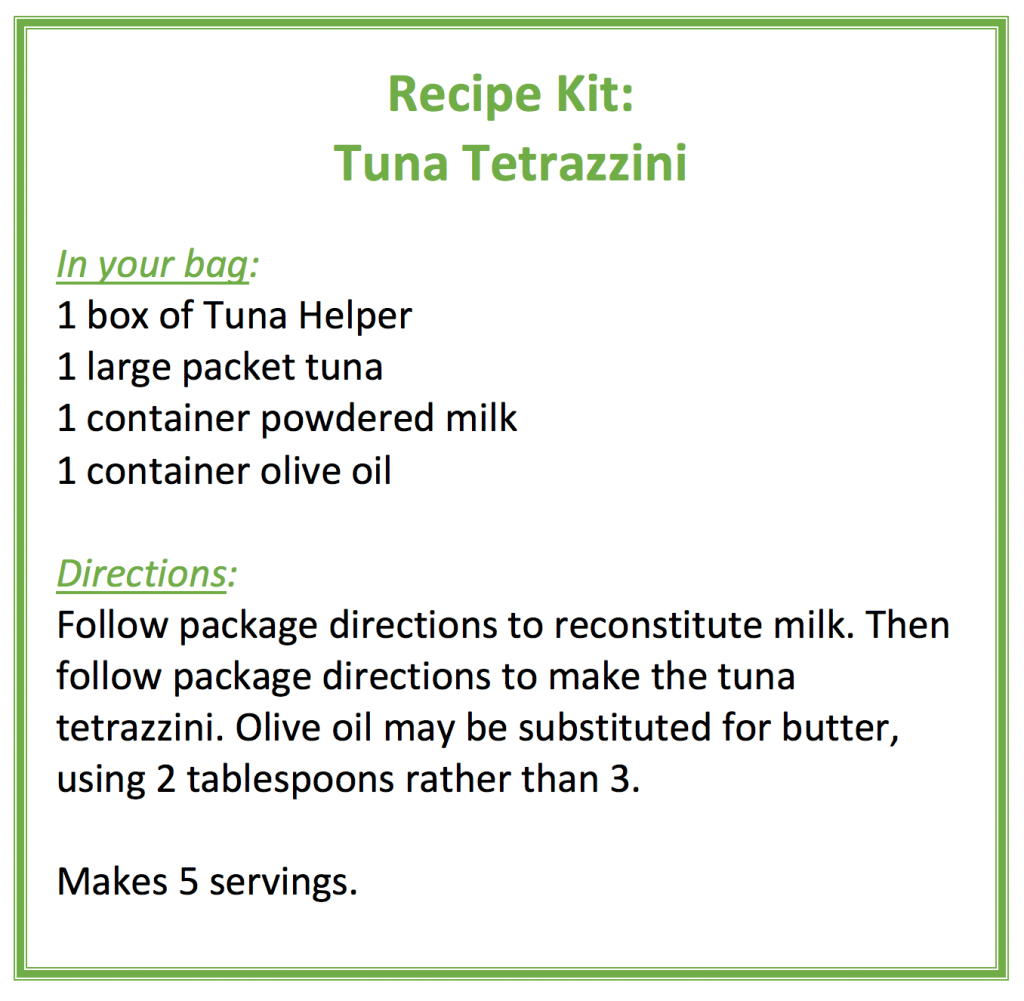
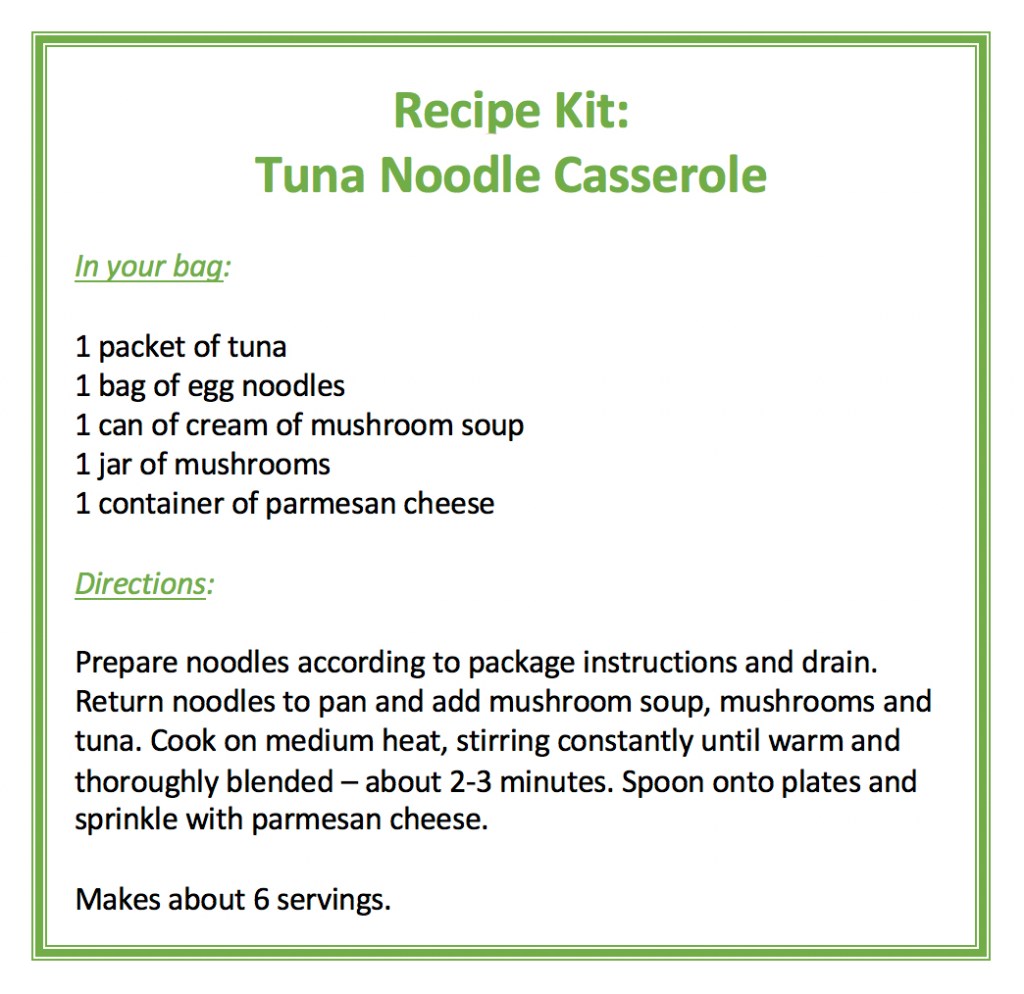
To make a kit, first create a label that looks something like this one, listing the items in the bag along with directions for making the recipe. (Note: When I make the tuna casserole recipe myself, I use a 5-ounce packet of tuna, 16-ounce bag of noodles, 10-ounce can of soup and 10-ounce jar of mushrooms, so you may want to purchase similar-sized containers of each of these ingredients for your kit in order to make the recipe work.)

Paste or tape the label to the outside of a paper bag. A plain sturdy gift bag with handles on it large enough to hold all the ingredients will work nicely.

Then just fill the bag with the recipe ingredients and place the kit in your church or neighborhood micro pantry next time you’re out and about.

If your church or civic organization wants to make this a group activity, some food pantries also welcome these meal/recipe kits. Or, if your community has several micro pantries scattered around town, you can make up several of the bags and deliver a few to each of the micro pantries.

At church, your youth group or community service committee could encourage congregation members to donate the ingredients. This project could also make a great service activity for other civic organizations you or your children belong to, such as Boy Scouts or Girl Scouts.

Our annual Christmas letter

Dear Family and Friends,

This holiday season finds us so sick of the pandemic we want to stick our fingers in our ears and scream until the frustration dissipates. And how are you??

We’re slowly beginning to grasp the reality that things aren’t getting “back to normal” anytime soon – if ever – so we might as well adjust to “the new normal.” Or – as we like to joke – “the new abnormal.” (Nobody’s ever been normal around our house.)

Among other pandemic activities, we’ve been growing ponytails. My hair hasn’t been this long since high school, and Pete’s wasn’t this long even during his hippie stage. Now that our hair has grown out, we’ve both decided we kind of like it that way. We can just stick it in a ponytail on bad hair days instead of having to fuss with it. Check out our “before” and “after” photos below.

Before

After

Despite our COVID fatigue, this Christmas is a time for immense gratitude! We survived a major scare in October that culminated in a two-week hospital stay for Pete. His heart raced along at 130-150 beats a minute for several days; he had pneumonia; and to top it off, a CT scan showed a quarter-size mass on one lung, which the doctors seemed convinced was cancer. He was admitted to the hospital for a cardiac ablation, a PET scan, a biopsy and treatment for his pneumonia. For two agonizing weeks, we both pleaded with God. Our prayers were answered. The mass on his lung turned out not to be malignant – GLORY HALLELUJAH!!!!!!!! – and the ablation procedure went without a hitch. His pneumonia is slowly healing.

Prior to the hospital stay, we were beginning to feel like characters in the movie Groundhog Day. Since Feb. 29, 2020, we seemed to be living the same day again and again … and again. Once the hospital adventure ended, however, we decided, “Groundhog Day is over!” Time to turn the calendar to a new day.

So we’re now doing something quite new and different: We’re in training to become part of the Associates Program for the Dominican Sisters in our community. Associates assist, among other things, with the Dominicans’ social justice activities. We’ve both admired the Dominican Sisters for a number of years. During our 20-plus years of working for human service agencies and teaching at Benedictine University, we saw up close the many valuable contributions they’ve made to our community – from serving as board members or in other volunteer capacities, to mentoring and helping nonprofit organizations with badly needed funding, to working with the Christian community in Iraq and Kurdistan.

We continue to be involved in our own congregation, of course, but in some rather new ways. Since COVID broke out, we’re been “attending” church online and doing book group and Bible study sessions via Zoom. Our church’s choir, which we sang in for years, is not active at this time due to safety concerns, but we’re finding other ways to contribute our time and talents. After the beginning of the year, we’ll be leading an adult faith formation class on the Ten Commandments. We’ll do this on Zoom, which means we’ll need to get up to speed on that technology. Wish us luck.

On the home front, we started growing milkweed in one of our flower beds a couple years ago and this year we got our first monarch caterpillars. Six of them!! We were so excited. We loved watching them busily munching away on the milkweed as they grew … and grew. Those little guys are voracious eaters. Then they wandered off one by one to begin their pupa stage.

But later we spotted a small flock of monarch butterflies sipping nectar from the other flowers in our yard and we like to think these were our former caterpillars. To increase the possibility that we’ll get to host lots more caterpillars next year, we’ve added several more milkweed plants to our flower beds. In fact, we’re doing our best to turn as much of the backyard as possible into a giant butterfly garden. We like to think of this project as “God’s work, our hands.”

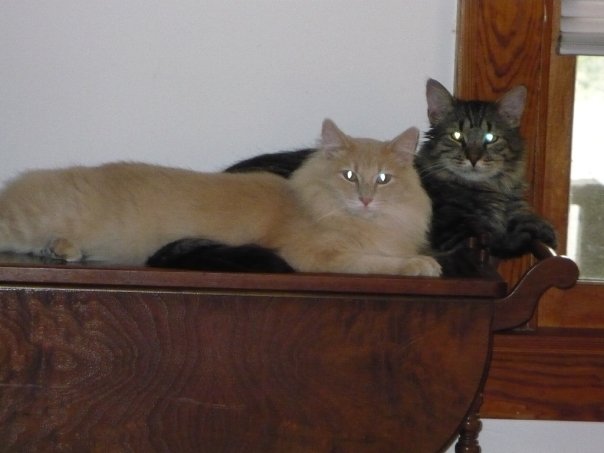
Oley and Champaign continue to be their feisty, sweet, ornery selves. So, we can’t finish up our Christmas letter without including at least a couple of cute kitty photos.

Here’s hoping everyone has a safe Christmas and an even better New Year.

Blessings,

A great giving opportunity: Micro food pantries

One of the niftier ideas to gain traction in recent years has been the micro pantry movement. We now have about 20 of these miniature food pantries scattered around our community – including one we just installed this year at our church.

Micro food pantries operate on a simple premise: “Take what you need. Leave what you can.” There are no sign-ups and no strings attached. If we are in need, micro pantries are there for us. And if we’re extra-blessed, we can help someone else.

The micro pantry movement provides another source of help for those who may be too embarrassed to seek assistance from a traditional food pantry, those who feel intimidated by the bureaucratic paperwork involved in receiving assistance from a government program, or those who don’t quite qualify for public assistance but are still strapped for cash between paychecks.

These little pantries – which have begun to pop up in communities all over the country – have also provided a wonderful low-contact, high-impact way for neighbors to help neighbors during the pandemic when more traditional, face-to-face volunteer activities have posed too much of a health risk.

Our church built our own micro pantry this year. About the size of a large kitchen cabinet, it turned out to be fairly easy to construct. Click HERE for a link to the design and instructions we used.

We placed it in a well-lit area next to the sidewalk leading up to one of our front entrances. People can safely access it 24 hours a day, seven days a week, no questions asked. Congregation members are encouraged to bring items and help keep it filled.

Once our little pantry was built, here are some examples of nonperishable items that have made great micro pantry offerings.

  • Fixings for sandwiches: Bread, peanut butter, jelly, canned tuna, canned chicken, mustard, mayo, pickle relish.
  • Canned goods: Soups and stews, chili, fruits and vegetables, potatoes or yams, corn, baked beans, jars of baby food.
  • Canned or nonperishable meats: Tuna, chicken, Spam, sardines, Hormel Compleats.
  • Boxed meal kits: Macaroni and cheese, mixes such as Hamburger Helper, pasta noodles and pasta sauces.
  • Other shelf-stable foods: Rice, dried beans, Ramen noodles, instant mashed potatoes, powdered milk, evaporated milk, powdered eggs.
  • Breakfast items: Dry cereal, prepackaged instant oatmeal, fruit juice, fruit cups, shelf-stable breakfast pastries.
  • Healthy snack foods: Crackers, granola or cereal bars, trail mix, peanuts, almonds or any nuts, P3 protein packs, jerky.

We also like to put items in our micro pantry that people can’t buy using SNAP benefits.

  • Grooming supplies: Toilet paper, shampoo and conditioner, body soap, disposable razors, toothpaste and toothbrushes, tampons or pads, baby wipes.
  • Cleaning supplies: Dish soap, laundry soap, bleach, sponges, paper towels.
  • Disposable face masks. I’ve ordered them online in boxes of 50 and put them in plastic sandwich bags in batches of 5 or 10 per bag.
  • Pet food: I sometimes even like to leave a little something for Fido or Fluffy – small cans or packages of dog or cat food.

When contributing items for the pantry, I like to leave a combination of small serving/individual-size items for single individuals, and larger economy-size items for families.

I’ve also repurposed those little packets containing napkins and plastic silverware that come in to-go restaurant orders. That way, homeless people who avail themselves of food in the pantry have something to eat it with. The sample-size soap and shampoo picked up from hotel rooms are perfect as well.

Our church’s little pantry has been getting well-used and it has been a fairly easy project for our community service committee to maintain.

Perhaps just as importantly, it has provided a great way for my husband and I and other congregation members to keep contributing to our community despite quarantining and other restrictions imposed by this endless pandemic.

This adds up to a win-win situation for everyone, giver and receiver alike.

God’s other book: Fall colors and a bit of history

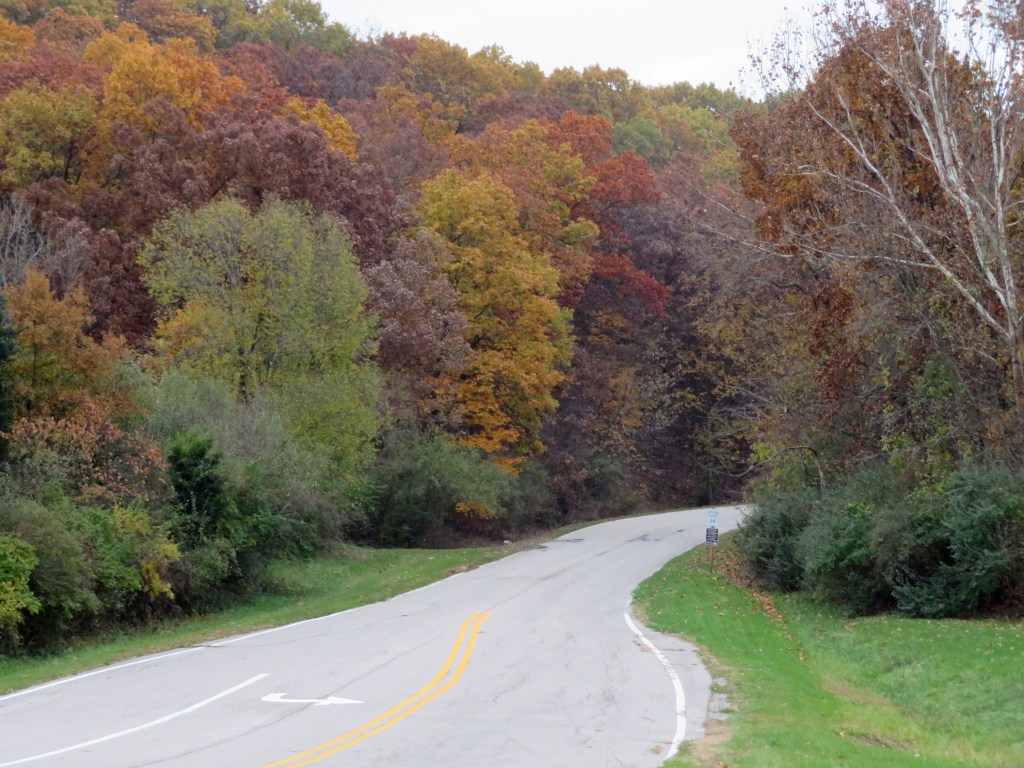
This week, both the weather and the leaves were simply too gorgeous for Pete and I to even consider staying inside. So we hopped in our car and drove up to New Salem, where we could drink in some history along with the beautiful fall colors.

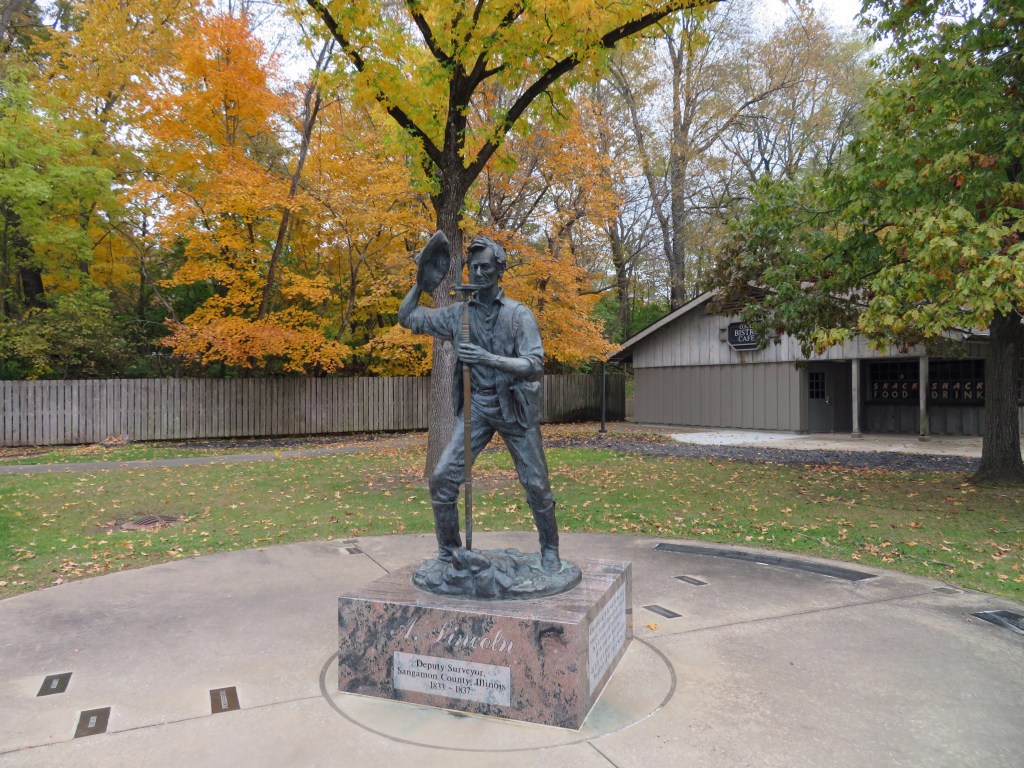
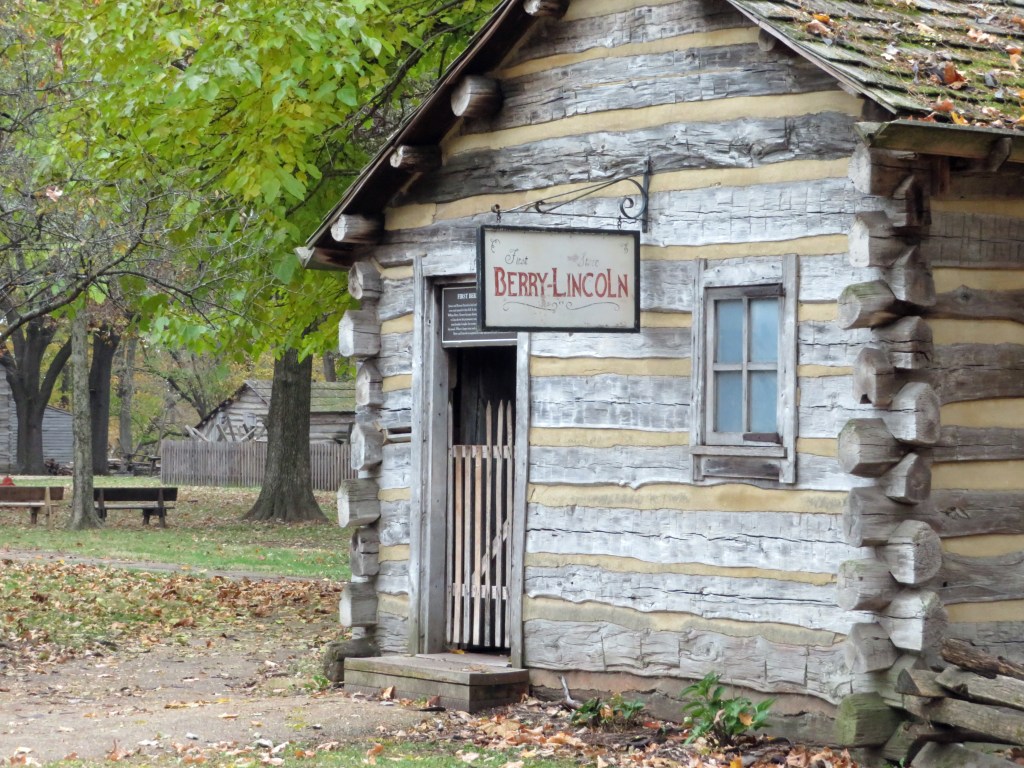
Lincoln’s New Salem State Historic Site, one of several popular Lincoln sites in central Illinois, is a reconstruction of the 1830s pioneer village where Abraham Lincoln spent his early adulthood.

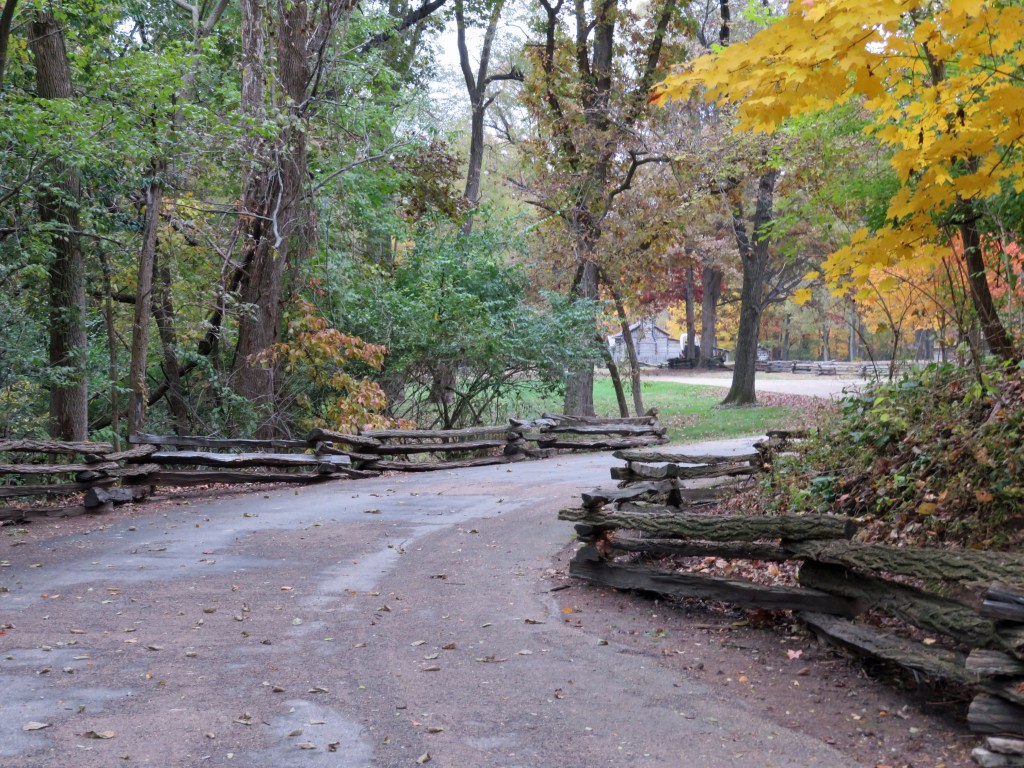
A statue of Lincoln as surveyor greets us just before we enter the village. Below is the path leading into the village, where we prepare to be taken back 200 years.

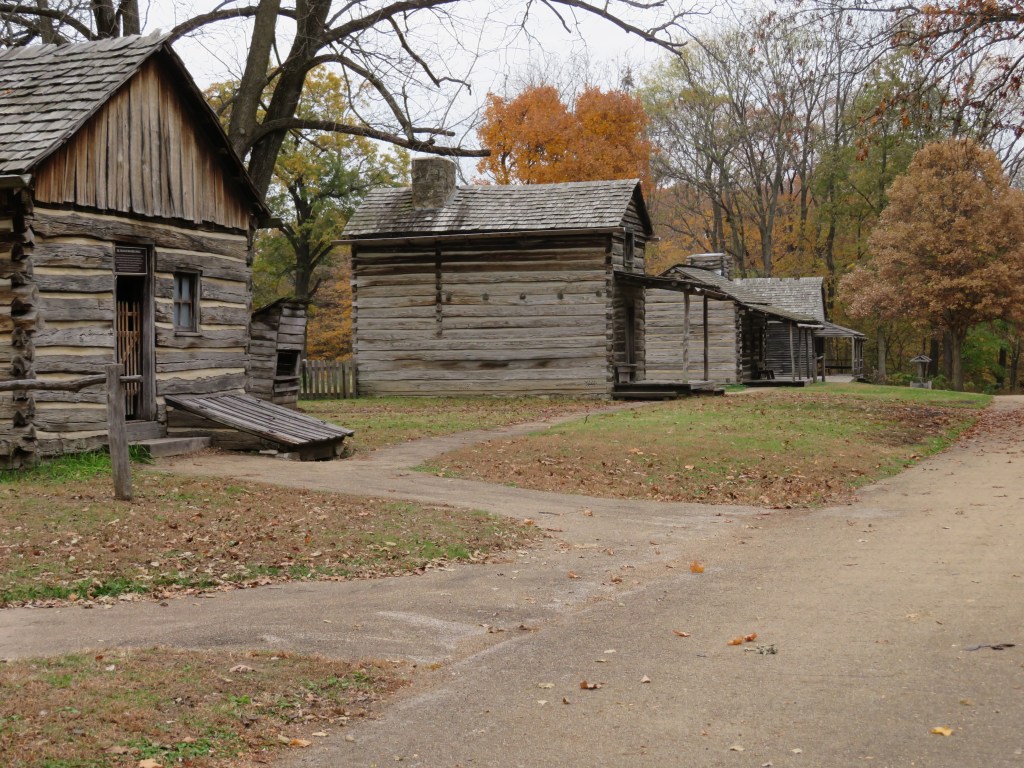
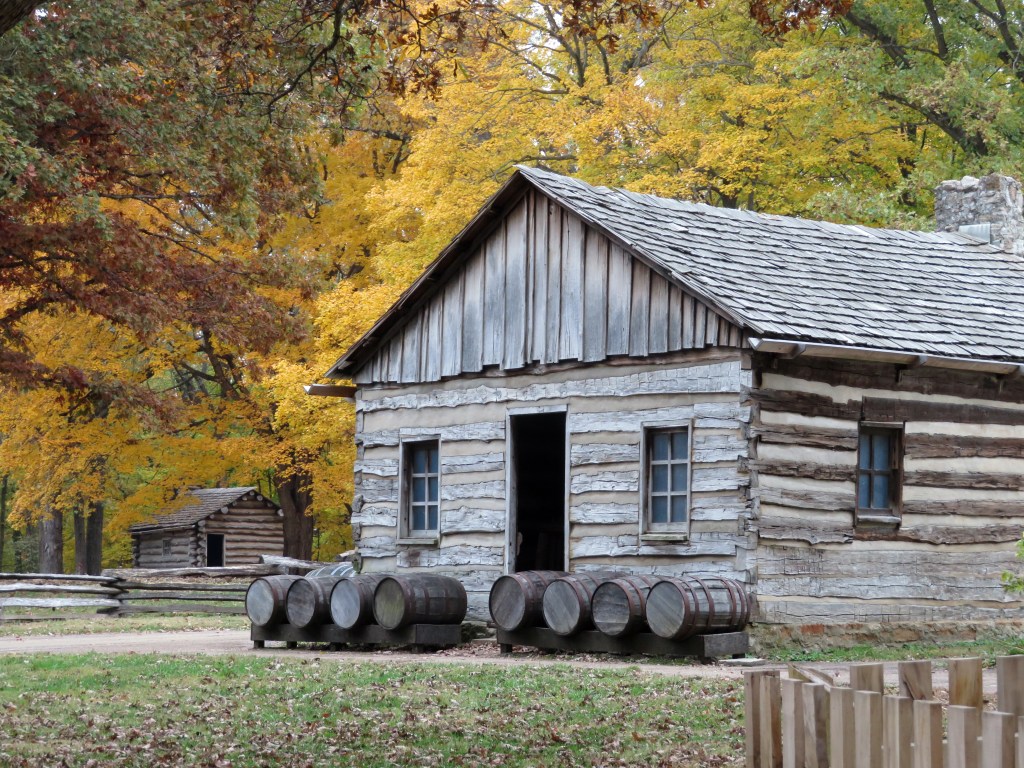
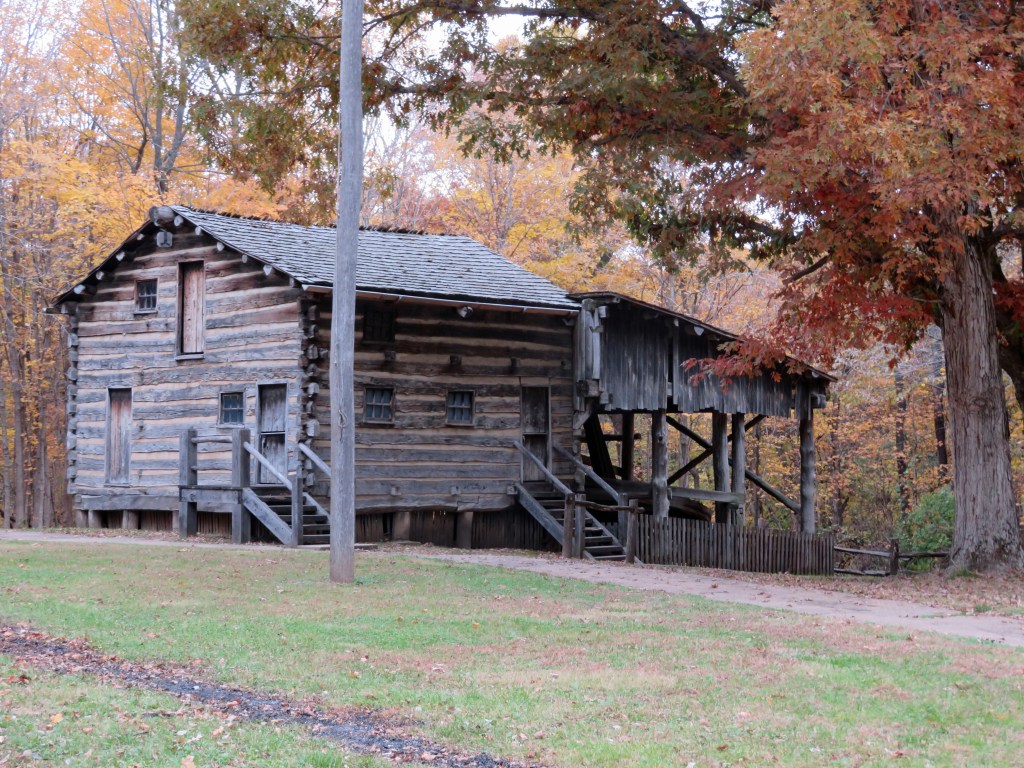
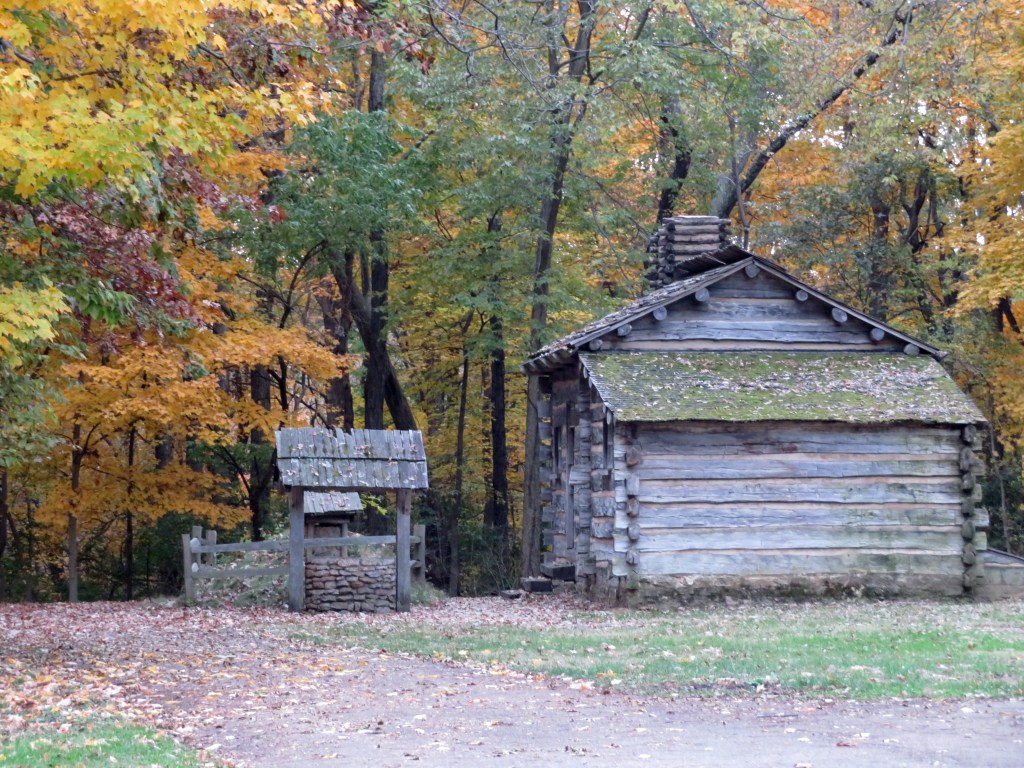
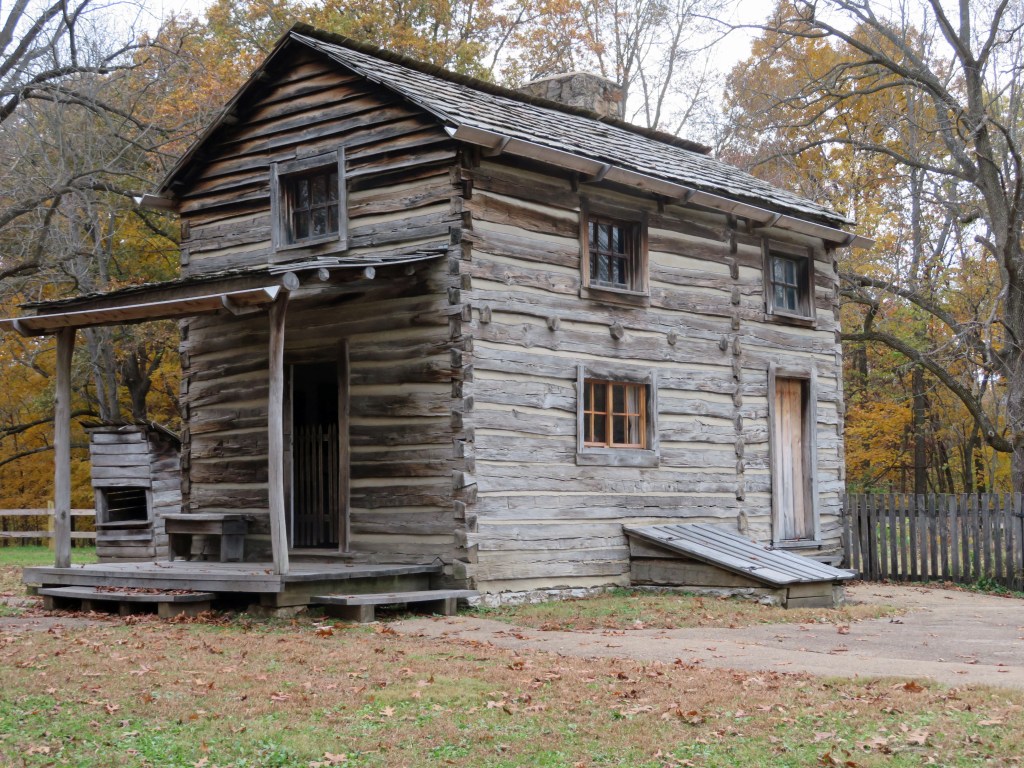
Along the path are a total of 23 cabins, shops and other buildings.

Most of the buildings contain period artifacts, many of which were gathered from descendants of New Salem residents. Lincoln’s surveyor’s tools are on display as well.

Visitors can walk at their leisure on self-guided tours through the grounds to view the buildings. Little plaques on the doors leading into each of the buildings explain their significance.

Costumed interpreters are also present in some of the buildings during the height of the tourist season, but this week, we pretty much had the place to ourselves.

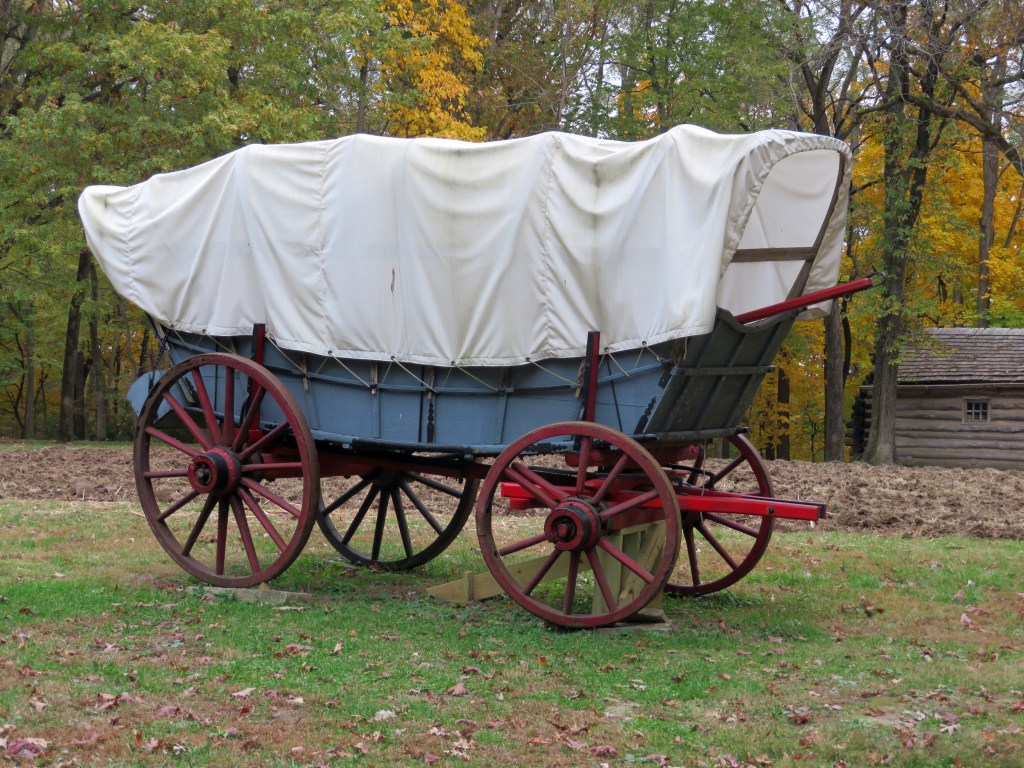
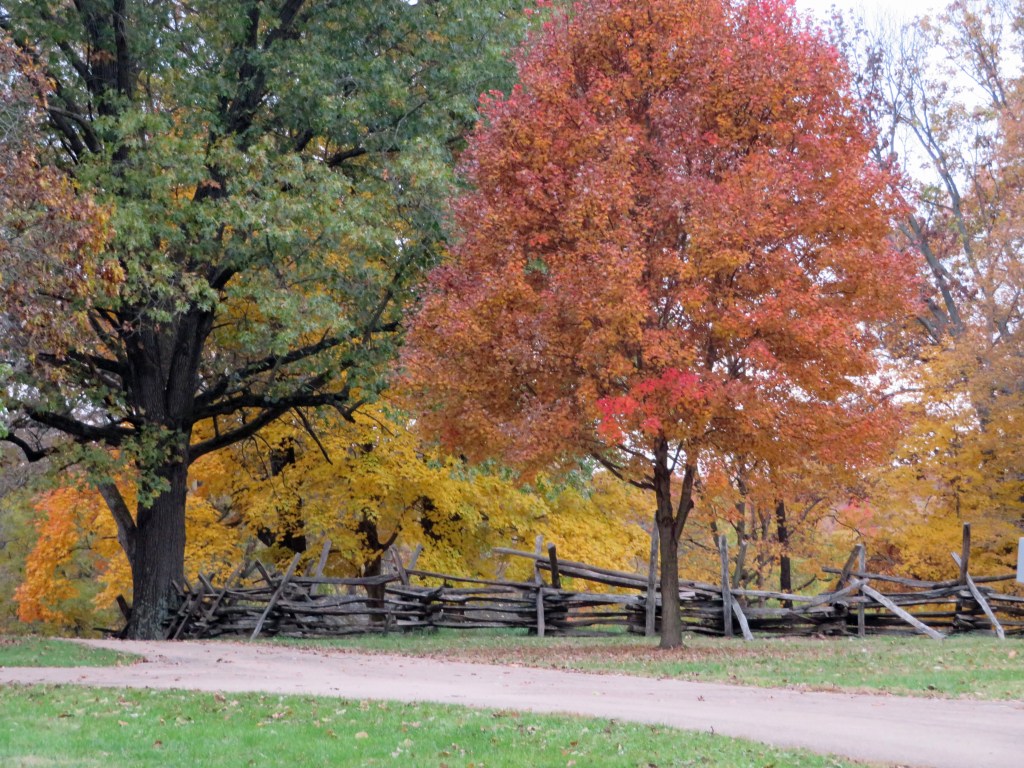
A covered wagon sits along the side of the road. Wooden fences like the one below can be seen in several places in the village.

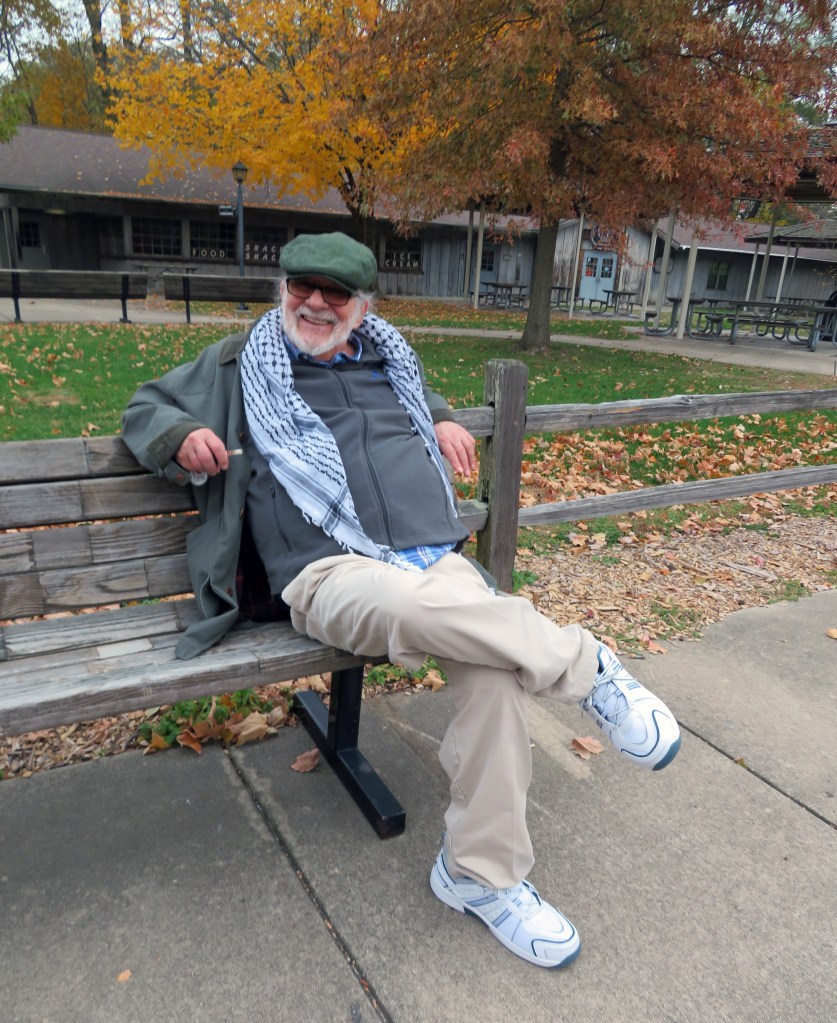
My favorite handsome gentleman posed for a photo as we got ready to leave.

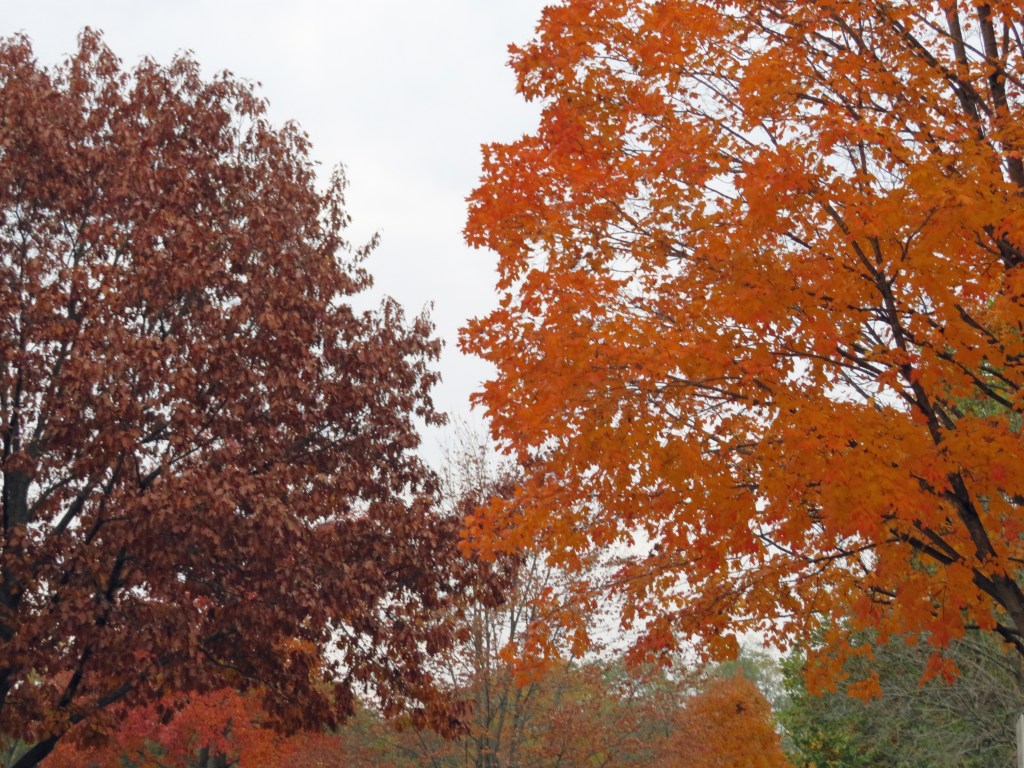
Even the parking lot was pretty, as was the scene that greeted us when we turned onto the highway and got back to the 21st century.

Our Holy Land pilgrimage: Immersing ourselves

One of the best things about the Holy Land tour my husband and I took several years ago was the chance to totally immerse ourselves in once-in-a-lifetime experiences.

These unforgettable experiences included attending a church service conducted in three languages simultaneously, taking communion on a boat in the middle of the Sea of Galilee, placing our own written prayers along with millions of others in the cracks of the Western Wall, feasting on delicious food, taking a dip in the Dead Sea and even meeting a camel face-to-face.

Above is the kibbutz where we stayed for the first part of our trip. Everywhere we went, we encountered the most amazing food. We visited restaurants with whole tables full of vegetable dishes, like the spread below. Good thing, too, because there were equally large tables full of irresistible pastries.

At one of our stops we got to meet a friendly camel. We were offered a chance to ride a camel, if we wished, but I settled for petting this one. Below, several members of our tour group took the opportunity to wade in the Dead Sea.

The Ancient Galilee Boat, above, also known as the Jesus Boat, is a first-century fishing boat discovered on the northwest shore of the Sea of Galilee. Members of our tour group shared communion in the middle of the Sea of Galilee while in a replica of the Jesus Boat, below.

For the communion service on the boat, we obtained the bread and grape juice, pictured below, from a little shop in Cana.

Several times during our trip, I found myself remarking, “This is what Pentecost must have felt like.” At each holy site we visited, we could hear tour groups, like the one above, from all over the world singing hymns or sharing devotions in every language imaginable.

On Sunday our own tour group attended a service at Christmas Lutheran Church in Bethlehem, pictured below. A German tour group was also present, along with the local church members. Everyone prayed and sang the familiar hymns in their own languages, so during the service, we could hear English, German and Arabic being sung and spoken simultaneously.

During the church service, we thumbed through a hymnbook in which we found Silent Night in Arabic. Note that the music and text are read from right to left on the page.

The “Pentecost feeling” continued at the Church of the Pater Noster, part of a Carmelite monastery in Jerusalem, where the walls are used to display the Lord’s Prayer in more than a hundred different languages and dialects. Below is the Lord’s Prayer in Hebrew and Aramaic.

Our tour group visited several programs operated by the Lutheran World Federation, including Augusta Victoria Hospital, above, in East Jerusalem. The hospital provides speciality care for Palestinians from the West Bank and the Gaza Strip. Quilts like those below, made by members of our congregation, are often sent to this hospital, and we were told the patients truly appreciate the quilts.

A special highlight of our trip was a visit to the Western Wall, below, a Jewish holy site in the Old City of Jerusalem. It has long been a practice to insert slips of paper containing written prayers to God into the cracks and crevices of the Western Wall. It is estimated that more than a million prayer notes are placed there each year. Of course, Pete and I added our own.

Our Holy Land pilgrimage: The Bible comes alive

Jerusalem … Bethlehem … Nazareth … the Sea of Galilee … the Road to Damascus.

From the time I was a child and began reading all the Bible stories, I had always visualized in my mind what these places looked like.

When my husband Pete and I checked off one of our bucket-list items several years ago and toured the Holy Land, many of these places turned out to be somewhat different from what I envisioned.

For example, the Sea of Galilee turned out to be … a very large lake.

I had always pictured Bethlehem and Nazareth as quaint little villages. While they actually were humble agricultural villages in the time of Jesus, they are now bustling densely-packed small cities of about 30,000 and 75,000 people respectively.

Modern Jerusalem did turn out to be much like I’d imagined, mostly because I’d seen so many pictures of it in the news media over the years.

Even though some of these places have changed considerably since Bible times, being there was an amazing experience. I had a sense of the Bible stories coming alive while I walked where Jesus and other people of the Bible lived and walked.

Here are some of the places we had the privilege of visiting, along with their Biblical significance.

Jerusalem

The Bible mentions Jerusalem more than any other place (about 800 times). It was the city to which Jesus was brought as a child to be presented at the Temple and to attend festivals, where he preached and healed, and where he died and was resurrected. Pictured here is a panoramic view of the Old City.

Jericho

The oldest still-inhabited city in the Middle East, Jericho is perhaps best known as the site of the Battle of Jericho described in the book of Joshua. Pictured here is the entrance to the modern city.

Bethlehem

Bethlehem is where David came from, and where he was crowned king of Israel. And, of course, it was later the birthplace of Jesus. While many of the streets of the modern city had bumper-to-bumper traffic, parts of the city actually did look like I envisioned it looking in Bible times, including the street scene here.

Nazareth

The Gospel of Luke tells us Nazareth was Mary’s home village as well as the site where she learned from the angel Gabriel that she would give birth to Jesus. Joseph and Mary resettled there with young Jesus after returning from the flight to Egypt from Bethlehem. Pictured here is a panoramic view of the modern city.

Jordan River

The Jordan River features prominently in the Hebrew Scriptures as the border of the Promised Land. The Gospels tell us John’s baptism of Jesus took place there, as did many more baptisms conducted by Jesus and his disciples.

Capernaum

According to the Gospels, Jesus made Capernaum his home during the years of his ministry. Peter, Andrew, James and John were fishermen living in the village. Matthew the tax collector also dwelt there. Pictured here are ruins of the Ancient Synagogue in Capernaum, one of the oldest synagogue buildings in the world.

Caesarea

Caesarea, once the Roman capital of Palestine, was the place where Pontius Pilate governed during the time of Jesus and where Paul was imprisoned before being sent to Rome for trial. It was also the residence of Philip the evangelist and Cornelius the centurion. Pictured here are ruins of the city’s amphitheater.

Sea of Galilee

The Sea of Galilee was the scene of many, many stories told in the Gospels about the life of Jesus. Among other events, it is where he preached his Sermon on the Mount, walked on water, calmed a storm and showed the disciples miraculous catches of fish.

Mount of Olives

The Mount of Olives is first mentioned in Genesis when the dove returned to Noah’s ark carrying an olive branch in its beak. It also appears in the Gospels as the place where Jesus stood when he wept over Jerusalem and where he ascended to heaven. The photo of the olive tree below was taken on the Mount of Olives.

Road to Damascus

According to the Book of Acts, the Road to Damascus is where the Apostle Paul had his conversion experience that led him to stop persecuting the early Christians and become a follower of Jesus. Here’s the modern road, as seen from the back of our tour bus.

Golan Heights

Land now known as the Golan Heights was referred to in the Bible as Bashan. The word “Golan” appears to be derived from the Biblical city of “Golan in Bashan.” The land of Bashan is mentioned in several places throughout the Hebrew Scriptures. The photo below was taken on a bluff from which we could see into Syria.