Prayers of petition and intercession: Can we ask God for things?

A week before Ash Wednesday, I landed in the intensive care unit at St. John’s Hospital after losing more than a third of my blood from a lesion in my stomach aggravated by blood-thinning medication. At first I thought I might be coming down with the flu – I had awakened with nausea and general achiness – but the symptoms grew progressively worse and by evening, I had muscle cramps and dizziness so severe I found it nearly impossible to walk. 

Fortunately, I decided to call an ambulance rather than try to tough it out and sleep off my “flu” symptoms. Emergency room staff told me I had dangerously low blood pressure, tachycardia and dehydration, and had already lost about 30 percent of my hemoglobin – which carries oxygen to my brain and other vital organs. Over the next 24 hours I received four units of blood. (Thanks to all you blood donors out there!)

To say I was scared would be an understatement. At one point, when I became increasingly worried about the mental confusion I was experiencing, staff sent for the hospital chaplain. Undeterred by my difficulty finding and forming words, the chaplain simply asked me to repeat after her: “Dear God, please help me.” We said this in unison several times, and I found the repetition amazingly calming.

Meanwhile, my husband alerted our pastor and church congregation, then got online and activated the Facebook prayer warriors. (I like to think of this as “crowd-sourced prayer.”) He even contacted our local Dominican Sisters community, which accepts prayer requests on their Web site – one doesn’t need to be Catholic to avail oneself of the service. 

My hospital adventure capped a rough couple of months which saw my mother hospitalized twice, my husband and I both sick with viruses and even our two kitties both newly diagnosed with chronic illnesses. One might say I had plenty of opportunities to practice prayers of petition and intercession – that is, prayers on behalf of oneself or others – along with some good old-fashioned foxhole spirituality.

Now I understand some people get squeamish about asking God for things. There is legitimate concern about regarding God as a combination Santa Claus/magic genie to whom we bring our shopping lists. In fact, I must acknowledge my own impatience with people who say “it’s a God thing” when a parking space opens up for them. However, the Bible is chock full of prayers of petition and intercession – not to mention a heavy dose of foxhole spirituality. 

Just a brief glance at the Psalms offers plenty of examples: 

  • Psalm 77:2 – In the day of my trouble I seek the Lord; in the night my hand is stretched out without wearying; my soul refuses to be comforted.
  • Psalm 27:12 – Give me not up to the will of my adversaries; for false witnesses have risen against me, and they breathe out violence.
  • Psalm 69:1-2 – Save me, O God! For the waters have come up to my neck. I sink in deep mire, where there is no foothold.

Several Biblical passages actually invite us to pray for ourselves and others this way:

  • Psalm 50:15 – Call on me in the day of trouble; I will deliver you, and you shall glorify me.
  • John 15:7 – If you abide in me, and my words abide in you, ask for whatever you wish, and it will be done for you. 
  • Philippians 4:6 – Do not worry about anything, but in everything by prayer and supplication with thanksgiving let your requests be made known to God. 

One could say the entire Lord’s Prayer (Matthew 6:9-13) qualifies as a prayer of petition:

Pray then like this: Our Father who art in heaven,
Hallowed be thy name.
10 Thy kingdom come,
Thy will be done,
On earth as it is in heaven.
11 Give us this day our daily bread;
12 And forgive us our debts,
As we also have forgiven our debtors;
13 And lead us not into temptation,
But deliver us from evil.

I have to admit at least half the prayers I write in my journal during my morning meditation sessions are prayers of petition/intercession – and that’s when I’m not facing a life-threatening emergency. 

A 2017 Barna Group study of American adults indicates I have a lot of company. In a recent article for the magazine Living Lutheran (link HERE), Kurt Lamont and John Potter make this observation about the study: “Aside from ‘gratitude and thanksgiving’ at the top and ‘reciting scripture passages, meditation or liturgies’ and ‘other’ at the bottom, all other prayer topics are asking for help in some way.”

So … is it okay to ask God for things? Based on my reading of the Bible, extensive church practice and my own experience, I think I can confidently say, “Absolutely!” 

Prayers of petition may encourage us to rely more on God and even rethink some of our priorities. According to the Catechism of the Catholic Church (paragraph 1501), “Illness can lead to anguish, self-absorption, sometimes even despair and revolt against God. [But] it can also make a person more mature, helping him discern in his life what is not essential so that he can turn toward that which is. Very often illness provokes a search for God and a return to him.” 

Prayers of intercession may remind us to consider the needs of others. During Sunday services, our church offers up prayers of intercession for everything from world peace to comfort for a congregation member who has lost a loved one. Our church secretary keeps a prayer list of people facing illnesses or other crises, as well as a list of people serving in the military, and the entire congregation is asked to keep these people in our personal prayers. Those who participate in our weekly men’s and women’s prayer breakfasts also use these lists as the basis for their group prayers. 

“Our praying does not change God. Instead, it is a way for God to change us,” Lamont and Potter  point out in their Living Lutheran article Pray without ceasing: A Lutheran approach to prayer. “In prayer, we admit that we are in need and we ask God to help us with those needs.”

The good news: I’m healing. My mother now has someone staying with her at night. Even our kitties are doing better. And my husband deserves a gold medal for his unwavering support for all of us over the past couple of months. 

But why is it that I often think to pray only when I’m in some kind of trouble? Foxhole spirituality has its place, but I would agree it should not be our sole motivation for prayer. That is why I’ve dedicated this Lenten season to experimenting with other kinds of prayer as well. 

And when God does answer my prayers, I must remember to say, “Thank you!” 

Morning meditation

Ever since I embarked on my 12-Step recovery journey 26 years ago, I’ve started my day with morning meditation whenever possible.

The Merriam-Webster dictionary defines meditate as “to engage in contemplation or reflection.” In 12-Step groups, members like to say prayer is talking to God and meditation is God talking to us. For me, meditation is a time set aside for both prayer and reflection. While my personal morning meditation ritual has evolved over the years and may change content from one day to the next, I’ve found that my meditation time easily accommodates several forms of prayer. 

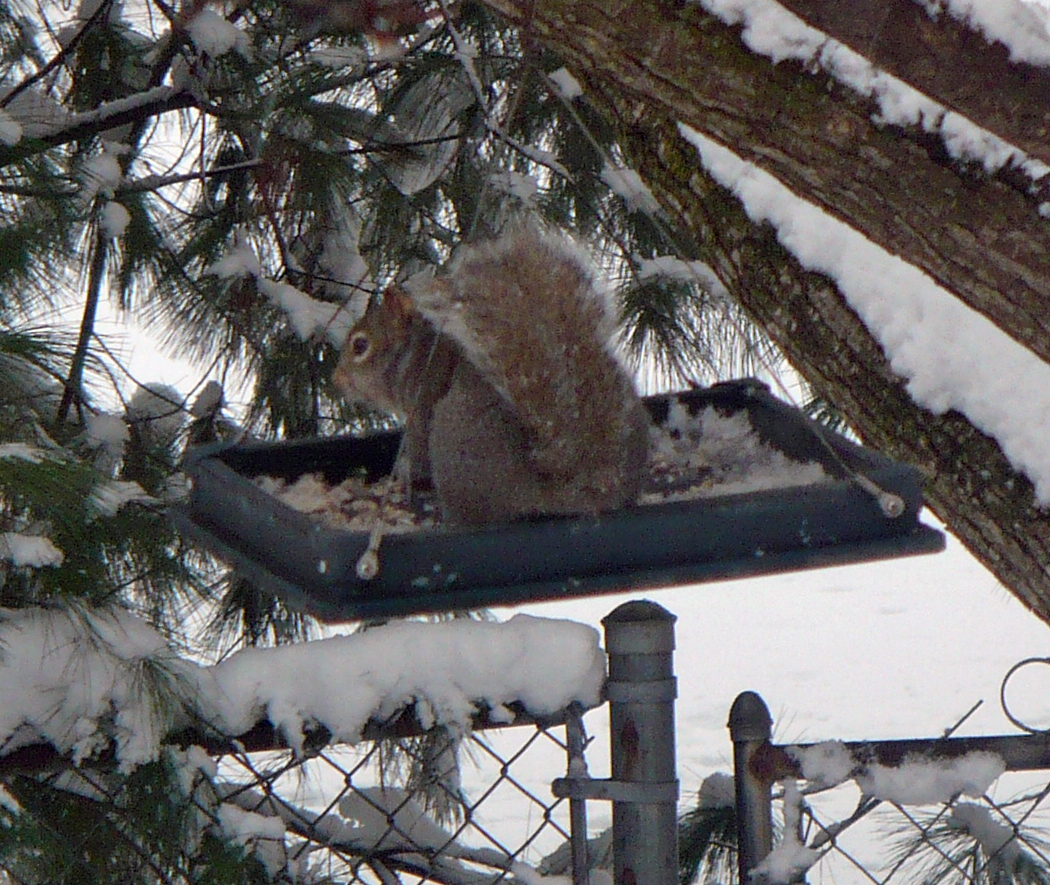
Most days I begin with “nature prayer.” I feed my cats, the birds and (yep!) the squirrels. If nice weather beckons, I may stroll around my backyard and admire the flowers. Right now, early spring has arrived in central Illinois and my snowdrops and crocuses are blooming. Soon they will be joined by jonquils, violets, tulips, pear and crabapple blossoms and the ever-ubiquitous dandelions. These flowers make me so happy! 

Back inside, I settle in my recliner in front of the fireplace with a cup of coffee by my side and Oley Cat in my lap and engage in “writing as prayer.” I may journal about my priorities for the coming day – or what I think they should be, at least. I’ve also used this time to write out my thoughts and insights generated by homework assignments my spiritual director gives me. 

Some mornings the journaling portion of my meditation largely consists of prayers of petition and intercession. Other times I may make a gratitude list or offer prayers of thanksgiving. Sometimes I even get to enjoy music when my husband joins Oley Cat and I to serenade us with sacred songs on his dulcimer.

Lately I have adopted a suggestion from my spiritual director as well: As I pray, spend some time listening. Say (or write) a prayer, then be silent. Quiet my mind for a few minutes and wait for God’s response. What is God saying to me?

Some Christians express concern that meditation is too “New Age,” or that it’s somehow inappropriate because religions other than Christianity practice it. However, from what I’ve read, meditation is firmly rooted in the Bible. Here are just a few passages that speak about the practice: 

  • Joshua 1:8 – This book of the law shall not depart out of your mouth; you shall meditate on it day and night, so that you may be careful to act in accordance with all that is written in it. For then you shall make your way prosperous, and then you shall be successful.
  • Psalm 19:14 – Let the words of my mouth and the meditation of my heart be acceptable to you, O Lord, my rock and my redeemer.
  • Psalm 119:15 – I will meditate on your precepts, and fix my eyes on your ways.
  • Psalm 145:5 – On the glorious splendor of your majesty, and on your wondrous works, I will meditate.
  • Philippians 4:8 – Finally, brethren, whatsoever things are true, whatsoever things are honest, whatsoever things are just, whatsoever things are pure, whatsoever things are lovely, whatsoever things are of good report; if there be any virtue and if there be any praise, think on these things. (Note: Since “think on” is one synonym for “meditate,” this verse would certainly speak to the practice and it’s also one of my favorites.)

Meditation also has a long history in Christian practice, engaged in by everyone from the Desert Fathers and Mothers of the early church era to Ignatius of Loyola, Augustine and Martin Luther in the Middle Ages to folks participating in the liturgies of many modern church services. 

Elizabeth Eaton, presiding bishop of the Evangelical Lutheran Church in America, shared a personal experience of being so preoccupied that she once arrived at work with no memory of how she got there. Eaton’s own spiritual director offered the following advice about meditation as one remedy for this type of distracted thinking: “Wait for the Lord. Disengage the autopilot. Notice. Just this. Just now.” (Link to her article HERE.)

In my own case, God seems to tell me I need my morning meditation ritual. While I may skip it occasionally – if I have to leave the house for a doctor’s appointment at 7:30 a.m. sharp, for instance – I’ve found that I start to feel a little less “centered” if I miss too many days in a row.

For me, meditation is a way of staying focused on important priorities. Listening to Oley Cat’s soft purr and the crackle of the fire, or watching the squirrels’ antics as they invade the bird feeders helps quiet my mind – a little, for a few moments anyway – and allows me to open up to God’s presence.

So I continue to commit myself to this wonderful and compelling morning ritual.

Questions allowed!

“It’s God’s will. You mustn’t question God’s will.” 

If I’ve heard this admonition once, I’ve heard it a gazillion times – usually when I’ve challenged some aspect of religious dogma or someone’s interpretation of a Biblical passage. And I must admit, I tend to become innately suspicious when any person (or church denomination) does not want me to ask questions. 

The Bible itself brims with stories of prophets and apostles who questioned God’s will – or tried to change God’s mind, or expressed doubts out loud – and lived to tell about it. 

When God commanded Jonah to go to Nineveh and prophesy against that city, Jonah tried to flee rather than carry out the command and got angry when the people of Nineveh actually repented of their sins. When Job fell on excruciatingly hard times, he didn’t lose his faith, but he did confront God, demanding to know why these things were happening to him.

Wikipedia defines a doubting Thomas as “a skeptic who refuses to believe without direct personal experience” – a reference to the Apostle Thomas, who refused to believe the resurrected Jesus had appeared to the other apostles until he could see and feel Jesus’s wounds for himself. Even Jesus, as he faced crucifixion, pleaded with God, “Father, if you are willing, remove this cup from me.”

But when people “caution” me not to question God’s will, I’m not sure it’s God’s will they’re worried about. I suspect what some of them really mean is, “Don’t question my interpretation of God’s will.” I haven’t yet decided whether it’s worth the effort to question God’s will, but I can certainly challenge another human being’s interpretation of it.

My own questioning of “received wisdom” began early. At age 8, I listened in shock as a mainline Protestant minister “explained” to the congregation that “God does not intend for black people to be equal to white people.” As a teenager, I simply refused to believe someone who claimed my baby sister would not go to heaven because my parents were unable to have her baptized before she died. 

When I was in college, some evangelical classmates talked excitedly about The Late, Great Planet Earth, a book by Hal Lindsay which speculated the Catholic Church was the Great Whore of Babylon mentioned in the Book of Revelation and the Pope was the Antichrist who had the number 666 engraved on his ring. I may not have agreed with every single aspect of Catholic teaching, but I was repulsed by the blatant bigotry and said so.

More recently I’ve debated folks who think God favors capitalism over socialism or America over other countries, the so-called “prosperity gospel” promoting the idea that God wants us to be wealthy, the assertion that God cares whether we sing traditional hymns or contemporary music at our church services, and the whole concept of predestination. 

One reason we have so many Christian denominations is that we have so many different interpretations of “the truth.” The various sects and denominations offer contrasting teachings on everything from baptism (sprinkling or immersion? infant or older?) to communion (wine or grape juice? open or closed?) to how one gets “saved” (baptism or personal decision?). And then there’s the debate over whether a church should take positions on hot-button “political” issues such as immigration and gun control. When Christians can’t agree on the “right” answers, how do I sort these things out for myself if I can’t ask questions?

I’ve discovered it’s not only important to question other people’s ideas, but my own as well. I must admit I occasionally notice cognitive dissonance between my stated values and my actions. For example, I say I care about the environment (God’s creation!), yet keep contributing excessive waste to our ever-expanding landfills. I say we all ought to invest in solar power, but have yet to install the panels on our own house. Along with Pope Francis, I decry consumerism, yet can’t seem to stop accumulating STUFF. I share the Bible’s concern about the poor, yet avoid looking too closely at the impact of my spending and investment habits on economically disadvantaged people. I could go on.

Whether we’re talking about church dogma or political/ideological positions, one thing I’ve been asking myself lately is, do I really believe everything I claim to believe? Or do I pay lip service to certain ideas to please my peer group? Do I secretly think someone else should be responsible for upholding certain values while I’m exempt? Could a fearless moral inventory of the type promoted by 12-Step programs be in order? (For those unfamiliar with 12-Step groups, the fearless moral inventory involves seriously examining one’s own attitudes and behavior.)

I’m aware that the mere act of asking questions carries risks. Will I stop believing in God altogether if I express too many doubts? Will I decide the church I’m attending is no longer appropriate for me? Will I stop agreeing with friends on certain issues, and will they no longer consider me an ally or want to be friends with me?

Yes, it is possible I could end up wanting to go to a different church. (Again.) Or I could stop believing in God altogether. Or I could lose friends. But it’s equally possible that answering questions to my own satisfaction could strengthen my faith, encourage me to appreciate my current church even more, and allow me to discern who my real friends are.

Matthew 22:37 says, “You shall love the Lord your God with all your heart, and with all your soul, and with all your mind.” Your mind, it says. Your mind.

I’ve been encouraged by reader responses to recent blog posts in which I’ve acknowledged struggling with various aspects of my faith. 

Chrissie, author of the blog Word Quilt (link HERE), had this response to one of my posts: “To doubt and still believe [is] a real definition of faith, but not blind faith.” Exactly, I thought.

Elizabeth, author of the blog Saved by Words (link HERE), responded to another of my posts: “If you didn’t question the very basis of your faith, you would be merely borrowing someone else’s faith.” I like that. And I completely agree.

Ultimately, what I want is my own personal faith – one that will stand up to reason and scrutiny. What that means is, I will probably be questioning God, myself and others until I draw my last breath. And for now, I’ve decided that’s okay.

Moving forward

What’s next, as I embark on the next leg of my spiritual direction journey? How do I maintain and build on my progress?  

My first goal will be to spend some time each day outdoors – away from the computer screen, away from the political bickering by culture warriors on TV and Facebook, away from endless news reports about people’s inhumanity to other people. Because nature constantly reminds me of God’s existence, going outside is something I can easily do whenever I encounter those pesky doubts. I need to immerse myself in God’s creation. Watch sunsets. Listen to cicadas. Smell some flowers. Feel the breeze against my face. Take a walk. Dig around in the dirt and plant flowers or veggies. Experience evidence of God with all my senses. If severe weather keeps me inside, I can nurture the plants in the sunroom or watch the birds and squirrels from the picture window in the living room. Meanwhile, I’d like to start each day with Psalm 118:24, which reminds me, “This is the day that the Lord has made; let us rejoice and be glad in it.” 

While I’m nowhere near my original goal of “a place for everything and everything in its place,” I’ve made some real headway sorting through physical clutter. I still advise houseguests against venturing into the basement or garage (I’d rather not have to file a missing person report), but the house mostly stays presentable enough so I’m not totally embarrassed when someone drops by without notice. I plan to continue with my spiritual director’s recommendation: Devote one hour per day to tackling clutter. And stop collecting more and more STUFF to fill a home already bursting at the seams with too much material abundance.

My spiritual director and I have also explored various kinds of “spiritual clutter” that crowd attention to God out of my life – and I eliminated a major distractor by walking away from an incredibly abusive volunteer work situation. As much as leaving the organization saddened me, I must say I love the newfound free time. Deadlines have practically disappeared. I feel so much “lighter” – like I’ve put down the 100-pound bag of stress I carried around for five years. Now, as I ponder the question of vocation, I must resist the urge to plunge into something new right away. I need to be selective as I discern where God wants me to go next.

My continuing spiritual journey also involves asking more questions. Lots of them:

  • The nature of God. I’ve decided there must be some kind of Creator. But who, or what, is this Entity I choose to call God? Is God distant and uninvolved, as some deists claim? Or is God a “close-up” entity who not only cares about each of us personally, but intervenes regularly in human affairs?
  • Authority. What is my authority for what I believe? The Bible? Church tradition? Clergy? Why, or why not? What about the priesthood of all believers? Where does science fit in? Since not even all Christians agree on the issue of authority, how do I decide who is right? Also, who or what outside of church has influenced my beliefs? How reliable are these sources of authority? Should I rethink some of them?
  • Church. Why go to church, when by my own admission, I feel the presence of God most while immersed in nature? Is there anything I can get from church that I can’t just as easily get by going outside? If we go to church, how often do we go? What characteristics should I look for when evaluating a church? What characteristics serve as deal-breakers? 
  • Prayer. What is prayer and how should we pray? Can writing, singing and gardening be forms of prayer? Is it okay to ask God for things? What about “crowd-sourced” prayer on Facebook?
  • Salvation. Some Christians say we’re “saved” through baptism, while others insist we must make a personal decision for Christ. Which is it? What about predestination? Is there a literal heaven or hell? If so, who goes where? What does salvation mean, actually?
  • The 10 Commandments. How do I relate these Commandments to 21st Century issues? For example, I promise I’ve never even been tempted to worship a golden calf made from melted-down jewelry. But what about the bronze bull on Wall Street? What does it mean to keep the Sabbath Day holy in a 24/7 culture that worships productivity? What constitutes stealing? Your wallet may be safe with me, but what about the way I invest my money?
  • Sin. In a world where many “sins” have been reframed as “diseases,” is sin still a legitimate concept? Is sin a specific act or is it the condition of separation from God? How would liberal Christians define sin versus how conservative Christians would define it? Who is correct?
  • Creeds. Considering that no creed exists anywhere in the Bible and a number of Christian churches don’t have one, do we need a creed? If so, what should be in it? 
  • Politics and the Culture Wars. Part of my motivation for seeking spiritual direction was the extreme level of vitriol permeating our society in recent years. I’ve begun to suspect I’m part of an Exhausted Majority who feels pressured to take sides in the Culture Wars, but at the same time doesn’t fit neatly into either the liberal or conservative camps. As the partisan positions have gotten more and more extreme, common sense seems to have flown out the window. This has prompted me to ask: What are my own beliefs and what is my role as a Christian in our society’s political battles? Even if we think someone’s values are totally wrong, how do we change hearts and minds if we demonize certain people and won’t have anything to do with them? 
  • Ecumenism. Is there a common core of beliefs shared by most Christians, regardless of sect or denomination? Do all of these denominations offer equally legitimate paths to God? Is there a way to heal the divisions between believers and relate respectfully to people whose viewpoints differ from ours?

That’s just for starters. 

When my spiritual director asked me point-blank if I ever doubted the existence of God, her question gave me permission to “go there.” For the next leg of my spiritual journey, I want to keep being honest about the questions I have.

One thing I do know for sure: I’m grateful to be making the journey with this spiritual director. When I shared this list of questions with her, as usual, there were no lectures. She just smiled and asked, “Where do you want to start?”

Spiritual progress

A little over a year ago I found myself at a spiritual crossroads. 

My husband and I attended church almost weekly, and I had read the Bible from cover to cover, along with shelves full of books on religion and spirituality. Yet I still found myself asking the “big” or “ultimate” questions. What do I actually believe about God and why? What is God’s purpose for my life? What are my values, or what should they be? How do I live my life in a way that is consistent with my beliefs and values?

Several factors led to this renewed questioning. The transition in focus and priorities prompted by my retirement. The “time is limited” epiphany that comes with being 60-something, losing loved ones and developing chronic health problems myself. Questions about faith and a church’s true purpose raised by reading the Bible and serving on my church’s evangelism committee. The internal tug-of-war over my own values brought on by the increasing divisiveness and polarization in our society.

I made a commitment: Develop a better understanding of God, so I can fulfill God’s purpose for my life, discern what my values should be, and live accordingly. Toward this end, I engaged a spiritual director to help me explore these “ultimate” questions and reorder my beliefs and values as necessary. Seeing a spiritual director does not replace going to church, of course – it’s a supplement, rather than a substitute. Spiritual direction is a one-on-one partnership in which one Christian helps another grow in a personal relationship with God. 

I must admit the idea of working with a spiritual director made me a bit nervous at first. While I hoped this person would ask the hard questions, I didn’t want someone who would merely push me to adopt their own belief system. I needed this person to be nonjudgmental and open to the idea that I was questioning all kinds of dogma, from the spiritual and religious to the political and ideological. 

My spiritual director, thankfully, has been patient as I grapple with questions some would say I shouldn’t even be asking. For the past year, we have met monthly for one-hour sessions. She offers a variety of suggestions for homework assignments, allowing me to choose which ones I might find most helpful. She recommends various reading materials as well.

I had already developed a morning meditation ritual – sitting in my recliner in front of the fireplace with a cat in my lap and a cup of coffee by my side while I journal about my priorities for the coming day. I began using this time to write out my thoughts and insights generated by the homework assignments. I’m a rather “visual” person, so I’ve also used imagery to describe what I’m experiencing at any given moment. 

One of my first assignments: Come up with an image that best symbolizes my present spiritual condition.

I created a Photoshop image of myself buried under a mountain of clutter and added a rope to represent the tug-of-war over everything from my time to my personal values caused by competing demands and continual conflict. Underneath the papers and boxes and to-do lists, I placed several boulders with labels on them – fear, anger, pain – to represent the steady stream of anxieties and resentments that kept me awake at night and pre-occupied during the day. A pair of arms juggled several balls in the air – family, friends, volunteer work, the house. More balls had been dropped and were nestled on the ground at the bottom of the heap – my writing, self-care, God.

Using the graphic as a starting point, I listed those areas of my life that felt not-so-well-ordered. My relationships. A messy house. Our finances. My frantic, overloaded schedule. Health issues ranging from aches and pains everywhere to heart problems, along with my inability to sustain a healthy eating plan for more than a few days at a time. My writing, which seemed to languish. My emotional life, which often left me feeling like a walking bundle of anxieties and resentments. The suspicion I entertained from time to time that my life had been reduced to crossing items off endless to-do lists. My spiritual life, with all those questions and doubts.

I shared my “laundry list” with my spiritual director and showed her the graphic. I described the chaos that seemed to permeate my life, stemming from my own challenges with organizing skills, my talent for procrastination, my difficulty saying “no” to demands on my time, and my penchant for getting sucked into other people’s dramas. Repeated efforts to get my life under better control often left me feeling more frustrated than ever, I confessed. 

My spiritual director listened to this litany without negative judgment – at least none that I could detect. Looking the graphic over for a moment, she asked, “What stands out for you?”

I pointed out the “God ball” at the foot of the clutter pile. God was there, of course, but after creating this image, I could see vividly how clutter of all kinds – from endless STUFF to excessive commitments – blocked my spiritual path.

I half expected her to supply some relevant Bible verses about the Godliness of cleanliness and self-discipline. But instead of helping me incorporate my “God ball” back into the rotation of balls I was juggling, my spiritual director suggested I leave it where it was for the time being. “Just sit with it,” she said.

Back at the drawing board (Photoshop, that is), I pulled up my Clutter Mountain graphic and painted my “God ball” gold. I then imagined myself crawling out from under the junk pile and sitting next to the golden God ball with my eyes closed and my back to everything else – a cup of warm coffee in my hands and my two cats at my side.

Of course, this meant the other balls I was juggling would drop, I told my spiritual director when I showed her the edited graphic. “That’s okay,” she said. “Those other balls will still be there when it’s time for you to get back to them. They’re not going anywhere.” She suggested I spend an hour each day tackling the clutter – just one hour – and leave the rest for the next day.

Then she asked me, “Have you ever questioned the existence of God?” She didn’t flinch when I said, “Oh yeah. More than once.” One of the things I’ve liked is that she’s continued to be nonjudgmental. I’ve been able to talk about things like my history of church-hopping (and religion-or-spiritual-tradition hopping) and I’ve even been able to acknowledge occasional doubts about God’s existence without getting a lecture.

I went to work on the clutter, using my spiritual director’s recommended one-hour-per-day approach. While I still have a long way to go before achieving my goal of “a place for everything and everything in its place,” slowly but surely, I’ve gotten my house to a point where it is at least presentable enough to invite people over from time to time.

I set a boundary with myself regarding my schedule. Before adding a new ongoing commitment to my calendar, something else must come off.  Some of the commitments really mattered to me: time with my husband, a meal with family or friends, singing in the church choir. But several other commitments had crept into my schedule because I should have said “no” and didn’t.

As I continued taming my schedule and tackling the endless clutter – one hour and one day at a time – a flash of insight occurred to me. A little epiphany, one might say. Could the question of God’s existence be what I was distracting myself from with all the to-do lists, the frantic scheduling, the endless cleaning and the mindless Internet surfing that cluttered my life and unquieted my mind? My spiritual director agreed that I might be on to something. 

For most of my life, I had leaned toward the idea that there probably was a God. Yet, those pesky doubts did creep in from time to time. I didn’t voice them to anyone, though. If the folks at church ever doubted God’s existence, they certainly weren’t letting on.

I confessed to my spiritual director that what I really wanted was that “blinding light” experience the Apostle Paul had on the road to Damascus, or the burning bush Moses encountered. I wanted to be like those people who saw the blinding light or the burning bush, just knew what they knew about God, and had their mission in life spelled out for them.

She recommended I use part of my morning meditation time to be completely quiet. “Listen for God’s voice,” she said. 

Well, the blinding light hasn’t happened for me – at least not yet. But what has happened is nearly as amazing. 

One thing that became glaringly apparent when I tried to quiet my mind and listen for God’s voice was the level of resentment and anxiety that continually filled my thoughts – much of this prompted by a not-for-profit organization I was heavily involved in. For several years I had dedicated an average of 5-10 volunteer hours per week to this organization and contributed thousands of dollars.

The organization was not church-related, but its program served a cause dear to my heart, and I had previously thought nurturing its development might be a significant part of God’s plan for my retirement years. However, warring factions within the organization seemed more focused on vanquishing each other than they were on the mission. The leader personally targeted me and others whose competence and dedication threatened his sense of power. 

After five years of relentless conflict and escalating abuse, I had to admit this organization’s dynamics were never going to change. And no matter how worthy the cause, I was doing untold damage to both myself and my other relationships by continuing to participate. With much sorrow, and after consulting with my spiritual director, my pastor and a valued mentor, I walked away. 

My husband was so happy with this decision, he celebrated by taking me out for supper at my favorite seafood restaurant. I could literally feel the tension flow out of my body as I tied up loose ends and turned tasks over to others. I’ve dropped 15 pounds since I resigned from the organization because I no longer feel the need to counter stress by opening the refrigerator door and mindlessly stuffing my emotions with junk food. My schedule opened up considerably.

Then I walked outside. Dismissing the existence of a God is tempting when so many people who claim to speak in God’s name spew hatred for their fellow and sister human beings while committing assorted hypocrisies and evil deeds. Denying God’s existence gets even easier when watching one terrible event after another unfold on the news. But I’ve found it’s almost impossible to deny the existence of a Creator when I’m outdoors with evidence of God all around me.

So, to ward off those nagging doubts that surface from time to time, I try to get outside as much as possible. Regardless of the weather, I like to start my day by feeding the birds (and squirrels) while my morning coffee brews. During the growing season I tend a garden and several flower beds. I take walks along an amazing tree-lined bike trail that runs beside a creek near our house. Strolling through our backyard, the bike path or a neighborhood park admiring the flowers and snapping wildlife photos sure beats watching the news and arguing with complete strangers on Facebook. Immersing myself in nature’s majesty continually reminds me there is an ultimate Creator.

My spiritual progress may seem agonizingly slow to anyone reading this. But for me, finding a way to effectively address my occasional doubts about God’s existence is HUGE. Summoning the self-respect and courage to walk away from an abusive situation has also been an enormous step in the right direction. As they say around the tables at 12-Step meetings, we aim for spiritual progress rather than spiritual perfection.

Time to fasten my seatbelt and embark on the next leg of my spiritual journey. 

Can I learn to like winter?

Ten inches of wet, heavy snow fell over the weekend, and the forecast predicts more on the way, along with strong winds and frigid temperatures. After being thoroughly spoiled by mild weather for a week or two, we’re back to January in central Illinois. Looks like we won’t sit on our deck grilling brats anytime soon.

I’m definitely a spring and fall person. Spring offers promise – those first green shoots poking up out of the ground, a backyard in bloom, and the vow that this year, I really will stay on top of the weeding. What’s not to love about fall – especially if I ignore the fact that winter follows. Few sights are more gorgeous than a sunset forming the backdrop for rioting brown-orange-yellow-crimson leaves. 

But winter? It gets dark in the afternoon. Utility bills go up. Add in cold and flu season. Last year, Pete and I were continuously sick from Thanksgiving to Easter except for a week of respite in late January when my family finally got together for Christmas. After Pete wound up in the hospital with pneumonia, we seriously considered becoming “snowbirds” and moving to Arizona this winter, but the mere thought of the hassle changed our minds.

Why is it that spring rushes by faster than a fire truck with its lights flashing, while the coldest days of January poke along like that driver ahead of us on a 2-lane highway who thinks the speed limit is 35 m.p.h.? Why can’t spring last as long as winter? I know. Technically, winter has 90 days this year, and spring has 92. But regardless of what the calendar says, winter came quite early – with record snowfall before November was half over. 

On the other hand, Psalm 118:24 reminds us, “Today is the day the Lord has made. Let us rejoice and be glad in it.” I’m pretty darned sure this includes winter days. And since I turned 60, life has begun feeling much too short to wish whole months away.  Therefore, I’ve decided I either need to move to a place with a more temperate climate or find some way to stop hating winter.

I haven’t always disliked winter.  When I was a small child, my reaction to snow was, “Oh boy! Let’s go sledding! Make snow angels! Build snow forts! Make a snowman! Have a snowball fight!” Making snow angels lost its luster once I reached junior high school age and got vain about how my hair looked, but I still appreciated the “no school” announcement. 

Could I possibly learn to like winter again? 

Snow is pretty – especially when seen through the picture window in our living room. In early November, snow covering the still-colorful fall leaves created an interesting – and gorgeous – effect.

Bare trees project a certain majesty. Photo of the magnificent tree below was taken at the North Carolina home of cousins Anne and John.

Of course I can better appreciate the beauty of ice-coated branches when the ice stays off sidewalks and doesn’t trigger a power outage. 

Snow even adds beauty to dead weeds. 

Our Christmas cactus in the sun room only blooms once a year, and that’s in the winter.

Christmas is the one time of year when I can usually count on seeing most of my family. Pete and I have also started a tradition of inviting friends to our house for greens and hoppin’ john (a dish made of black-eyed peas and rice) to help us ring in the New Year. The hoppin’ john and greens are pictured below, right.

I’ve come to think of cold weather as God’s gift to people who need to be inside getting some work done. With 10 inches of snow on the ground and wind chill temperatures below zero, I can clean closets or work on a deadline project without feeling deprived by spending the whole day inside.

Winter weather reminds me of several other things I should be grateful for as well. Not being homeless. Not having a job such as postal carrier that requires me to work outside in sub-zero temperatures. Having a house with a garage, so I don’t need to dig our cars out of a foot of snow. Sixty-degree days in January. Snowdrops and crocuses that start poking their heads up in late February, just as I’m beginning to crawl out of my skin with cabin fever. Bird (and squirrel) watching.

I’m especially grateful for cardinals this time of year. In the middle of all the black-and-white dreariness appear those tiny splashes of brilliant red.

I’ve found it helps to think of winter as hibernation season. Bears do it, so why not me? Time to bundle up under a half-dozen quilts and read an 800-page book. Work on a deadline project and not feel guilty about staying indoors all day. Experiment with soup recipes.

I’ve also started leaving my Christmas decor up long past the time when the holidays are over. The twinkling lights make the room feel warmer and brighter in the mornings, and the winter weather outside doesn’t seem so harsh. They add such cheer to the darkness. This year, I’m keeping the Christmas tree and lights up till Lent. 

This morning I had a cat curled up in my lap and a cup of coffee at my side while I did my morning meditation. (I can see why having a warm cuddly pet is good for reducing blood pressure.) Christmas lights blinked cheerfully while I sat in the recliner in front of the fireplace bundled up in a flannel nightgown, yoga pants, hoodie, two pairs of socks and bedroom slippers. (This get-up will not get me featured in a Victoria’s Secret catalog, but it sure is comfy.) 

The forecast for this coming weekend predicts a real MESS — a mixture of snow and ice, strong winds and plunging temperatures. But we’ve stocked up on groceries. I’m preparing a casserole dish and some soup to get us through the pair of storms headed our way. And the lights that frame my windows are battery-operated, which means I’ll have a well-lit living room even if the power goes off. 

Here’s to staying warm!

God’s fireworks

The frost sadly zapped my annual flowers early this year. But as the saying goes, “The Lord giveth and the Lord taketh away.” And the fall leaves, which seem to need a good freeze to get really colorful, are making up for the lost flowers.

Here is the view from my kitchen window in the late afternoon.

Kitchen

The street outside my house.

Street Scene2a

And the nearby park, which I like to drive through on my way to everywhere, especially this time of year.

Pond

Gawking at trees is one of my favorite pastimes.

Red tree

Yellow tree

Orange tree

Park scene

Street scene1

The seeds and berries are pretty this time of year as well.

As are the leaves that have dropped to the ground.

Some flowers stay colorful and interesting even after the frost has zapped them.

A few perennial flowers have managed to survive the freeze. Love the ones that hang in there!

And here’s the cute kitty who followed me while I was snapping some of my photos. So of course, I need to include her here.

New Salem kitty


Carpe diem!

  “This is the day that the Lord has made; let us rejoice and be glad in it.” – Psalm 118:24

Our church’s adult Faith Formation class this fall assigned us to choose our favorite Bible verse/passage and explain why we find it meaningful.

I like Psalm 118:24 so much I have it stenciled above the door in our sunroom so I can see it when I go out to my backyard in the morning to feed the birds and squirrels. It reminds me that each day is a gift from God, full of promise and new opportunities.

Notice the verse says “this is THE day the Lord has made,” not “this is day.” Yesterday is gone. Tomorrow is not guaranteed. Today is all we have. Yet, how many times have I said, “I’ll be glad when this day is over!” How many times have I fantasized that a future time exists when everything will fall into place and I will be able to start living my life in earnest?

Psalm 118:24 encourages me to practice mindfulness – to pay attention to each moment rather than operating on autopilot. When my days feel reduced to crossing items off the To-Do list I jokingly call “my conscience,” this verse inspires me to take a break from my often distracted, multitasking, overly-stressed schedule so I can be awake and alive instead of sleepwalking through life.

The verse also prompts me to set boundaries with my computer. Stop the mindless Internet surfing, resist “click bait” and avoid getting sucked into Facebook flame wars. How many articles do I need to read about our elected officials calling each other names? What do I gain by arguing about politics with total strangers on Facebook except for a bushel basket full of new resentments? Perhaps, the verse tells me, I should take a walk instead.

And while I’m out walking, the verse reminds me to let go of those joy-stealing resentments. I remember taking a twilight walk one beautiful October day surrounded by the most gorgeous sunset I’d seen in a while. Then I realized that, while God was putting on this amazing display, I had been staring at the sidewalk, my mind flitting from one surly thought to another. I even managed to reserve rent-free space in my head for the mean girls who made my life miserable in high school, the latter rumination triggered by an invitation to my 40th class reunion.

Finally, Psalm 118:24 teaches me to practice gratitude. I’m too often guilty of taking for granted common events in my life that should be cause for rejoicing: my marriage, my family, my kitties, my health, my home, good friends past and present, my church and other supportive people, the gifts and talents that helped me earn a living and will allow me to contribute something worthwhile during my retirement years.

So instead of groaning when the alarm clock goes off, I’d like to get in the habit of saying, “Carpe diem!” Time to wake up and seize the day …


Feasting on God’s eye candy

When I’m tempted to doubt God’s existence, all I have to do is go outdoors to set my thinking straight. Our pastor’s monthly newsletter column served as a reminder this past week that I’ve been spending WAY too many hours glued to my computer screen. Time to pay a visit to our church’s rose garden, she said. 


The rose garden is one of my favorite places. Tucked in among the roses is a plaque quoting Martin Luther, who seemed to share my perception about God being immanent in all of creation.


15 Sign 2a


The roses are expertly and lovingly tended by two men in our congregation, who created the garden in memory of wives gone much too soon. A wonderful tribute!


With gorgeous fall weather approaching, I’ve also decided it’s time to start going on walks again. An amazing bike trail within a couple blocks of our house means there’s no excuse to stay inside on 70-degree days. Trees line both sides of the trail, and a creek runs alongside, making it almost possible to forget I’m in town.


I also have access to a park just a few more blocks from my house. One of the most attractive features is a carillon (below right), which provides background music while visitors walk or ride their bikes.


This park has an amazing number of paths where I can stroll, meditate and feast my eyes on a huge variety of flowers, shrubs, decorative grasses and native plants of all kinds.


 I like to think of the numerous flower beds and native plant displays as God’s eye candy.


07 Eye Candy 2a


Of course, no park is complete without the critters. Park visitors constantly feed bread crumbs to the ducks and geese, which means some are tame enough to let me snap close-up photos and one even walked right up to my camera while I was photographing him.


12 Goose 1a


What I know for sure is that I must tear myself away from my computer and TV screens and spend more time outside this fall!


“We should just SEE Him”

“God is everywhere and in all creation,” my friend Sara said in response to my last blog post when I shared it on Facebook. “We seek Him when we should just SEE Him.”

Nothing like a stroll in my backyard on a summer morning to confirm what she says. I like to start my day by feeding the birds (and squirrels), then feasting my eyes on some flowers. This time of year, all kinds of lovelies are blooming:

astilbe

bee balm

begonias

lillies

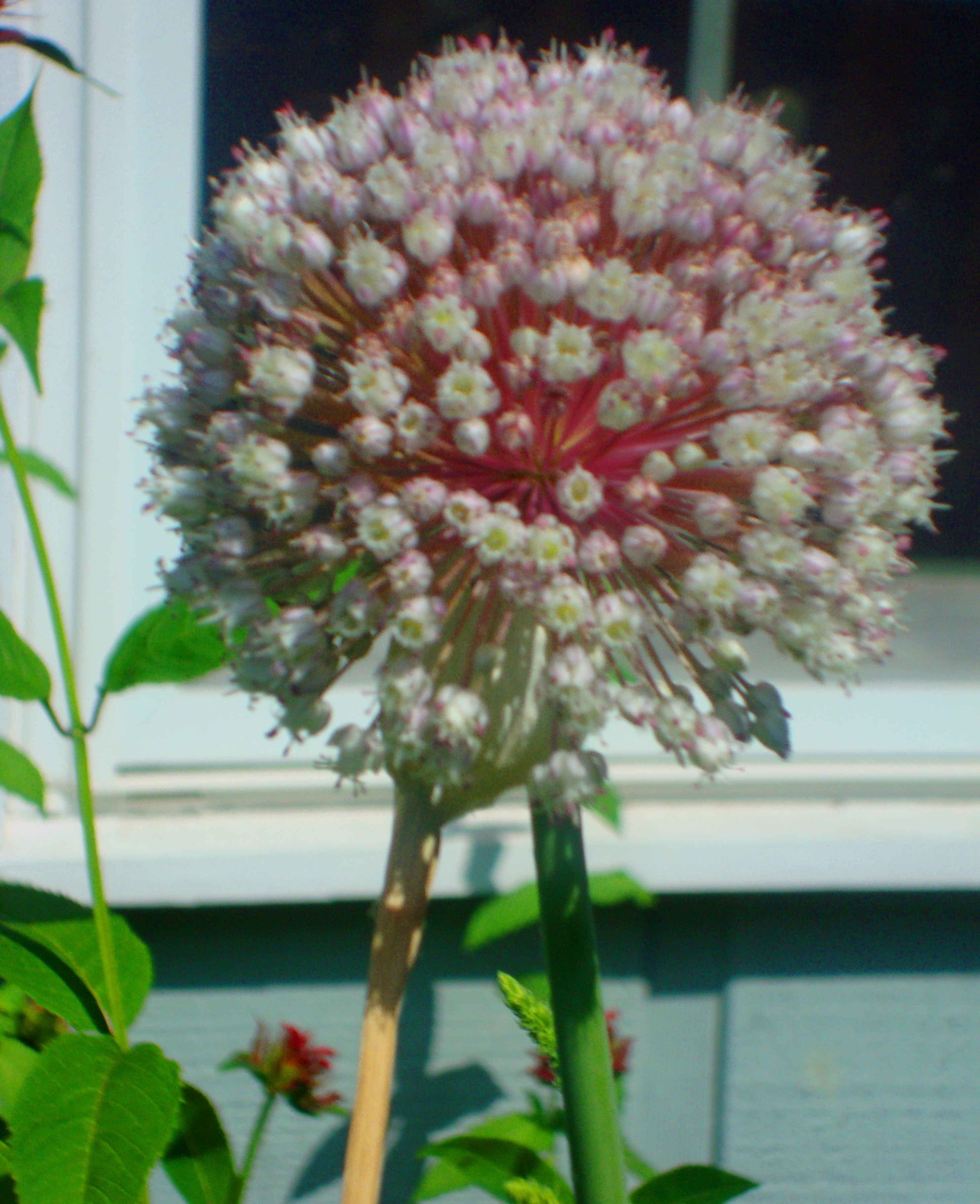
chives

coreopsis

02 petunia

whitetail

05 multicolor

pinks

03 black eyed susans

01 Rose of sharon

06 blanket flower

rose

04 African violets

And last but not least …

dandelion