God’s other book: Ice sculpture

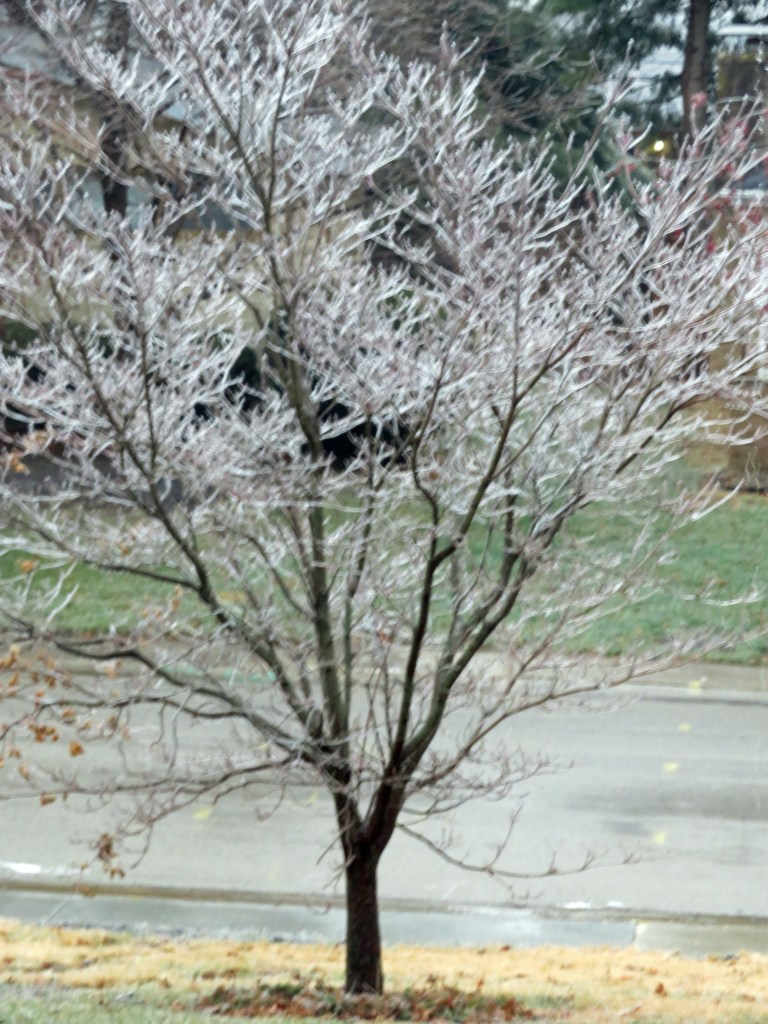
When I looked out the picture window in our living room on New Year’s Day, my first thought was, “I hope this isn’t a sign of what 2021 is going to be like.” In central Illinois, the year started out with … an ice storm.

But I had also pledged to start each day finding something to be grateful for and I had to admit, the ice really was pretty. Especially since I didn’t have to go anywhere that day and could stay warm and toasty inside while enjoying a feast of hoppin’ john and greens with my husband.

So I got out my camera and pointed it out several windows to see what the lens might capture. The thin coating of ice turns twigs into a work of art.

In our driveway, we have a small tree we call “the clubhouse.” Dozens of birds gather there, and we can hear the chorus of chirping as soon as we walk out the front door. Even the ice didn’t deter the birds from having their regular “meeting,” but … BR-R-R-R-R!

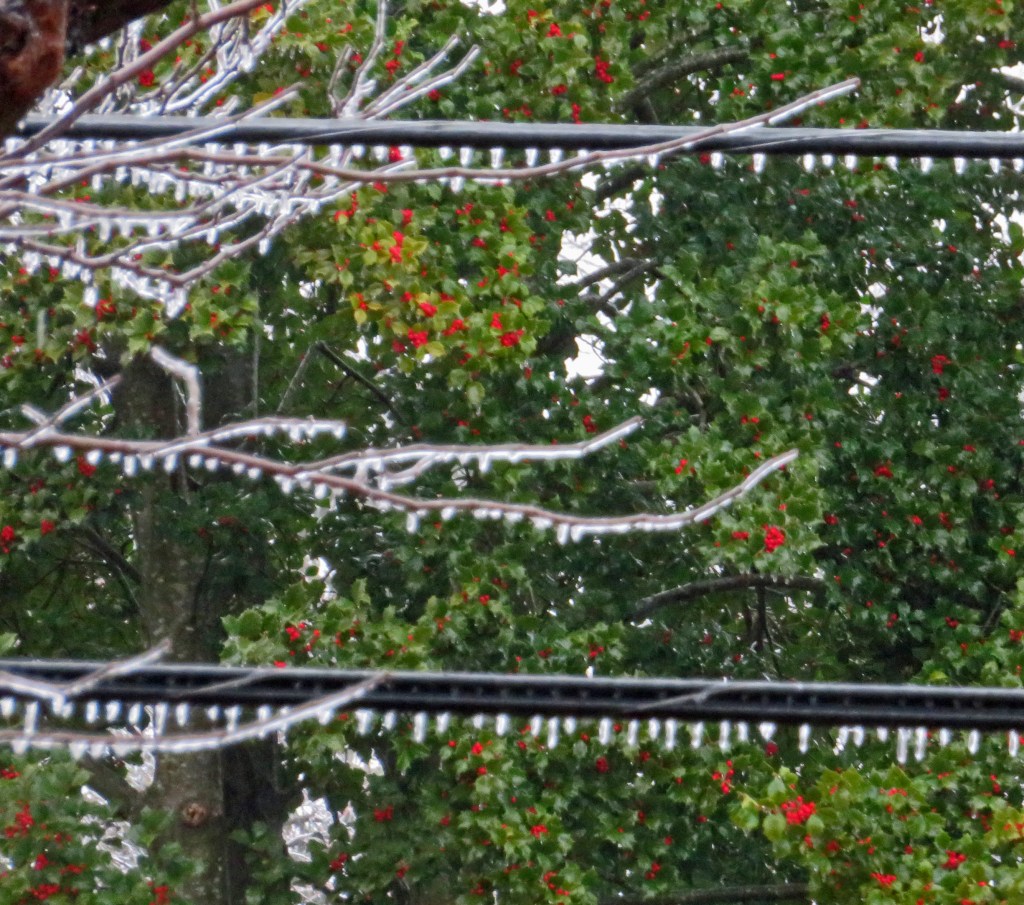
I love how each of the berries on our neighborhood crabapple trees has its own icicle.

If you look close, you can see a bead of ice hanging from every single one of those berries. Just. Wow.

And I was certainly grateful the sheet of ice that covered everything, including the electrical wires, was only about a quarter inch thick and we didn’t lose power.

So, may everyone have a blessed and happy new year!

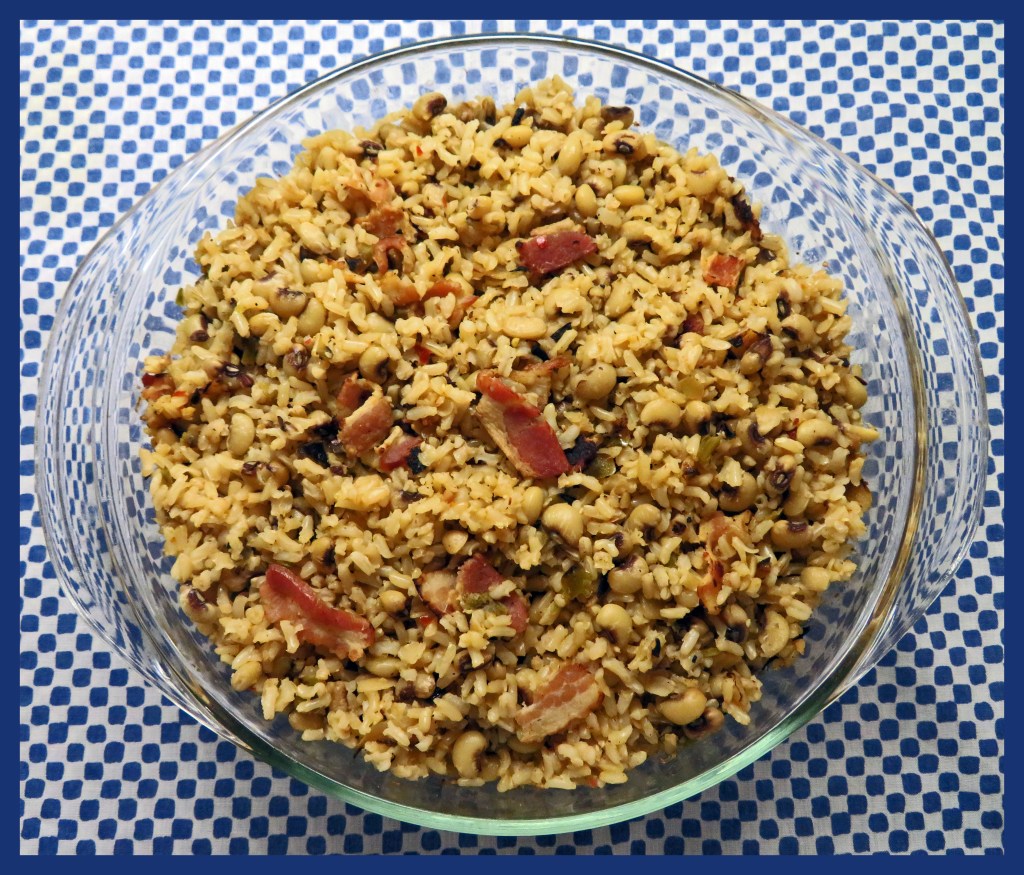
Recipe: Hoppin’ John

For several years now, Pete and I have enjoyed a New Year’s Day tradition of inviting friends to our house for hoppin’ john, greens and cornbread.

Hoppin’ john is a traditional southern dish made with black-eyed peas and rice, and is said to bring good luck if eaten on New Year’s Day. My husband, who grew up in East Tennessee, brought the recipe with him when he moved to Illinois. 

As usual, I’ve modified the recipe somewhat to meet my dietary restrictions. For my version of hoppin’ john, I use brown rice – the frozen kind for convenience. I’ve actually come to prefer brown rice for its nutty texture. Plus, it has more healthy fiber than the more heavily processed white rice. I cook the bacon separately and drain off the grease before adding it to the recipe, which allows me to add some delicious bacon flavor without so much saturated fat, and I sauté the onion and pepper separately in olive oil. I use Tony Chachere’s no-salt seasoning blend in place of salt. Low sodium chicken broth adds flavor.

We serve the dish with greens and cornbread, which are said to further ensure prosperity for the coming year. For the cornbread, I use Martha White self-rising buttermilk corn meal mix, and follow the recipe on the back of the package. This brand of corn meal mix does NOT have added sugar, which not only makes it better for my diabetic diet, but also more authentically southern.

Most years, our friends bring their own favorite dishes, along with their musical instruments, making for a great potluck feast and jam session. What better way to start the New Year off right?

Unfortunately, this year we’ll be celebrating with just the two of us because of the pandemic. But our friends will be with us in spirit, and the leftover hoppin’ john freezes very well.

This recipe makes about eight one-cup servings.

Ingredients

  • 2 10-ounce packages frozen whole grain brown rice
  • 1 12-ounce package frozen black-eyed peas
  • 3 slices bacon, crumbled
  • 1 medium onion, chopped
  • 1 green pepper, chopped
  • 2 tablespoons olive oil
  • 1/2 teaspoon Tony Cachere’s no-salt seasoning blend
  • 1/2 teaspoon red pepper flakes
  • 1/4 teaspoon black pepper
  • 32-ounce carton low-sodium chicken broth

Directions

Combine black-eyed peas and chicken broth in a saucepan and bring to a boil. Turn down the heat and simmer for about 20 minutes, stirring occasionally.

Thaw the brown rice in the refrigerator overnight, or heat in the microwave oven following package directions.

Cook the bacon on a plate lined and covered with paper towels in the microwave oven for 3-4 minutes, or until crisp, and crumble the bacon.

Sauté the onion and pepper in olive oil until tender and caramelized, and sprinkle in the no-salt seasoning, red pepper and black pepper.

Combine rice, black-eyed peas (with broth), bacon and sautéed vegetables. Add one cup water and stir until thoroughly mixed.

Pour into baking dish and cover with aluminum foil. Bake in 425-degree oven for 25-30 minutes, or until all liquid has been absorbed by the rice. Stir again and serve hot.

Nutritional Information

Serving size: 1 cup | Calories: 240 | Carbohydrates: 38 g | Protein: 8 g | Fat: 6 g | Saturated Fat: 1 g | Cholesterol: 3 mg | Sodium: 125 mg | Potassium: 305 mg | Fiber: 4 g | Sugar: 1 g | Vitamin A: 1% | Vitamin C: 20% | Calcium: 1.5% | Iron: 6% 

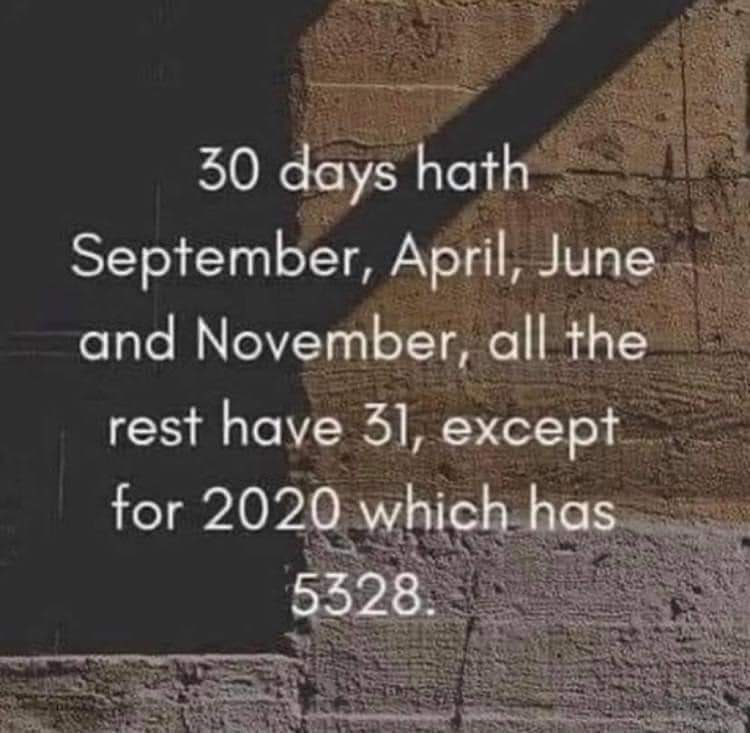
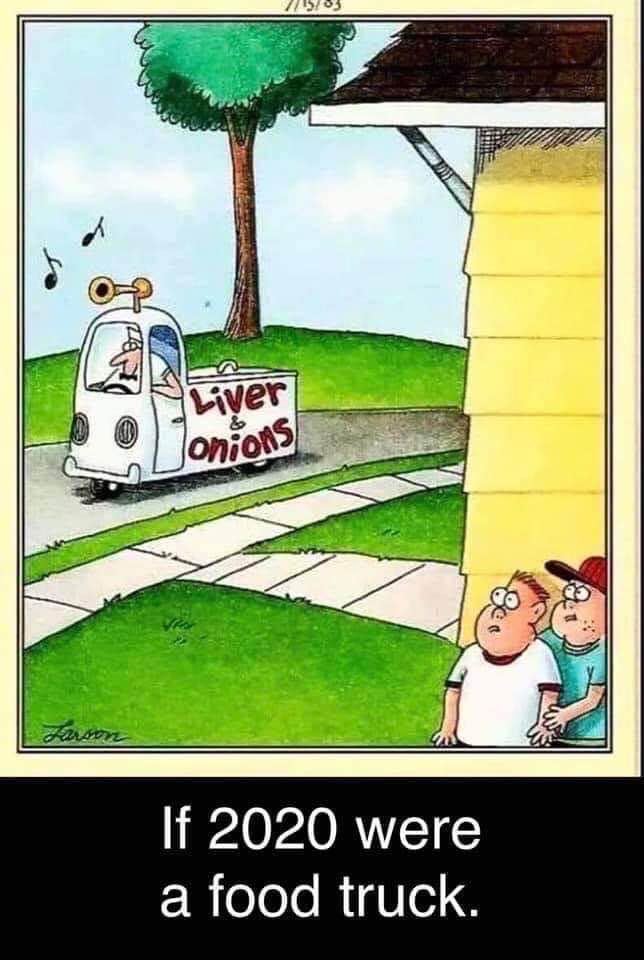
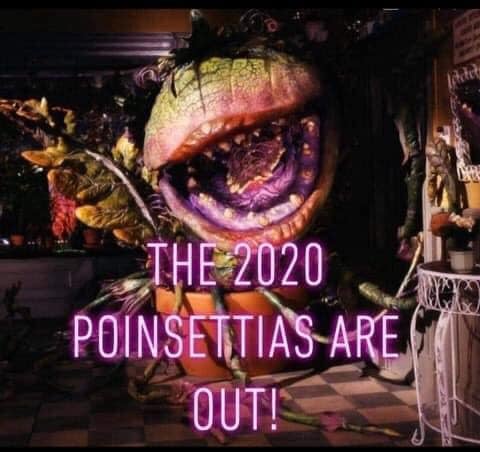
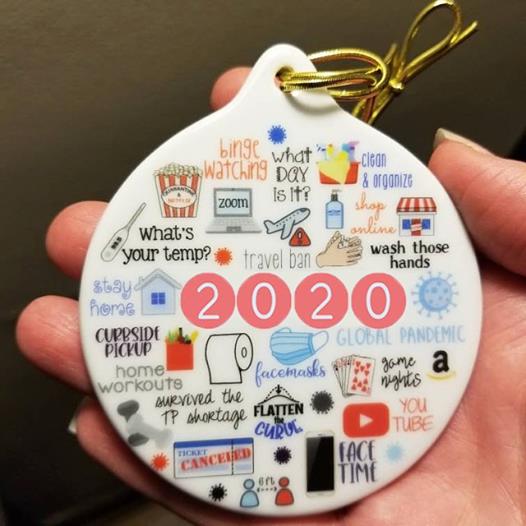
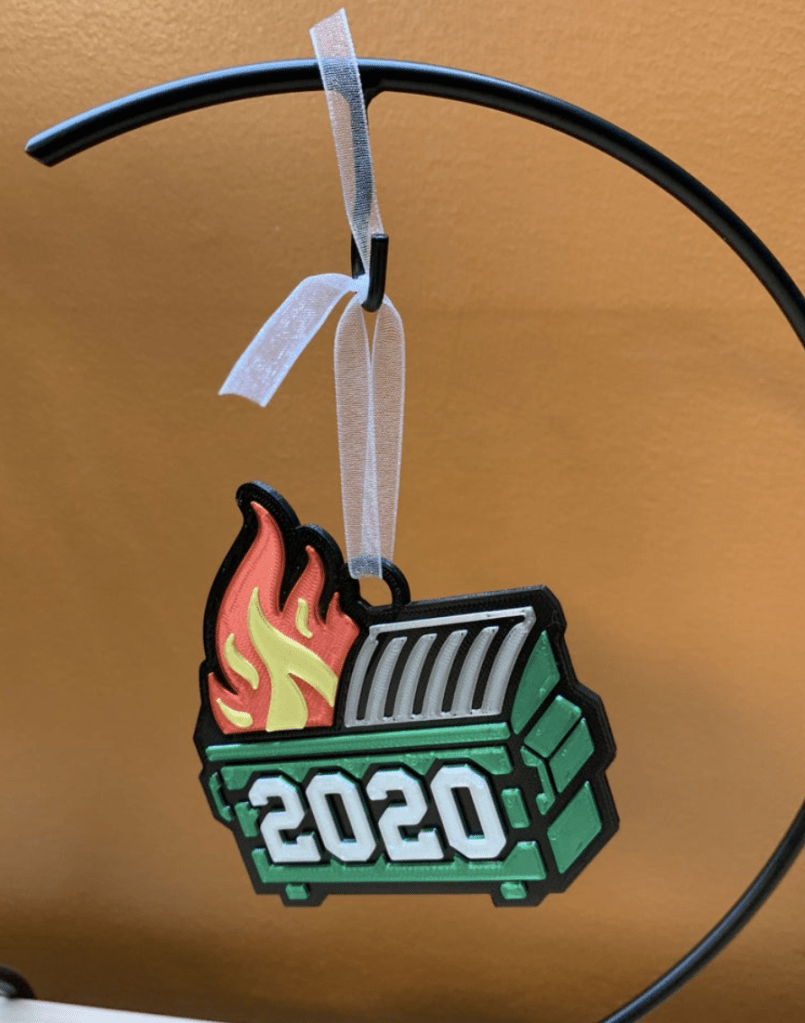
Ah, 2020!

If anything good can be said about this past year, we must admit it has generated some hilarious memes.

Since 2020 has lasted about 10 years, retailers have surely had enough time to introduce a 2020 Barbie. Not to mention the inevitable commemorative Christmas ornaments. Alas, this might not have been the best year to let our imaginations run wild when it comes to anything from Halloween candy to relaxing drinks to baby food. And Time Magazine may have missed a bet when designating their Person of the Year.

Enjoy.

And on a more serious note …

Our annual Christmas letter

Dear Family and Friends,

We certainly don’t need to tell any of you what kind of a year this has been! It’s been a year like none other in our household – even that year when the Cubs finally won the World Series. Our little “QuaranTeam” (two humans and two cats) has been holed up in our home since March – which seems like last week and 10 years ago, both at the same time.

The good news: We’ve been learning lots of new things – like how to get our groceries delivered and how to use technological marvels like FaceTime and Zoom. We’re learning new recipes, because we’re eating at home all the time now, something that hasn’t happened before in our adult lives. We’ve started doing yoga at home too, since our exercise class for seniors went on hiatus when the pandemic hit. Who knew yoga could be so much work? We’re even relearning how to style long hair. Debi’s hair hasn’t been this long in 20 years, and Pete’s hasn’t been this long since his hippie days in the 1960s. 

In October Pete did a presentation for a virtual history conference (over Zoom, like everything else this year) for the Abraham Lincoln Presidential Library and Museum. The title was “Swedes in Roger Williams’ Garden: Acculturation in Immigrant Churches, 1848-1860,” and he’s thinking of expanding it. In the meantime, it keeps him busy with something more constructive than posting political memes on social media. The photo here captures Pete doing his Zoom presentation from the comfort and safety of our home.

We have decided to use the enforced downtime constructively to write the books we’ve been threatening to write nearly forever. Debi’s book, with the working title We Need to Talk, will examine the polarization ripping apart our society and share her personal search for an appropriate Christian response. She has gotten several excerpts written so far, which she’s publishing on her blog Seriously Seeking Answers. Pete’s been blogging, too, and there may be a book in the offing. Not that we’re competitive, but in the middle of the night when he can’t sleep, Pete has sometimes been detected outlining a book about Swedish immigrants (an expansion of the paper he presented for the virtual history conference) and quietly humming “Anything You Can Do, I Can Do Better.” 

Despite the lockdown, we’ve continued to “attend” church every Sunday. Although our building has been closed for all but a few weeks since Lent, a dedicated team of volunteers quickly learned the technology necessary to make our virtual services happen. We’ve been able to participate in weekly Bible study and book group meetings via Zoom as well. Our community service committee has developed several creative ways for us to help people in need in the larger community. And we learned how to use another new technology – iMovie. Here, we made a video of ourselves sharing the peace, to be uploaded and used in an online church service.

Debi has also been busy cleaning the basement, garage, closets and cupboards, and Pete has been chipping away at the archaeological midden in his office. Who knows, we might actually come out of this quarantine having achieved one of Debi’s life-long bucket-list items – a meticulously ordered household, with a place for everything and everything in its place, even in the garage and the basement.

Oley and Champaign have provided their usual endlessly adorable companionship during this shelter-in-place adventure. They continue to be their sweet, lovable, ornery, mischievous selves, thus making our isolation much more bearable.

So we all wish you a “Meowy” Christmas, and what we HOPE will be a much better New Year!

Blessings,

Book excerpt: How the Culture Wars affect us

Note: This is an excerpt from We Need to Talk, my book in progress, which examines the polarization ripping apart our society and shares my personal search for an appropriate Christian response. For an overview of the book and to read my previous excerpts, link HERE.

Some would argue that the extreme polarization in our society is normal and relatively harmless. We must simply learn to ignore the drama. Turn off the TV. Spend less time on social media sites.

If only it were that simple. 

Around the tables at 12-Step group meetings, people say it’s important to distinguish between “normal” and “healthy.” Some situations and behaviors considered all-too-normal in our society are actually anything but healthy, they warn.

For example, it would be bad enough if the tide of anger and disrespect swirling around us served merely to put people in a surly, antisocial mood. Unfortunately, the damage doesn’t stop there. On a societal level, our finger-pointing epidemic leads to everything from Congressional gridlock and loss of trust in our institutions to violence against individuals who belong to maligned groups. On a personal level, people report damaged relationships and higher levels of stress. Perhaps worst of all, our children are watching us. 

Here are some of the ways I see the Culture Wars affecting us, both personally and as a community.

  • Our relationships. In a study published by the journal PLOS ONE (link HERE), about 20 percent of respondents reported that political animosity had damaged their friendships. Nearly 40 percent of registered voters – both Democrat and Republican – surveyed by the Pew Research Center (link HERE) said they do not have a single close friend from the opposing party. I’ve watched some of my own Facebook friends – both conservative and progressive – shred each other on my news feed to the point where I needed to block them. Others have pressured me to “unfriend” or stop associating with people who voted the “wrong” way in an election. I’ve fretted about who to invite to gatherings at my house because I worried that one of my more opinionated guests might insult or offend another guest. Sadly, I’ve had loved ones decide they’re “done” with me because “we don’t agree on anything” politically. 
  • Our livelihoods. Polarization can impact our jobs, along with our ability to support ourselves and our families. At the national level, our elected officials regularly threaten to “shut down the government” unless they get their way on hot-button priorities. In the past few years, government shutdowns have resulted in workers getting furloughed until the impasse is resolved. In Illinois, where I live, social service agencies were forced to conduct massive layoffs when our legislators and the governor held the state budget hostage for two years while fighting over ideological agendas. 
  • Our civic engagement. The Culture Wars may boost TV ratings and generate clicks for social media advertisers. But the toxic nature of our conflicts leaves too many of us wanting to drop out of the civic arena entirely. Hidden Tribes (link HERE), a survey of public opinion by the organization More in Common, says two-thirds (67 percent) of Americans belong to a group the authors have dubbed “the Exhausted Majority.” Although members of this group have many political and ideological differences, they share fatigue with the current state of U.S. politics. The relentless back-and-forth arguments have rendered many folks just plain fed up and wondering if the U.S. can move beyond division, according to the report. At least a quarter (26 percent) of those surveyed report feeling detached, distrustful and disengaged. On a personal level, the warring factions leave me wanting to grab a good book and a flashlight and dive under the bed with my cat.
  • Our conversations. No matter how innocuous or trivial the topic, many of us have become reluctant to express our true thoughts. Personally, I’m not afraid that people might disagree with me, which is fine, or even that someone might prove me wrong, which I can live with. But I do tend to avoid speaking up in situations where I might get name-called or otherwise bullied, and several friends have reported having similar experiences. I don’t think this makes us snowflakes. It means we practice good self-care. Unfortunately, this situation puts a damper on our ability to engage in anything more than the most superficial small talk with others.
  • Our credibility. Name-calling, flaming, trolling and other rude behavior don’t just stop genuine discussion in its tracks. Obnoxious behavior invites others to take us less than seriously. When we lash out with insults toward those who disagree with us, we only give others an excuse to discount us and dismiss our message. 
  • Our ability to profit from advice. Lately I’ve noticed that the constant vitriol has made both me and others more reactive, less able to tolerate even the mildest, most constructive criticism. I don’t think this is entirely a matter of our having overly delicate egos. What passes for criticism is so pervasive and so relentless that we all feel like we’ve had our lifetime quota and cannot bear even one more iota of “feedback.” How many times can we hear words like “moron” and “Nazi” directed toward ourselves before even the most thick-skinned among us gets defensive and shuts down?
  • Our ability to fix or learn from mistakes. People these days find it almost impossible to admit when they are wrong. Again, I think this goes beyond fragile egos. I suspect one factor is that the punishment so often exceeds the crime. We don’t just ask people to repair the damage when they make mistakes. We sue them for everything they’ve got so we can make an example of them. We don’t just fire people. We seek to ruin their entire careers in the name of “accountability.” We “call them out,” target them for public humiliation and attempt to “cancel” them like credit cards. No wonder people are afraid of even the appearance of being wrong.
  • Our ability to resolve real problems. While we bicker incessantly, genuine problems go unaddressed. Raging war in various global hotspots creates millions of refugees. Thousands of children worldwide die each day of starvation and/or totally preventable diseases. Nearly a third of all children in the U.S. live in poverty. Because of Congressional gridlock, our elected officials are completely unable to come up with sensible policy on issues ranging from immigration, health care and our crumbling infrastructure to criminal justice reform and how to manage a pandemic.
  • Our trust. We don’t trust anyone these days – not the government, not the press, not the police, not doctors or scientists, and not even the church. According to a recent Gallup poll (link HERE), barely half (51 percent) of Americans expressed “a great deal” or “quite a lot” of confidence in the medical system. Fewer than half expressed similar confidence in the police (48 percent), the church/organized religion (42 percent), public schools (41 percent), the Supreme Court (40 percent), banks (38 percent), or large technology companies (32 percent). Fewer than a quarter expressed confidence in the criminal justice system (24 percent), big businesses (19 percent), newspapers (24 percent) or television news (18 percent). A measly 13 percent of us expressed confidence in Congress.
  • Our physical health. It would be nice if our elected officials could sit down like mature adults and work out a comprehensive policy to ensure appropriate health care is available to everyone, regardless of income or pre-existing medical conditions. Instead, members of Congress insist on turning our health care into a political wedge issue. Disastrously, the Culture Wars have rendered our national and state governments totally unable to effectively address either the medical or the economic fallout of COVID-19. The tricky part for the rest of us is figuring out how to separate the progressive-versus-conservative political spin from the medical information we need to know in order to protect ourselves from a potentially deadly virus. 
  • Our mental health. In “Stress in America 2020,” an annual survey published by the American Psychological Association (link HERE), 68 percent of adults named the current political climate in the U.S. as a source of stress. Republicans and Democrats were equally likely to say this was true for them. Three in five (60 percent) say the sheer number of issues America faces currently – ranging from racism and immigration to health care, the economy and climate change – is overwhelming to them. As anxiety arising from the COVID-19 pandemic has been added to our tension over these already existing conflicts, our stress levels have skyrocketed to the point that APA has sounded an alarm: “We are facing a national mental health crisis that could yield serious health and social consequences for years to come.”
  • Our faith. The Culture Wars have literally split congregations down the middle in recent years, and major denominations have faced schisms over such issues as LGBTQ rights, abortion and the role of women. How do we have conversations about genuine moral issues such as racism or poverty when important Biblical passages are labelled “too political” and therefore off-limits for discussion? For those of us who claim to be people of faith, spewing hurtful and gratuitous snark on Christian social media sites gives the increasing numbers of young people who identify as “none” ammunition to call us hypocrites and declare they want nothing to do with either us or our religion. 
  • Our safety. Taken to extremes, polarization can promote dehumanization and lower the threshold for violence. Democratic Congresswoman Gabrielle Giffords and Republican Congressman Steve Scalise were shot by mentally unstable individuals who took our society’s heated political rhetoric too literally. Other elected officials from both parties routinely receive death threats in response to their policy decisions. We have groups on both the left (such as Antifa) and the right (such as the Proud Boys) who endorse violence as a legitimate way to achieve political ends. Perhaps more disturbing, a Voter Study Group survey (link HERE) found that 16 percent of ordinary Americans felt that violence is sometimes justified to advance political goals. We’re not even safe in our places of worship – mass shootings have occurred in Christian churches, Jewish synagogues, Muslim mosques and a Sikh temple. 
  • Our children. Do we really think our kids don’t notice the mudslinging we’ve come to regard as normal for political campaigns? Or the car with the middle-aged driver and the bumper sticker that tells us what we can eat if we don’t like the owner’s driving? Or the (alleged) adults who consider “flaming” a popular sport on social media? Or the talk show host who refers to ideological opponents as “wackos”? I’ve heard parents and teachers alike share concerns about children and adolescents watching political debates because of the abundance of name-calling, constant interruptions and generally uncivil behavior. Young people looking to adults for an example of how to behave could be excused for concluding that rudeness is clever. Kids who take their cues from their elders might also get this message: Consideration for others is passé.

So, is extreme polarization normal in our society? Unfortunately. Is it healthy or harmless? Hardly.

Questions for readers: How has our society’s polarization impacted you personally? How do we become part of the solution rather than part of the problem? I’d love to hear your responses to these questions, as well as your comments on this article. Just hit “Leave a Reply” below. When responding, please keep in mind the guidelines I’ve outlined on my Rules of Engagement page (link HERE).

An early Advent

Perhaps they’ve been seeking an antidote to the harrowing nature of 2020 so far, but an unusual number of my friends have started the Christmas season early this year and have been posting photos of their trees and other decorations on Facebook.

Most years I make a practice of declaring to anyone who cares to listen, “I don’t even think about Christmas until the day after Thanksgiving. One holiday at a time, folks.” 

And I studiously have NOT shopped on Black Friday for years, both because I hate crowds and because I don’t want to enable department stores that make their employees leave their families in the middle of Thanksgiving dinner so adult customers can get a head start on fighting over the latest must-have toy. (I certainly don’t intend to do so this year either.)

But I must admit I’ve been having more than my usual share of “Bah! Humbug!” moments with the pandemic surging again. In fact, I’ve been so depressed I had seriously considered not even bothering to put up a tree or decorations this year. After all, being in lockdown means we won’t be entertaining any family or friends at our house. 

So I decided it wouldn’t hurt to follow my friends’ example and start observing Advent early this year myself.

We have a small artificial tree that fits on a table, the better to keep curious pets away from the ornaments. 

I love to go all-out in the sun room. The blaze of lights brings so much cheer on cold, dark mornings.

As if it could read my mind, our Christmas cactus actually started blooming early this year. (It usually doesn’t start blooming until December.)

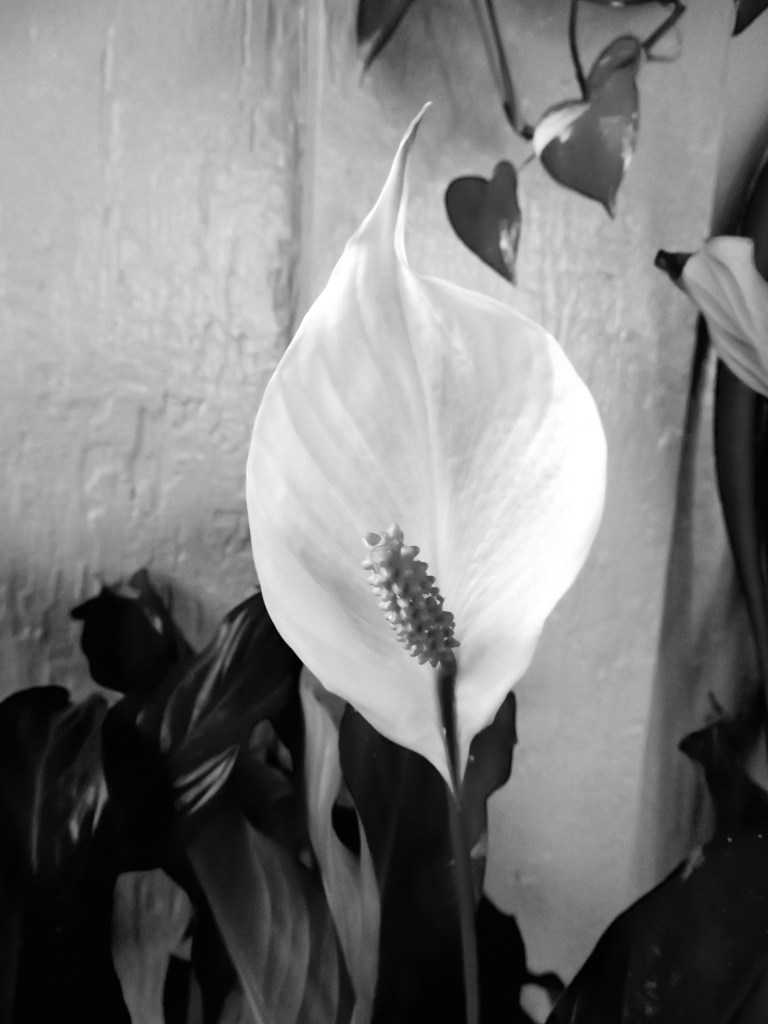
And the peace lily, which usually doesn’t bloom this time of year at all, has decided to add its contribution.

A ceramic Nativity Scene my mother made for me has a place of honor in our china cabinet. Yes, that’s a cat next to the manger. We all know how cats have to be in the middle of things whenever something important is going on, and what could possibly be more important than the birth of our Savior?

At our house, we have an annual tradition of listening to Handel’s Messiah all the way through while putting up the tree and decorations. My favorite part is the Hallelujah chorus, which I could listen to over and over again like a teenager.

There, I’m starting to perk up already.

Tribute to a terrific mentor

In a year of losses, I’m now facing another one. My spiritual director for the past three years died this month following a valiant fight with multiple sclerosis and cancer.

Prior to beginning my journey with Sister M, I had found myself at a spiritual crossroads. My husband and I attended church almost weekly, and I had read the Bible from cover to cover, along with shelves full of books on religion and spirituality. Yet I still found myself asking the “big” or “ultimate” questions. What do I actually believe about God and why? What is God’s purpose for my life? What are my values, or what should they be? How do I live my life in a way that is consistent with my beliefs and values?

Several factors had led to this renewed questioning. The transition in focus and priorities prompted by my retirement. The “time is limited” epiphany that comes with being 60-something, losing loved ones and developing chronic health problems myself. Questions about faith and a church’s true purpose raised by reading the Bible and serving on my congregation’s evangelism committee. The internal tug-of-war over my own values brought on by the increasing divisiveness and polarization in our society.

I made a commitment: Develop a better understanding of God, so I can fulfill God’s purpose for my life, discern what my values should be, and live accordingly. Toward this end, I engaged Sister M to help me sort through my bushel basket full of questions. It’s important for me to point out here that seeing Sister M did not replace going to church. Spiritual direction is a one-on-one partnership in which one Christian helps another grow in a personal relationship with God. It’s a supplement to — rather than a substitute for — church. 

Sister M and I met monthly for one-hour sessions. She offered a variety of suggestions for homework assignments, allowing me to choose which ones I might find most helpful. Sometimes she would have me write my thoughts about a topic. Other times she might have me create an image, or take my camera and go for a walk, or read a book. 

I had already developed a morning meditation ritual — sitting in my recliner in front of the fireplace with a cat in my lap and a cup of coffee by my side while I journaled about my priorities for the coming day. I began using this time to write out my thoughts and insights generated by the homework assignments. 

I must admit the idea of working with a spiritual director made me a bit nervous at first. While I hoped this person would ask the hard questions, I didn’t want someone who would merely push me to adopt their own belief system. I needed this person to be nonjudgmental and open to the idea that I was questioning all kinds of dogma, from the spiritual and religious to the political and ideological. 

Sister M, thankfully, was patient as I grappled with questions some would say I shouldn’t even be asking. Her demeanor was very pleasant, and we immediately discovered one thing in common — we both grew up on farms.

One of her first assignments: Come up with an image that best symbolizes my present spiritual condition. I created a Photoshop image of myself buried under a mountain of clutter. A pair of arms juggled several balls in the air — family, friends, volunteer work, the house. More balls had been dropped and were nestled on the ground at the bottom of the heap — my writing, self-care, God.

I listed those areas of my life that felt not-so-well-ordered. My relationships. A messy house. My frantic, overloaded schedule. Health issues. My writing, which seemed to languish. My emotional life, which often left me feeling like a walking bundle of anxieties. The suspicion I entertained from time to time that my life had been reduced to crossing items off endless to-do lists. My spiritual life, with all those questions and doubts.

Sister M listened to my litany without negative judgment — at least none that I could detect. I half expected her to supply some relevant Bible verses about the Godliness of cleanliness and self-discipline. Instead, she suggested I spend an hour each day tackling the clutter — just one hour — and leave the rest for the next day. Baby steps.

One of the first questions Sister M asked me was, “Have you ever questioned the existence of God?” She didn’t flinch when I said, “Oh yeah. More than once.” For most of my life, I had leaned toward the idea that there probably is a God. Yet, nagging doubts continued to creep in from time to time. I didn’t voice them to anyone, though. If the Christians around me ever doubted God’s existence, they certainly weren’t letting on.

As I began taming my schedule and tackling the endless clutter — one hour and one day at a time — a flash of insight occurred to me. A little epiphany, one might say. Could the question of God’s existence be what I was distracting myself from with all the to-do lists, the frantic scheduling, the endless cleaning and the mindless Internet surfing that cluttered my life and unquieted my mind? My spiritual director agreed that I might be on to something. 

I confessed that what I really wanted was the “blinding light” experience the Apostle Paul had on the road to Damascus, or the burning bush Moses encountered. I wanted to be like those people who saw the blinding light or the burning bush, just knew what they knew about God, and had their mission in life spelled out for them. 

She recommended I use part of my morning meditation time to be completely quiet. “Listen for God’s voice,” she said. Well, the blinding light hasn’t happened for me — at least not yet. But what has happened is nearly as amazing. 

I walked outside. Dismissing the existence of a God is tempting when so many people who claim to speak in God’s name spew hatred for their fellow and sister human beings while committing assorted hypocrisies and evil deeds. Denying God’s existence gets even easier when watching one terrible event after another unfold on the news. But I’ve found it’s almost impossible to deny the existence of a Creator when I’m outdoors with evidence of God all around me.

Sister M helped me explore various kinds of “spiritual clutter” that was crowding attention to God out of my life — and I eliminated a major distractor by walking away from an incredibly abusive volunteer work situation. As much as leaving the organization saddened me, I immediately felt so much “lighter” — like I put down the 100-pound bag of stress I had carried around for five years. 

When my spiritual director asked me point-blank if I ever doubted the existence of God, her question gave me permission to “go there.” For the next leg of my spiritual journey, I wanted to keep being honest about the questions I had. And I had LOTS of them.

Who, or what, exactly, is this Entity I choose to call God? What is my authority for what I believe? The Bible? Church tradition? Why go to church, when by my own admission, I feel the presence of God most while immersed in nature? What is prayer and how should we pray? Can writing, singing and gardening be forms of prayer? Is it okay to ask God for things? What does salvation mean, actually? How do I relate the 10 Commandments to 21st Century issues? In a world where many “sins” have been reframed as “diseases” or “dysfunctional behavior,” is sin still a legitimate concept? How would liberal Christians define sin versus how conservative Christians define it? Considering that no creed exists anywhere in the Bible and a number of Christian churches don’t have one, do we need a creed? If so, what should be in it? Is there a common core of beliefs shared by most Christians, regardless of sect or denomination? Do all of these denominations offer equally legitimate paths to God? Is there a way to heal the divisions between believers and relate respectfully to people whose viewpoints differ from ours?

That was just for starters. When I shared this list of questions with Sister M, as usual, there were no lectures. She just smiled and asked, “Where do you want to start?”

We explored a variety of prayer techniques. Among them: morning meditation, nature prayer, prayers of petition and intercession, prayers of thanksgiving, writing and journaling as a form of prayer, and practicing better mindfulness in church. While I had used some of these prayer techniques off and on for years, I committed to doing them on a more regular, disciplined basis. 

When it came to my dreams, one goal on my bucket list remained elusive. From age 10 onward, I’d dreamed of writing a book. More than 50 years later, that goal was … still on my bucket list. So, with encouragement from Sister M, I decided it was time. My book — with the working title We Need to Talk — will examine the polarization ripping apart our society and share my personal search for an appropriate Christian response.

My spiritual progress may seem agonizingly slow to some who are reading this. But for me, finding a way to effectively address my occasional doubts about God’s existence was HUGE. Summoning the self-respect and courage to walk away from an abusive situation was an enormous step in the right direction. My creativity has soared. I’ve now written several book excerpts, I recently posted my 100th blog entry, and I’ve discovered a new hobby – nature photography. And while I haven’t yet tamed all the clutter in my house, I’ve gotten much more comfortable with incremental progress. Baby steps, as Sister M would say. 

The graphic I produced for her at the beginning of our work together would now look more like this.

As they say around the tables at 12-Step meetings, we aim for spiritual progress rather than spiritual perfection. One thing I do know for sure: I’m grateful God gave me the opportunity to make a portion of this journey with Sister M.

Rest in peace, dear sister in Christ. In your honor, I’m going to keep asking those pesky questions.

Recipe: Peanut butter cup pie

One of my absolute favorite comfort foods is peanut butter. So, a real treat for me was the Chocolate Peanut Butter Cup pie at Baker’s Square Restaurant and Bakery, a local Midwestern chain restaurant known for its amazing pies. (Alas, the restaurant has sadly closed.)

The dessert, of course, was meant to resemble an actual Reese’s peanut butter cup (my all-time favorite candy), with its chocolate graham cracker crust, peanut butter cheesecake filling and chocolate ganache topping liberally sprinkled with chopped peanut butter cups. Ah-h-h-h!

The bad news: Each slice contained a whopping 830 calories. Even more scary was the delectable dessert’s heavy fat and sugar content – 56 grams of fat and 63 grams of sugar. The online recipes that came closest to duplicating the restaurant version – with their heavy cream and astronomical sugar content – flunked the nutritional test nearly as badly.

The good news: With just a few ingredient tweaks, I’ve been able to improve the dessert’s nutritional content considerably. So, I get to have my pie and eat it too, so to speak. Better yet, this no-bake recipe is fairly simple to make. The pie also freezes well for up to three months, so it can be enjoyed a slice at a time over a period of several weeks.

Replacing regular cream cheese with the fat-free variety cuts nearly 12 grams of fat and 140 calories from each serving. I further reduce the calories, fat and sugar content by using sugar-free Cool Whip, sugar-free vanilla pudding made with fat-free milk, sugar-free chocolate frosting and even sugar-free peanut butter cups.

Bottom line: Sorry, this still is not a totally low-calorie treat – but I’ve managed to cut out about half the calories, half the fat and nearly all of the sugar. And I swear there is NO sacrifice in taste. Plus, this version actually has some nutritional value – about the same protein content as a 3-ounce hamburger patty, in fact.

Of course, one way to further cut the calorie content as well as fat and sugar consumption is to control portion size. Cutting the pie into 12 servings rather than the standard 8 still allows for a somewhat generous slice (in fact, a slightly bigger slice than I got when splitting the restaurant dessert with a friend, which I sometimes did). Below, I’ve provided nutrition information for a smaller slice (12 servings per pie) and a larger slice (8 servings per pie).
Note: I’ve included brand names for some of the ingredients I use because of the marked differences in taste and quality between the various fat-free and sugar-free products. These are the brands that have worked best for me in terms of flavor, and which don’t just replace fat content by increasing sugar content. I always have to watch for this when using reduced-fat products.

Ingredients

  • 8-inch pre-made Oreo pie crust
  • 8-ounce package fat-free Philadelphia cream cheese
  • 8-ounce package fat-free Philadelphia cream cheese
  • ½ cup peanut butter
  • Small (1 ounce) package Jell-o brand sugar-free vanilla pudding mix
  • 1 cup fat-free (skim) milk
  • 1 cup sugar-free Cool Whip whipped topping
  • ½ of 15-ounce container Pillsbury sugar-free chocolate fudge frosting
  • 8.8-ounce bag Reese’s sugar-free miniature peanut butter cups

Directions

Prepare pudding according to package instructions but using only one cup of milk. Add whipped topping and stir until blended. 

Add cream cheese and peanut butter. Blend thoroughly in a food processor or blend using a food processor stick. (You may wish to add the cream cheese a small chunk at a time or soften it in the microwave oven about 30 seconds to one minute to make the blending process easier.)

Spoon mixture evenly into pie crust and refrigerate at least four hours until pie filling is firm. Or place in the freezer for about a half hour.

Soften frosting by placing in the microwave oven for up to 30 seconds and then stirring. Spread the frosting evenly over the cheesecake.

Chop the peanut butter cups and sprinkle over the top.

Nutrition information

Servings: 12 | Calories: 335 | Carbohydrates: 44 g | Protein: 8 g | Fat: 20 g | Saturated fat: 2 g | Cholesterol: 4 mg | Sodium: 400 mg | Potassium: 143 mg | Fiber: 4 g | Sugar: 7 g | Vitamin A: 1% | Vitamin C: 0% | Calcium: 2% | Iron: .5% 

Servings: 8 | Calories: 502 | Carbohydrates: 66 g | Protein: 12 g | Fat: 30 g | Saturated fat: 4 g | Cholesterol: 6 mg | Sodium: 600 mg | Potassium: 215 mg | Fiber: 6 g | Sugar: 11 g | Vitamin A: 2% | Vitamin C: 0% | Calcium: 3% | Iron: 1%