Conscious contact with God

Note: I’ve been taking a short break from writing the past few weeks to focus on a couple of important offline projects, so I’m reposting one of my personal favorites from a couple of years ago. This was first posted in September of 2023, and I still refer to it from time to time when looking for inspiration for my prayer life.

For several years now, my number one priority has been to develop a better understanding of God, so I can fulfill God’s purpose for my life, discern what my core values should be and live accordingly. As I have sought to improve my relationship with God, a key part of my spiritual direction journey has involved exploring prayer.

My Bible study has yielded an abundance of models for how to pray – Matthew 6:9-16 gives us the Lord’s prayer, of course, and the Psalms provide dozens of other examples. At church, I’m invited to join the congregation in liturgical prayer. My 12-step groups introduced me to the Serenity Prayer, and my parents and grandparents taught me still others, from table grace to my favorite childhood bedtime prayer.

My first spiritual director was fond of pointing out that prayer is – quite simply – a conversation with God, and there is an almost infinite variety of ways to pray. We can offer up confessional prayers and liturgical prayers, prayers of intercession and prayers of thanksgiving, foxhole prayers and prayers of lament, nature prayer and even crowd-sourced prayers.

Types of prayer

Here are several types of prayer that I’ve personally engaged in.

  • Foxhole prayer. A popular saying posits that “there are no atheists in foxholes.” While the Bible doesn’t explicitly mention the term “foxhole prayer,” Scripture is chock-full of desperate prayers from people in distress or danger. I must acknowledge that my prayer life during a crisis is quite often of the “foxhole” variety. Many of my prayers this past year happened in doctors’ offices and hospital rooms, and to say I was scared would be an understatement. So, this type of prayer is definitely part of my repertoire.
  • Prayers of petition and intercession. When it comes to praying on behalf of ourselves or others, I know there is some concern about regarding God as a magic genie to whom we bring our shopping list. However, the Bible is jam-packed with prayers of petition and intercession, so I’m assured this type of prayer is perfectly appropriate. In fact, Philippians 4:6 encourages us to “let your requests be known to God,” and one could say most of the Lord’s Prayer qualifies as a prayer of petition.
  • Confessional prayer. The Bible frequently emphasizes the importance of confession in seeking reconciliation with God. Proverbs 28:13 reminds us that “whoever conceals their sins does not prosper, but the one who confesses and renounces them finds mercy.” I’ve engaged in confessional prayer both privately, during morning meditation or as part of an evening Examen, and with others, as part of the prayer of confession and absolution during Sunday church services.
  • Liturgical prayer. Liturgical prayers follow a prescribed order and include specific rituals and readings from sacred texts. Examples during Sunday services at my church include the invocation, confession and absolution, the collect, prayers of intercession, the Lord’s prayer and the benediction. I have always found the ritual aspect appealing, because it is conducive to contemplation and reflection. Plus, I feel a historical connection to other Christians who have been saying these same prayers for hundreds of years.
  • Lament. Prayers of lament allow us to fully face and name the pain in our lives, and we need look no further than the Bible for numerous examples. The Psalms brim with prayers about pain, anguish, fear and grief. Jesus wept. More than once. Chapter 3 of Ecclesiastes reminds us that for everything, there is a season – a time to weep and a time to mourn are sanctified, right along with a time to laugh and a time to dance.
  • Crowd-sourced prayer. This is what I like to call the prayers solicited on Facebook and other social media. Often responders not only pledge to offer up prayers themselves, but promise to put the original poster on their church’s prayer lists. When I’m the one asking for prayers, I like to visualize all those prayers wending their way up to heaven – prayers from my family, my friends and the folks who respond to the prayer lists at all the different churches my family and friends attend. Talk about feeling loved and supported!
  • Nature prayer. Nature prayer – encountering and being attentive to God’s presence in creation – has been my most consistently reliable way to address my occasional doubts about God’s existence. For me, it involves experiencing God’s handiwork with all my senses – seeing the vibrant colors of spring blossoms and fall leaves, listening to birds singing and cicadas humming, drinking in the scent of lilacs or honeysuckle, feeling a gentle breeze against my face, tasting the sweetness of a vine-ripened strawberry. 
  • Listening prayer. This form of prayer involves quieting ourselves and intentionally seeking to hear God’s voice by being still and receptive. As Psalm 46:10 tells us, “Be still and know that I am God.” One of my spiritual directors suggested that I say or write a prayer, then be completely silent for a few minutes while I quiet my mind and wait for God’s response. Then ask myself, “What is God saying to me right now?”
  • Prayers of thanksgiving. 1 Chronicles 16:13 says: “Give thanks to the Lord, for he is good; his steadfast love endures forever.” Even in tough times – or maybe I should say, especially in tough times – expressing gratitude for answered prayers and other blessings can help lift me out of despair. I also remind myself that, while prayers of petition and intercession are fine, I must not forget to thank God when those prayers are answered.

Some prayer techniques worth trying

There are also several techniques designed to facilitate prayer that I’ve personally found helpful – some of them suggested by my spiritual directors and some that I’ve employed for nearly as long as I can remember:

  • Memorization. Ever since I was a child and learned the bedtime prayer that begins with “now I lay me down to sleep,” there has been a place in my life for “rote” – or memorized – prayers. When I am too overwhelmed to think straight, rote prayers such as the Lord’s Prayer or the Serenity Prayer can help calm me and give me the words I need. The fact that a prayer is memorized, or is being recited in unison with others, or has been offered a gazillion times before, need not mean it’s “empty” as long as I pay attention to the words while I say them.
  • Meditation. Morning meditation has been a vital part of my daily routine for more than a quarter century. I might journal about my priorities for the coming day, or make a gratitude list, or work on a homework assignment my spiritual director has given me. While the content may vary from one day to the next, I’ve found that I often feel more “centered” after a meditation session and sense that something is missing if I skip it.
  • Writing/journaling. Writing, which has been a major part of my morning meditation sessions for years, helps me focus my thoughts in an organized way. This makes it a valuable tool, even when I’m communicating with God. Keeping a journal also encourages me to record the fruits of my prayers, which in turn reminds me that God does answer prayer more often than I appreciate.
  • Photography. I’ve found that photography can serve as a potent medium for reflection and contemplation. It invites me to slow down and take notice of my surroundings, increases my awareness of the visual richness in ordinary objects such as an acorn or a flower blossom, and cultivates receptivity to God’s beauty all around me. Most of all, it demands that I pay attention and stay in the moment.
  • Music. St. Augustine has been quoted as saying, “Whoever sings, prays twice.” I’ve long considered both making and listening to music conducive to prayer. For me, music has the power to cut through mental chatter and quiet my mind. Making music is a great way to offer a positive contribution to other Christians as well. For years, Pete and I sang in the church choir and sometimes Pete even serenades me with his dulcimer while I engage in morning meditation.
  • Mindfulness. 1 Thessalonians 5:17 tells us to “pray without ceasing.” For me, this has come to mean mindfulness – living with a moment-by-moment awareness of God’s presence as I go about my daily activities, or at least trying not to get distracted by my own random thoughts while immersed in Bible study or listening to a sermon. I’ve found that mindfulness is definitely a learned skill, more easily said than done!
  • Lectio divina. A Latin phrase meaning “sacred reading,” lectio divina is a form of prayer that can help us get more from our personal Bible study. This technique, suggested by my first spiritual director, encourages us to ask questions as we carefully and mindfully read scripture: What does the text say? What do I want to ask God about this text? What will be different in my daily life as a result of reading this passage, and how can I put its teaching into action?
  • Examen. This technique, also suggested by one of my spiritual directors, is a time specifically set aside for reflective prayer. It may involve an examination of my conscience, prayerful reflection on the events of the day to detect God’s presence, expressions of thanksgiving and gratitude, or a request for the grace I will need to get through the following day. It’s a great way to wrap up my day before I go to sleep.

I’ve used some of these prayers and techniques off and on for years, while others have been added to my repertoire more recently. I’d like to commit to doing them all on a more regular, disciplined basis as I continue my spiritual journey.

Conscious contact with God

For several years now, my number one priority has been to develop a better understanding of God, so I can fulfill God’s purpose for my life, discern what my core values should be and live accordingly. As I have sought to improve my relationship with God, a key part of my spiritual direction journey has involved exploring prayer.

My Bible study has yielded an abundance of models for how to pray – Matthew 6:9-16 gives us the Lord’s prayer, of course, and the Psalms provide dozens of other examples. At church, I’m invited to join the congregation in liturgical prayer. My 12-step groups introduced me to the Serenity Prayer, and my parents and grandparents taught me still others, from table grace to my favorite childhood bedtime prayer.

My first spiritual director was fond of pointing out that prayer is – quite simply – a conversation with God, and there is an almost infinite variety of ways to pray. We can offer up confessional prayers and liturgical prayers, prayers of intercession and prayers of thanksgiving, foxhole prayers and prayers of lament, nature prayer and even crowd-sourced prayers.

Types of prayer

Here are several types of prayer that I’ve personally engaged in.

  • Foxhole prayer. A popular saying posits that “there are no atheists in foxholes.” While the Bible doesn’t explicitly mention the term “foxhole prayer,” Scripture is chock-full of desperate prayers from people in distress or danger. I must acknowledge that my prayer life during a crisis is quite often of the “foxhole” variety. Many of my prayers this past year happened in doctors’ offices and hospital rooms, and to say I was scared would be an understatement. So, this type of prayer is definitely part of my repertoire.
  • Prayers of petition and intercession. When it comes to praying on behalf of ourselves or others, I know there is some concern about regarding God as a magic genie to whom we bring our shopping list. However, the Bible is jam-packed with prayers of petition and intercession, so I’m assured this type of prayer is perfectly appropriate. In fact, Philippians 4:6 encourages us to “let your requests be known to God,” and one could say most of the Lord’s Prayer qualifies as a prayer of petition.
  • Confessional prayer. The Bible frequently emphasizes the importance of confession in seeking reconciliation with God. Proverbs 28:13 reminds us that “whoever conceals their sins does not prosper, but the one who confesses and renounces them finds mercy.” I’ve engaged in confessional prayer both privately, during morning meditation or as part of an evening Examen, and with others, as part of the prayer of confession and absolution during Sunday church services.
  • Liturgical prayer. Liturgical prayers follow a prescribed order and include specific rituals and readings from sacred texts. Examples during Sunday services at my church include the invocation, confession and absolution, the collect, prayers of intercession, the Lord’s prayer and the benediction. I have always found the ritual aspect appealing, because it is conducive to contemplation and reflection. Plus, I feel a historical connection to other Christians who have been saying these same prayers for hundreds of years.
  • Lament. Prayers of lament allow us to fully face and name the pain in our lives, and we need look no further than the Bible for numerous examples. The Psalms brim with prayers about pain, anguish, fear and grief. Jesus wept. More than once. Chapter 3 of Ecclesiastes reminds us that for everything, there is a season – a time to weep and a time to mourn are sanctified, right along with a time to laugh and a time to dance.
  • Crowd-sourced prayer. This is what I like to call the prayers solicited on Facebook and other social media. Often responders not only pledge to offer up prayers themselves, but promise to put the original poster on their church’s prayer lists. When I’m the one asking for prayers, I like to visualize all those prayers wending their way up to heaven – prayers from my family, my friends and the folks who respond to the prayer lists at all the different churches my family and friends attend. Talk about feeling loved and supported!
  • Nature prayer. Nature prayer – encountering and being attentive to God’s presence in creation – has been my most consistently reliable way to address my occasional doubts about God’s existence. For me, it involves experiencing God’s handiwork with all my senses – seeing the vibrant colors of spring blossoms and fall leaves, listening to birds singing and cicadas humming, drinking in the scent of lilacs or honeysuckle, feeling a gentle breeze against my face, tasting the sweetness of a vine-ripened strawberry. 
  • Listening prayer. This form of prayer involves quieting ourselves and intentionally seeking to hear God’s voice by being still and receptive. As Psalm 46:10 tells us, “Be still and know that I am God.” One of my spiritual directors suggested that I say or write a prayer, then be completely silent for a few minutes while I quiet my mind and wait for God’s response. Then ask myself, “What is God saying to me right now?”
  • Prayers of thanksgiving. 1 Chronicles 16:13 says: “Give thanks to the Lord, for he is good; his steadfast love endures forever.” Even in tough times – or maybe I should say, especially in tough times – expressing gratitude for answered prayers and other blessings can help lift me out of despair. I also remind myself that, while prayers of petition and intercession are fine, I must not forget to thank God when those prayers are answered.

Some prayer techniques worth trying

There are also several techniques designed to facilitate prayer that I’ve personally found helpful – some of them suggested by my spiritual directors and some that I’ve employed for nearly as long as I can remember:

  • Memorization. Ever since I was a child and learned the bedtime prayer that begins with “now I lay me down to sleep,” there has been a place in my life for “rote” – or memorized – prayers. When I am too overwhelmed to think straight, rote prayers such as the Lord’s Prayer or the Serenity Prayer can help calm me and give me the words I need. The fact that a prayer is memorized, or is being recited in unison with others, or has been offered a gazillion times before, need not mean it’s “empty” as long as I pay attention to the words while I say them.
  • Meditation. Morning meditation has been a vital part of my daily routine for more than a quarter century. I might journal about my priorities for the coming day, or make a gratitude list, or work on a homework assignment my spiritual director has given me. While the content may vary from one day to the next, I’ve found that I often feel more “centered” after a meditation session and sense that something is missing if I skip it.
  • Writing/journaling. Writing, which has been a major part of my morning meditation sessions for years, helps me focus my thoughts in an organized way. This makes it a valuable tool, even when I’m communicating with God. Keeping a journal also encourages me to record the fruits of my prayers, which in turn reminds me that God does answer prayer more often than I appreciate.
  • Photography. I’ve found that photography can serve as a potent medium for reflection and contemplation. It invites me to slow down and take notice of my surroundings, increases my awareness of the visual richness in ordinary objects such as an acorn or a flower blossom, and cultivates receptivity to God’s beauty all around me. Most of all, it demands that I pay attention and stay in the moment.
  • Music. St. Augustine has been quoted as saying, “Whoever sings, prays twice.” I’ve long considered both making and listening to music conducive to prayer. For me, music has the power to cut through mental chatter and quiet my mind. Making music is a great way to offer a positive contribution to other Christians as well. For years, Pete and I sang in the church choir and sometimes Pete even serenades me with his dulcimer while I engage in morning meditation.
  • Mindfulness. 1 Thessalonians 5:17 tells us to “pray without ceasing.” For me, this has come to mean mindfulness – living with a moment-by-moment awareness of God’s presence as I go about my daily activities, or at least trying not to get distracted by my own random thoughts while immersed in Bible study or listening to a sermon. I’ve found that mindfulness is definitely a learned skill, more easily said than done!
  • Lectio divina. A Latin phrase meaning “sacred reading,” lectio divina is a form of prayer that can help us get more from our personal Bible study. This technique, suggested by my first spiritual director, encourages us to ask questions as we carefully and mindfully read scripture: What does the text say? What do I want to ask God about this text? What will be different in my daily life as a result of reading this passage, and how can I put its teaching into action?
  • Examen. This technique, also suggested by one of my spiritual directors, is a time specifically set aside for reflective prayer. It may involve an examination of my conscience, prayerful reflection on the events of the day to detect God’s presence, expressions of thanksgiving and gratitude, or a request for the grace I will need to get through the following day. It’s a great way to wrap up my day before I go to sleep.

I’ve used some of these prayers and techniques off and on for years, while others have been added to my repertoire more recently. I’d like to commit to doing them all on a more regular, disciplined basis as I continue my spiritual journey.

We need lament

For a while now, my husband and I have been facing a series of personal crises that have left us only half-jokingly pondering whether the Biblical Book of Job was written especially for us. A cancer diagnosis. A heart attack. The deaths of multiple loved ones over a very short period of time. In the middle of all this, a pandemic with restrictions that felt like a prison sentence in solitary confinement. And we’ve been asking ourselves, “How do we get through this ‘midnight of the soul’ with our lives, our relationships, and our faith intact?”

When we sought professional counseling to help us process all this – a wise decision, I now believe – I sent a warning shot across the bow to Robin, our therapist: No toxic positivity, please. I wanted at least one place where I didn’t have to say “fine” when asked how I was doing. After all, anyone who attends 12-Step meetings knows what “fine” really means, right? (Clean version: A Frazzled, Insecure, Neurotic and Emotional mess.) What I needed, I told Robin, was a place where I could say, “I’m scared. I’m overwhelmed. I’m exhausted.” And not be judged.

Far from being a sign of “adjustment disorder” – or any other pathologizing label insurance companies want mental health professionals to paste on people as a condition for covering the cost of therapy sessions – my attitude going into counseling may be entirely healthy, according to both secular and spiritual experts.

What is toxic positivity?

Toxic positivity is the demand that we project a relentlessly upbeat attitude regardless of our actual feelings and circumstances, says Miami-based psychotherapist Whitney Goodman. “Every day we’re bombarded with pressure to be positive,” she explains in her book Toxic Positivity: Keeping it Real in a World Obsessed with Being Happy. “Even faced with illness, loss, breakups, and other challenges, there’s little space for talking about our real feelings – and processing them so that we can feel better and move forward.”

Before I go further, let me emphasize that I’m not suggesting all positivity is wrong. I certainly am grateful for the get-well wishes and prayers, the delicious meals people have sent to our house when we didn’t feel like cooking, the many offers to assist with transportation and other needs, the cat photos and baby goat videos and bad puns posted to our Facebook pages, and the many other things our wonderful family members and friends have done to help us feel supported as we’ve moved through our recent crises. However, it is quite possible to experience “positive” emotions such as gratitude and “negative” emotions such as grief simultaneously. For example, when I’ve lost loved ones, I’ve felt both gratitude for their lives and grief over their loss. At the same time.

According to Goodman, positivity becomes toxic when someone seeks support, validation or compassion during trying times and is met instead with a platitude or a lecture, or is shamed for not being happy or positive enough.

Toxic positivity may be well-intentioned but often ends up feeling dismissive, she says. We may think we’re being supportive by offering platitudes such as “this too shall pass” when a friend is going through a difficult time. But in reality, we may be invalidating their experience by subtly suggesting that their feelings are somehow wrong. At worst, our good-vibes-only culture encourages emotional suppression and shames us for being too negative: You’re not the only one who has problems. Focus on the good things in your life and be grateful. It could be worse. Suck it up, buttercup. Spare us the pity party. Get over it already.

Toxic positivity too often has the effect of gaslighting people who have legitimate feelings or concerns, and may seem to imply that everything bad in their lives is their own fault, Goodman adds. Whether our goal is to help people feel better or to shame them, we tend to use platitudes and lectures as a conversation stopper. Always appearing positive and carefree allows us to deny our reality or the other person’s, rationalize unacceptable situations, or avoid taking responsibility, and can instantly shut down uncomfortable dialogue.

I suspect toxic positivity may be one of the drivers behind the nastiness of our current culture wars. In our day-to-day conversations, how long can we discuss news stories about tragedies such as floods or earthquakes, let alone “political” issues such as racism or gun violence, before someone subtly or not-so-subtly encourages us to change the subject? And while our society allows us few acceptable outlets for the legitimate expression of suffering and anguish, there is one negative emotion that is not only accepted but celebrated: Self-righteous outrage. We are allowed to call people names, hurl insults and assassinate each other’s character, but heaven forbid we break down and cry when we are grieving.

Putting on our ‘church face’

Unfortunately, even our churches – at least in the U.S. – often don’t do much better with strong “negative” emotions, according to Methodist pastor Abby Norman. “In church,” she says in the book Yes You Can Talk to God Like That, “we slap a smile on and wear the mask I have heard called ‘church face.’ As in, ‘I was crying in the parking lot, but I put my church face on and walked into the foyer and told everyone I was fine.’ Somehow, we’ve decided that church is where everyone is supposed to be OK, fine, great! We are afraid our church family can’t handle our sorrows.”

Church people can be nearly as uncomfortable with suffering and anguish as secular folks are, so we may also discourage overt expressions of strong emotions. The result? At church, we often get to hear still more dreadful lectures and platitudes: God is good, all the time! Everything happens for a reason. You mustn’t question God’s will. God won’t give you more than you can handle. If we fail to keep our “church face” properly pasted on at all times, it may be implied that we lack enough faith to trust God appropriately.

Some folks suggest that even our private prayers should reflect a good-vibes-only attitude. Prayers of praise and thanksgiving only, we may be told. If we ask for anything, we must only ask for knowledge of God’s will for us. Heaven forbid that we ask for something selfish, or admit to God that we’re afraid or angry. “Perhaps we’re afraid even God can’t handle the hardest stuff in our lives,” Norman laments.

This, she believes, is pretty unhealthy. “Imagine going to see your doctor, but instead of explaining what is wrong with you, you immediately tell the doctor you are fine or that it isn’t that bad,” she explains. “Why even bother going? Coming to God and to the greater body of Christ as though everything is fine when it is not fine is exactly what we do at church. Then we wonder why church doesn’t feel good or why we can’t heal.”

An antidote from the Bible

Fortunately, the Bible offers a healthy antidote to toxic positivity: Lament.

According to Norman, lament takes up a surprising amount of space in Scripture. “People giving God the what-for, while not taught in Sunday School, is actually almost a third of the Bible,” she points out. “When categorizing the Psalms, experts say that 40 percent of them are psalms of lament.”

Indeed, the Book of Psalms brims with prayers about pain, anguish, fear and grief. Take passages like Psalm 6:6:

I am weary with my moaning;
    every night I flood my bed with tears;
    I drench my couch with my weeping.

David certainly spews out some honest feelings in Psalm 22:14-15:

I am poured out like water,
    and all my bones are out of joint.
My heart has turned to wax;
    it has melted within me.
My mouth is dried up like a potsherd,
    and my tongue sticks to the roof of my mouth;
    you lay me in the dust of death.

In fact, Psalm 22 continues in this vein for 21 verses before turning to expressions of faith that God will deliver him from harm.

Additional examples of Biblical lament abound:

  • The Bible offers us the entire Book of Lamentations, which is chock full of passages like 3:17-18: “My soul is bereft of peace; I have forgotten what happiness is; … my endurance has perished; so has my hope from the LORD.” (Maybe it should come as no surprise in our good-vibes-only circles that Lamentations seems to be one of the most neglected books of the Bible.)
  • The Hebrew custom of wailing and rending one’s garments to express deep anguish upon the death of a loved one or a great calamity appears several times in the Bible. Reuben rent his clothes when he found that Joseph had been taken from the pit (Genesis 37:29).  David rent his garments when he heard that Absalom had slain his brothers (2 Samuel 13:31).  
  • When Job fell on excruciatingly hard times, he didn’t lose his faith, but he did confront God, demanding to know why these things were happening to him. He even wanted to put God on trial. Meanwhile, his friends responded the way too many of us do. At first, they were empathetic, but then began offering useless advice and even asking what Job had done to deserve his misfortune.
  • Chapter 3 of Ecclesiastes reminds us that for everything, there is a season. A time to weep and a time to mourn are sanctified, right along with a time to laugh and a time to dance.
  • Jesus wept. More than once. As he faced crucifixion, he pleaded with God, “Father, if you are willing, remove this cup from me.” And while he hung on the cross, he asked, “My God, why have you forsaken me?”

In other words, Job and David and even Jesus were willing to talk to God in ways many of us can’t quite manage, and none of them were struck by lightning as a result.

Lament can be healthy

“Lament allows us to fully face and name our pain,” says longtime Bible Project Blog contributor Whitney Woollard. “It creates space for future resolution and hope without glossing over our trauma.”

In a post titled “Lamentations: The Volatile Voice of Grief” (link HERE), Woollard explains that lament “gives us permission to protest life’s difficulties, to scream, cry, vent, plead, and complain in the presence of God and others. It lets us ask the hard questions without condemnation: Why did this have to happen? How could you allow it? Where are you in the midst of it? It allows weeping without explanation. It might be messy and uncomfortable.”

By the way, God is quite capable of handling our negative feelings, including our anger, according to Jesuit priest Jim McDermott. “Most of us were taught being angry at God was taboo, at least a sin and at worst ‘duck your head because the lightning is coming’ dangerous,” he says in a recent blog post (link HERE). “But we have known hard times, some of us very hard times, or we have witnessed people we love ravaged by disease or addiction in ways that just seem cruel or malicious. It’s only natural in those moments to turn to God, who we hear over and over at church is here for us, loves us, walks with us, and ask, ‘Well? How about it? Where are you now that we actually need you?’”

Woollard believes we could benefit from including elements of lament in both our individual and congregational lives.

“Incorporating prayers of lament into a Christian worship service or small gathering is a way to give voice to hurting believers,” says Woollard. “It says, ‘We see you and we grieve alongside you.’ In a global village where disasters, wars, shootings, and famines are brought before our eyes daily, it’s natural that we should weep with one another by sharing in the God-given language of lament and crying out ‘How? Why?’ alongside them. Lament then, is a powerful practice that gives voice to our grief and initiates the healing process.”

On an individual level, “if you feel alone, forsaken, or abandoned by God, give honest expression to those feelings,” Woollard suggests. “If you’re exhausted by life’s blows, having lost all endurance or the will to go on, tell it to God. Really. The Bible wants you to do this.”

If we can trust God to handle our anger and our sadness, we can avoid using these emotions to damage other people or ourselves by bringing them into our prayers, says Kaya Oakes, a contributing writer for America magazine (link HERE). “Yes, you’re angry,” she points out. “Yes, you’re sad. God is present to us in those states of emotional turmoil, too. But God isn’t asking us to move on or let go; like a trusted friend or a good therapist, God simply receives our sorrow and desolation, and gives it a place to go.”

We need not edit our prayers

In other words, we need not edit ourselves when praying, but can be as brutally honest as we need to be when life gets painful. “As in any meaningful relationship, sometimes taking the risk of saying what you actually think and feel is itself the path out of the desert,” says McDermott. “What is shared is no longer carried alone; in fact, it’s often released.”

Woollard concurs. “If you’re not used to this kind of raw honesty in God’s presence, it might seem scary at first. That’s okay. Just know that lament isn’t irreverent; it’s biblical. Going to God in your grief is an act of faith all on its own.”

This all sounds very reassuring to me because I must confess that, during a crisis, most of my prayers tend to be of the foxhole variety:

Dear God, please get us out of this jam. Help!

One time, while I drove to the emergency room in the wee hours of the morning – for the fourth time in two weeks – I just plain screamed:

DEAR GOD, MAKE IT STOP!!!!!!!!!

My prayers have also sounded a lot like lament on numerous occasions:

Dear God, I’m tired of cancer. I’m tired of heart problems. I’m tired of arthritis pain everywhere that’s so bad I can’t sleep. I’m tired of test results with nasty surprises. I’m tired of fighting with insurance companies every single time a doctor changes one of our medications. I’m tired of doctors who don’t want to communicate and collaborate because of turf issues. I’m tired. I’m tired. I’m tired.

So, here’s another heartfelt prayer.

Dear God: To be perfectly honest, I’m scared. I’m overwhelmed. I’m exhausted. Thank-you for listening. Amen.

Photography as prayer

Note: I’m taking a short break from writing in July to focus on some pressing personal priorities, so for this month, I’m reposting some of my favorite blog pieces from earlier days when I only had a few people following my blog. This was first posted in September 2020.

Can photography be a form of prayer? Howard Zehr, author of The Little Book of Contemplative Photography, thinks so. 

Photography can serve as a medium for reflection and meditation, and encourages mindfulness, he says. “By slowing down to reflect and meditate, by heightening our visual awareness and our imaginations, by cultivating receptivity and a more holistic way of knowing, we can renew ourselves while gaining new insights into ourselves, the creation, and the Creator.”

Some photographic subjects present themselves in an obvious way. An amazing sunrise practically screams, “Quick! Grab your camera.”

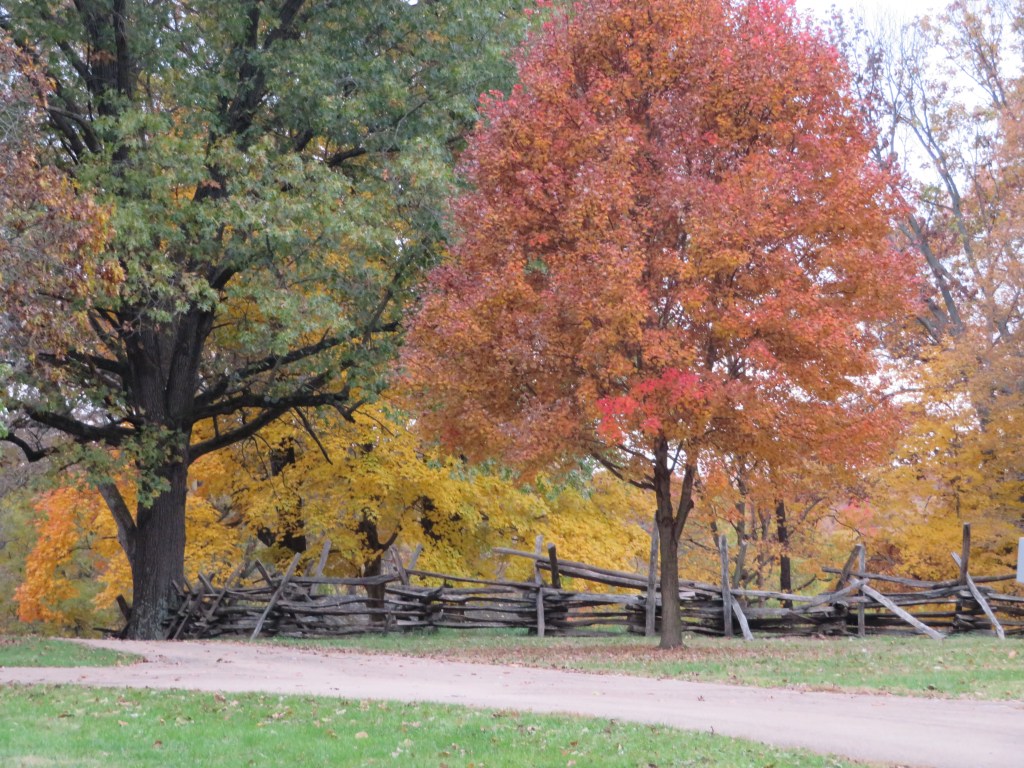
As do the brilliant fall colors in this park scene.

However, mindfulness is also about “being aware of and appreciating the ordinary, of being open to beauty and insights in the commonplace,” Zehr says. 

For example, who knew that chives going to seed could be so pretty?

“We often overlook things that we experience as ordinary or everyday,” Zehr says. “We tend to make preconceived judgments about what is worth looking at or photographing, valuing the ‘picturesque’ or ‘spectacular’ and failing to recognize many of the visual possibilities around us.”

How about a coneflower blossom?

Throughout his little book, Zehr gives us exercises designed to increase our awareness of the visual richness of ordinary objects and scenes. One exercise: Set out to photograph without a specific subject in mind, remaining open to whatever seems to present itself. 

Like a leaf that has floated to the ground.

A pair of acorns.

Or a single perfect rose.

“To me, photography is an art of observation. It’s about finding something interesting in an ordinary place,” Zehr says. “I’ve found it has little to do with the things you see and everything to do with the way you see them.”

Like bright red berries against a deep blue sky.

Or a starkly bare tree with a cloudy sky shortly before sunset serving as a backdrop.

“Ordinary things, when really seen, make extraordinary photos,” Zehr says. “Such photos seem to make themselves. They seem like presents that were given.”

I snapped this photo of icicles dripping from a twig on a bush next to my porch.

These fall leaves still flashed their brilliant colors as they peeked out from under a very early snowfall.

“One must always take photographs with the greatest respect for the subject and for oneself,” Zehr says.

Of course, one can’t help but respect this goose walking straight toward me in the park, who just begged to be noticed … and photographed.

“A contemplative approach to photography is an expression of wonder grounded in respect and humility,” he says. “As such, it calls us to live in right relationship with our Creator, the creation, and our fellow human beings.”

An attitude of wonder “requires that we look anew at the familiar, that we stop taking the world around us for granted,” he adds. “An attitude of wonder is essential if we are truly to experience the creation and the Creator.”

Nature prayer

Note: I’m taking a short break from writing in July to focus on some pressing personal priorities, so for this month, I will re-post some of my favorite blog pieces from earlier days when I only had a few people following my blog. This was first posted in June 2019.

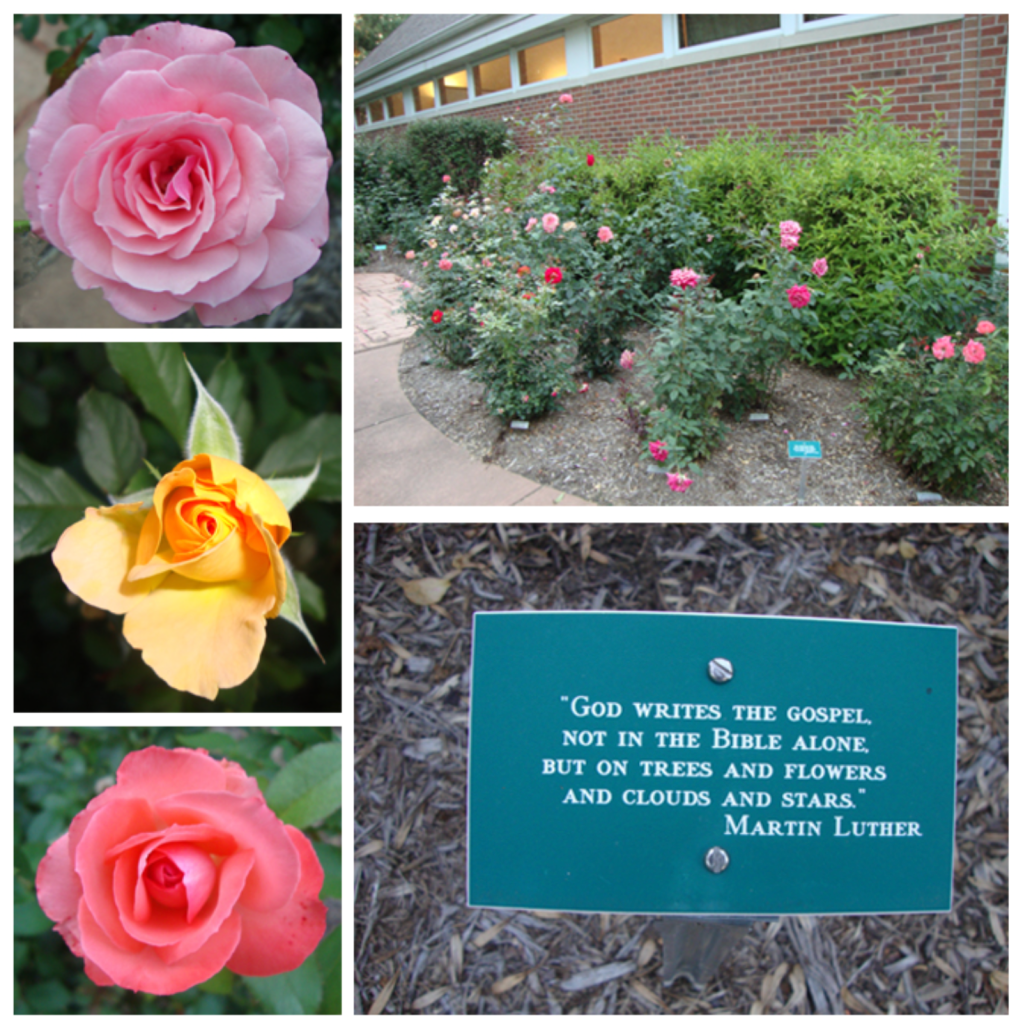
Martin Luther is said to have observed, “God writes the gospel not in the Bible alone, but on trees and flowers and clouds and stars.” 

Tertullian is quoted by Galileo (link HERE) as saying, “We conclude that God is known first through Nature, and then again, more particularly, by doctrine; by Nature in His works, and by doctrine in His revealed word.”

In other words, one can think of nature as God’s “other book.”

Regardless of the weather, I like to start my day by feeding the birds (and squirrels) while my morning coffee brews. During the growing season I tend several veggie, herb and flower beds. On warm sunny days, I take walks along an amazing tree-lined bike trail that runs beside a creek near our house. Sometimes I grab my camera and visit a neighborhood park.

Whether I’m feeding the critters, admiring the flowers in our backyard, snapping photos of flora and fauna at the park or strolling along the bike path, experiencing God’s creation with all my senses ranks as one of my favorite activities. Not to mention one of my most effective forms of relaxation and stress relief. (It sure beats arguing with complete strangers about politics on Facebook.) 

Immersing myself in nature’s majesty continually reminds me there is an ultimate Creator. As I’ve said before, I find it almost impossible to deny God’s existence when I’m outdoors with the evidence all around me. So, to ward off those nagging doubts that surface from time to time, I try to get outside as much as possible and engage in what has become my most potent form of prayer: Nature prayer.

According to the Rev. James Martin, a Jesuit priest, author and editor-at-large of America magazine (link HERE), nature prayer is simply being “attentive to the presence of God in nature.” 

For me, this form of prayer doesn’t even necessarily need words. Just looking at the vibrant colors of spring blossoms and fall leaves. Listening to birds singing and cicadas humming. Drinking in the scent of lilacs. Feeling a gentle breeze against my face. Tasting the sweetness of a vine-ripened strawberry. 

I’m aware some Christians eye nature prayer with suspicion. Isn’t it too “New Agey?” Too “pagan?” Aren’t we worshipping creation instead of the Creator? Resistance to nature prayer has always baffled me, frankly, because the Bible itself is chock full of passages that extole nature and invite us to immerse ourselves in it, appreciate it and learn from it.

Psalm 19:1 says, “The heavens declare the glory of God; the skies proclaim the work of his hands.” 

Luke 12:27 says, “Consider the lilies, how they grow; they neither toil nor spin; yet I tell you, even Solomon in all his glory was not clothed like one of these.” 

Being in nature not only brings us close to God, but can restore us physically and spiritually. The opening verses of the 23rd Psalm affirm, “The Lord is my shepherd; I shall not want. He maketh me to lie down in green pastures: he leadeth me beside the still waters. He restoreth my soul.”

Psalm 104:24 exclaims, “O Lord, how manifold are your works! In wisdom you have made them all; the earth is full of your creatures.” In fact, Psalm 104 in its entirety presents one long ode to the natural world – mountains that smoke, melodious birds, wine that gladdens the heart, trees and streams that protect and feed wildlife of all kinds.

Even Jesus found nature conducive to prayer and meditation. After a long day of healing, teaching and preaching to crowds, “he withdrew himself into the wilderness and prayed,” says Luke 5:16.

For those interested in pursuing nature prayer from a Christian perspective, the Web site Busted Halo (link HERE) offers suggestions for an “outdoor retreat.” Designed to “deepen our relationship with God and nature,” this retreat has three parts, each involving prayer and reflection – seeing God, listening to God, and breathing in God. To access the retreat guide, click HERE.

As I engage in nature prayer, I sense God speaking to me every bit as directly as God speaks to me while I’m in church or reading the Bible. 

When I watch a brilliant sunset dance along the tops of rioting fall leaves, I sense that God loves beauty.

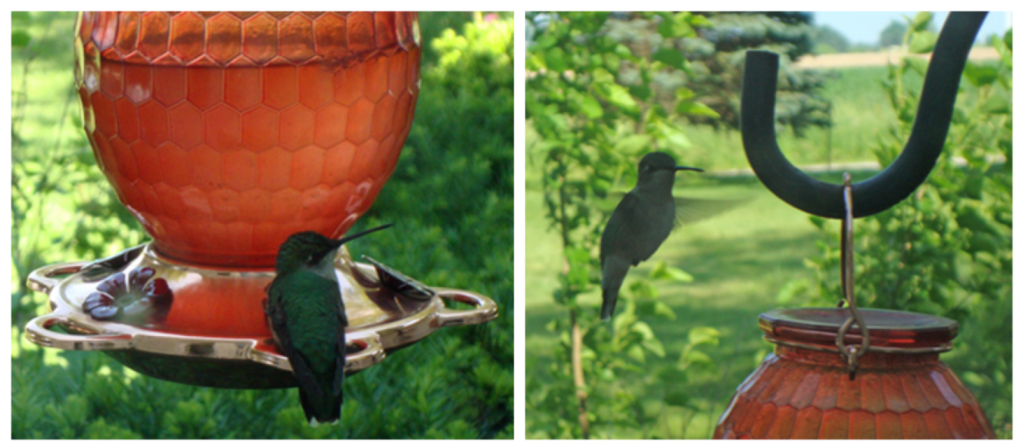
When I watch a hummingbird flit from blossom to blossom sipping nectar while its tiny wings flap 70 times per second, I sense that God wants to inspire awe.

When I observe the more than three dozen varieties of flowers just in my own backyard, I sense that God prefers diversity.

When jonquils poke up through snow, I sense that God encourages us to feel hope. No matter how cold, dark and bleak life may seem, spring will come eventually.

Most importantly, when I’m immersing myself in nature, I understand at the deepest level that we are meant to appreciate and care for God’s creation. Because nature is part of God’s creation and a gift to us, we have an obligation to protect and preserve it.

Photography as prayer

Can photography be a form of prayer? Howard Zehr, author of The Little Book of Contemplative Photography, thinks so. 

Photography can serve as a medium for reflection and meditation, and encourages mindfulness, he says. “By slowing down to reflect and meditate, by heightening our visual awareness and our imaginations, by cultivating receptivity and a more holistic way of knowing, we can renew ourselves while gaining new insights into ourselves, the creation, and the Creator.”

Some photographic subjects present themselves in an obvious way. An amazing sunrise practically screams, “Quick! Grab your camera.”

As do the brilliant fall colors in this park scene.

However, mindfulness is also about “being aware of and appreciating the ordinary, of being open to beauty and insights in the commonplace,” Zehr says. 

For example, who knew that chives going to seed could be so pretty?

“We often overlook things that we experience as ordinary or everyday,” Zehr says. “We tend to make preconceived judgments about what is worth looking at or photographing, valuing the ‘picturesque’ or ‘spectacular’ and failing to recognize many of the visual possibilities around us.”

How about a coneflower blossom?

Throughout his little book, Zehr gives us exercises designed to increase our awareness of the visual richness of ordinary objects and scenes. One exercise: Set out to photograph without a specific subject in mind, remaining open to whatever seems to present itself. 

Like a leaf that has floated to the ground.

A pair of acorns.

Or a single perfect rose.

“To me, photography is an art of observation. It’s about finding something interesting in an ordinary place,” Zehr says. “I’ve found it has little to do with the things you see and everything to do with the way you see them.”

Like bright red berries against a deep blue sky.

Or a starkly bare tree with a cloudy sky shortly before sunset serving as a backdrop.

“Ordinary things, when really seen, make extraordinary photos,” Zehr says. “Such photos seem to make themselves. They seem like presents that were given.”

I snapped this photo of icicles dripping from a twig on a bush next to my porch.

These fall leaves still flashed their brilliant colors as they peeked out from under a very early snowfall.

“One must always take photographs with the greatest respect for the subject and for oneself,” Zehr says.

Of course, one can’t help but respect this goose walking straight toward me in the park, who just begged to be noticed … and photographed.

“A contemplative approach to photography is an expression of wonder grounded in respect and humility,” he says. “As such, it calls us to live in right relationship with our Creator, the creation, and our fellow human beings.”

An attitude of wonder “requires that we look anew at the familiar, that we stop taking the world around us for granted,” he adds. “An attitude of wonder is essential if we are truly to experience the creation and the Creator.”

A prayer of thanksgiving

Dear God,

In Exodus 20:12 and again in Deuteronomy 5:16, you gave us the following commandment: “Honor thy father and thy mother.” 

Fortunately, you blessed me with parents who made following that commandment easy. My life has turned out pretty wonderful. I have been blessed with a good marriage, a successful career and good friends. I owe that in no small part to having a good upbringing by parents who were loved and respected by the entire community. 

But this holiday season is the first that I will be facing without either Mom or Dad, except in my memories. So I’d like to take the time this Thanksgiving to offer thanks for their lives.

As a child with disability issues, I had problems in school, especially with other kids. In those days, diversity was NOT considered beautiful, and I was bullied pretty relentlessly. Compounding the problem was the fact that there were no good services 50-60 years ago – no IDEA, no Individualized Education Plans. Parents and their special-needs kids were pretty much on their own, and my parents just had to do the best they could without the help parents and kids can take for granted today. Despite these obstacles, they raised an honor student who graduated in the top 10 percent of her class.

It’s amazing how a small gesture can change a person’s life. When I was in junior high school, and didn’t have much belief in my abilities, I showed Mom a poem I had written. Without telling me, she sent a copy of the poem to Carol Burnett and it wound up getting published in a book. Then Mom gave me a typewriter, even though it wasn’t my birthday or Christmas or anything, and said, “You could be a famous writer someday.” Okay, so maybe the “famous” part didn’t happen, but I did grow up to be a successful professional writer. I even managed to win some writing and journalism awards. And it started with someone believing in me and telling me I had talent.

I appreciated my parents’ sense of humor when conveying life’s lessons to my sisters and me. Instead of lecturing us extensively about the need to avoid peer pressure, they’d simply say, “If 10 of your friends jumped off the top of the Empire State Building, would you do it too?” Once when I was complaining about a mean boss, Dad said, “You know, you can learn as much from a bad example as you can from a good one.” I took that advice to heart, actually, as I progressed through my career. When I became a boss myself, I thought about the bosses I’d liked, and analyzed what they did right. But I also learned a lot about what not to do from the bosses I didn’t like so well.

Mom and Dad took just about the right approach when I ran into problems. If I found myself in a situation that really and truly wasn’t fair, they were my best allies, and more than once they went to school to help me straighten out misunderstandings with one teacher or another. But if I got into trouble and was guilty as charged, they allowed me to experience the consequences rather than bailing me out the way some parents would. I can still remember when I got into a water fight with a classmate in the home-ec room, and our punishment was staying after school for 10 afternoons to clean ovens. When I complained that the punishment seemed excessive, I didn’t get much sympathy, but was told, “The exercise will do you good.” 

But perhaps the best gift they gave me was their example. 

My parents showed me what a good marriage looks like. I’ve now been blessed for 34 years with the kind of marriage they had, and I know it is possible to have a relationship with someone who loves and respects me and treats me well.

They showed me how to overcome adversity. I was not a happy camper when I got diagnosed with diabetes. But Mom had it for 60 years, and showed me how to live with the condition and accept the dietary restrictions with good grace.

They showed me it was possible to disagree without being disagreeable. One of my favorite memories was of Dad and his brothers arguing about politics, for two or three hours at a time. But they’d all be smiling while they argued, and they’d still be smiling when they got done.

Mom and Dad taught me to be generous and to give back to our community and they walked the talk. Whether it was serving on the school board, teaching Sunday School, or donating $1,000 to help a family at church, both parents were generous with their time and money. Helping others has been a big part of both my career and my volunteer work, and I learned that value from my parents. 

Their generosity has extended to hospitality. Pete and I are both grateful for how nice my parents were to my mother-in-law, making her feel like part of the family after her husband died. They made sure she felt welcome and loved.

And the community loved my parents back. During their funerals and visitations, I was blown away by the outpouring of love and respect from everyone who knew Mom and Dad. Literally hundreds of people lined up to tell my sisters and I what our parents meant to them. Here are just a few examples of the comments:

“Sweetest lady ever!”

“He’d give the shirt off his back.”

“So special, kind and caring.”

“Always so nice to everyone.”

“They changed my life.”

Finally, my parents taught me by example to count my blessings. On my 50thbirthday, I remember joking, “Now that I’m finally mature enough to listen to my elders and believe them, what advice would you pass on? If you had one thing you could do differently, what would it be?” I remember Dad, who was 75 at the time, saying, “I wouldn’t change a thing.” I only hope I can say the same thing when I’m 75. 

So now I try to remember to count my own blessings, and I definitely count my parents to be among those blessings.

With love and gratitude,

Courting my Muse

I picked up a copy of The Artist’s Way: A Spiritual Path to Higher Creativity because I could relate all too well to author Julia Cameron’s description of writer’s block: “Creative, yes, but in spurts, like blood from a severed carotid artery. A decade of writing and all I knew was how to make these headlong dashes and hurl myself, against all odds, at the wall of whatever I was writing.” 

My own Muse had been on strike for several months, and attempts at negotiation had utterly failed to coax her out of hiding. A prolonged siege of work-related stress had left me feeling emotionally exhausted, with no creative energy whatsoever. I was ready to try almost anything.

Cameron calls The Artist’s Way a blueprint for “creative recovery” – in fact, 12-Step recovery movement lingo is sprinkled liberally throughout the book. She encourages us to nurture and protect our inner artist and to build healthy artist habits one day at a time. While we may relapse into unhealthy patterns from time to time, we seek progress, not perfection. If we faithfully use the tools she outlines in the book, we will experience a creative awakening. 

Why the 12-Step model? “On a societal level, blocked creative energy manifests itself as self-destructive behavior,” Cameron says. “Many people who are engaged in self-defeating behaviors, such as [addictions to] alcohol, drugs, sex, or work, are really in the hands of this shadow side of the creative force. As we become more creative, these negative expressions of the creative force often abate.”

Cameron also invokes spiritual themes extensively. “Those who speak in spiritual terms routinely refer to God as the Creator but seldom see creator as the literal term for artist,” she says. “I am suggesting you take the term creator quite literally. You are seeking to forge a creative alliance, artist-to-artist with the Great Creator. … We are, ourselves, creations. And we, in turn, are meant to continue creativity by being creative ourselves.”

How it works

The Artist’s Way, which has become a classic since its publication in 1992, offers two basic tools for creative recovery – the Morning Pages and the Artist Date.

The Morning Pages are three pages of longhand writing, strictly stream-of-consciousness, done first thing in the morning. “Three pages of whatever crosses your mind – that’s all there is to it,” Cameron says. “If you can’t think of anything to write, then write, ‘I can’t think of anything to write.’ Do this until you have filled three pages. Do anything until you have filled three pages. … Just write three pages … and write three more pages the next day.”

We should think of the Morning Pages not as “art” but as an active form of meditation for Westerners, she says. “In the Morning Pages we declare to the world – and ourselves – what we like, what we dislike, what we wish, what we hope, what we regret, and what we plan.” 

“In a sense Morning Pages are prayer,” Cameron told Publishers Weekly. In her book The Right to Write, she elaborates: “Writing gives us a place to welcome more than the rational. It opens the door to inspiration. It opens the door to God or, if you would, to ‘Good Orderly Direction.’ Writing is a spiritual housekeeper.” 

The Artist Date is “a block of time, perhaps two hours weekly, especially set aside and committed to nurturing your creative consciousness, your inner artist,” Cameron says. The Artist Date can be devoted to any pleasurable activity – a concert, a visit to an ice cream shop or a walk in the park – but we must do it alone. Bringing along kids or a significant other is strictly against the rules. We are to make time for an Artist Date at least once a week.

The Artist’s Way also offers a series of exercises. For example: List twenty things you enjoy doing. … List ten changes you’d like to make for yourself. … List five favorite childhood foods. … Describe yourself at eighty. … Complete this sentence: “My payoff for staying blocked is …” 

Some of the exercises seem to have little to do with writing, drawing or other creative activity: Open your closet. Throw out – or donate – one low-self-worth outfit. (You know the outfit.) … Mend something. … Repot any pinched and languishing plants. … Bake something. So why does Cameron include them? “Creativity does not have to always involve capital-A art,” she says. “Very often, the act of cooking something can help you cook something up in another creative mode.”

All of these activities – the Morning Pages, the Artist’s Date and the exercises – are designed to get us past The Censor, “a nasty internal and eternal critic” who “keeps up a constant stream of subversive remarks that are often disguised as the truth.” (You call that writing? What a joke. You can’t even punctuate. … What makes you think you can be creative?) “Think of your Censor as a cartoon serpent, slithering around your creative Eden, hissing vile things to keep you off guard,” she says. “As blocked artists, we tend to criticize ourselves mercilessly.” 

After Cameron finishes explaining how The Artist’s Way works, she makes a bold promise: “If the basic tools of Morning Pages and the Artist Date are kept carefully in place, you can expect to experience large life shifts.”

Yes, whining is allowed

I first decided to give The Artist’s Way a try about 15 years ago. What did I have to lose? Since I was a veteran of 12-Step groups, the book’s recovery focus was familiar to me. 

The Morning Pages turned out to be fairly easy. I had no trouble meeting my three-page quota most days. At first the writing amounted to little more than a daily To-Do list. Need to do laundry today. … Need to get some grocery shopping done. … Need to get some gas in the car.

Then I began writing about areas of my life that felt unmanageable. This house is full of piles and piles of junk and boxes and boxes of stuff that needs sorting. … I spend too much time getting tangled up in political intrigues at work and not enough time nurturing personal relationships. … I seem to spend all my time juggling and juggling and making to-do lists and doing more juggling and making more intricate to-do lists and I still can’t seem to get caught up. … I’m overweight and out of shape. I need to adopt a healthier way of living.

After that, a litany of complaints and resentments began to pour out onto my Morning Pages. I’m tired of all the childish games at work. … I’m tired of political campaigns that amount to six months of name-calling. … I’m tired of people who question my patriotism unless I vote for their candidate. … I’m tired of cleaning up the house every day, only to see it messed up again the following day. … I’m tired of all these half-finished tasks that never seem to get done.

Some days my Morning Pages consisted of three solid pages of ranting. Everything I try to do runs into some snarly little complicated snag. Why can’t anything be simple? Could one little thing go right? Just one thing? Just one little thing?! … I wish I didn’t have to work for a living. Actually, I’d do volunteer work, but I’d only work for people who treat me right and appreciate me. I want to do work that actually uses my skills and training. What a radical idea. … I want a clean house. I want a sane schedule. I want a full day off just for me, with no one yanking my chain. I want, I want, I want …

All this raging and whining was supposed to release creative energy?

The author of The Artist’s Way seemed to anticipate what my Morning Pages would sound like. She assures us that the Morning Pages “are often negative, frequently fragmented, often self-pitying, repetitive, stilted or babyish, angry or bland – even silly sounding. Good! … All that angry, whiny, petty stuff that you write down in the morning stands between you and your creativity.” 

The Morning Pages “round up the usual suspects,” she says. “They mention the small hurts we prefer to ignore, the large successes we’ve failed to acknowledge. In short, the Morning Pages point the way to reality: This is how you’re feeling; what do you make of that? And what we make of that is art.”

Cameron predicted that the Artist Dates would be harder than the Morning Pages, especially for workaholics like me. She turned out to be right. But I managed to keep my dates most weeks. I went shopping and bought myself some pretty pajamas. I walked through my neighborhood park’s rose garden. I got a manicure and pedicure. 

What happened next

To my surprise, things suddenly started to get done. I spoke up and asked my hairdresser to cut my hair a certain way and got exactly what I wanted. I confronted an electrician who overcharged me and saved $50. I ordered a new computer, something I had been meaning to do for a year. I bought a new freezer, something I’d been needing to do for several years, and cleaned out a place in the basement to make room for it. I got rid of an old washer that had been sitting in the basement ever since we bought the house – 18 years earlier. I baked bread for the first time in months. I planted a fall crop of spinach and salad greens for the first time ever. I cleaned out closets. I walked away from a job that had been driving me crazy and replaced it with a new job that paid twice as much.

According to Cameron, this all makes perfect sense. “It is very difficult to complain about a situation morning after morning, month after month, without being moved to constructive action,” she says. “One of the clearest signals that something healthy is afoot is the impulse to weed out, sort through, and discard old clothes, papers, and belongings.”

But what does all this have to do with writing and other creative pursuits?

After a long, long dry spell – during which I felt guilty even attending meetings of my writer’s group because it seemed like everyone but me had something to share – I finished my first short essay. More essays followed. I co-authored a “best practices” manual with a colleague in my field, and was invited to be a keynote speaker at a conference in Alaska. A couple years ago, I started this blog … and have been writing steadily ever since.

I’ll confess, I don’t do Morning Pages every single day. And I don’t always write three pages. But the Morning Pages continue to be part of my life. 

For my Morning Pages ritual, I settle in my recliner in front of the fireplace with a cup of coffee by my side and a cat in my lap. Sometimes I get to enjoy music when my husband joins Oley Cat and me to serenade us with sacred songs and folk tunes on his dulcimer. 

I journal about my priorities for the coming day. Or I write thoughts and insights generated by homework assignments my spiritual director gives me. Some mornings the writing consists largely of prayers of petition and intercession. Other times I make a gratitude list or offer prayers of thanksgiving. 

Recently I’ve been recording my real feelings about my ongoing medical saga. I’m tired of doctors pushing pills. … I’m tired of bouncing from one specialist to the next like a human ping pong ball. … I’m tired of the feeling that I’m constantly at war with my own body. … I’m tired of symptoms that scare me. … I’m tired of being sick. … I’m sick of being tired. … I’m tired, I’m tired, I’m tired! The first time I wrote like that, tears were streaming down my face by the time I finished writing. But I felt better just getting it all on paper.

No matter what I choose to write about, my Morning Pages ritual continues to offer a great jumpstart to my day when I do it. And I’ve found this ritual to be a perfect form of prayer.

I’ve also continued to treat myself to occasional Artist Dates and expand my creativity in other ways. I may spend an hour or two walking around my backyard or the park snapping photos. Or I experiment with recipes. Or I play with Photoshop and design memes. Lately I’ve been teaching myself to use iMovie, a video editing software application that lets me create video clips.

In short, The Artist’s Way has given my creativity a significant boost over the years, and I highly recommend this book to anyone looking for a way to coax their own Muse out of hiding.

Nature prayer

Martin Luther is said to have observed, “God writes the gospel not in the Bible alone, but on trees and flowers and clouds and stars.” 

Tertullian is quoted by Galileo (link HERE) as saying, “We conclude that God is known first through Nature, and then again, more particularly, by doctrine; by Nature in His works, and by doctrine in His revealed word.”

In other words, one can think of nature as God’s “other book.”

Regardless of the weather, I like to start my day by feeding the birds (and squirrels) while my morning coffee brews. During the growing season I tend several veggie, herb and flower beds. On warm sunny days, I take walks along an amazing tree-lined bike trail that runs beside a creek near our house. Sometimes I grab my camera and visit a neighborhood park.

Whether I’m feeding the critters, admiring the flowers in our backyard, snapping photos of flora and fauna at the park or strolling along the bike path, experiencing God’s creation with all my senses ranks as one of my favorite activities. Not to mention one of my most effective forms of relaxation and stress relief. (It sure beats arguing with complete strangers about politics on Facebook.) 

Immersing myself in nature’s majesty continually reminds me there is an ultimate Creator. As I’ve said before, I find it almost impossible to deny God’s existence when I’m outdoors with the evidence all around me. So, to ward off those nagging doubts that surface from time to time, I try to get outside as much as possible and engage in what has become my most potent form of prayer: Nature prayer.

According to the Rev. James Martin, a Jesuit priest, author and editor-at-large of America magazine (link HERE), nature prayer is simply being “attentive to the presence of God in nature.” 

For me, this form of prayer doesn’t even necessarily need words. Just looking at the vibrant colors of spring blossoms and fall leaves. Listening to birds singing and cicadas humming. Drinking in the scent of lilacs. Feeling a gentle breeze against my face. Tasting the sweetness of a vine-ripened strawberry. 

I’m aware some Christians eye nature prayer with suspicion. Isn’t it too “New Agey?” Too “pagan?” Aren’t we worshipping creation instead of the Creator? Resistance to nature prayer has always baffled me, frankly, because the Bible itself is chock full of passages that extole nature and invite us to immerse ourselves in it, appreciate it and learn from it.

Psalm 19:1 says, “The heavens declare the glory of God; the skies proclaim the work of his hands.” 

Luke 12:27 says, “Consider the lilies, how they grow; they neither toil nor spin; yet I tell you, even Solomon in all his glory was not clothed like one of these.” 

Being in nature not only brings us close to God, but can restore us physically and spiritually. The opening verses of the 23rd Psalm affirm, “The Lord is my shepherd; I shall not want. He maketh me to lie down in green pastures: he leadeth me beside the still waters. He restoreth my soul.”

Psalm 104:24 exclaims, “O Lord, how manifold are your works! In wisdom you have made them all; the earth is full of your creatures.” In fact, Psalm 104 in its entirety presents one long ode to the natural world – mountains that smoke, melodious birds, wine that gladdens the heart, trees and streams that protect and feed wildlife of all kinds.

Even Jesus found nature conducive to prayer and meditation. After a long day of healing, teaching and preaching to crowds, “he withdrew himself into the wilderness and prayed,” says Luke 5:16.

For those interested in pursuing nature prayer from a Christian perspective, the Web site Busted Halo (link HERE) offers suggestions for an “outdoor retreat.” Designed to “deepen our relationship with God and nature,” this retreat has three parts, each involving prayer and reflection – seeing God, listening to God, and breathing in God. To access the retreat guide, click HERE.

As I engage in nature prayer, I sense God speaking to me every bit as directly as God speaks to me while I’m in church or reading the Bible. 

When I watch a brilliant sunset dance along the tops of rioting fall leaves, I sense that God loves beauty.

When I watch a hummingbird flit from blossom to blossom sipping nectar while its tiny wings flap 70 times per second, I sense that God wants to inspire awe.

When I observe the more than three dozen varieties of flowers just in my own backyard, I sense that God prefers diversity.

When jonquils poke up through snow, I sense that God encourages us to feel hope. No matter how cold, dark and bleak life may seem, spring will come eventually.

Most importantly, when I’m immersing myself in nature, I understand at the deepest level that we are meant to appreciate and care for God’s creation. Because nature is part of God’s creation and a gift to us, we have an obligation to protect and preserve it.

Praying for pets

Pete and I live with two furry bundles of love and mischief – Olaf DaVinci, a gorgeous Maine Coon, and Champaign Le Chat, a beautiful cream-colored domestic longhair. Needless to say, we absolutely adore them.

About four months ago, we noticed Oley had started to limp and could no longer jump up onto the bed or his other favorite perches without a struggle. He was insatiably thirsty and peed copiously. I took him to the vet. The verdict: Diabetes.

No sooner had we begun to absorb this distressing news, when the vet delivered another whammy: Champaign had early-stage kidney disease.

Is it permissible to pray for pets? I certainly hope so, because my intercessory prayers began the minute I got the news about our furbabies:

Dear God, please take care of our sweet kitties. Help them respond to treatment and don’t let them suffer. Please, please, please! I love these little guys. Amen.

Fortunately, I’ve never encountered anyplace in the Bible that suggests we shouldn’t pray for our beloved companions. “Ask, and it shall be given you,” says Matthew 7:7. The verse doesn’t tell us what to ask for – it simply says, “Ask.”

While I haven’t found specific references to pets in the Bible, several passages indicate God cares about animals and expects us to care about them too.

“You, Lord, preserve both people and animals,” says Psalm 36:6.

 “Not one sparrow … can fall to the ground without your Father knowing it,” says Matthew 10:29.  

“The righteous care for the needs of their animals,” says Proverbs 12:10.

The Bible points out that animals can impart spiritual lessons. “But ask the beasts, and they will teach you,” says Job 12:7. 

Animals even show up in the Ten Commandments. Not only should we take time off on the Sabbath, but our animals should as well, says Exodus 23:12: “Six days do your work, but on the seventh day do not work, so that your ox and your donkey may rest.” 

And who can imagine heaven without critters? In God’s future kingdom, “the wolf shall dwell with the lamb, and the leopard shall lie down with the kid, and the calf and the lion and the fatling together, and a little child shall lead them,” says Isaiah 11:6. 

In other words, God loves His creation – all of it!

As if I needed further assurance that God listens to prayers on behalf of our furry (or feathered or finned) companions, I’ve learned that many Christian churches ranging from Lutheran and Methodist to Catholic and Episcopalian hold a special “Blessing of the Animals” ceremony on the Feast Day for St. Francis of Assisi, who was famous for his love of all living things. 

Kevin E. Mackin, OFM, a Franciscan friar of the Holy Name Province, offers a delightful description of one such service in an article on franciscanmedia.org [link HERE]: “Usually the Blessing of Pets is held outdoors. But I remember it rained one year, and all were invited inside St. Stephen’s Church in Manhattan. It was quite a sight to see pairs of creatures—one human, one animal—sitting in the pews. The pastor joined right in with his beagle. Noah’s Ark was never like this!”

“It’s okay to pray for anything that is on your heart,” says Linda Evans Shepherd, an evangelical Christian speaker, author and president of Right to the Heart Ministries (link HERE]. “After all, God not only created animals, but He’s interested in the things you’re interested in.”

At any rate, I’ve concluded it’s absolutely appropriate to keep Oley and Champaign in my prayers and I’ve been asking God for wisdom to make the right decisions regarding their medical care. 

The vet prescribed a diabetic diet for Oley and a kidney-support diet for Champaign. I would need to give Oley medication twice a day and bring him to the vet’s office every other week for testing. 

At first the logistics seemed impossible. With the kitties on separate special diets, how could I keep them out of each other’s food? Besides, Champaign was such a picky eater. What if he simply refused to touch the food prescribed for him?

I worried that medicating Oley might prove to be an insurmountable task. In the past, when I needed to give him meds, he resisted me to the point of running and hiding whenever he saw me. How on earth would I be able to do this twice a day for the rest of his life? 

And the doctor had to be kidding about bringing Oley to the vet’s office every two weeks, I thought. Both cats had let me know in no uncertain terms how much they hated vet visits – and that was when I only took them once or twice a year.

However, when we went on Facebook to solicit some crowd-sourced prayers, several friends shared their personal experiences of caring for pets who had either diabetes or kidney disease. After hearing their stories, Pete and I began to relax.

The good news: Treatment has gone better than we dared to hope. 

We keep the cats out of each other’s bowls by feeding them in separate rooms. I’ve minimized trips to the vet by learning how to do some of Oley’s testing at home. And whoever invented Pill Pockets deserves the Nobel Peace Prize. Oley thinks his pills are treats!

When an office visit can’t be avoided, I try to reduce Oley’s anxiety as much as possible by giving him a mild sedative. One of the vet techs has invited me to call her when I’m in the parking lot so we can take him straight to a room where he doesn’t have to meet any dogs. 

Lately, I’ve been offering prayers of thanksgiving:

Dear God, getting a urine sample from Oley was WAY easier than I thought it would be. Thank-you for inspiring the person who invented Nosorb kitty litter!

Dear God, I was worried that Champaign might not eat enough. But I’ve been sneaking more and more of his prescription food into his Gravy Lover’s salmon. So far, this is working. Thank-you! 

Our experience of the past several weeks has even taught me to be grateful when our little darlings get ornery – especially Oley, since mischievous behavior signals that he’s feeling better. Here he is, eyeing Pete’s cereal. 

“Some people criticize the amount and cost of care given to pets,” says Franciscan friar Kevin E. Mackin. “People are more important, they say. … However, I believe every creature is important. The love we give to a pet, and receive from a pet, can draw us more deeply into the larger circle of life, into the wonder of our common relationship to our Creator.”

“So when you pray, pray for the provisions you need, your family members, your church, nation, hurting friends and world peace,” says author Linda Evans Shepherd. “Only don’t forget to pray for your pet. God’s grace is big enough to cover your prayers for even the little paws in your life.”

For me, the fear that we might love and care for our pets more than we love and care for other people represents a false dichotomy. I love people and pray for them. I love my pets and pray for them too. This is not an either/or proposition. Love and prayer are not limited commodities or finite resources. There is enough of both to go around!