Unknown's avatar

About seriouslyseekinganswers

I am on a spiritual journey in which I'm questioning everything I think I know.

Moving forward

What’s next, as I embark on the next leg of my spiritual direction journey? How do I maintain and build on my progress?  

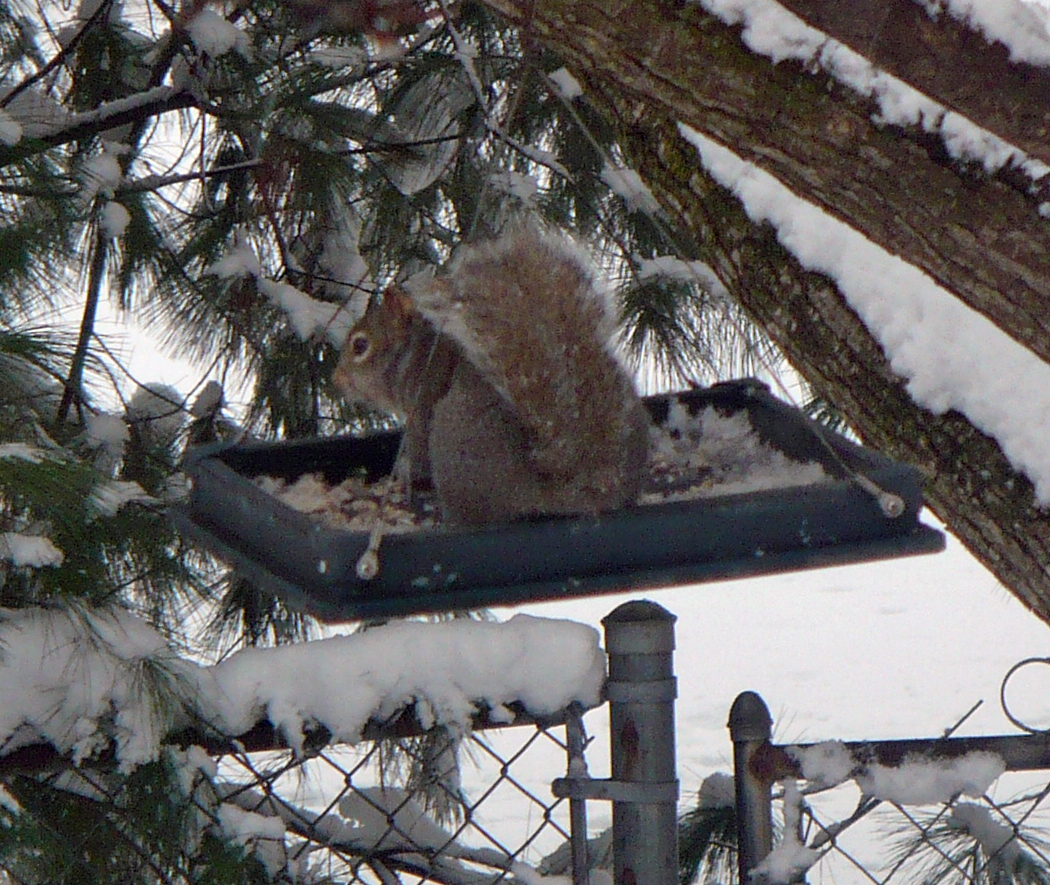
My first goal will be to spend some time each day outdoors – away from the computer screen, away from the political bickering by culture warriors on TV and Facebook, away from endless news reports about people’s inhumanity to other people. Because nature constantly reminds me of God’s existence, going outside is something I can easily do whenever I encounter those pesky doubts. I need to immerse myself in God’s creation. Watch sunsets. Listen to cicadas. Smell some flowers. Feel the breeze against my face. Take a walk. Dig around in the dirt and plant flowers or veggies. Experience evidence of God with all my senses. If severe weather keeps me inside, I can nurture the plants in the sunroom or watch the birds and squirrels from the picture window in the living room. Meanwhile, I’d like to start each day with Psalm 118:24, which reminds me, “This is the day that the Lord has made; let us rejoice and be glad in it.” 

While I’m nowhere near my original goal of “a place for everything and everything in its place,” I’ve made some real headway sorting through physical clutter. I still advise houseguests against venturing into the basement or garage (I’d rather not have to file a missing person report), but the house mostly stays presentable enough so I’m not totally embarrassed when someone drops by without notice. I plan to continue with my spiritual director’s recommendation: Devote one hour per day to tackling clutter. And stop collecting more and more STUFF to fill a home already bursting at the seams with too much material abundance.

My spiritual director and I have also explored various kinds of “spiritual clutter” that crowd attention to God out of my life – and I eliminated a major distractor by walking away from an incredibly abusive volunteer work situation. As much as leaving the organization saddened me, I must say I love the newfound free time. Deadlines have practically disappeared. I feel so much “lighter” – like I’ve put down the 100-pound bag of stress I carried around for five years. Now, as I ponder the question of vocation, I must resist the urge to plunge into something new right away. I need to be selective as I discern where God wants me to go next.

My continuing spiritual journey also involves asking more questions. Lots of them:

  • The nature of God. I’ve decided there must be some kind of Creator. But who, or what, is this Entity I choose to call God? Is God distant and uninvolved, as some deists claim? Or is God a “close-up” entity who not only cares about each of us personally, but intervenes regularly in human affairs?
  • Authority. What is my authority for what I believe? The Bible? Church tradition? Clergy? Why, or why not? What about the priesthood of all believers? Where does science fit in? Since not even all Christians agree on the issue of authority, how do I decide who is right? Also, who or what outside of church has influenced my beliefs? How reliable are these sources of authority? Should I rethink some of them?
  • Church. Why go to church, when by my own admission, I feel the presence of God most while immersed in nature? Is there anything I can get from church that I can’t just as easily get by going outside? If we go to church, how often do we go? What characteristics should I look for when evaluating a church? What characteristics serve as deal-breakers? 
  • Prayer. What is prayer and how should we pray? Can writing, singing and gardening be forms of prayer? Is it okay to ask God for things? What about “crowd-sourced” prayer on Facebook?
  • Salvation. Some Christians say we’re “saved” through baptism, while others insist we must make a personal decision for Christ. Which is it? What about predestination? Is there a literal heaven or hell? If so, who goes where? What does salvation mean, actually?
  • The 10 Commandments. How do I relate these Commandments to 21st Century issues? For example, I promise I’ve never even been tempted to worship a golden calf made from melted-down jewelry. But what about the bronze bull on Wall Street? What does it mean to keep the Sabbath Day holy in a 24/7 culture that worships productivity? What constitutes stealing? Your wallet may be safe with me, but what about the way I invest my money?
  • Sin. In a world where many “sins” have been reframed as “diseases,” is sin still a legitimate concept? Is sin a specific act or is it the condition of separation from God? How would liberal Christians define sin versus how conservative Christians would define it? Who is correct?
  • Creeds. Considering that no creed exists anywhere in the Bible and a number of Christian churches don’t have one, do we need a creed? If so, what should be in it? 
  • Politics and the Culture Wars. Part of my motivation for seeking spiritual direction was the extreme level of vitriol permeating our society in recent years. I’ve begun to suspect I’m part of an Exhausted Majority who feels pressured to take sides in the Culture Wars, but at the same time doesn’t fit neatly into either the liberal or conservative camps. As the partisan positions have gotten more and more extreme, common sense seems to have flown out the window. This has prompted me to ask: What are my own beliefs and what is my role as a Christian in our society’s political battles? Even if we think someone’s values are totally wrong, how do we change hearts and minds if we demonize certain people and won’t have anything to do with them? 
  • Ecumenism. Is there a common core of beliefs shared by most Christians, regardless of sect or denomination? Do all of these denominations offer equally legitimate paths to God? Is there a way to heal the divisions between believers and relate respectfully to people whose viewpoints differ from ours?

That’s just for starters. 

When my spiritual director asked me point-blank if I ever doubted the existence of God, her question gave me permission to “go there.” For the next leg of my spiritual journey, I want to keep being honest about the questions I have.

One thing I do know for sure: I’m grateful to be making the journey with this spiritual director. When I shared this list of questions with her, as usual, there were no lectures. She just smiled and asked, “Where do you want to start?”

Spiritual progress

A little over a year ago I found myself at a spiritual crossroads. 

My husband and I attended church almost weekly, and I had read the Bible from cover to cover, along with shelves full of books on religion and spirituality. Yet I still found myself asking the “big” or “ultimate” questions. What do I actually believe about God and why? What is God’s purpose for my life? What are my values, or what should they be? How do I live my life in a way that is consistent with my beliefs and values?

Several factors led to this renewed questioning. The transition in focus and priorities prompted by my retirement. The “time is limited” epiphany that comes with being 60-something, losing loved ones and developing chronic health problems myself. Questions about faith and a church’s true purpose raised by reading the Bible and serving on my church’s evangelism committee. The internal tug-of-war over my own values brought on by the increasing divisiveness and polarization in our society.

I made a commitment: Develop a better understanding of God, so I can fulfill God’s purpose for my life, discern what my values should be, and live accordingly. Toward this end, I engaged a spiritual director to help me explore these “ultimate” questions and reorder my beliefs and values as necessary. Seeing a spiritual director does not replace going to church, of course – it’s a supplement, rather than a substitute. Spiritual direction is a one-on-one partnership in which one Christian helps another grow in a personal relationship with God. 

I must admit the idea of working with a spiritual director made me a bit nervous at first. While I hoped this person would ask the hard questions, I didn’t want someone who would merely push me to adopt their own belief system. I needed this person to be nonjudgmental and open to the idea that I was questioning all kinds of dogma, from the spiritual and religious to the political and ideological. 

My spiritual director, thankfully, has been patient as I grapple with questions some would say I shouldn’t even be asking. For the past year, we have met monthly for one-hour sessions. She offers a variety of suggestions for homework assignments, allowing me to choose which ones I might find most helpful. She recommends various reading materials as well.

I had already developed a morning meditation ritual – sitting in my recliner in front of the fireplace with a cat in my lap and a cup of coffee by my side while I journal about my priorities for the coming day. I began using this time to write out my thoughts and insights generated by the homework assignments. I’m a rather “visual” person, so I’ve also used imagery to describe what I’m experiencing at any given moment. 

One of my first assignments: Come up with an image that best symbolizes my present spiritual condition.

I created a Photoshop image of myself buried under a mountain of clutter and added a rope to represent the tug-of-war over everything from my time to my personal values caused by competing demands and continual conflict. Underneath the papers and boxes and to-do lists, I placed several boulders with labels on them – fear, anger, pain – to represent the steady stream of anxieties and resentments that kept me awake at night and pre-occupied during the day. A pair of arms juggled several balls in the air – family, friends, volunteer work, the house. More balls had been dropped and were nestled on the ground at the bottom of the heap – my writing, self-care, God.

Using the graphic as a starting point, I listed those areas of my life that felt not-so-well-ordered. My relationships. A messy house. Our finances. My frantic, overloaded schedule. Health issues ranging from aches and pains everywhere to heart problems, along with my inability to sustain a healthy eating plan for more than a few days at a time. My writing, which seemed to languish. My emotional life, which often left me feeling like a walking bundle of anxieties and resentments. The suspicion I entertained from time to time that my life had been reduced to crossing items off endless to-do lists. My spiritual life, with all those questions and doubts.

I shared my “laundry list” with my spiritual director and showed her the graphic. I described the chaos that seemed to permeate my life, stemming from my own challenges with organizing skills, my talent for procrastination, my difficulty saying “no” to demands on my time, and my penchant for getting sucked into other people’s dramas. Repeated efforts to get my life under better control often left me feeling more frustrated than ever, I confessed. 

My spiritual director listened to this litany without negative judgment – at least none that I could detect. Looking the graphic over for a moment, she asked, “What stands out for you?”

I pointed out the “God ball” at the foot of the clutter pile. God was there, of course, but after creating this image, I could see vividly how clutter of all kinds – from endless STUFF to excessive commitments – blocked my spiritual path.

I half expected her to supply some relevant Bible verses about the Godliness of cleanliness and self-discipline. But instead of helping me incorporate my “God ball” back into the rotation of balls I was juggling, my spiritual director suggested I leave it where it was for the time being. “Just sit with it,” she said.

Back at the drawing board (Photoshop, that is), I pulled up my Clutter Mountain graphic and painted my “God ball” gold. I then imagined myself crawling out from under the junk pile and sitting next to the golden God ball with my eyes closed and my back to everything else – a cup of warm coffee in my hands and my two cats at my side.

Of course, this meant the other balls I was juggling would drop, I told my spiritual director when I showed her the edited graphic. “That’s okay,” she said. “Those other balls will still be there when it’s time for you to get back to them. They’re not going anywhere.” She suggested I spend an hour each day tackling the clutter – just one hour – and leave the rest for the next day.

Then she asked me, “Have you ever questioned the existence of God?” She didn’t flinch when I said, “Oh yeah. More than once.” One of the things I’ve liked is that she’s continued to be nonjudgmental. I’ve been able to talk about things like my history of church-hopping (and religion-or-spiritual-tradition hopping) and I’ve even been able to acknowledge occasional doubts about God’s existence without getting a lecture.

I went to work on the clutter, using my spiritual director’s recommended one-hour-per-day approach. While I still have a long way to go before achieving my goal of “a place for everything and everything in its place,” slowly but surely, I’ve gotten my house to a point where it is at least presentable enough to invite people over from time to time.

I set a boundary with myself regarding my schedule. Before adding a new ongoing commitment to my calendar, something else must come off.  Some of the commitments really mattered to me: time with my husband, a meal with family or friends, singing in the church choir. But several other commitments had crept into my schedule because I should have said “no” and didn’t.

As I continued taming my schedule and tackling the endless clutter – one hour and one day at a time – a flash of insight occurred to me. A little epiphany, one might say. Could the question of God’s existence be what I was distracting myself from with all the to-do lists, the frantic scheduling, the endless cleaning and the mindless Internet surfing that cluttered my life and unquieted my mind? My spiritual director agreed that I might be on to something. 

For most of my life, I had leaned toward the idea that there probably was a God. Yet, those pesky doubts did creep in from time to time. I didn’t voice them to anyone, though. If the folks at church ever doubted God’s existence, they certainly weren’t letting on.

I confessed to my spiritual director that what I really wanted was that “blinding light” experience the Apostle Paul had on the road to Damascus, or the burning bush Moses encountered. I wanted to be like those people who saw the blinding light or the burning bush, just knew what they knew about God, and had their mission in life spelled out for them.

She recommended I use part of my morning meditation time to be completely quiet. “Listen for God’s voice,” she said. 

Well, the blinding light hasn’t happened for me – at least not yet. But what has happened is nearly as amazing. 

One thing that became glaringly apparent when I tried to quiet my mind and listen for God’s voice was the level of resentment and anxiety that continually filled my thoughts – much of this prompted by a not-for-profit organization I was heavily involved in. For several years I had dedicated an average of 5-10 volunteer hours per week to this organization and contributed thousands of dollars.

The organization was not church-related, but its program served a cause dear to my heart, and I had previously thought nurturing its development might be a significant part of God’s plan for my retirement years. However, warring factions within the organization seemed more focused on vanquishing each other than they were on the mission. The leader personally targeted me and others whose competence and dedication threatened his sense of power. 

After five years of relentless conflict and escalating abuse, I had to admit this organization’s dynamics were never going to change. And no matter how worthy the cause, I was doing untold damage to both myself and my other relationships by continuing to participate. With much sorrow, and after consulting with my spiritual director, my pastor and a valued mentor, I walked away. 

My husband was so happy with this decision, he celebrated by taking me out for supper at my favorite seafood restaurant. I could literally feel the tension flow out of my body as I tied up loose ends and turned tasks over to others. I’ve dropped 15 pounds since I resigned from the organization because I no longer feel the need to counter stress by opening the refrigerator door and mindlessly stuffing my emotions with junk food. My schedule opened up considerably.

Then I walked outside. Dismissing the existence of a God is tempting when so many people who claim to speak in God’s name spew hatred for their fellow and sister human beings while committing assorted hypocrisies and evil deeds. Denying God’s existence gets even easier when watching one terrible event after another unfold on the news. But I’ve found it’s almost impossible to deny the existence of a Creator when I’m outdoors with evidence of God all around me.

So, to ward off those nagging doubts that surface from time to time, I try to get outside as much as possible. Regardless of the weather, I like to start my day by feeding the birds (and squirrels) while my morning coffee brews. During the growing season I tend a garden and several flower beds. I take walks along an amazing tree-lined bike trail that runs beside a creek near our house. Strolling through our backyard, the bike path or a neighborhood park admiring the flowers and snapping wildlife photos sure beats watching the news and arguing with complete strangers on Facebook. Immersing myself in nature’s majesty continually reminds me there is an ultimate Creator.

My spiritual progress may seem agonizingly slow to anyone reading this. But for me, finding a way to effectively address my occasional doubts about God’s existence is HUGE. Summoning the self-respect and courage to walk away from an abusive situation has also been an enormous step in the right direction. As they say around the tables at 12-Step meetings, we aim for spiritual progress rather than spiritual perfection.

Time to fasten my seatbelt and embark on the next leg of my spiritual journey. 

Can I learn to like winter?

Ten inches of wet, heavy snow fell over the weekend, and the forecast predicts more on the way, along with strong winds and frigid temperatures. After being thoroughly spoiled by mild weather for a week or two, we’re back to January in central Illinois. Looks like we won’t sit on our deck grilling brats anytime soon.

I’m definitely a spring and fall person. Spring offers promise – those first green shoots poking up out of the ground, a backyard in bloom, and the vow that this year, I really will stay on top of the weeding. What’s not to love about fall – especially if I ignore the fact that winter follows. Few sights are more gorgeous than a sunset forming the backdrop for rioting brown-orange-yellow-crimson leaves. 

But winter? It gets dark in the afternoon. Utility bills go up. Add in cold and flu season. Last year, Pete and I were continuously sick from Thanksgiving to Easter except for a week of respite in late January when my family finally got together for Christmas. After Pete wound up in the hospital with pneumonia, we seriously considered becoming “snowbirds” and moving to Arizona this winter, but the mere thought of the hassle changed our minds.

Why is it that spring rushes by faster than a fire truck with its lights flashing, while the coldest days of January poke along like that driver ahead of us on a 2-lane highway who thinks the speed limit is 35 m.p.h.? Why can’t spring last as long as winter? I know. Technically, winter has 90 days this year, and spring has 92. But regardless of what the calendar says, winter came quite early – with record snowfall before November was half over. 

On the other hand, Psalm 118:24 reminds us, “Today is the day the Lord has made. Let us rejoice and be glad in it.” I’m pretty darned sure this includes winter days. And since I turned 60, life has begun feeling much too short to wish whole months away.  Therefore, I’ve decided I either need to move to a place with a more temperate climate or find some way to stop hating winter.

I haven’t always disliked winter.  When I was a small child, my reaction to snow was, “Oh boy! Let’s go sledding! Make snow angels! Build snow forts! Make a snowman! Have a snowball fight!” Making snow angels lost its luster once I reached junior high school age and got vain about how my hair looked, but I still appreciated the “no school” announcement. 

Could I possibly learn to like winter again? 

Snow is pretty – especially when seen through the picture window in our living room. In early November, snow covering the still-colorful fall leaves created an interesting – and gorgeous – effect.

Bare trees project a certain majesty. Photo of the magnificent tree below was taken at the North Carolina home of cousins Anne and John.

Of course I can better appreciate the beauty of ice-coated branches when the ice stays off sidewalks and doesn’t trigger a power outage. 

Snow even adds beauty to dead weeds. 

Our Christmas cactus in the sun room only blooms once a year, and that’s in the winter.

Christmas is the one time of year when I can usually count on seeing most of my family. Pete and I have also started a tradition of inviting friends to our house for greens and hoppin’ john (a dish made of black-eyed peas and rice) to help us ring in the New Year. The hoppin’ john and greens are pictured below, right.

I’ve come to think of cold weather as God’s gift to people who need to be inside getting some work done. With 10 inches of snow on the ground and wind chill temperatures below zero, I can clean closets or work on a deadline project without feeling deprived by spending the whole day inside.

Winter weather reminds me of several other things I should be grateful for as well. Not being homeless. Not having a job such as postal carrier that requires me to work outside in sub-zero temperatures. Having a house with a garage, so I don’t need to dig our cars out of a foot of snow. Sixty-degree days in January. Snowdrops and crocuses that start poking their heads up in late February, just as I’m beginning to crawl out of my skin with cabin fever. Bird (and squirrel) watching.

I’m especially grateful for cardinals this time of year. In the middle of all the black-and-white dreariness appear those tiny splashes of brilliant red.

I’ve found it helps to think of winter as hibernation season. Bears do it, so why not me? Time to bundle up under a half-dozen quilts and read an 800-page book. Work on a deadline project and not feel guilty about staying indoors all day. Experiment with soup recipes.

I’ve also started leaving my Christmas decor up long past the time when the holidays are over. The twinkling lights make the room feel warmer and brighter in the mornings, and the winter weather outside doesn’t seem so harsh. They add such cheer to the darkness. This year, I’m keeping the Christmas tree and lights up till Lent. 

This morning I had a cat curled up in my lap and a cup of coffee at my side while I did my morning meditation. (I can see why having a warm cuddly pet is good for reducing blood pressure.) Christmas lights blinked cheerfully while I sat in the recliner in front of the fireplace bundled up in a flannel nightgown, yoga pants, hoodie, two pairs of socks and bedroom slippers. (This get-up will not get me featured in a Victoria’s Secret catalog, but it sure is comfy.) 

The forecast for this coming weekend predicts a real MESS — a mixture of snow and ice, strong winds and plunging temperatures. But we’ve stocked up on groceries. I’m preparing a casserole dish and some soup to get us through the pair of storms headed our way. And the lights that frame my windows are battery-operated, which means I’ll have a well-lit living room even if the power goes off. 

Here’s to staying warm!

The reason for the season

I must admit I’ve had my share of “Bah! Humbug!” moments this year. 

My resistant attitude kicked into gear when I saw a department store’s first Christmas display, along with a suggestion to get my holiday shopping done early. “Good grief, it’s July!!!” I wanted to scream. 

By Halloween, I routinely declared to anyone who cared to listen, “I don’t want to even think about Christmas until the day after Thanksgiving. One holiday at a time, folks.” 

By Thanksgiving, my resistance had escalated to full revolt. I informed family and friends that I did not plan to go anywhere near a department store on Black Friday. Furthermore, I planned to boycott any business that made its employees leave their families in the middle of Thanksgiving dinner so adult customers could get a head start on fighting over the latest must-have toy.

Paul Hayden, editor-in-chief of ConservativeTruth.org and a personal friend, may be my polar opposite politically, but he shares my sentiments about the materialism surrounding Christmas. “I have been somewhat cynical about Christmas sometimes – not so much the day or the spirit, but all that seemed to surround and even engulf Christmas,” he writes. “The commercializing of Christmas bothered me even when I was a kid. I liked getting gifts, but not the advertising of Christmas, using the beautiful and wonderful birth of the Savior and Lord Jesus in order to SELL stuff. It really messed it up for me.” (Read his article HERE.)

If there truly is a War on Christmas, it’s not being perpetrated by the Walmart greeter who wishes us “Happy Holidays!” or the barista who hands us a plain red cup at Starbucks. The real culprit, to my mind, is the consumerism permeating our society, crowding out the reason we celebrate Christmas in the first place – Christ entering our world. 

So the YouTube video Advent in 2 Minutes got me thinking. (Click on the image below to watch it.)

“If you’re sick of Christmas by December 25, you haven’t done Advent correctly,” the video asserts. “Advent isn’t about shopping, stressing, planning or buying. Advent is expectant waiting, hopeful anticipation and joyful preparation for God coming into our lives and hearts in all moments, all places, all times – past, present, future. Commemorating the birth of Jesus, welcoming God into our lives every day, preparing for Christ’s second coming.”

The video, produced by Busted Halo (a ministry of The Paulist Fathers, a religious order of Roman Catholic priests whose Website can be found HERE), offers several suggestions for getting through the holiday season without succumbing to the pressures of the commercialized world. Volunteer at a hospital or soup kitchen. Spend extra time in prayer. Be patient with our families. Speak kindly to strangers. Go to church. Share hope with those who need it most. 

So … time for Take Two …

I started Advent this year with an annual tradition of listening to Handel’s Messiah all the way through while putting up Christmas decorations. My favorite part is the Hallelujah chorus, which I could listen to over and over again like a teenager, so I’ve been playing it periodically while I’m at my computer as well. I absolutely love the “Christmas Food Court Flash Mob” video, created by Alphabet Photography in 2010, in which the Chorus Niagara gives a stellar performance of the Hallelujah chorus at a mall in Ontario. It seems so appropriate, reminding shoppers of the true meaning of Christmas.

I also love the song “Hallelujah” by Leonard Cohen, and I have a soft spot for talented kids who sing. So one can imagine my joy at coming across a Christmas version of Cohen’s “Hallelujah,” sung by 10-year-old Kaylee Rogers and the Killard House School Choir. Killard House is a school in Northern Ireland that serves children with special needs. I hope Kaylee, who has autism, and her classmates realize what gifts from God they really are!

At church, I renewed my efforts to follow our choir director’s advice. “Think about the message,” Jan encouraged us during our weekly practice sessions, as we rehearsed Advent and Christmas selections.

When our church put on its annual Christmas pageant this year, I must admit I was dubious. A “pop-up” pageant? Rather than participation by children only, members and visitors of all ages were invited to take part. “Come ready to hear the story of the birth of our Savior and imagine yourself in the scene!” its organizers suggested, as members were invited (cajoled, snagged) to stand in as angels, shepherds and all the other roles. My husband (pictured below, right) was recruited, and the whole thing turned out to be memorable. 

What to do about gifts? 

In addition to my distaste for battling crowds at department stores, our family circumstances present special challenges. Between us, my husband and I have family members scattered over ten states and three different countries, which makes seeing everyone impossible. So we hit upon a solution – instead of buying a bunch of STUFF people don’t really need and figuring out how to get it all delivered to people we can’t visit, my husband and I are making a small donation to the charity of each recipient’s choice.

Our family members chose a nice variety of deserving charities – from Big Brothers Big Sisters and a ministry in Guatemala to a couple of women’s shelters and an organization that benefits veterans. To be honest, I wasn’t sure how this decision would go over with the younger children. But I was in for a pleasant surprise – if anything, some of the kids seemed to warm to the idea even more than the adults. Several of them opted for animal shelters.

I’m also learning about some charities I didn’t know existed. One of my favorite discoveries is Lumos, which focuses on issues involving the world’s most vulnerable children (website HERE). Named after the light-giving spell in the Harry Potter books, the organization was founded by author J.K. Rowling. “She’d be one of the billionaires listed by Forbes,” explained Eric, our 21-year-old nephew and fervent Harry Potter fan who chose Lumos. “Except she’s given away so much of her money, she no longer qualifies.” 

Now there’s an attitude that could make the world a better place year-round, I thought.

Merry Christmas, everyone!

Gratitude, Part 2

Over Thanksgiving weekend, my husband Pete and I went to North Carolina for a long-anticipated visit with some favorite cousins who live near Asheville. Two previous attempts to visit had been foiled – the first time by wildfires burning in the area, and the second time by illness. Maybe, we hoped, the third attempt would be the proverbial charm.

The photo above was taken just as we entered Tennessee. Yes, the sign below points to the “Rocky Top” of bluegrass and country music fame. The town of Rocky Top is just down the road a piece from Pete’s hometown of Norris in the eastern part of the state.

We stopped at a bluff overlooking Norris Dam, one of Pete’s favorite places. From this location, one can observe breathtaking scenery. On the day after Thanksgiving, the mountains were covered with trees still hanging onto their blazing multicolor fall leaves. I got to shoot several photos of the beloved Smokies. So far, so good. We were only a couple hours from our destination.

Then we ate supper at one of our favorite restaurants in the area, and dropped in at a Walgreens pharmacy to check my blood pressure. I had experienced a brief A-fib episode earlier in the day and was still feeling a little bit “off.” Among other things, a blood pressure monitor can detect an irregular heartbeat and I wanted to make sure my heart rate had stabilized. Alas, my blood pressure had skyrocketed and I was promptly sent to the emergency room.

I expected the ER folks would give me some medication to bring my blood pressure under control quickly, then release me. This was the treatment usually offered by my regular doctor at home. Instead, they admitted me to the hospital for an overnight stay and more tests. Needless to say, being in a hospital 500 miles from home was not part of our vacation plans and I began to feel downright surly, especially when there seemed to be no guarantee I would be released the following day either.

We relayed the news of our “detour” to Pete’s cousins. They immediately offered to come visit us at the hospital in Knoxville. Since this visit involved a two-hour drive for them, I resisted the offer at first. But Pete pointed out that a visit from the cousins might possibly set Murphy’s Law in reverse.

So John and Anne, Lise and Nate made the two-hour drive. And sure enough, Murphy’s Law-in-Reverse was activated. No sooner had we posed for the photo below (that’s me in the hospital gown worn over a pair of jeans), the doctor came in and announced that the tests were normal and I was free to leave.

So on we went to North Carolina, where we stayed in a hotel room at the Lake Junaluska Conference and Retreat Center, a beautiful resort tucked into the Blue Ridge Mountains. The mission of the conference center, owned by the United Methodist Church, is “to be a place of Christian hospitality where lives are transformed through renewal of soul, mind and body.”

The folks at the conference center seemed to practice Christian charity as well as hospitality. Although we called after 7 p.m. to let them know we wouldn’t be coming the first night of our reservation (way past the deadline for a cancellation), when they heard my story, they didn’t charge us for that night. My husband and I have stayed at the conference center several times now, and love the place. Below is one breathtaking view, as seen from our hotel room.

In the end, we got to spend two days with our fabulous cousins after all. We enjoyed cousin Anne’s fine cooking on Saturday night. On Sunday, we all piled into their van to take Nate back to his college in Charlotte, where he is studying to be a chef (the school actually offers an entire course on chocolate). Along the way, we stopped at a restaurant and I enjoyed a meal of Cajun-style barbecued salmon. It was delicious and the company was delightful.

As an added treat, I got to visit the horses who live next door to our cousins. When I held out some apple cores, they walked right up to me. If anyone thinks cats and dogs are the only pets who beg for food, they haven’t interacted with horses. These two have begging down to a science.

So I ended up with plenty to be thankful for, after all. I’m especially grateful for our cousins’ visit while I was stuck in a hospital 500 miles from home. They certainly didn’t have to go out of their way like that, especially when they had another all-day trip to make the following day. But they did – and revived my faith that there are plenty of kind and generous people left on the planet.

God’s fireworks

The frost sadly zapped my annual flowers early this year. But as the saying goes, “The Lord giveth and the Lord taketh away.” And the fall leaves, which seem to need a good freeze to get really colorful, are making up for the lost flowers.

Here is the view from my kitchen window in the late afternoon.

Kitchen

The street outside my house.

Street Scene2a

And the nearby park, which I like to drive through on my way to everywhere, especially this time of year.

Pond

Gawking at trees is one of my favorite pastimes.

Red tree

Yellow tree

Orange tree

Park scene

Street scene1

The seeds and berries are pretty this time of year as well.

As are the leaves that have dropped to the ground.

Some flowers stay colorful and interesting even after the frost has zapped them.

A few perennial flowers have managed to survive the freeze. Love the ones that hang in there!

And here’s the cute kitty who followed me while I was snapping some of my photos. So of course, I need to include her here.

New Salem kitty


Carpe diem!

  “This is the day that the Lord has made; let us rejoice and be glad in it.” – Psalm 118:24

Our church’s adult Faith Formation class this fall assigned us to choose our favorite Bible verse/passage and explain why we find it meaningful.

I like Psalm 118:24 so much I have it stenciled above the door in our sunroom so I can see it when I go out to my backyard in the morning to feed the birds and squirrels. It reminds me that each day is a gift from God, full of promise and new opportunities.

Notice the verse says “this is THE day the Lord has made,” not “this is day.” Yesterday is gone. Tomorrow is not guaranteed. Today is all we have. Yet, how many times have I said, “I’ll be glad when this day is over!” How many times have I fantasized that a future time exists when everything will fall into place and I will be able to start living my life in earnest?

Psalm 118:24 encourages me to practice mindfulness – to pay attention to each moment rather than operating on autopilot. When my days feel reduced to crossing items off the To-Do list I jokingly call “my conscience,” this verse inspires me to take a break from my often distracted, multitasking, overly-stressed schedule so I can be awake and alive instead of sleepwalking through life.

The verse also prompts me to set boundaries with my computer. Stop the mindless Internet surfing, resist “click bait” and avoid getting sucked into Facebook flame wars. How many articles do I need to read about our elected officials calling each other names? What do I gain by arguing about politics with total strangers on Facebook except for a bushel basket full of new resentments? Perhaps, the verse tells me, I should take a walk instead.

And while I’m out walking, the verse reminds me to let go of those joy-stealing resentments. I remember taking a twilight walk one beautiful October day surrounded by the most gorgeous sunset I’d seen in a while. Then I realized that, while God was putting on this amazing display, I had been staring at the sidewalk, my mind flitting from one surly thought to another. I even managed to reserve rent-free space in my head for the mean girls who made my life miserable in high school, the latter rumination triggered by an invitation to my 40th class reunion.

Finally, Psalm 118:24 teaches me to practice gratitude. I’m too often guilty of taking for granted common events in my life that should be cause for rejoicing: my marriage, my family, my kitties, my health, my home, good friends past and present, my church and other supportive people, the gifts and talents that helped me earn a living and will allow me to contribute something worthwhile during my retirement years.

So instead of groaning when the alarm clock goes off, I’d like to get in the habit of saying, “Carpe diem!” Time to wake up and seize the day …


Feasting on God’s eye candy

When I’m tempted to doubt God’s existence, all I have to do is go outdoors to set my thinking straight. Our pastor’s monthly newsletter column served as a reminder this past week that I’ve been spending WAY too many hours glued to my computer screen. Time to pay a visit to our church’s rose garden, she said. 


The rose garden is one of my favorite places. Tucked in among the roses is a plaque quoting Martin Luther, who seemed to share my perception about God being immanent in all of creation.


15 Sign 2a


The roses are expertly and lovingly tended by two men in our congregation, who created the garden in memory of wives gone much too soon. A wonderful tribute!


With gorgeous fall weather approaching, I’ve also decided it’s time to start going on walks again. An amazing bike trail within a couple blocks of our house means there’s no excuse to stay inside on 70-degree days. Trees line both sides of the trail, and a creek runs alongside, making it almost possible to forget I’m in town.


I also have access to a park just a few more blocks from my house. One of the most attractive features is a carillon (below right), which provides background music while visitors walk or ride their bikes.


This park has an amazing number of paths where I can stroll, meditate and feast my eyes on a huge variety of flowers, shrubs, decorative grasses and native plants of all kinds.


 I like to think of the numerous flower beds and native plant displays as God’s eye candy.


07 Eye Candy 2a


Of course, no park is complete without the critters. Park visitors constantly feed bread crumbs to the ducks and geese, which means some are tame enough to let me snap close-up photos and one even walked right up to my camera while I was photographing him.


12 Goose 1a


What I know for sure is that I must tear myself away from my computer and TV screens and spend more time outside this fall!


“We should just SEE Him”

“God is everywhere and in all creation,” my friend Sara said in response to my last blog post when I shared it on Facebook. “We seek Him when we should just SEE Him.”

Nothing like a stroll in my backyard on a summer morning to confirm what she says. I like to start my day by feeding the birds (and squirrels), then feasting my eyes on some flowers. This time of year, all kinds of lovelies are blooming:

astilbe

bee balm

begonias

lillies

chives

coreopsis

02 petunia

whitetail

05 multicolor

pinks

03 black eyed susans

01 Rose of sharon

06 blanket flower

rose

04 African violets

And last but not least …

dandelion


I want that blinding light

For most of my life, I’ve leaned toward the idea that there probably is a God – some kind of Ultimate Reality or Intelligence. Yet, despite all the evidence I wrote about in my last couple of blog entries, those pesky doubts have creeped in from time to time.

When I acknowledged to my spiritual director that I’ve sometimes questioned God’s existence, she gave me a writing exercise: How would my life be different if I knew for sure there was a God? How would my life be different if I knew for sure there wasn’t?

During my morning meditation, I pulled out a fresh legal pad and wrote down the question, “What would I be doing if there were no God and this could be proven to me?”

The first thought that popped into my head was, I might try getting away with more mischief like fibbing to the IRS or making snarky remarks about people who irritate me. (I’m only half joking.) But in reality, I realized I would feel depressed because the lack of a God would mean for sure I would never again see loved ones who have died. And what about my own life? Without a God, would it be true that life is absurd, as Albert Camus argued?

As I continued with the exercise, I also realized it wasn’t the existence of a God, per se, that I questioned from time to time, so much as some ideas about God portrayed by Christianity. The question in my mind was not so much, “Does God exist?” It was, “Who, or what, is this Entity I choose to call God? What does it mean to order my life as if God exists? What, if anything, does this Being want from me?”

In other words, my decision to be a de facto theist and order my life as if God exists has only raised more questions for me.

Catholic theologian Henri J.M. Nouwen, author of Spiritual Direction: Wisdom for the Long Walk of Faith, believes this is normal. “The quest for meaning can be extremely frustrating and at times even excruciating, precisely because it does not lead to ready answers but to new questions,” he writes. He continues:

The main questions for spiritual direction – Who am I? Where have I come from? Where am I going? What is prayer? Who is God for me? Where do I belong? How can I be of service? – are not questions with simple answers, but questions that lead us deeper into the unspeakable mystery of existence. What needs affirmation is the validity of the questions. What needs to be said is: “Yes, yes indeed, these are the questions. Don’t hesitate to raise them.”

Doing this exercise brought back memories of our recent trip to the Holy Land. In 2012, my husband and I went to Israel and Palestine with a church group. The trip had been on my bucket list for decades. At the time I was in one of my “questioning the existence of God” phases and I secretly hoped something about the trip might clarify the issue for me.

We visited places with names that felt intimately familiar from my reading them in the Bible and hearing them in church – Bethlehem, Jerusalem, Nazareth, Capernaum, Jericho, Cana. We toured the Church of the Nativity built on the site thought to be the birthplace of Jesus, the Church of the Multiplication commemorating Jesus’ feeding of the five thousand, the Garden of Gethsemane, the Church of the Holy Sepulchre believed to be the site of Jesus’ crucifixion and resurrection, and even the house where St. Peter’s mother-in-law is thought to have lived.

While the overall trip was amazing, I must confess the “holy sites” themselves were somewhat of a letdown. While others in our tour group talked of being “on sacred ground,” many of the sites seemed to me more like tourist traps than shrines – vendors, vendors, vendors, everywhere. The image of Jesus chasing the money changers from the Temple often came to mind.

But then we participated in a communion service in the middle of the Sea of Galilee, in a replica of a boat Jesus and his disciples are thought to have used. During the service, I decided maybe I should just do what Alcoholics Anonymous founder Bill Wilson did when he was first trying to achieve sobriety and simply demand that the Diety show Itself.

Since the service was in progress, I couldn’t shout – at least not without being terribly rude. Instead, I called out silently, “God, if you exist, show me a sign!”

Right before my eyes, a rainbow appeared. It was a beautiful clear day. No rain, A cloudless sky. Nothing that would normally cause a rainbow to form. To make sure I wasn’t hallucinating, I quietly nudged my husband and pointed to the rainbow.

“Cool!” he whispered.

In Genesis 9:12, a rainbow was seen as a message from God: “And God said, ‘This is the sign of the covenant that I make between me and you and every living creature that is with you, for all future generations.’”

Was this rainbow a response from God to my rather imperious demand that this Entity show Itself? Maybe even a sign God wanted some kind of covenant with me? Or was it a coincidence, as my skeptical mind was already suggesting?

A couple of days after my experience in the middle of the Sea of Galilee, our tour group visited the Western Wall in the Old City of Jerusalem. The Western Wall is the holiest place where Jews are permitted to pray. Visitors of other religions are allowed to pray there as well if they wish to.

Visitors often participate in a long-time tradition of writing prayers on slips of paper and inserting them into the crevices of the Wall. According to Wikipedia, more than a million of these notes are placed in the Wall each year. It has even become customary for visiting dignitaries to participate in this ritual.

I wrote my own prayer on a slip of paper:

Dear God,

Please answer these questions:

Who are you?

What do you want from me?

I inserted the note into a crevice in the Wall and, a couple of days later, returned to my home in central Illinois. Shortly thereafter, I began journaling about my spiritual questions. So … was the rainbow a coincidence? Did God want some sort of covenant with me? If so, what?

Alas, my daily life with its million and one distractions intervened and my journaling about God ended up on hold. Some of the distractions were legitimate – my father’s final illness, followed closely by the death of my best friend Patti, then hospitalizations for my mother, my husband and myself. However, most of the distractions were of the mundane variety I’ve been blogging about for the past year – the endless clutter of all kinds, from the material to the spiritual.

It’s been almost a year now since I engaged a spiritual director to hold my feet to the fire and help me explore the questions on the note I placed in the Western Wall in Jerusalem.

I’m actually pretty convinced there is a God, I told her. What I really want is to figure out who or what this entity is, because believing in the existence of God still doesn’t answer questions like what, if anything, God wants from me, or what God considers to be right and wrong.

1 Corinthians 13:12 says, “For now we see through a glass darkly but then face to face. Now I know in part; but then shall I know even as also I am known.” The problem, I told my spiritual director, is that I want answers now, in this lifetime.

What I really want is that “blinding light” experience the Apostle Paul had on the road to Damascus, or the burning bush Moses encountered. I want to be like those people who see the blinding light or the burning bush, just know what they know about God, and have their mission in life spelled out for them.

My spiritual director, thankfully, has been patient and nonjudgmental as I continue to grapple with questions some would say I shouldn’t even be asking. And she gave me another assignment: Some morning, while I’m sitting in my recliner in front of the fireplace watching the birds and squirrels, be still and listen for God to speak.

Perhaps I’m finally ready.