A clarification and some definitions

Note: I first posted this article shortly after the 2020 U.S. presidential election. But with another election season in progress, I’d like to run it again with just a couple of small updates, because it still reflects my feelings about the polarization ripping apart our society.

When I express my desire to step back from the Culture Wars and find less-polarizing ways of addressing societal problems or controversies, I get a pair of common responses.

Some folks who identify as progressive will say sarcastically, “Oh, I see. You think we should all be NICE.” They practically spit out the word nice, then accuse me of wanting to look the other way in the face of injustice. Some who identify as conservative will suggest that what I really want is for everyone to simply ignore sinful behavior and “wink at sin.”

My first spiritual director – a wise woman who had a talent for posing questions most people don’t think to ask – challenged me with this question: “What, exactly, do you mean by Culture Wars?” And this one: “What would you consider to be polarizing behavior?” She made an important point. Those words may not mean the same thing to everyone who hears them.

So I’d like to clarify: When I speak of the Culture Wars and the resulting polarization in our society, I’m not talking about honest disagreements between people of good will who just happen to have differing ideas about the best way to resolve issues. I’m not saying we should look the other way in the face of injustice or cease discussing sin in sermons, Bible study sessions and religious education classes. I’m not suggesting we should retreat from the political arena, refrain from sharing our opinions about issues we feel strongly about, forsake our favorite causes or stop working to resolve problems such as poverty and hunger.

When I speak of the Culture Wars and the resulting polarization in our society, I am talking about the trolling, the name-calling, the insults, the character assassination, the demonizing and scapegoating, and the gratuitous rudeness that have become a mind-numbingly routine part of our daily conversations and social media interactions. I’m talking about activist groups doctoring videos and jerking quotes out of context to make ideological opponents look sinister, candidates for public office deliberately playing on fears and divisions to score political points and get votes, ordinary folks combing through comments on Facebook or X (formerly known as Twitter) looking for “gotcha” opportunities so they can pounce, and extremists phoning in death threats to people who say or do something they disagree with.

Dictionary.com defines Culture War as “a conflict or struggle for dominance between groups within a society, or between societies, arising from their differing beliefs and practices.” Wikipedia points out that “in American usage the term culture war may imply a conflict between those values considered traditionalist or conservative and those considered progressive or liberal.” Dictionary.com defines polarization as “a sharp division, as of a population or group, into opposing factions.” Urban Dictionary defines culture warrior as “a member of one of the two major political tribes who have come to dominate political discussion in the U.S. with their divisive, polarizing conflict.”

A key concept for me in these definitions is dominance. All too often, the competing factions in our Culture Wars aren’t so much concerned with actually resolving issues as they are with winning – at any cost – by humiliating and annihilating people perceived to be their opponents. These “opponents” are no longer simply misguided or mistaken, they are stupid, crazy or just plain evil.

When I express my desire to step back from the Culture Wars, I also get another common response. Some equally exhausted folks enthusiastically nod their heads and suggest I should turn off the TV, log off the Internet and disengage from the larger society. Some will argue that even talking about politics or hot-button social issues is poor etiquette. That getting involved in causes is the province of people afraid to look too closely at their personal problems. That marches, rallies and boycotts are inherently divisive. That civil discussion is a waste of time since most of us already have our minds made up. That special interests control our government to the point where voting is futile, so why bother?

I would respectfully disagree with the idea of simply “dropping out.” The Constitution guarantees our right to petition our government for the redress of grievances. Participating in the political process is not only a right, but one of our responsibilities as citizens. Supporting a good cause with our time or money beats sitting in front of our screens mindlessly doomscrolling on the Internet or using our social media posts for performative virtue signaling that substitutes for rolling up our sleeves. Too many problems need addressing for us to move in the direction of apathy and disconnection. We do need to stay engaged.

But could we please, please, please stop the vitriol? If we really want to change hearts and minds, we must stop the name-calling, the scapegoating and the demonizing. It’s one thing to write a politely-worded letter to an elected official. It’s another to send a profanity-laced screed containing death threats. It’s one thing to attend a candidate forum or town hall meeting and ask an intelligent question when it’s our turn to do so. It’s another to shout down a lawmaker or candidate who is trying to speak. It’s one thing to participate in a march or rally in which organizers have obtained all the proper permits. It’s another to vandalize property, set fire to a police station or bomb a clinic.  

Name-calling and other rude behavior stop genuine discussion and problem solving in their tracks. Lashing out gives others an excuse to ignore our concerns, discount us and dismiss our issues. For those of us who claim to be people of faith, spewing snarky insults gives people ammunition to call us hypocrites and declare they want nothing to do with either us or our religion. And violence only begets more violence.

In my own case, I actually have changed my mind now and then over the years, even on some fairly important issues. When I did so, it was because someone presented factual information in such a way that I could listen without becoming defensive. It also helped if the other person was willing to hear my side of the story, shared their personal experience of the issue in question, or showed me how I could come around to their way of thinking without sacrificing important values.

But I can promise I have never, EVER changed my mind about anything because someone called me names, insulted me or tried to convince me they were morally superior to me. All yelling and character assassination ever did for me was encourage me to dig in my heels or walk away. People of all political stripes have let me know I’m not alone in this regard.

In our current environment, we are so often presented with only two alternatives – be “in-your-face” reactionary or be apathetic. I’d like to see a third option. I’d like to see all of us eliminate the name-calling, the trolling and the flaming, and have a respectful discussion about serious issues. We need to replace our desire to be right and come out on top with a desire to solve problems. That way, instead of “our side” winning, perhaps we can all win.

Questions for readers: Have you found a constructive way to address pressing social issues without getting caught up in the vitriol that characterizes the Culture Wars? I’d love to hear your response to this question, as well as your comments on this article. Just hit “Leave a Reply” below. When responding, please keep in mind the guidelines I’ve outlined on my Rules of Engagement page (link HERE).

Why do I write?

I often ask myself, “What on earth possessed me to be a writer? Besides being a total masochist.”

Writing can be enormously frustrating, especially when my drive to create gets paired with the attention span of a toddler some days. In fact, to be perfectly honest, sometimes I really HATE writing. 

I often promise myself I will start writing in earnest at some future date – New Year’s Day, my birthday, as soon as I get through whatever crisis hijacks my energy at the moment. Beginning on that date, I will devote at least one hour each day to writing, no matter what.

Alas, I have a gazillion excuses for not putting pen to paper. I need to clean house. Pay bills. Get groceries. Cook supper. Check Facebook to see what’s going on with my friends and relatives. When my resolve to start writing in earnest fails to translate into action, I’m tempted to give up and say, “Oh well, what’s the use?” Curses! Foiled again!

But if writing is such a royal pain, why do I write?

Writing is my “voice.” When I was a child – actually, well into my teen years – making two-way conversation was a supreme challenge. I could write well before I could speak well. Even today, writing comes more easily to me than speaking when I need to share important thoughts or strong feelings. I can express myself without yelling, and without someone interrupting me and making me lose my train of thought.

I have things I want to say. I want to do my part to change the world by writing on behalf of a favorite cause. I have ideas I want to contribute to the public conversation. I want others to know what it’s like to be me or why I think the way I do.

Writing has been somewhat lucrative. From young adulthood on, my writing ability has assured me I would never starve. During my career as a journalist, then as a public relations consultant and finally as a human services provider, lots of people knew I could write a coherent sentence better than the average person and wanted me to help them get their own ideas/messages on paper. Or help their organizations get donors. Even more enticingly, people offered to pay me real money for this assistance.

Writing beat other professions I could have chosen. As hard as writing could be at times, journalism – or even preparing grant proposals – sure beat waiting tables or flipping burgers for a living. Courses in mathematical information systems or data analytics would have bored me silly, even if they led to one of those “hot” tech careers. And I sure as heck was not a public speaker or numbers cruncher.

Writing helps me develop a filter. Instead of allowing my mouth to run faster than my brain, I can look over each word or sentence and ask myself, “How is this going to sound to others?” Is this what I really want to say? Can it be misinterpreted? Is there a way to get my point across more clearly? Or nicely?

Writing serves as a safety valve. When I find myself walking around with random anxieties, fears and resentments competing for rent-free space in my head, putting it all down on paper helps me let go of some of that anger, anxiety and frustration. 

I love having actually written something. I love the feeling of accomplishment I get when I finally put pen to paper and come up with something well-reasoned and rational, then polish it like a brilliant little gem. I’m still thrilled to see my by-line in a magazine or newspaper, and it would be even more of a thrill to see my name on a book.

Writing can serve as a form of prayer. Writing helps me focus my thoughts in an organized way, even when I’m communicating with God. I feel much more “centered” after journaling during my morning meditation. Keeping a journal also encourages me to record the fruits of prayer, which in turn reminds me that God does answer prayer from time to time. 

My writing ability is a gift from God. I’ve known since third grade that writing would play some role in my life’s purpose, whatever that turned out to be. I’ve known this is a talent I must not waste. I want to make good use of my gifts, rather than hiding my light under a bushel. 

Since I have all these marvelous reasons to write, what keeps me from doing so in a more disciplined fashion? What gets in my way? What makes writing such a pain?

One problem is, I frequently have so many ideas floating around in my mind I don’t know where to start. Then I end up staring into space and writing nothing. When I do manage to commit something to paper, I tend to flit from one subject to another, so I have piles and piles of random notes written on yellow or white legal pads. Most of these end up buried under a mound of other papers in my office, or in one of the 68 boxes in the basement marked “miscellaneous.” 

I suspect another problem as well. “Is it because I’m afraid?” I ask myself. “What am I afraid of?” That I won’t get answers to the questions I’m asking? That someone will disagree with what I write? That I’ll end up looking foolish or awful in print? That people will reject not only my writing, but me as a person? 

So how do I get past these barriers and motivate myself to write? 

In the end, I know it all boils down to self-discipline. Feet to the fire. Derriere in the chair. Just do it. Write already! 

And another thought: What if I never get around to writing? Someday I’ll die without ever having said what I really wanted to say. Lately that’s been reason enough to overcome writer’s block.

Wait a minute … the cat’s litter box really needs cleaning, doesn’t it?

God’s other book: Morning meditation partners

One of my favorite rituals for more than a quarter century has been morning meditation. If nice weather beckons, I may stroll around my backyard. Or I may settle in my recliner in front of the fireplace with a cup of coffee or tea by my side while observing nature through our picture window. Either way, I’ve got plenty of morning meditation partners to inspire me, regardless of the season.

How the Culture Wars affect us

Note: I first posted this article shortly after the 2020 U.S. presidential election. But with our current election season growing increasingly rancorous, I’d like to run it again with just a couple of small updates, because it still reflects my feelings about the polarization ripping apart our society. If anything, the situation has gotten so bad that last weekend’s events – while shocking and tragic – were hardly surprising.

Some would argue that the extreme polarization in our society is normal and relatively harmless. We must simply learn to ignore the drama, we’re told. Turn off the TV. Spend less time on social media sites.

If only it were that simple. 

The Culture Wars have infiltrated every nook and cranny of our lives, and we can’t seem to escape the bickering, no matter where we go or what we do – whether we’re walking past a sea of bumper stickers in a grocery store parking lot, getting harassed by political robocalls while trying to eat lunch or encountering insults plastered across someone’s t-shirt in a doctor’s office. The blaming and finger-pointing have become white noise in the background of our daily lives.

Around the tables at 12-Step group meetings, people say it’s important to distinguish between “normal” and “healthy.” Some situations and behaviors considered all-too-normal in our society are actually anything but healthy, they warn. And this warning seems especially applicable to the Culture Wars.

For example, it would be bad enough if the tide of anger and disrespect swirling around us served merely to put people in a surly, antisocial mood. Unfortunately, the damage doesn’t stop there. On a societal level, our finger-pointing epidemic leads to everything from Congressional gridlock and loss of trust in our institutions to violence against individuals who belong to maligned groups. On a personal level, people report damaged relationships and higher levels of stress. Perhaps worst of all, our children are watching us. 

Here are some of the harmful ways I see the Culture Wars affecting us, both personally and as a community.

Our relationships. In a study published by the journal PLOS ONE (link HERE), about 20 percent of respondents reported that political animosity had damaged their friendships. Nearly 40 percent of registered voters – both Democrats and Republicans – surveyed by the Pew Research Center (link HERE) said they do not have a single close friend from the opposing party. I’ve watched some of my own Facebook friends – both conservative and progressive – shred each other on my news feed to the point where I needed to block them. Others have pressured me to “unfriend” or stop associating with people who voted the “wrong” way in an election. I’ve fretted about who to invite to gatherings at my house because I worried that one of my more opinionated guests might insult or offend another guest. Sadly, I’ve had loved ones decide they’re “done” with me because I wouldn’t take their side politically. 

Our livelihoods. Polarization can impact our jobs, along with our ability to support ourselves and our families. At the national level, our elected officials regularly threaten to “shut down the government” unless they get their way on hot-button priorities. In the past few years, government shutdowns have resulted in workers getting furloughed until the impasse is resolved. In Illinois, where I live, social service agencies were forced to conduct massive layoffs when our legislators and our governor at the time held the state budget hostage for two years while fighting over ideological agendas. 

Our civic engagement. The Culture Wars may boost TV ratings and generate clicks for social media advertisers. But the toxic nature of our conflicts leaves too many of us wanting to drop out of the civic arena entirely. Hidden Tribes (link HERE), a survey of public opinion by the organization More in Common, says two-thirds (67 percent) of Americans belong to a group the authors have dubbed “the Exhausted Majority.” Although members of this group have many political and ideological differences, they share fatigue with the current state of U.S. politics, according to the report. At least a quarter (26 percent) of those surveyed report feeling detached, distrustful and disengaged. On a personal level, the warring factions leave me wanting to grab a good book and a flashlight and dive under the bed with my cat.

Our conversations. No matter how innocuous or trivial the topic, many of us have become reluctant to express our true thoughts. Personally, I’m not afraid that people might disagree with me, which they have a perfect right to do, or even that someone might prove me wrong, which has happened more than once. But I do tend to avoid speaking up in situations where I might get name-called or otherwise bullied, and several friends have reported having similar experiences. I don’t think this makes us snowflakes. It means we practice good self-care. Unfortunately, this situation puts a damper on our ability to engage in anything more than the most superficial small talk with others.

Our credibility. Name-calling, flaming, trolling and other rude behavior don’t just stop genuine discussion in its tracks. Obnoxious behavior invites others to take us less than seriously. When we lash out with insults toward those who disagree with us, we only give others an excuse to discount us and dismiss our message. 

Our ability to profit from advice. Lately I’ve noticed that the constant vitriol has made both me and others more reactive, less able to tolerate even the mildest, most constructive criticism. I don’t think this is entirely a matter of our having overly delicate egos. What passes for criticism is so pervasive and so relentless and so abusive that we feel like we’ve had our lifetime quota and cannot bear even one more iota of “feedback.” How many times can we hear words like “moron” directed toward ourselves before even the most thick-skinned among us gets defensive and shuts down?

Our ability to fix or learn from mistakes. People these days find it almost impossible to admit when they are wrong. Again, I think this goes beyond fragile egos. I suspect one factor is that the punishment so often exceeds the crime. We don’t just ask people to repair the damage when they make mistakes. We sue them for everything they’ve got so we can make an example of them. We don’t just fire people. We seek to ruin their entire careers in the name of “accountability.” We “call them out,” target them for public humiliation and attempt to “cancel” them like credit cards. No wonder people are afraid of even the appearance of being wrong.

Our ability to resolve real problems. While we bicker incessantly, genuine problems go unaddressed. Raging war in various global hotspots creates millions of refugees. Thousands of children worldwide die each day of starvation and/or totally preventable diseases. Nearly a third of all children in the U.S. live in poverty. Because of Congressional gridlock, our elected officials are completely unable to come up with sensible policy on issues ranging from immigration and health care to criminal justice reform and how to manage a pandemic.

Our trust. We don’t trust anyone these days – not the government, not the press, not the police, not doctors or scientists, and not even the church. According to a recent Gallup poll (link HERE), barely half (51 percent) of Americans expressed “a great deal” or “quite a lot” of confidence in the medical system. Fewer than half expressed similar confidence in the police (48 percent), the church/organized religion (42 percent), public schools (41 percent), the Supreme Court (40 percent), banks (38 percent), or large technology companies (32 percent). Fewer than a quarter expressed confidence in the criminal justice system (24 percent), big businesses (19 percent), newspapers (24 percent) or television news (18 percent). A measly 13 percent of us expressed confidence in Congress.

Our physical health. It would be nice if our elected officials could sit down like mature adults and work out a comprehensive policy to ensure appropriate health care is available to everyone, regardless of income or pre-existing medical conditions. Instead, members of Congress insist on turning our health care into a political wedge issue. Disastrously, for several years, the Culture Wars rendered our national and state governments totally unable to effectively address either the medical or the economic fallout of COVID-19. The tricky part for the rest of us continues to be figuring out how to separate the progressive-versus-conservative political spin from the medical information we need to know in order to protect ourselves from a potentially deadly virus. 

Our mental health. In “Stress in America 2020,” a survey published by the American Psychological Association (link HERE), 68 percent of adults named the political climate in the U.S. as a source of stress. Republicans and Democrats were equally likely to say this was true for them. Three in five (60 percent) said the sheer number of issues America faces – ranging from racism and immigration to health care, the economy and climate change – was overwhelming to them. As anxiety arising from the COVID-19 pandemic was added to our tension over these already existing conflicts, our stress levels skyrocketed to the point that APA sounded an alarm: “We are facing a national mental health crisis that could yield serious health and social consequences for years to come.”

Our faith. The Culture Wars have literally split congregations down the middle in recent years, and major denominations have faced schisms over such issues as LGBTQ rights, abortion and the role of women. How do we have conversations about genuine moral issues such as racism or poverty when important Biblical passages are labelled “too political” and therefore off-limits for discussion? For those of us who claim to be people of faith, spewing hurtful and gratuitous snark on Christian social media sites gives the increasing numbers of young people who identify as “none” ammunition to call us hypocrites and declare they want nothing to do with either us or our religion. 

Our safety. Taken to extremes, polarization can promote dehumanization and lower the threshold for violence. Unfortunately, this past weekend’s assassination attempt was only the latest example. Democratic Congresswoman Gabrielle Giffords and Republican Congressman Steve Scalise were shot by mentally unstable individuals who took our society’s heated political rhetoric too literally. Since then, there have been a string of incidents involving political violence, from the attempted kidnapping of a governor to an assassination plot against a Supreme Court justice. Elected officials from both parties routinely receive death threats in response to their policy decisions. We have groups on both the left (such as Antifa) and the right (such as the Proud Boys) who endorse violence as a legitimate way to achieve political ends. Perhaps more disturbing, a Voter Study Group survey (link HERE) found that 16 percent of ordinary Americans felt that violence is sometimes justified to advance political goals. We’re not even safe in our places of worship – mass shootings have occurred in Christian churches, Jewish synagogues, Muslim mosques and a Sikh temple. A Marist national poll conducted in May 2024 (link HERE) found that nearly half of Americans think there is a likelihood of another U.S. civil war in their lifetime.

Our children. Do we really think our kids don’t notice the mudslinging we’ve come to regard as normal for political campaigns? Or the car with the middle-aged driver and the bumper sticker that tells us what we can eat if we don’t like the owner’s driving? Or the (alleged) adults who consider “flaming” a popular sport on social media? Or the talk show host who refers to ideological opponents as “wackos”? I’ve heard parents and teachers alike share concerns about children and adolescents watching political debates because of the abundance of name-calling, constant interruptions and generally uncivil behavior. Young people looking to adults for an example of how to behave could be excused for concluding that rudeness is clever. Kids who take their cues from their elders might also get this message: Consideration for others is passé.

So, is extreme polarization normal in our society? Unfortunately. Is it healthy or harmless? Hardly.

Questions for readers: How has our society’s polarization impacted you personally? How do we become part of the solution rather than part of the problem? I’d love to hear your responses to these questions, as well as your comments on this article. Just hit “Leave a Reply” below. When responding, please keep in mind the guidelines I’ve outlined on my Rules of Engagement page (link HERE).

Recipe: Fresh tomato salad

It’s hard to beat fresh vine-ripened tomatoes from the garden.

One of my favorite ways to use them is in this sliced tomato salad with avocados and mushrooms, which is not only delicious, but chock full of good nutrition.

The salad is relatively low in the “bad” stuff like saturated fat, sodium and sugar, but rich in fiber, potassium and Vitamins A and C. Bolthouse Farms makes a delicious classic balsamic vinaigrette dressing with olive oil that only has 15 calories per tablespoon.

This side dish is also super easy-peasy to make – always a plus in my book. Just slice up the produce, toss with dressing and chill in the refrigerator. That’s all there is to it.

The recipe makes 2-3 generous-sized servings.

Ingredients

  • 2 medium-size tomatoes
  • 1 medium-size avocado
  • 6 large fresh mushrooms
  • 2-3 tablespoons balsamic vinaigrette dressing

Directions

Thoroughly wash produce, remove stems from tomatoes and mushrooms and peel avocado.

Thinly slice tomatoes, avocado and mushrooms.

Toss with the balsamic vinaigrette dressing.

To enhance flavor, refrigerate for a half hour or so before serving.

Nutrition Info

Calories per serving: 125 | Carbohydrates: 13 g | Protein: 3 g | Fat: 8 g | Saturated Fat: 1 g | Cholesterol: 0 mg | Sodium: 85 mg | Potassium: 610 mg | Fiber: 6 g | Sugar: 6 g | Vitamin A: 18% | Vitamin C: 31% | Calcium: 2% | Iron: 8%

Little epiphanies

Note: I first posted this article shortly after the 2020 U.S. presidential election. But with another election season in progress, I’d like to post it again with just a couple of small updates, because it still reflects my feelings about the polarization ripping apart our society. If anything, the problem only seems to be getting worse. This is part of a series of articles I will post between now and the U.S. election in November.

Insight doesn’t usually come to me in big EUREKA! moments, but tends to creep into my awareness through a series of little epiphanies. And so it was with the realization that our society’s culture wars were wreaking real damage, both in our communities and in my personal life. Even worse, I began to discern – albeit more slowly – that my own attitudes and behavior might be contributing to the problem.

The first of these little epiphanies came during my 20-year career in human services. Between my paid employment and my volunteer commitments, it was hard to avoid the fallout from our larger society’s political battles because the never-ending conflict so often affected my ability to simply do my job. Government funding to the social service agencies where I worked would be cut or delayed on a regular basis because elected officials liked to hold state and federal budgets hostage until they got their way on ideological priorities. This often resulted in staffing shortages and a reduction in the level of services we were able to provide for people in need.

“Philosophical differences” within the social service system itself sometimes kept helping professionals from working together for the benefit of people who sought assistance for problems ranging from drug addiction and homelessness to domestic violence and mental health issues. Conservative colleagues said poor choices and lack of personal responsibility were to blame for these individuals’ problems, while progressive colleagues insisted bad luck and social oppression were the culprits. My own experience told me the cause of most client problems was a complex combination of poor choices, bad luck and social oppression, but I often felt pressured by colleagues on both the left and the right to deny the reality in front of me when certain details of a person’s situation were not “ideologically correct.” 

Outside of work, I frequently found myself sucked into arguments with friends, relatives and even strangers over contentious “hot-button” issues such as abortion, gun violence, climate change and racial unrest. Sometimes online squabbles would get sufficiently nasty for me to block or “snooze” Facebook friends – both progressive and conservative – who refused to stop insulting my other Facebook friends. This situation got more pronounced after the 2016 election, with some friends actually pressuring me to stop associating with people on the “wrong” side of the ideological divide. 

However, I have to admit I wasn’t always the innocent victim or bystander in these skirmishes. For years, I had been repelled by the culture wars and yet attracted like the proverbial moth to a flame.

One sign that I might be a bit too invested in the culture wars came when I realized I had just wasted an entire afternoon arguing with total strangers about jello. Yes, jello. Progressives and conservatives on one Christian denomination’s Facebook page had been wrangling for days over this question: “Is it racist to make jokes about jello at church potlucks?” I further realized it wasn’t the first time this had happened. Conservative and progressive Christians frequently mauled and skewered each other on Web sites such as Patheos, gleefully calling each other names and dropping F-bombs on people left and right. While I didn’t resort to insults or profanity myself, I confess to participating in too many of these “discussions” for longer than I should have. 

Another “Aha!” moment came during election season when I realized I hadn’t done my morning meditation in several days. Morning meditation was one of my favorite prayer rituals. I settled in my recliner in front of the fireplace with a cup of coffee by my side and a cat in my lap and asked for God’s protection and guidance as I journaled about my priorities for the coming day. Sometimes my husband serenaded Oley Cat and me with sacred songs on his dulcimer. So why was I missing out? Not because of early doctor appointments or work commitments. Before I even had my morning coffee, I would rush to my computer and click into Real Clear Politics or FiveThirtyEight.com to see who was ahead in the polls. Housework and my writing also languished while I aimlessly surfed the web, looking for that news story or editorial that would magically reassure me the right side was winning.

One beautiful October day, I was taking a twilight walk when I suddenly stopped short. Mother Nature’s handiwork prompted me to gasp. Fall leaves flashed yellow-orange-crimson. Light from the setting sun bounced off the tops of trees in even more vivid colors. The sky competed with the trees for sheer outrageousness – the sun painting the clouds red, orange, yellow, pink, purple. A still-warm breeze blew gently across my face. Then I stopped short again. I realized I had been walking for several minutes before I noticed what was in front of me. While God was putting on this living fireworks display, I had been gazing at the sidewalk, my mind flitting from one surly thought to another: I wish our elected officials would stop acting like children. … What kind of people would vote for a monster like that? … What on earth is wrong with people?! … How can they think that way?  

The final straw that convinced me I’d had enough of the culture wars came with the COVID-19 pandemic. Here we were, facing a virus that was killing hundreds of thousands of people, and our elected officials would not stop brawling long enough to develop a coherent plan for addressing this urgent public health issue. One would think the general public might urge lawmakers to put aside their political differences and collaborate on ways to get personal protective equipment to our frontline workers, ensure ICU beds were available for everyone who needed one, and help families and small businesses affected by our shutdown orders. Instead, all we could seem to do was bicker about face masks and shame each other with Facebook memes while we retreated further into our ideological camps and dug in our heels.

So what could one person do to stop the lunacy? I was pretty sure the answer was not to retreat from the political arena, look the other way in the face of injustice or stop working to resolve problems such as poverty and hunger. On the other hand, something clearly wasn’t working – either in our society or in my responses to the endless strife. At the very least, my own responses needed to change. 

Unfortunately, the church community – where one might hope to find some guidance – seemed only to provoke more confusion and discord. Many Christian denominations were drawing progressive-versus-conservative battle lines that matched those of secular society. As people on either end of the political/ideological divide pressured me to take sides, I often found myself performing mental gymnastics to make my religious beliefs about an issue fit a particular political party’s platform. And I came to realize how much my own beliefs were being shaped by my desire to fit in with the people around me rather than by an objective search for truth. 

This internal tug-of-war brought on by the increasing divisiveness in our society prompted me to ask myself several questions: What were my own beliefs about the hot-button issues that consumed our nation’s culture warriors? Should I continue holding onto these beliefs and values, or should some of them be changed or discarded? How could I avoid the continual pressure to “choose sides” and do more of my own thinking? What was my role as a Christian in fighting or mitigating society’s political battles? How should I engage people who disagreed with me, while keeping in mind God’s commandment to love our neighbors as ourselves? And perhaps most importantly, how did I avoid becoming part of the problem as our society grew ever more partisan and angry? How could I be part of the solution?

To help me sort through these questions, I engaged a spiritual director. With her encouragement, I began questioning many things I thought I knew. I questioned values other people wanted me to hold – whether they be conservative or progressive. I began asking myself how much I really believed everything I claimed to believe concerning church dogma and secular political ideologies. Was it possible I was merely paying lip service to certain ideas to please my peer group? I decided for the time being to ignore what academic “experts” thought. I did not want a value system that would simply let me fit in chameleon-like with my surroundings. Ultimately, I wanted a personal faith that would stand up to reason, scrutiny and pressure from the various culture warriors in my life. My “deconstruction and reconstruction” — or discernment — process continues to this day.

In 1 Thessalonians 5:21, the Apostle Paul said, “Test all things; hold fast to that which is good.” 

I certainly haven’t figured out all the answers. But I do think one key to finding an appropriate Christian response to our society’s polarization problem is to avoid knee-jerk ideological responses to heated controversies, hear people out on all sides and keep asking those pesky questions.

Questions for readers: How has our society’s polarization impacted you personally? If you’re one of those people who feel exhausted by the fighting, what incidents or events triggered that exhaustion? How do we become part of the solution rather than part of the problem? I’d love to hear your responses to these questions, as well as your comments on this article. Just hit “Leave a Reply” below. When responding, please keep in mind the guidelines I’ve outlined on my Rules of Engagement page (link HERE).
Gardening: Sweet agony

When it comes to gardening, I always start out the year with good intentions.

Seed catalogs offer such enticing possibilities, I begin to envision landscaping around my house that rivals the most gorgeous Japanese garden or Thomas Kinkade painting.

As soon as the first shoots appear in the spring, I visit the nurseries, where I encounter flat after flat of seedlings that all seem to shout in unison: “Take me home! Take me home!”

Once I get a carload of them home, my eyes widen as I realize I actually need to find a place for each one. Oh my.

I tell myself, “God’s work, my hands,” get down on my hands and knees, and start digging in the dirt.

Then the @#$#@ weeds arrive! I belong to several local Facebook gardening groups, and we’re forever sharing tips on how to outsmart those little suckers. None of us ever quite succeeds, but that doesn’t stop us from trying, even those of us committed to not using chemicals in our yards.

But when I gaze upon all my lovely flower beds on a summer morning or slice up that first vine-ripened tomato for lunch, that’s when I decide the results are well worth all the hours of toil.

One could say my relationship with gardening resembles my love-hate relationship with writing. The process may be agonizing, but when I’m finished with a plot, I love having done it.

So to all my fellow gardeners, here is a baker’s dozen of my favorite gardening memes.

We need to talk

Note: I first posted this article during the lead-up to the 2020 U.S. presidential election. But with another election season heating up, I’d like to run it again with just a couple of small updates, because it still reflects my feelings about the polarization ripping apart our society. If anything, the situation has gotten worse.

Sometimes I want to stick my fingers in my ears and yell “SHUT UP!” over and over at the top of my lungs until the madness stops.

One cannot turn on the news, sign in to a social media account or even go out in public without getting a daily dose of the name-calling, accusations, counter-accusations, demonizing of opponents and overall nastiness that characterize our society’s Culture Wars:

You know who’s causing all the problems in this country, don’t you? … It’s those racist, misogynistic Rethuglican deplorables who want to impose their narrow version of morality on the rest of us. …  Those whining Dumbocrat crybabies and snowflakes who want safe spaces and free stuff. … Those naïve socialists who would destroy businesses and bankrupt the government with their outrageous demands. … Those greedy capitalists who stuff their pockets while robbing honest hard-working people of their retirement funds. … Those lazy welfare recipients with their infuriating sense of entitlement. … Those wealthy elites who have too much already and want more, more, more. … Those incompetent teachers who staff our lousy public schools. … Those illegal immigrants stealing our jobs. … Those SUV drivers contributing to global warming. … Those environmental wackos who want us to give up eating hamburgers. … Those obese gluttons who gorge on fudge rounds and drive up health care costs. … Those fat-shamers who encourage eating disorders with their unattainable standards of attractiveness. … Those feminazis destroying the family. … Those cisgender, heterosexual white men who refuse to acknowledge their privilege. … Those people who own guns. … Those people who want to take away our guns. … Those fundamentalist Christians, those radical Muslims, those godless atheists, those New-Age navel gazers … Those self-centered Boomers running up the national debt with no regard for how their decisions will affect future generations. … Those teenagers who watch too much TV, play too many video games, listen to music with depraved lyrics, do drugs, drop out of school, get pregnant and join gangs. … Of course, none of this would be happening if it weren’t for those helicopter parents who fail to teach their hopelessly coddled trophy kids personal responsibility!!!

Whew! Have we left anyone out?

Here in the U.S., one could see news commentators practically salivating as they proclaimed the 2016 demolition derby of a presidential campaign to be the ugliest mudfest in history. The venom showed no signs of abating during a 2020 campaign season that began with an impeachment trial and ended with the January 6 horror show. Many people I know say the 2024 election is filling them with dread, because they fear there will be violence no matter who wins.

For too long now, we have come to regard name-calling and character assassination as normal for election campaigns. But the gutter brawling isn’t limited to political candidates. On the cable news networks, guests routinely talk over each other and shout each other down while debating the latest hot-button issues. “Flaming” and “trolling” have become popular sports in the anonymous comments sections that follow some news articles and blog posts. 

We have Climate Wars — those who believe climate change is caused by human behavior versus those who believe the former are perpetrating an elaborate hoax. We have Health Care Wars — those who wish to preserve the private insurance system versus those who want government-funded Medicare for All. We have Class Wars — the 99 percent versus the 1 percent. We have Education Wars — ferocious debates over issues such as what books and subjects are suitable for students, merit pay for teachers and private-school vouchers. We have Mommy Wars — mothers scrutinizing and judging other mothers’ decisions on everything from working outside the home to letting one’s toddler use a pacifier. 

This seething anger has seeped into the public square and manifests itself as an epidemic of rudeness. Many people I encounter in my everyday life seem more cranky and defensive than they used to be, and some seem to be spoiling for a fight. A car with a middle-aged driver sports a bumper sticker that tells us what we can eat if we don’t like the owner’s driving. We have Road Rage (shouting, cursing and flinging obscene gestures at other drivers), Airport Rage (yelling at ticket agents or flight attendants and starting fistfights on flights), Sidewalk Rage (reacting violently because people in front of us are walking too slowly), Parking Lot Rage (engaging in an angry standoff with another driver over a parking space) and Starbucks Rage (working oneself into a ballistic frenzy over the color and design of a coffee cup).

Sadly, those of us who identify as Christians are in no position to judge secular society when it comes to polarization. We often stand justifiably accused of stirring the pot ourselves — and not in a good way. Several denominations have split down the middle over hot-button social issues. Progressive and conservative Christians regularly skewer each other on Web sites such as Patheos. And we have our Worship Wars (which transcend denominational boundaries) — Christians locked in an unyielding struggle over whether a congregation’s music and worship style should be traditional or contemporary. 

As I’ve paid closer attention to the steady drumbeat of vitriol that makes up the background noise of our daily lives, I find myself thinking, “No wonder we’ve become a nation of people with clenched teeth and balled up fists.”

It would be bad enough if the tide of anger and disrespect — both in our churches and our larger society — served only to put people in a surly, antisocial mood. Unfortunately, the damage doesn’t end there. Our finger-pointing epidemic leads to everything from Congressional gridlock to violence against individuals who belong to maligned groups. While we bicker incessantly, our real problems go unaddressed — raging war in various global hotspots creates millions of refugees; thousands of children worldwide die each day of starvation and/or totally preventable diseases; nearly a third of all children in the U.S. live in poverty. 

On a personal level, the constant conflict leaves me wanting to grab a good book and a flashlight and dive under the bed with my cat. Apparently, I’m not alone. Hidden Tribes (link HERE), a report on public opinion by the organization More in Common, says as many as 67 percent of Americans belong to a group the authors have dubbed “the Exhausted Majority.” Although members of this group have many political and ideological differences, they share fatigue with the current state of U.S. politics and a feeling of being forgotten in political debates. The relentless back-and-forth arguments have rendered many folks just plain fed up and wondering if the U.S. can move beyond division, according to the report.

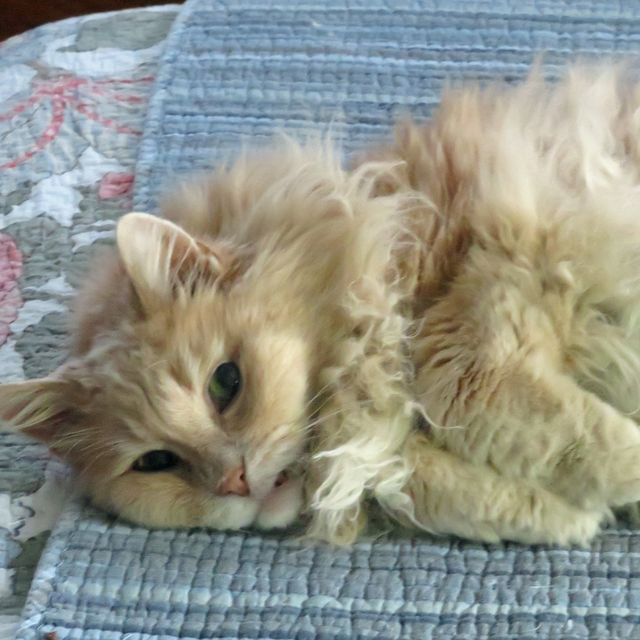
Matthew 5:13-16 urges Christians to be “the salt of the earth” and “the light of the world.” I suspect this precludes my hiding under the bed with my little yellow cat until the world stops fighting. But I suspect it also means I must aim to avoid being part of the problem. Because the vitriol on all sides is so widespread and so relentless and so damaging, we must look for ways to create more light and less heat. As Christians, I believe we should do no less.

Questions for readers: How has our society’s polarization impacted you personally? Your family and friends? Our larger community? Our churches? Which problems do you see going unaddressed while we rip each other apart? What do you think is behind all the divisiveness and how do we turn down the heat? How do Christians avoid becoming part of the problem? 

I’d love to hear your responses to these questions, as well as your comments on the article itself. Just hit “Leave a Reply” below. When responding, please keep in mind the guidelines I’ve outlined on my Rules of Engagement page (link HERE).

Recipe: Lemony dill salmon

I am always, always, always looking for delicious ways to add fish to our diet, and this recipe definitely meets the “yum” test.

Better yet, both salmon and olive oil contain omega-3 fatty acids – the good kind of fat known to lower the risk of heart disease.

Plus, the recipe meets another test – it’s super easy to prepare.

The recipe also lends itself to batch cooking. It can keep in the refrigerator for up to three days and I just pop the leftovers in the microwave for 2-3 minutes.

This recipe makes 4 servings.

Ingredients

  • 4 salmon filets
  • 3 tablespoons extra virgin olive oil
  • 2 tablespoons lemon juice
  • 1 tablespoon dried dill weed
  • 1 teaspoon minced garlic
  • fresh ground pepper to taste

Instructions

Whisk together the olive oil, lemon juice, dill weed and garlic until well-blended.

Dip salmon filets in the mixture to coat thoroughly and place in a 9 X 9-inch baking dish.

Pour the remaining mixture over the top of the filets.

Bake in a 375-degree oven for 20-25 minutes, or until the fish flakes easily, basting filets with the liquid once or twice while baking.

Nutrition information

Serving size: 4-ounce filet | Calories: 300 | Carbohydrates: 0 g | Protein: 20 g | Fat: 27 g | Saturated Fat: 5 g | Cholesterol: 55 mg | Sodium: 60 mg | Potassium: 360 mg | Fiber: 0 g | Sugar: 0 g | Vitamin A: 1% | Vitamin C: 6% | Calcium: 0% | Iron: 1%

God’s other book: Dandelions

Just my humble opinion, but what’s not to love about dandelions?

They are among the first signs of spring, popping up in our yard even before the grass starts greening.

One can’t help but admire their irrepressible resiliency. These masters of survival can grow up through cracks in a sidewalk and thrive.

Many pollinators rely on dandelions, violets and other early-spring wildflowers to provide nectar before other flowers begin to bloom.

Sadly, people use millions of gallons of herbicides each year to kill these delightful flowers, thus taking a terrible toll on the environment.

We’ve made the decision to keep our lawn chemical-free. Don’t worry, we do mow (though we put off the first mowing for as long as possible).

By about mid-spring, our entire yard has become a colorful dandelion-and-violet patch, which keeps the butterflies and bees very happy.

Even our resident chipmunks like the wildflowers.

And then there are the seed puffs. When I was a child, I loved plucking dandelions and blowing the seeds into the air.

I also loved hooking their long hollow stems together to make a necklace or bracelet.

If we must pull them up, the greens can be added to a salad. Some people also use them to make tea or wine.

I saw the paperweight and necklace below on Etsy. What will folks think of next?

So when others talk about getting rid of dandelions, I always want to ask this one-word question: “Why?”

I don’t know about anyone else, but I love my dandelions! And I’m letting them stay exactly where they are.