Little epiphanies

Note: I first posted this article shortly after the 2020 U.S. presidential election. But with another election season in progress, I’d like to post it again with just a couple of small updates, because it still reflects my feelings about the polarization ripping apart our society. If anything, the problem only seems to be getting worse. This is part of a series of articles I will post between now and the U.S. election in November.

Insight doesn’t usually come to me in big EUREKA! moments, but tends to creep into my awareness through a series of little epiphanies. And so it was with the realization that our society’s culture wars were wreaking real damage, both in our communities and in my personal life. Even worse, I began to discern – albeit more slowly – that my own attitudes and behavior might be contributing to the problem.

The first of these little epiphanies came during my 20-year career in human services. Between my paid employment and my volunteer commitments, it was hard to avoid the fallout from our larger society’s political battles because the never-ending conflict so often affected my ability to simply do my job. Government funding to the social service agencies where I worked would be cut or delayed on a regular basis because elected officials liked to hold state and federal budgets hostage until they got their way on ideological priorities. This often resulted in staffing shortages and a reduction in the level of services we were able to provide for people in need.

“Philosophical differences” within the social service system itself sometimes kept helping professionals from working together for the benefit of people who sought assistance for problems ranging from drug addiction and homelessness to domestic violence and mental health issues. Conservative colleagues said poor choices and lack of personal responsibility were to blame for these individuals’ problems, while progressive colleagues insisted bad luck and social oppression were the culprits. My own experience told me the cause of most client problems was a complex combination of poor choices, bad luck and social oppression, but I often felt pressured by colleagues on both the left and the right to deny the reality in front of me when certain details of a person’s situation were not “ideologically correct.” 

Outside of work, I frequently found myself sucked into arguments with friends, relatives and even strangers over contentious “hot-button” issues such as abortion, gun violence, climate change and racial unrest. Sometimes online squabbles would get sufficiently nasty for me to block or “snooze” Facebook friends – both progressive and conservative – who refused to stop insulting my other Facebook friends. This situation got more pronounced after the 2016 election, with some friends actually pressuring me to stop associating with people on the “wrong” side of the ideological divide. 

However, I have to admit I wasn’t always the innocent victim or bystander in these skirmishes. For years, I had been repelled by the culture wars and yet attracted like the proverbial moth to a flame.

One sign that I might be a bit too invested in the culture wars came when I realized I had just wasted an entire afternoon arguing with total strangers about jello. Yes, jello. Progressives and conservatives on one Christian denomination’s Facebook page had been wrangling for days over this question: “Is it racist to make jokes about jello at church potlucks?” I further realized it wasn’t the first time this had happened. Conservative and progressive Christians frequently mauled and skewered each other on Web sites such as Patheos, gleefully calling each other names and dropping F-bombs on people left and right. While I didn’t resort to insults or profanity myself, I confess to participating in too many of these “discussions” for longer than I should have. 

Another “Aha!” moment came during election season when I realized I hadn’t done my morning meditation in several days. Morning meditation was one of my favorite prayer rituals. I settled in my recliner in front of the fireplace with a cup of coffee by my side and a cat in my lap and asked for God’s protection and guidance as I journaled about my priorities for the coming day. Sometimes my husband serenaded Oley Cat and me with sacred songs on his dulcimer. So why was I missing out? Not because of early doctor appointments or work commitments. Before I even had my morning coffee, I would rush to my computer and click into Real Clear Politics or FiveThirtyEight.com to see who was ahead in the polls. Housework and my writing also languished while I aimlessly surfed the web, looking for that news story or editorial that would magically reassure me the right side was winning.

One beautiful October day, I was taking a twilight walk when I suddenly stopped short. Mother Nature’s handiwork prompted me to gasp. Fall leaves flashed yellow-orange-crimson. Light from the setting sun bounced off the tops of trees in even more vivid colors. The sky competed with the trees for sheer outrageousness – the sun painting the clouds red, orange, yellow, pink, purple. A still-warm breeze blew gently across my face. Then I stopped short again. I realized I had been walking for several minutes before I noticed what was in front of me. While God was putting on this living fireworks display, I had been gazing at the sidewalk, my mind flitting from one surly thought to another: I wish our elected officials would stop acting like children. … What kind of people would vote for a monster like that? … What on earth is wrong with people?! … How can they think that way?  

The final straw that convinced me I’d had enough of the culture wars came with the COVID-19 pandemic. Here we were, facing a virus that was killing hundreds of thousands of people, and our elected officials would not stop brawling long enough to develop a coherent plan for addressing this urgent public health issue. One would think the general public might urge lawmakers to put aside their political differences and collaborate on ways to get personal protective equipment to our frontline workers, ensure ICU beds were available for everyone who needed one, and help families and small businesses affected by our shutdown orders. Instead, all we could seem to do was bicker about face masks and shame each other with Facebook memes while we retreated further into our ideological camps and dug in our heels.

So what could one person do to stop the lunacy? I was pretty sure the answer was not to retreat from the political arena, look the other way in the face of injustice or stop working to resolve problems such as poverty and hunger. On the other hand, something clearly wasn’t working – either in our society or in my responses to the endless strife. At the very least, my own responses needed to change. 

Unfortunately, the church community – where one might hope to find some guidance – seemed only to provoke more confusion and discord. Many Christian denominations were drawing progressive-versus-conservative battle lines that matched those of secular society. As people on either end of the political/ideological divide pressured me to take sides, I often found myself performing mental gymnastics to make my religious beliefs about an issue fit a particular political party’s platform. And I came to realize how much my own beliefs were being shaped by my desire to fit in with the people around me rather than by an objective search for truth. 

This internal tug-of-war brought on by the increasing divisiveness in our society prompted me to ask myself several questions: What were my own beliefs about the hot-button issues that consumed our nation’s culture warriors? Should I continue holding onto these beliefs and values, or should some of them be changed or discarded? How could I avoid the continual pressure to “choose sides” and do more of my own thinking? What was my role as a Christian in fighting or mitigating society’s political battles? How should I engage people who disagreed with me, while keeping in mind God’s commandment to love our neighbors as ourselves? And perhaps most importantly, how did I avoid becoming part of the problem as our society grew ever more partisan and angry? How could I be part of the solution?

To help me sort through these questions, I engaged a spiritual director. With her encouragement, I began questioning many things I thought I knew. I questioned values other people wanted me to hold – whether they be conservative or progressive. I began asking myself how much I really believed everything I claimed to believe concerning church dogma and secular political ideologies. Was it possible I was merely paying lip service to certain ideas to please my peer group? I decided for the time being to ignore what academic “experts” thought. I did not want a value system that would simply let me fit in chameleon-like with my surroundings. Ultimately, I wanted a personal faith that would stand up to reason, scrutiny and pressure from the various culture warriors in my life. My “deconstruction and reconstruction” — or discernment — process continues to this day.

In 1 Thessalonians 5:21, the Apostle Paul said, “Test all things; hold fast to that which is good.” 

I certainly haven’t figured out all the answers. But I do think one key to finding an appropriate Christian response to our society’s polarization problem is to avoid knee-jerk ideological responses to heated controversies, hear people out on all sides and keep asking those pesky questions.

Questions for readers: How has our society’s polarization impacted you personally? If you’re one of those people who feel exhausted by the fighting, what incidents or events triggered that exhaustion? How do we become part of the solution rather than part of the problem? I’d love to hear your responses to these questions, as well as your comments on this article. Just hit “Leave a Reply” below. When responding, please keep in mind the guidelines I’ve outlined on my Rules of Engagement page (link HERE).

Gardening: Sweet agony

When it comes to gardening, I always start out the year with good intentions.

Seed catalogs offer such enticing possibilities, I begin to envision landscaping around my house that rivals the most gorgeous Japanese garden or Thomas Kinkade painting.

As soon as the first shoots appear in the spring, I visit the nurseries, where I encounter flat after flat of seedlings that all seem to shout in unison: “Take me home! Take me home!”

Once I get a carload of them home, my eyes widen as I realize I actually need to find a place for each one. Oh my.

I tell myself, “God’s work, my hands,” get down on my hands and knees, and start digging in the dirt.

Then the @#$#@ weeds arrive! I belong to several local Facebook gardening groups, and we’re forever sharing tips on how to outsmart those little suckers. None of us ever quite succeeds, but that doesn’t stop us from trying, even those of us committed to not using chemicals in our yards.

But when I gaze upon all my lovely flower beds on a summer morning or slice up that first vine-ripened tomato for lunch, that’s when I decide the results are well worth all the hours of toil.

One could say my relationship with gardening resembles my love-hate relationship with writing. The process may be agonizing, but when I’m finished with a plot, I love having done it.

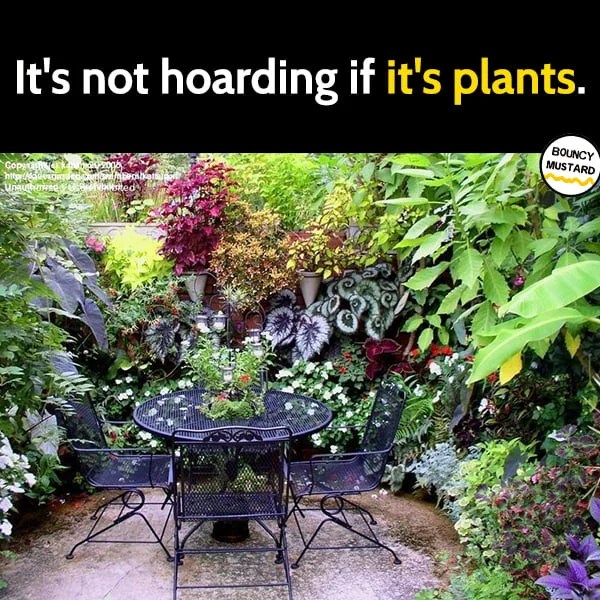
So to all my fellow gardeners, here is a baker’s dozen of my favorite gardening memes.

We need to talk

Note: I first posted this article during the lead-up to the 2020 U.S. presidential election. But with another election season heating up, I’d like to run it again with just a couple of small updates, because it still reflects my feelings about the polarization ripping apart our society. If anything, the situation has gotten worse.

Sometimes I want to stick my fingers in my ears and yell “SHUT UP!” over and over at the top of my lungs until the madness stops.

One cannot turn on the news, sign in to a social media account or even go out in public without getting a daily dose of the name-calling, accusations, counter-accusations, demonizing of opponents and overall nastiness that characterize our society’s Culture Wars:

You know who’s causing all the problems in this country, don’t you? … It’s those racist, misogynistic Rethuglican deplorables who want to impose their narrow version of morality on the rest of us. …  Those whining Dumbocrat crybabies and snowflakes who want safe spaces and free stuff. … Those naïve socialists who would destroy businesses and bankrupt the government with their outrageous demands. … Those greedy capitalists who stuff their pockets while robbing honest hard-working people of their retirement funds. … Those lazy welfare recipients with their infuriating sense of entitlement. … Those wealthy elites who have too much already and want more, more, more. … Those incompetent teachers who staff our lousy public schools. … Those illegal immigrants stealing our jobs. … Those SUV drivers contributing to global warming. … Those environmental wackos who want us to give up eating hamburgers. … Those obese gluttons who gorge on fudge rounds and drive up health care costs. … Those fat-shamers who encourage eating disorders with their unattainable standards of attractiveness. … Those feminazis destroying the family. … Those cisgender, heterosexual white men who refuse to acknowledge their privilege. … Those people who own guns. … Those people who want to take away our guns. … Those fundamentalist Christians, those radical Muslims, those godless atheists, those New-Age navel gazers … Those self-centered Boomers running up the national debt with no regard for how their decisions will affect future generations. … Those teenagers who watch too much TV, play too many video games, listen to music with depraved lyrics, do drugs, drop out of school, get pregnant and join gangs. … Of course, none of this would be happening if it weren’t for those helicopter parents who fail to teach their hopelessly coddled trophy kids personal responsibility!!!

Whew! Have we left anyone out?

Here in the U.S., one could see news commentators practically salivating as they proclaimed the 2016 demolition derby of a presidential campaign to be the ugliest mudfest in history. The venom showed no signs of abating during a 2020 campaign season that began with an impeachment trial and ended with the January 6 horror show. Many people I know say the 2024 election is filling them with dread, because they fear there will be violence no matter who wins.

For too long now, we have come to regard name-calling and character assassination as normal for election campaigns. But the gutter brawling isn’t limited to political candidates. On the cable news networks, guests routinely talk over each other and shout each other down while debating the latest hot-button issues. “Flaming” and “trolling” have become popular sports in the anonymous comments sections that follow some news articles and blog posts. 

We have Climate Wars — those who believe climate change is caused by human behavior versus those who believe the former are perpetrating an elaborate hoax. We have Health Care Wars — those who wish to preserve the private insurance system versus those who want government-funded Medicare for All. We have Class Wars — the 99 percent versus the 1 percent. We have Education Wars — ferocious debates over issues such as what books and subjects are suitable for students, merit pay for teachers and private-school vouchers. We have Mommy Wars — mothers scrutinizing and judging other mothers’ decisions on everything from working outside the home to letting one’s toddler use a pacifier. 

This seething anger has seeped into the public square and manifests itself as an epidemic of rudeness. Many people I encounter in my everyday life seem more cranky and defensive than they used to be, and some seem to be spoiling for a fight. A car with a middle-aged driver sports a bumper sticker that tells us what we can eat if we don’t like the owner’s driving. We have Road Rage (shouting, cursing and flinging obscene gestures at other drivers), Airport Rage (yelling at ticket agents or flight attendants and starting fistfights on flights), Sidewalk Rage (reacting violently because people in front of us are walking too slowly), Parking Lot Rage (engaging in an angry standoff with another driver over a parking space) and Starbucks Rage (working oneself into a ballistic frenzy over the color and design of a coffee cup).

Sadly, those of us who identify as Christians are in no position to judge secular society when it comes to polarization. We often stand justifiably accused of stirring the pot ourselves — and not in a good way. Several denominations have split down the middle over hot-button social issues. Progressive and conservative Christians regularly skewer each other on Web sites such as Patheos. And we have our Worship Wars (which transcend denominational boundaries) — Christians locked in an unyielding struggle over whether a congregation’s music and worship style should be traditional or contemporary. 

As I’ve paid closer attention to the steady drumbeat of vitriol that makes up the background noise of our daily lives, I find myself thinking, “No wonder we’ve become a nation of people with clenched teeth and balled up fists.”

It would be bad enough if the tide of anger and disrespect — both in our churches and our larger society — served only to put people in a surly, antisocial mood. Unfortunately, the damage doesn’t end there. Our finger-pointing epidemic leads to everything from Congressional gridlock to violence against individuals who belong to maligned groups. While we bicker incessantly, our real problems go unaddressed — raging war in various global hotspots creates millions of refugees; thousands of children worldwide die each day of starvation and/or totally preventable diseases; nearly a third of all children in the U.S. live in poverty. 

On a personal level, the constant conflict leaves me wanting to grab a good book and a flashlight and dive under the bed with my cat. Apparently, I’m not alone. Hidden Tribes (link HERE), a report on public opinion by the organization More in Common, says as many as 67 percent of Americans belong to a group the authors have dubbed “the Exhausted Majority.” Although members of this group have many political and ideological differences, they share fatigue with the current state of U.S. politics and a feeling of being forgotten in political debates. The relentless back-and-forth arguments have rendered many folks just plain fed up and wondering if the U.S. can move beyond division, according to the report.

Matthew 5:13-16 urges Christians to be “the salt of the earth” and “the light of the world.” I suspect this precludes my hiding under the bed with my little yellow cat until the world stops fighting. But I suspect it also means I must aim to avoid being part of the problem. Because the vitriol on all sides is so widespread and so relentless and so damaging, we must look for ways to create more light and less heat. As Christians, I believe we should do no less.

Questions for readers: How has our society’s polarization impacted you personally? Your family and friends? Our larger community? Our churches? Which problems do you see going unaddressed while we rip each other apart? What do you think is behind all the divisiveness and how do we turn down the heat? How do Christians avoid becoming part of the problem? 

I’d love to hear your responses to these questions, as well as your comments on the article itself. Just hit “Leave a Reply” below. When responding, please keep in mind the guidelines I’ve outlined on my Rules of Engagement page (link HERE).

Recipe: Lemony dill salmon

I am always, always, always looking for delicious ways to add fish to our diet, and this recipe definitely meets the “yum” test.

Better yet, both salmon and olive oil contain omega-3 fatty acids – the good kind of fat known to lower the risk of heart disease.

Plus, the recipe meets another test – it’s super easy to prepare.

The recipe also lends itself to batch cooking. It can keep in the refrigerator for up to three days and I just pop the leftovers in the microwave for 2-3 minutes.

This recipe makes 4 servings.

Ingredients

  • 4 salmon filets
  • 3 tablespoons extra virgin olive oil
  • 2 tablespoons lemon juice
  • 1 tablespoon dried dill weed
  • 1 teaspoon minced garlic
  • fresh ground pepper to taste

Instructions

Whisk together the olive oil, lemon juice, dill weed and garlic until well-blended.

Dip salmon filets in the mixture to coat thoroughly and place in a 9 X 9-inch baking dish.

Pour the remaining mixture over the top of the filets.

Bake in a 375-degree oven for 20-25 minutes, or until the fish flakes easily, basting filets with the liquid once or twice while baking.

Nutrition information

Serving size: 4-ounce filet | Calories: 300 | Carbohydrates: 0 g | Protein: 20 g | Fat: 27 g | Saturated Fat: 5 g | Cholesterol: 55 mg | Sodium: 60 mg | Potassium: 360 mg | Fiber: 0 g | Sugar: 0 g | Vitamin A: 1% | Vitamin C: 6% | Calcium: 0% | Iron: 1%

God’s other book: Dandelions

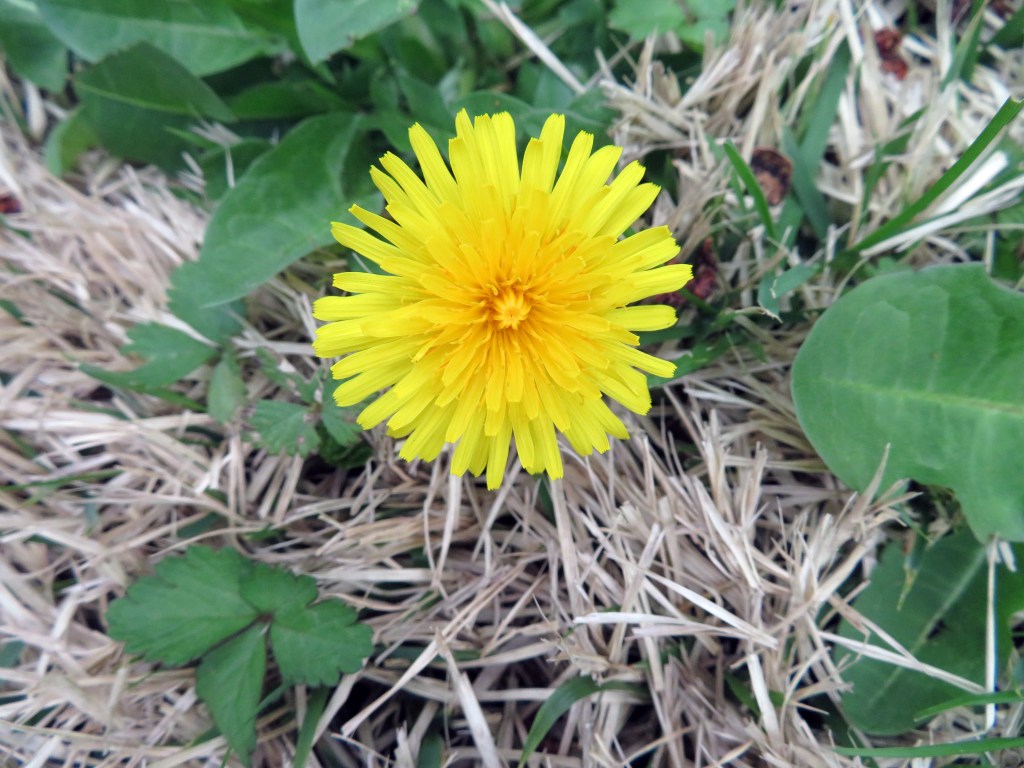
Just my humble opinion, but what’s not to love about dandelions?

They are among the first signs of spring, popping up in our yard even before the grass starts greening.

One can’t help but admire their irrepressible resiliency. These masters of survival can grow up through cracks in a sidewalk and thrive.

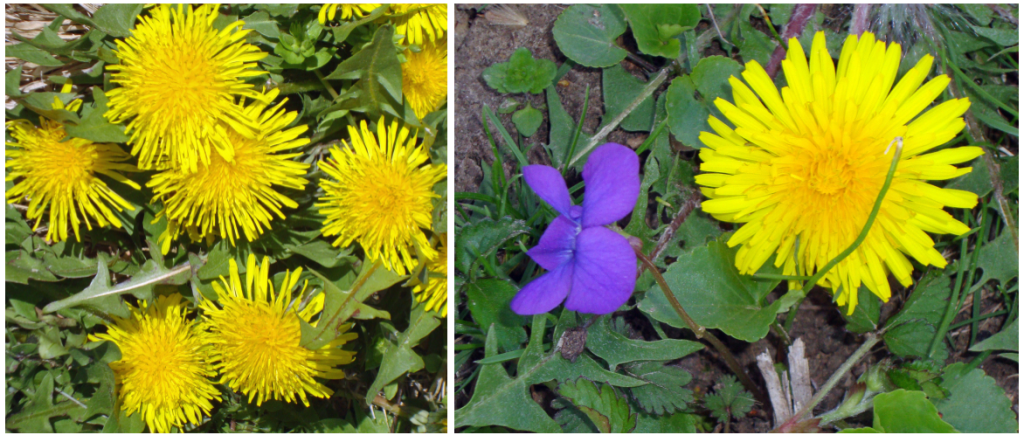
Many pollinators rely on dandelions, violets and other early-spring wildflowers to provide nectar before other flowers begin to bloom.

Sadly, people use millions of gallons of herbicides each year to kill these delightful flowers, thus taking a terrible toll on the environment.

We’ve made the decision to keep our lawn chemical-free. Don’t worry, we do mow (though we put off the first mowing for as long as possible).

By about mid-spring, our entire yard has become a colorful dandelion-and-violet patch, which keeps the butterflies and bees very happy.

Even our resident chipmunks like the wildflowers.

And then there are the seed puffs. When I was a child, I loved plucking dandelions and blowing the seeds into the air.

I also loved hooking their long hollow stems together to make a necklace or bracelet.

If we must pull them up, the greens can be added to a salad. Some people also use them to make tea or wine.

I saw the paperweight and necklace below on Etsy. What will folks think of next?

So when others talk about getting rid of dandelions, I always want to ask this one-word question: “Why?”

I don’t know about anyone else, but I love my dandelions! And I’m letting them stay exactly where they are.

Feeding the hungry: Micro food pantries

One of the niftier ideas to gain traction in recent years has been the micro pantry movement. Micro food pantries – sometimes referred to as Little Free Pantries or Blessing Boxes – operate on a simple premise: “Take what you need. Leave what you can.” There are no sign-ups, no strings attached and everything is free. If we’re in need, micro pantries are there for us. If we’re extra-blessed, we can help someone else.

These little outdoor pantries – usually about the size of a large kitchen cabinet – have begun to pop up in communities all over the country. They can be found next to churches, schools, businesses, apartment complexes and buildings owned by civic or not-for-profit organizations.

The pantries provide another source of help for a variety of individuals or families, from homeless people and hungry students to families strapped for cash between paychecks and people who need items not covered by SNAP benefits such as toilet paper or laundry detergent.

The need is growing. About 1 in 8 U.S. households suffer from food insecurity each year, according to the U.S. Department of Agriculture – meaning they had difficulty providing enough food for all household members. The nonprofit Feeding America estimates that 1 in 5 children face hunger. Poverty, unemployment or low wages, and disability are cited as chief causes of food insecurity.

The church I belong to built its own micro pantry a couple of years ago. We placed it in a well-lit area next to the sidewalk leading up to one of our front entrances. People can safely access it 24 hours a day, seven days a week, no questions asked.

Our little pantry is very well-used and has been a fairly easy project for our community service committee to maintain. Congregation members are encouraged to bring items and help keep it filled. We supplement individual contributions with occasional food drives and have received additional help from a generous bequest, as well as a fabulous group of community volunteers who call themselves Pantry Helpers.

For readers who would like to duplicate this idea in their own church, business or community group, I offer the following compilation of tips based on my own experience as a volunteer “pantry helper” and the experience of fellow volunteers. Feel free to take what you need and leave the rest! Also feel free to share this article with anyone who might be interested in such a project.

What to put in a micro pantry

A major challenge when filling a micro food pantry is that only nonperishable food items can be used, which rules out anything needing refrigeration. That leaves several creative options, however. Here are some examples of items that work great in these little free pantries:

Canned or pouched meats: Chicken, ham, Spam, beef cubes, tuna, salmon, sardines, pre-cooked bacon, Hormel Compleats.

Other proteins: Canned stew, ravioli, spaghetti and meatballs or sausage gravy; peanut butter; nuts and seeds such as almonds, walnuts, cashews, peanuts or sunflower seeds.

Fruits and vegetables: Canned fruits, vegetables, corn, baked beans, sweet potatoes or yams.

Grain products: Pasta, rice, corn meal, crackers, stuffing mix, tortillas, taco shells.

Soups: Chili; canned meat, bean or vegetable soup; boxed or pouched soup kits; ramen noodles.

Boxed kits: Macaroni and cheese, Hamburger Helper or Tuna Helper mixes, pasta noodles, rice and red bean mixes, scalloped or au gratin potato kits, pasta salad mix.

Breakfast items. Dry cereal, cream of wheat, prepackaged instant oatmeal, boxed or canned fruit juice, fruit cups, pop tarts or other breakfast pastries, pancake mix, syrup in a plastic bottle.

Other shelf-stable foods: Dried beans, instant mashed potatoes, pasta sauce in cans or plastic jars, pouched or plastic containers of baby food.

Healthy snack foods. Granola or protein bars, trail mix, peanuts or other nuts, P3 protein packs, yogurt pouches, pudding snack cups, jerky.

Cooking essentials. Sugar, flour, vegetable oil, cooking spray, vinegar, instant powdered or evaporated milk, powdered eggs, commonly used spices such as garlic, oregano, salt and pepper.

Condiments. Catsup, mustard, salsa, pickle relish, soy sauce, honey, lemon or lime juice, salad dressing.

Other: Coffee, tea, bottled water, energy drinks such as Gatorade.

Again, always make sure that all items are “shelf stable.” If unsure, check for the words “no refrigeration needed” or “refrigerate after opening.”

More goodies

Other great things to add to a micro food pantry include grocery store items that people can’t buy using SNAP benefits. Some volunteers even like to leave something for Fido or Fluffy. Here are some ideas:

Grooming supplies. Toilet paper, shampoo and conditioner, body wash, bar of soap and washcloth, disposable razors, toothpaste and toothbrushes, deodorant, feminine hygiene products, grooming kits for homeless people.

Baby items. Disposable diapers or pull-ups in assorted sizes, baby wipes, talcum powder.

Cleaning supplies. Dish soap, laundry soap, bleach, sponges, paper towels, garbage bags.

Pet food. Small cans, pouches or bags of dog or cat food.

Disposable face masks. During flu season or COVID outbreaks, order medical-grade masks online in boxes of 25 or 50 and put them in plastic sandwich bags in batches of 3 or 4 per bag.

Recipe or meal kits

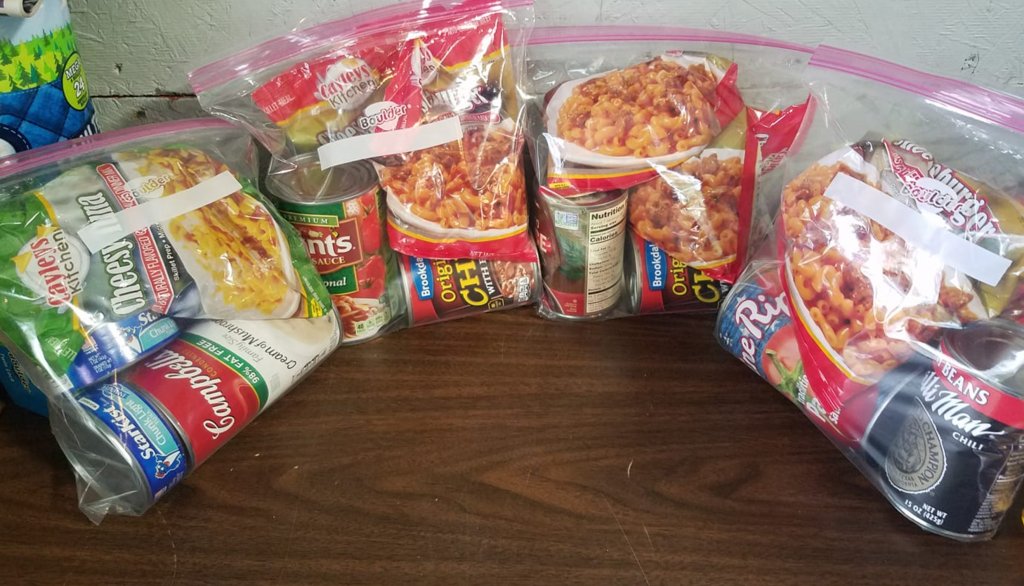
Meal kits or recipe kits are perfect for many micro pantries because it is often hard for people using food pantries to find all the ingredients they need to make a complete recipe. For example, simple kits can be made pairing boxes of pasta mix with sauce and pouches of meat. Here are some ideas:  

Chicken or tuna noodle casserole. Family size pouch or can of chicken or tuna, bag of egg noodles, canned cream of celery or cream of mushroom soup, can of mushrooms.

Tuna tetrazzini. Box of Tuna Helper tetrazzini, family-size pouch or can of tuna, canned cream of mushroom soup, can of mushrooms.

Chicken fettuccini alfredo. Boxed fettuccini alfredo kit, pouched or canned chicken, canned cream of chicken soup (which can be used in place of milk and butter).

Beef stroganoff. Boxed or pouched stroganoff mix, pouched or canned beef cubes, mushrooms.

Chicken a la king. Canned chicken a la king, biscuit mix that only requires adding water.

Biscuits and gravy. Canned sausage gravy, biscuit mix that only requires adding water.

Chicken soup. Pouched or boxed soup mix, pouched or canned chicken.

Chili 3-Way. Spaghetti noodles, can of chili, plastic container of parmesan cheese.

Mexican dinner. Canned tamales, heat-and-eat Spanish rice, canned refried beans or pinto beans, small plastic container of salsa.

Chinese dinner. Canned chow mein, can or bag of crispy chow mein noodles, packets or plastic container of soy sauce.

Sandwich fixings: Pair peanut butter and jelly in plastic jars, or tuna in a pouch with mayonnaise and pickle relish in plastic jars. Add a small loaf of sliced bread.

Sack lunches. Include a protein item (pouched yogurt, jerky, breakfast bar or granola bar, trail mix, crackers with peanut butter or cheese), a fruit cup and a container of vegetable juice. Adding plastic silverware and a napkin is a nice touch.

To make a kit, create a label listing the items in the bag along with recipe directions if needed. Paste or tape the label to the outside of a paper bag – a plain lunch-size paper bag or gift bag large enough to hold all the ingredients will work well. Ingredients for these kits may also fit nicely into a gallon-size zip-lock bag. Just tuck the recipe inside the bag.

Special needs

Each micro pantry has its own unique combination of neighbors and needs. Depending on your pantry’s location, the people who use it may be primarily families, homeless individuals or even students. Volunteers may want to tailor the pantry’s contents to the needs of its frequent users.

A downtown pantry popular with homeless people may contain an assortment of grab-and-go items or sack lunches packed with a protein item, a small container of juice, a fruit cup and plastic silverware. These pantries may also include small grooming kits, socks or gloves and snack foods such as granola bars that can easily be stuffed into one’s pockets.

A pantry located next to an apartment complex may contain items more suitable for families. Meal kits and breakfast items would be especially welcome here, as well as toilet paper, cleaning supplies, laundry detergent, baby wipes and pet food.

A pantry located at a school might include a variety of healthy snacks, as well as sack lunch kits. School supplies such as pens and spiral notebooks or grooming supplies and feminine hygiene products would also be useful for needy students.

Healthy snack items work great in just about any pantry, whether for homeless people or students who need something that doesn’t have to be heated up, or for families to pack for work or school.

Stocking your pantry in extreme weather

Winter weather provides yet another challenge: Not only must the items be non-perishable, but the packaging must be able to withstand freezing temperatures. This is particularly true in regions where temps can dip into single digits or lower. Glass jars or even canned goods can break or swell and burst when frozen, creating quite a mess! (Think soda cans left in the freezer.)

When sub-zero weather is in the forecast, you will want to choose meat that comes in pouches rather than cans – tuna, chicken and salmon are good options. Choose boxed soup rather than canned, or soup mixes in pouches. Staples such as sugar, flour, corn meal, rice, dried beans, pasta noodles, powdered milk, powdered egg whites, salt and pepper can withstand freezing and are always welcome regardless of the season.

Other good temperature-resistant items that fly off the shelves include grooming supplies, toilet paper, laundry detergent in a box or plastic jug, and small bags of dry pet food.

Despite the extra challenges, keeping micro pantries stocked in the winter is particularly beneficial because factors such as higher utility bills and unexpected medical expenses stemming from seasonal illnesses can squeeze budgets especially hard this time of year.

Other considerations

Is there anything that shouldn’t go into a micro pantry?

Volunteers who stock pantries on a regular basis recommend avoiding food in glass jars. Unfortunately, glass jars have been known to crack or break if the temperature gets too hot or too cold. Items such as peanut butter and jelly, mayonnaise, pickle relish and pasta sauce are often available in plastic rather than glass jars.

Another point to consider: If you don’t want to eat it, probably no one else does either. This includes expired, damaged or already opened food items, rusty, severely dented or unmarked cans, or any other food you would NOT eat yourself or feed your own family. This may seem like common sense, but volunteer pantry helpers have learned to expect just about anything – garbage, dented cans, perishable food that has perished.

Here are some additional things volunteers have collectively learned as they’ve stocked the micro pantries in their communities.

  • If possible, locate your pantry in a well-lit place with a security camera nearby and in plain view. This may discourage vandalism as well as increase personal safety for pantry users.
  • If a pantry has an overabundance of any one item, a pantry helper may want to remove some and either take to other pantries or gradually add the item back to the original pantry shelf. For example, leave a few rolls of toilet paper rather than an entire 12-roll package.
  • Meal kits offer a way to move some items off the shelves. For example, boxed macaroni and cheese by itself may not work if a person doesn’t have milk and butter at home. But pair the same item with cream of cheese soup, which can replace milk and butter, and canned ham or spam that can be cut into chunks, and one has a complete meal. Canned beans and tomatoes present a similar puzzle, but may work well as part of a meal kit.
  • Micro pantries are a great place to repurpose those little packets containing napkins and plastic silverware that come in to-go restaurant orders. That way, homeless people or students who avail themselves of food in the pantry have something to eat it with. The sample-size soap and shampoo picked up from hotel rooms are perfect for grooming kits.
  • Again, consider the pantry’s location. Pull-top cans may not be a good idea in locations with a lot of ongoing vandalism, but they work perfectly in busy downtown spaces where homeless people gather.
  • Pantries may need to be cleaned and repaired from time to time. Many volunteers carry garbage bags, boxes, latex gloves and some cleaning supplies in case they are needed when stocking pantries.

Make it a group project

What’s nice about micro pantries is that there are no hard-and-fast rules. At first, the little free pantries operated very informally, with mostly individuals either taking or adding items. But then various organizations began “adopting” the pantries and turning their maintenance into a more formal group effort.

If your church, business or civic organization has someone with carpentry skills, you can build your own little pantry. The one my church built turned out to be fairly easy to construct. (Click HERE for a link to the design and instructions we used.)

Other organizations may prefer to adopt an existing micro pantry and assume responsibility for keeping it filled, clean and in good repair.

At church, your youth group or community service committee could encourage congregation members to donate the items. Conducting a food drive would also make a great service activity for civic organizations you or your children belong to, such as Boy Scouts, Girl Scouts or your local garden club. Many businesses have also been conducting food drives.

Where I live, a 501c3 organization called Pantry Helpers specifically devotes itself to keeping our community’s nearly three dozen micro pantries stocked. The group organizes its own food drives or picks up food from other organizations that conduct the drives, and members distribute the items to the various pantries. These volunteers also make sure the pantries stay clean and in good repair.

The biggest thing volunteers have learned is just how great the need is in many of our communities. Keeping the pantries stocked is a huge challenge – items often fly off the shelves faster than they can be replaced. So anything individuals or groups can do to help is worthwhile.

All this adds up to a win-win situation for everyone, giver and receiver alike.

Update: Some good news

Over the past year and a half, several of you who follow my blog have been generously keeping my husband Pete and me in your prayers. So, on this very blessed Easter Sunday, I’d like to take this opportunity to offer an update.

Pete was diagnosed with bladder cancer in October of 2022, and in December of the same year, I had a heart attack. I got the easier part of the bargain – two stents for Christmas, followed by cardiac rehab therapy, a healthier eating plan and more exercise. Pete’s journey has been far more grueling – chemotherapy, followed by major surgery to remove his bladder, then several hospitalizations due to infections and other complications, and finally, immunotherapy treatments.

There were bright spots, like the major milestone moment when Pete “rang the bell” upon finishing chemo last spring.

But much of 2023 was a chaotic roller coaster ride of repeated hospital stays, juggling medical appointments (sometimes as many as 15 in one week between the two of us) and frustrating efforts to navigate the health care system – not to mention an abundance of anxiety and uncertainty about the future.

So it’s with much relief, joy and thanksgiving that we’re finally able to report some good news. In mid-March, Pete went for a complete follow-up CT scan of his lungs, abdomen and pelvis. Nothing scary was growing and several previous “areas of concern” had either shrunk or disappeared entirely. Last week, Pete’s oncologist confirmed that his current regimen of immunotherapy seems to be keeping his “bad-boy cells” under control.

Because it’s Stage 4, there is no cure at this point. But the oncologist assures us the cancer continues to be treatable, and so far (knock wood!) the side effects from the immunotherapy have been minimal. These days, a LOT can be done – even some advanced cancers are now being treated like a chronic illness rather than an automatic death sentence. As Pete said a few days ago in his Facebook update about the CT scan results: “This stuff never goes away, and doctors deal with probabilities, not certainties. But I’m taking this as very good news indeed!”

Meanwhile, my heart attack was definitely a wake-up call. My heart – quite literally – was telling me I really, really needed to establish better eating habits and address my mostly sedentary lifestyle. My cardiac rehab program offered nutritional advice, a personalized exercise plan and educational classes on how to live with a heart condition. So we’ve established a healthy eating plan and have added yoga and walking to our routine.

This, of course, has me singing: “Hallelujah! Hallelujah! Hallelujah, hallelujah, hal-le-e-lu-jah!” (Picture a choir singing the “Hallelujah Chorus” from The Messiah.) And I do have much to be thankful for.

I have been impressed and humbled by my dear husband’s strength, courage and persistence as he has plowed through his endless treatments.

I’ve taken to calling Champie our furry little comforter. Our sweet kitty kept Pete company and rubbed noses with him as Pete was recuperating from surgery and other complications. Our fur baby cuddled up with me on those lonely nights when Pete was in the hospital and I had to sleep alone at home. Even at the ripe old age of 18, he continues to be his sweet, ornery, adorable self.

We are both beyond grateful for the mountain of get-well wishes, the delicious meals sent to our house by special angels when we didn’t feel like cooking, the offers to assist with transportation and other needs, the cat photos and baby goat videos and bad puns posted to our Facebook pages to cheer us up, and the many other things our wonderful family members and friends have done to help us feel supported and loved as we’ve traveled through this uncharted and often frightening and frustrating territory.

Everyone’s continued prayers have been especially appreciated!! Our church congregation has kept us on their prayer list for well over a year now, and friends and family members have put us on the prayer lists at their own churches. The Dominican Sisters in our community have enveloped us in prayer and provided us with spiritual direction. Several dear readers who follow this blog have assured us that we’re in your prayers as well. The steady stream of prayers, cards and visits have helped more than people know!

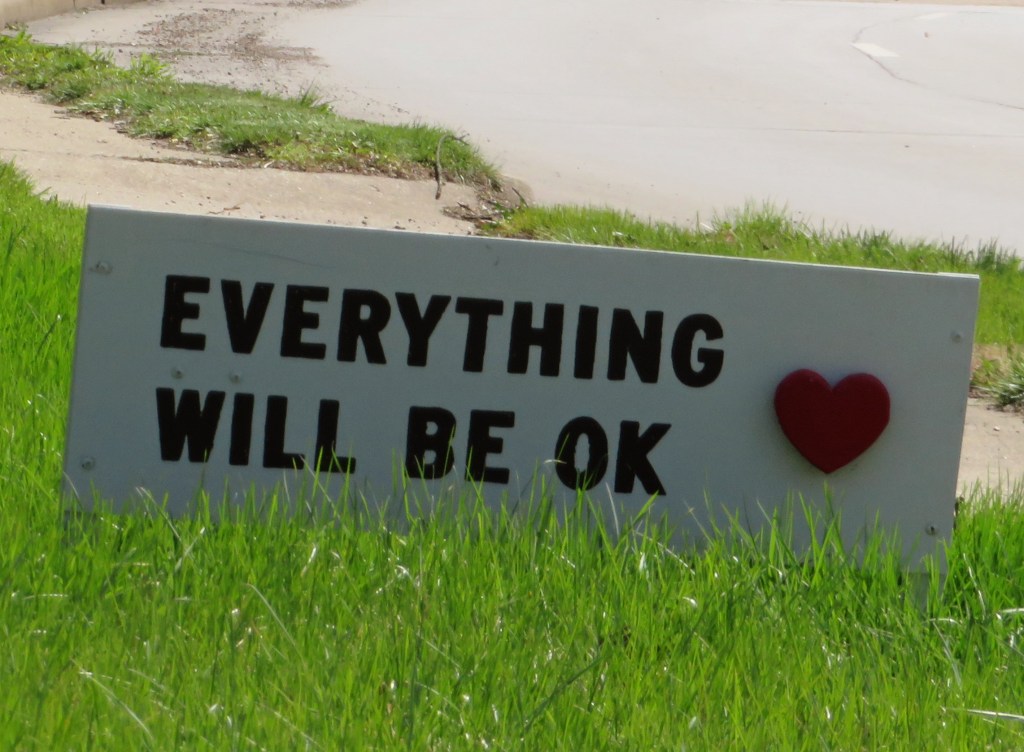
We’ve even gotten support from complete strangers who probably have no idea how much of an impact their small actions are having. When we’re out and about, especially when we’re on our way to doctor’s appointments, we make a point of driving by the house on MacArthur Boulevard with this sign in their yard.

While we’ve gotten amazing support from family, friends and our spiritual community, possibly the one biggest thing we’ve needed is hope. For hope to happen, we’ve had to lean on a health care team we can trust.

Over the past year, we’ve assembled a good medical team that is helping both of us get the ongoing physical care we need. As exasperating as our health care system can be to navigate, we’ve been blessed with competent and dedicated health care professionals, from Pete’s oncologist and my heart specialists to the overnight nursing staff who helped keep Pete and me comfortable during hospital stays.

We mustn’t forget to mention the amazing staff at the Simmons Cancer Institute’s infusion center, the interventional radiology team at St. John’s Hospital, the folks at the Prairie Heart Institute’s cardiac rehab center, and the home health team who came to our house throughout the late winter, spring and early summer of 2023.

More importantly, we’ve had to lean on and trust God to get us through. The “Prayer of Good Courage” was written in 1941 by Anglican priest Eric Milner-White, and is a favorite at Holden Village, a Christian retreat center in Washington state. It has become a favorite for Pete and me as well, especially during times when we’ve found it hard to trust where God might be leading us next.

So … Pete and I finally seem to be turning a corner. I hope!! For those who have been keeping us in your prayers and offering a million other kinds of generous support — thank you, thank you, thank you!!

Happy Easter, everyone! Christ is risen indeed.

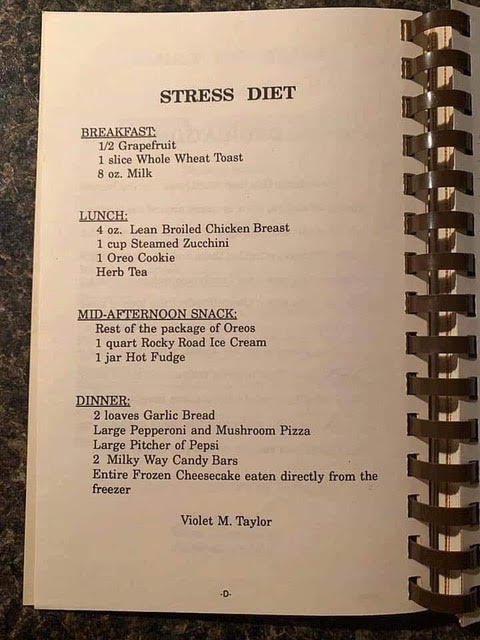
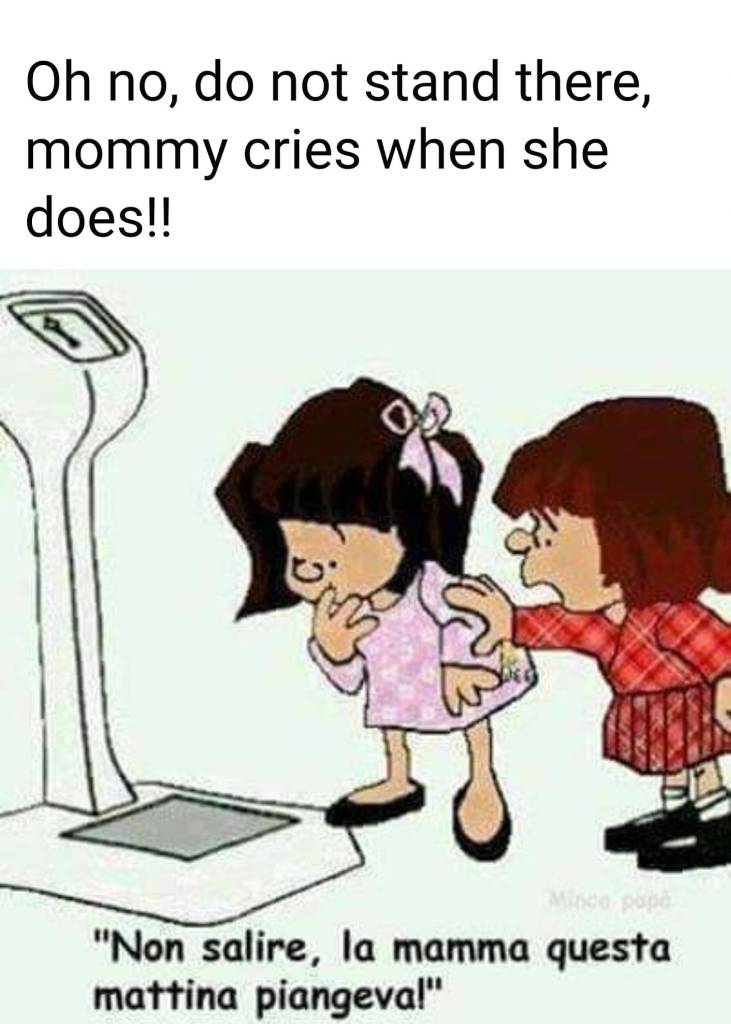
Healthy eating: Memes for the rest of us

This Lenten season, I’ve committed to doubling down on healthy eating and exercise.

Four weeks in, I’m actually doing fairly well and have even managed to drop a few pounds. But that’s not to say it’s been easy.

So I appreciate the abundance of memes that express empathy for my struggle, and can’t resist sharing some of them. Enjoy.

Book excerpt: Our children are watching

Note: This is an excerpt from my book in progress, which examines the polarization ripping apart our society and shares my personal search for an appropriate Christian response. For an overview of the book and to read my other excerpts, click HERE.

It would be bad enough if the tide of anger and disrespect fueled by the Culture Wars served merely to put people in a surly, antisocial mood. Unfortunately, the damage doesn’t stop there. On a societal level, our finger-pointing outrage epidemic leads to everything from loss of trust in our institutions to violence against individuals who belong to maligned groups. On a personal level, people report damaged friendships and stress at family gatherings.

Perhaps worst of all, however, is the fact that our children are watching us. 

Of course, adults have been lamenting youthful attitudes and behavior ever since Socrates complained that the younger generation of his day disrespected their elders and lacked proper manners. Twenty-first century adults gripe that kids feel entitled, want instant gratification, lack a proper work ethic, spend so much time glued to their devices they no longer have basic communication skills, and are generally rude and inconsiderate of others.

The school shootings that occur with numbing regularity in the U.S. have called attention to a problem pervasive in most school districts – student cliques, outcasts and bullying. Children begin forming cliques as early as grade school. High school jocks pick on geeks. Middle school mean girls single out scapegoats for gratuitous abuse because their hair is wrong.

Many of these students aren’t content to simply avoid or exclude certain kids. Insiders often treat outsiders in ways that seem inexplicably cruel. Insults, harassment and scapegoating abound. Almost any perceived difference – race or ethnicity, language, social class, disability, size, wardrobe, personal style – serves as useful fodder for hurtful words and actions. Tragically, some students have been driven to suicide by cyberbullying.

Yet we must remember that children aren’t born with social graces. Getting along with others requires skills that, for most kids, don’t come naturally – the ability to listen, negotiate, compromise, and look at a situation from another’s point of view. Youngsters need to be guided toward healthy behavior, and the best guide is adult example. “Train children in the right way, and when old, they will not stray,” Proverbs 22:6 reminds us.

So what kind of example are we showing them?

Cliques, bad attitudes and hypocrisy, oh my!

A cynic might suggest that cliques and cyberbullying provide excellent practice for life in adult society. Several parallels could be drawn between student cliques and adult culture war “tribes” – social sorting, an Us vs. Them mentality, in-group conformity and out-group stigmatization, and peer pressure to align with the in-group’s norms, beliefs and behaviors in order to gain acceptance and avoid isolation.

We live in echo chambers that ensure we are exposed mostly to people who share our own worldview and are shielded from conflicting ideas or viewpoints. The more we identify with a group, the more we feel pressured to agree with its dogma – a party line that seems to include 650 boxes which must all be checked, lest we risk rejection by our chosen peers.

Kids who take their cues from adults in our highly polarized society might be excused for thinking rudeness is clever. Parents and teachers share concerns about allowing younger children to watch political debates because of the name-calling, insults and other loutish behavior on the part of the candidates. Comedians and talk show hosts derive perverse delight from their crude and uncontrolled behavior toward people perceived as opponents. Cable news programs feature guests who constantly interrupt each other and engage in shouting matches.

Young people looking to adults for examples of how to behave might also get the message that values like kindness and compromise are passé. Elected officials who work across the aisle often risk losing support from their base or face opposition in their party’s next primary election. In our private relationships, people who insist on maintaining friendships across ideological lines may be accused of selling out.

Politically progressive folks who should be old enough to know better accuse us of “tone policing” if we object to their profanity-laced tirades directed toward anyone who disagrees with them. Supposedly mature conservatives tell us we’ve overdosed on “political correctness” if we dare to suggest that consideration for others is still a virtue worth cultivating, especially if we suggest those people should be the recipients.

Kids adept at spotting adult hypocrisy don’t have to look far to find it. Do we think our kids don’t notice the mudslinging we’ve come to regard as routine for political campaigns? Or the car with the middle-aged driver and the bumper sticker that tells us what we can eat if we don’t like the owner’s driving? Or the (alleged) adults who consider flaming a popular sport on social media sites?

A Gallup poll found that a majority of Americans think our lack of manners in everyday life is a somewhat or very serious problem, and that the problem is getting worse. However, when asked whether they had displayed road rage themselves (shouted, cursed or made gestures to other drivers), 61 percent of the same survey respondents admitted doing so.

Sadly, those of us who identify as Christians are in no position to judge secular society when it comes to adults behaving badly. For years now, church folks have been locked in “worship wars” – an unyielding struggle over whether a congregation’s music and worship style should be traditional or contemporary. Progressive and conservative Christians regularly skewer each other on Web sites such as Patheos in diatribes complete with insults, name-calling and expletives NOT deleted.

In short, when one looks at the divisions between various groups in our culture, not to mention the general incivility that seems so pervasive everywhere, is it any wonder that our kids form cliques and behave in inconsiderate ways toward their peers? Should we be surprised if our young people roll their eyes or ignore us when we lecture them about their manners?

In Ezekiel 18:2, we find an ancient Hebrew proverb: “The parents have eaten sour grapes, and the children’s teeth are set on edge.” Seems that some things haven’t changed much in the past 3,000 years or so.

Let’s watch our own manners

The fact that our society has become more relaxed in recent years – and more open-minded about what constitutes proper etiquette – is not a totally bad thing. Who cares whether we wear white after Labor Day? And modern courtesy demands respect for the fact that different cultures may have different rules about how to set a table.

But perhaps we could refrain from spilling beer all over the fans in front of us at sports events, constantly checking our mobile phones or other devices during face-to-face encounters, or interrupting and shouting down speakers at public forums. Common sense would dictate that verbal abuse and harassment, belittling others, and using intimidation tactics to get our own way constitute inappropriate behavior in any culture.

School districts have tried various means to encourage more respectful behavior among students – anti-bullying programs, social skills incorporated into lesson plans, even etiquette classes. Many parents try to do their part by encouraging their children to avoid cliquishness and show empathy for others, as well as letting their kids know they disapprove of hurtful behavior.

But families and schools can only go so far in an era of road rage, political scapegoating and so-called “news” shows that glorify shouting matches. If we really want to encourage younger generations to be polite rather than insolent, and inclusive rather than cliquish, we need to look at what’s going on in our adult communities.

Exodus 34:7 warns us that the sins of the parents shall be visited upon the children unto the third and fourth generations. In other words, children often suffer the consequences of their parents’ sins, especially when young people adopt the sinful behavior for themselves.

While it’s true that children are not born with social graces, it would be interesting to contemplate how much better our kids might behave if everyone over 21 observed a few rules of basic courtesy – the kind that go beyond which fork to use at the dinner table:

• Say “please” and “thank-you.”

• Avoid name-calling, insults and character assassination, even when posting on social media or running for public office.

• Refrain from flashing obscene gestures at other drivers, whether or not your kids are in the back seat.

• Resist dropping F bombs on the heads of people who fail to check all your ideological boxes.

• Keep in mind that political differences are no excuse for rudeness.

Syndicated columnist Judith Martin, a.k.a. Miss Manners, reminds us, “To have a pleasant society, you must control yourself.” Especially if we want our kids to control themselves. When we forget or overlook our manners, so, it seems, does everyone else – including our children.

Questions for readers: Do you feel that rudeness has gotten worse in recent years? How does one “train children in the right way” when we have so many examples of adults behaving badly? I’d love to hear your response to these questions, as well as your comments on this article. Just hit “Leave a Reply” below. When responding, please keep in mind the guidelines I’ve outlined on my Rules of Engagement page (link HERE).

Thoughts on sacrifice

Each Lenten season, as I contemplate the subject of sacrifice, a favorite childhood memory comes to mind.

My sisters and I were sitting around the kitchen table one afternoon after school discussing what we planned to give up for Lent that year – cake, ice cream, candy, chocolate – when my father added his two cents to the conversation. “I’ve never been a fan of sacrifice just for the sake of it,” he said thoughtfully. “Not when life itself gives us so many opportunities to make real sacrifices. If you’re going to give something up, your sacrifice should actually make a difference.”

We all looked at him quizzically.

Dad grinned from ear to ear. “Instead of cake and ice cream, why don’t you kids give up fighting for Lent?”

“That’s a wonderful idea,” Mom chimed in. “Just imagine – six whole weeks with no kids fighting!

Being charitable toward a sibling guilty of looking at me the wrong way proved a bit more challenging than forgoing a candy bar. Nevertheless, I think my sisters and I may have accomplished this feat for a whole day or two.

A story circulating on Facebook quotes an anonymous priest whose approach to Lenten sacrifice echoes my father’s: “Jesus would probably laugh at us for giving up chocolate or coffee – things that bring us joy and make us happy. What he might suggest instead is giving up things that make us miserable – jealousy, greed, gossip.”

Both Dad’s observation and the priest’s seem to fit pretty well with what the Bible teaches about sacrifice.

“For I desire mercy and not sacrifice,” says Hosea 6:6, “and the knowledge of God more than burnt offerings.”

Isaiah 58:6-7 offers an example of sacrifice that really makes a difference. “Is not this the fast that I choose: to loose the bonds of injustice, to undo the straps of the yoke, to let the oppressed go free, and to break every yoke? Is it not to share your bread with the hungry and bring the homeless poor into your house; when you see the naked, to cover them and not to hide yourself from your own kin?”

Micah 6:8 elaborates. “And what does the Lord require of you but to do justice and to love kindness and to walk humbly with your God?”

In other words, not all sacrifices are created equal.

At its best, sacrificial giving offers an amazing way to show love for our neighbors, whether we do something small like filling a neighborhood micro pantry with groceries, or something major like assuming the caregiving role for a family member with dementia. At its worst, “sacrifice” can go horribly wrong – suicide bombers come to mind.

Even the best of us can make somewhat misguided sacrifices. We’ve all known parents who give their children everything – everything, that is, but their time and attention. Or we commit too much of our time to things that don’t really matter because we can’t say “no.” Such self-sacrifice often leads to resentment and, ironically, may not truly benefit anyone in the long run.

Then we have performative sacrifice – giving that lets us feel self-righteous and is designed more for our own benefit than for others. Some businesses make charitable contributions that seem like nothing more than a cynical ploy to keep their brand in front of the public. Or someone buys a meal for a homeless person and takes a selfie to post on social media. This virtue signaling may be what Jesus had in mind when he said in Matthew 6:2, “Whenever you give alms, do not sound a trumpet before you, as the hypocrites do … so that they may be praised by others.”

And how much sacrifice is enough? In recent years, some of us were only half-joking when we said it felt like Lent had been going on since Ash Wednesday in 2020, which came just days before the pandemic shut everything down. “Haven’t we given up enough already?” we asked plaintively.

In all seriousness, we may rightly decide a particular goal isn’t worth the sacrifices we would need to make in order to achieve it. Earlier in my life, I learned the hard way that we should not sacrifice too much of what is important to us at the altar of career success, only to discover that the brass ring isn’t so shiny once we’ve grabbed it.

Most of us don’t mind a certain amount of sacrifice as long as the expectations are fair. For example, we might agree that asking others to make sacrifices we wouldn’t make ourselves is manipulative and hypocritical. I’m thinking of corporate executives who exhort employees to “make sacrifices for the company” in the form of substandard pay and abysmal working conditions while awarding themselves exorbitant salaries and bonuses.

The scriptures in several places suggest tithing – sacrificing 10 percent of our income. In Mark 10:20, Jesus also tells a rich young man to “go, sell what you own, and give the money to the poor.” So far, I have yet to meet anyone who has actually followed the advice given to the rich young man, and many of us (myself included) have tended to regard tithing as “aspirational.”

Most of us would probably agree that those who have more should give more. Mark 12:41-44 comes to mind here: Jesus sat down and “watched the crowd putting money into the treasury. Many rich people put in large sums. A poor widow came and put in two small copper coins, which are worth a penny. Then he called his disciples and said to them, ‘Truly I tell you, this poor widow has put in more than all those who are contributing to the treasury.’” 

So if we’re giving up something for Lent – or making sacrifices any other time of the year, for that matter – what kinds of sacrifices are appropriate, reasonable and acceptable to God?

Like my father said, life itself presents us with plenty of opportunities to make real sacrifices. Examples that come to mind include our need to always be right, our desire to retaliate when someone offends us, our compulsion to multitask when someone needs our undivided attention, our mindless screen time that crowds out activities with family and friends.

In recent years, some of my friends, both Catholic and Protestant, have added a new tradition to their Lenten discipline. Instead of – or in addition to – giving something up, they approach Lent as a time to “take something on” and acquire a new positive habit. This could include anything from healthy eating and exercise to daily prayer and meditation to a new charitable commitment.

Since Ephesians 4:22-24 tells us to put off the “old self” and put on a “new self,” including such “add-ons” during Lent makes sense. Adding positive new habits often entails moving beyond our comfort zone, which can be a sacrifice in itself. Psychologists say it takes about 30 days for a new behavior to become a habit, so Lent gives us a bonus of 10 extra days to make a new habit our own.

Last year, my spiritual director suggested coming up with a list of fun or relaxing activities my husband and I could do together, which required both of us to pry ourselves away from our computers and sacrifice time spent doom-scrolling for salacious reporting about the latest political scandal. 

If we’re at all honest, we have to admit that we actually receive significant benefits from self-sacrifice. Giving to others helps us feel empowered and good about ourselves. This became more clear to me during the pandemic, when my husband and I found ourselves looking for ways to keep giving to others despite the COVID restrictions and our respective health problems. It reminded us that the world still needed what we had to offer. We need to feel needed.

We’ve also found that letting people give to us can, believe it or not, be a form of sacrifice. Doing so can mean surrendering our illusions of self-sufficiency, while at the same time giving others a chance to feel good about themselves. When Pete and I were both recuperating from hospital stays in the same month, friends and relatives were quick to offer various kinds of help. Our first impulse was to say, “We’re fine. We don’t need anything.” Instead, our cancer support group facilitator suggested, “Let them help.” The result was several delicious meals delivered to our door at a time when neither of us felt up to cooking.

Finally, in this era of relentless culture wars, I’m reminded of the Biblical passage about making peace with our neighbors before bringing our offering to the altar. Matthew 5:23-24 says, “When you are offering your gift at the altar, if you remember that your brother or sister has something against you, leave your gift there before the altar and go; first be reconciled to your brother or sister, and then come and offer your gift.”

It would seem that Dad was right after all: We need to give up incessant and pointless fighting. Then – maybe – let’s talk about forgoing chocolate ice cream.