Spiritual direction: Moving beyond survival

As the new year gets underway, I’m looking forward to beginning another year of spiritual direction.

For those unfamiliar with the concept, spiritual direction is a partnership in which one Christian helps another grow in a personal relationship with God, usually through regular one-on-one meetings. The meetings are tailored to each individual’s needs and can include anything from scripture study, prayer and reflection to discernment, goal setting and accountability. My husband Pete and I have been working with specially-trained Dominican Sisters. It’s important to point out that, for us, spiritual direction has been a supplement to – rather than a substitute for – church. 

Several factors led me to seek such direction – the transition in focus and priorities prompted by my retirement; the “time is limited” epiphany that comes with aging, losing loved ones and developing chronic health problems; and the internal tug-of-war over my personal values brought on by the increasing divisiveness and polarization in our society. When Pete saw how much I was benefitting from the process, he decided to embark on a spiritual direction journey of his own.

I can’t help but regard this decision as a “God thing” that came at exactly the right time for us. Since beginning spiritual direction, Pete and I have lost what feels like an unbearably long list of loved ones. COVID-19 upended our lives relentlessly for the better part of two years. Just as everyone else was emerging from the pandemic, we got hit with a stage 4 cancer diagnosis (Pete) and the aftermath of a heart attack (me). As we struggled to cope with a world turned upside down, spiritual direction proved to be exactly what the doctor ordered.

Where I’ve been

I began my own spiritual direction journey by learning how to address those pesky doubts about God’s existence that creep up from time to time – mostly by going outside and immersing myself in nature, which constantly reassures me of the presence of a Creator. I’ve also explored a variety of prayer techniques ranging from meditation, prayers of petition/intercession, prayers of thanksgiving and nature prayer to writing, photography or journaling as forms of prayer.

After about three years of spiritual direction, Pete and I decided to try something completely new and became Dominican Associates – lay people who embrace the Dominican Sisters’ traditions of prayer, study, community and ministry. Associates may undertake individual volunteer ministries in their own churches/parishes and communities, or they may join the Sisters in their ministries by providing logistical support. As the Dominican Sisters told us during our training sessions (and I just love this): Associates “respond to God’s call to share the Gospel by preaching it through the witness of their lives.”

One of the Sisters’ activities that proved particularly attractive to Pete and me was their efforts to combat racism, and we decided to join their anti-racism task force’s Associates Committee. Our involvement in this group, which brings together people of different races to discuss how to address racism both in ourselves and in our society’s institutions, has proven to be an amazing learning experience.

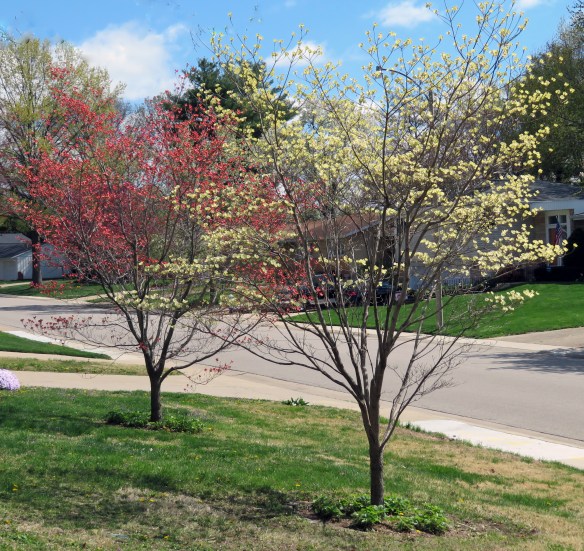
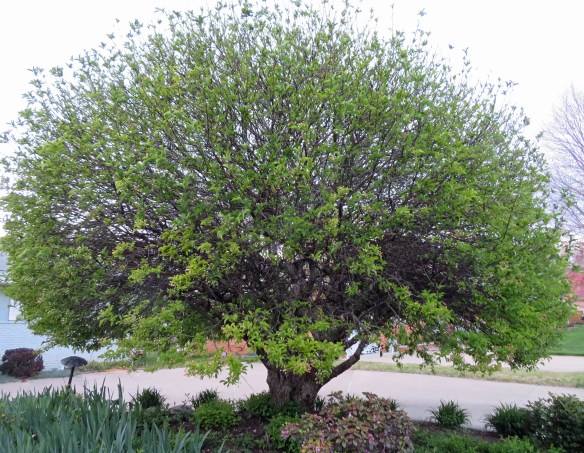
Another of my commitments as an Associate has involved doing my part to preserve and protect the environment through my own habits, such as better recycling, environmentally-friendly gardening and lawn care, creating flower beds for pollinators and reducing our household’s use of fossil fuels. We’ve had extensive landscaping work done – turning our flower beds into a welcome center for hummingbirds, bees and butterflies. As a bonus, the yard is looking beautiful! I like to think of this project as “God’s work, our hands,” and have found gardening to be enormously therapeutic.

Other goals I’ve worked on as part of spiritual direction have included taking a more intentional look at our finances and investment decisions, and – of all things – decluttering.

Our financial “inventory” started with Pete and I updating our wills and power-of-attorney documents, something we’d been putting off. Then we established a donor-advised fund with our local community foundation in honor of Pete’s parents and mine, and have begun making small grants to community organizations that address food insecurity, social justice issues or environmental causes. We also engaged a faith-based organization whose financial advisors are helping us find investment opportunities that match our values.

Decluttering may seem like a trivial goal in the face of everything else we’re dealing with right now, but when the house is a mess, the rest of my life starts to feel unmanageable. Taming clutter is one small thing I can do to feel less helpless when life gets chaotic. My first spiritual director recommended I devote one hour each weekday to sorting through the physical clutter in our house. Alas, I still haven’t achieved my dream of a perfectly clean house with a place for everything and everything in its place, but our house does stay looking at least presentable most of the time.

Where I am now

I like to think of 2024 as a “year of emergence” for us. After what seemed like an endless siege of homebound isolation – first because of the pandemic and then because of our health issues – we’ve been able to return to in-person church services and get-togethers with family and friends, and we’re up to our eyeballs in volunteer commitments.

We help keep our church’s micro pantry filled with food we either buy with generous grant money or pick up from food drives conducted by various civic groups around the community. I’ve taken on the role of chairing our congregation’s community service committee, and I’ve been asked to serve on the church council beginning in 2025. We’re about to begin our fourth year of leading Sundays@6, an adult faith formation class which meets on Zoom. We’ve continued our involvement in the Dominican Sisters’ anti-racism associates’ committee.

While self-care, by necessity, continues to be a major overriding concern, I no longer think of “self-care” simply in terms of buying myself a new outfit or spending a day at the spa. It’s meant putting together a competent medical team and learning to be assertive with health care professionals. Over the past year, we’ve assembled a good medical team that can help both of us get the ongoing physical care we need. We’ve also worked on making our home more handicapped-accessible.

1 Corinthians 6:19 reminds us that our bodies are the temple of the Holy Spirit, and my recent medical adventures have sent an unmistakable message that I need to take better care of mine. My heart – quite literally – is telling me I really, really need to establish better eating habits and a sustainable exercise program, which can also help nurse Pete back to health as he joins me in these things.

I’ve made “emotional health” a priority as well. One might say this was the year I took off the pasted-on smile. In the aftermath of the pandemic and our medical issues, I struggled to establish new routines and ward off exhaustion, depression and despair. Serenity and gratitude are great, of course, but I’ve decided what I really need is to be in touch with all my emotions. Being able to acknowledge when I’m not fine and to reach out for help is essential.

Given our ongoing medical issues, I’ve slowly begun to accept that our lives aren’t going “back to normal” – that is, pre-2022, let alone pre-pandemic – anytime soon. If ever. So how do I continue to keep my most important priorities front and center in the face of our changed reality? Given the nerve-wracking unpredictablity Pete and I live with these days, and the frequency with which my priorities end up sidelined or completely hijacked, I’ve asked myself this question more than once: “Is it even worth it to have priorities, set goals or plan ahead at all?”

It has helped to remind myself that recent years have seen worthwhile accomplishments, despite the barriers created by the pandemic and our ongoing health issues. We’ve continued spiritual direction. Created pollinator beds in our backyard. Set up the donor-advised fund with the community foundation. Led the adult faith formation group at our church. Participated in the anti-racism task force. Maintained my blog and continued to work on my book.

Perhaps the biggest challenge has been learning to live with uncertainty as I adjust to the limitations posed by medical and disability issues, seek appropriate help, and learn to appreciate those ordinary days one day at a time in the face of not knowing what’s coming next. I’ve leaned on the Serenity Prayer more times than I can count: “God, grant us the serenity to accept the things we cannot change, the courage to change the things we can, and the wisdom to know the difference.”

When facing uncertainty, the Holden Village Prayer of Good Courage has also been especially helpful: “Oh God, you have called your servants to ventures of which we cannot see the ending, by paths as yet untrodden, through perils unknown. Give us faith to go out with good courage, not knowing where we go, but only that your hand is leading us and your love supporting us, through Jesus Christ our Lord. Amen.”

Where next?

So what’s ahead as I continue my spiritual direction journey in 2025?

In previous years, I’ve tended to create a fairly lengthy list of goals – lists that got seriously hijacked as health issues intervened and dominated our lives. My spiritual director has suggested I select no more than one or two areas to focus on – much more realistic, I would agree.

Okay, so I came up with three goals rather than one or two. But a couple of them are a continuation of things I’ve been working on already. Here’s where I want to focus my attention in the coming year:

Emotional and spiritual health. Because our physical health issues at this point are chronic rather than curable, keeping our heads above water is going to present a challenge for my husband and me going forward. Nevertheless, we want our lives to move from merely surviving to thriving. Hopefully, with God’s help, our continued spiritual direction work can be a key part of making that happen.

All three spiritual directors we’ve worked with so far have coped with cancer and other debilitating or disabling chronic conditions, and it has been inspiring to see the ways they’ve been able to contribute to their communities in spite of their challenges. Our first two spiritual directors are now, sadly, deceased. But they continued to do God’s work right up to the end, and Pete and I have been impressed enough to say to each other, “We want to be like that.”

My writing. I also want to focus more sustained attention on my writing, especially my book-in-progress. From age 10 onward, I’ve dreamed of writing a book. Almost 60 years later, that goal is … still on my bucket list. I have nearly two dozen excerpts written and need to stay motivated so I can make real progress on the book. I want to keep working on my blog. I’ve known since grade school that writing would play some role in my life’s purpose, whatever that turned out to be. I do consider my writing ability to be a gift from God that should not be wasted. 

Discernment. Finally, I want to focus more attention on the discernment process that led me to embark on this spiritual direction journey to begin with. What is God’s purpose or plan for my life going forward? How do I live my life in a way that is consistent with my beliefs and values? What are my own beliefs about the hot-button issues that consume our nation’s culture warriors? What is my role as a Christian in fighting or mitigating society’s problems and political battles?

From the beginning, I have been questioning all kinds of dogma, from the spiritual and religious to the political and ideological. This “deconstruction/reconstruction” work started with questioning a lot of things I thought I knew, along with beliefs and values other people – whether liberal or conservative – want me to hold. I want to continue developing a belief/value system that both my rational mind and my conscience can accept, rather than simply parroting a set of values and beliefs that will let me fit in chameleon-like with my peers.

This discernment process has gotten sidetracked several times, so I do want to make an especially conscientious effort this year to overcome my inertia – and fear, perhaps – so I can stay on track in this vital area.

Whatever happens in the days, weeks or months ahead – especially with our medical issues – I’m asking God for courage, wisdom, healing and hope for both Pete and me as we move forward. Meanwhile I can remind myself, in the words of the 23rd Psalm, “I will fear no evil, for thou art with me.”


Our annual Christmas letter

This past year, Pete and I have been truly blessed.

As most of you know, my husband has been battling Stage 4 cancer for two years. In November, Pete’s oncologist pointed out that his every-three-month scans have been coming back “unremarkable” (translation – no signs of recurring cancer) for at least a year. This means his immunotherapy treatments appear to be working, and even better, with minimal side effects. The doctor was practically ecstatic as he expressed cautious optimism about Pete’s prognosis.

Besides the good news about Pete, I received some good news of my own earlier this year: My cardiologist said tests show my heart sustained only minor damage from the heart attack I had in December of 2022. I continue to participate in cardiac rehab, and Pete has even joined me for the exercise portion. He has the honor of having been accepted into the hospital’s Stay Fit exercise program for both pulmonary and cardiac rehab. (Ah, the joys and perks of old age! We get to have Medicare pay for our fitness workouts.)

So, 2024 has given us a blessed reprieve from the ring-tailed monster of a year we experienced in 2023, thanks be to God, and life is slowly returning to … dare I say it? … normal. In other words, we have a LOT to be grateful for this year.

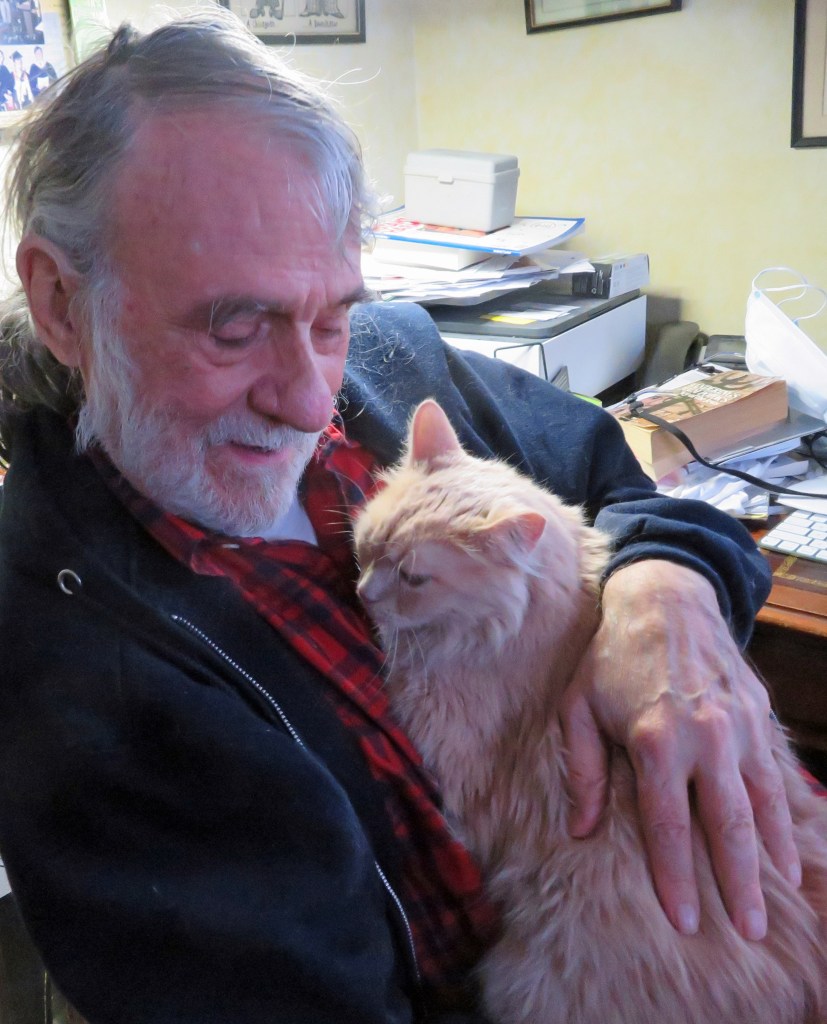
On a very sad note, we had to say goodbye in November to our lovable, ornery, beautiful Champaign Le Chat. Champie was a “rescue kitty” we adopted from the Animal Protective League shelter 17 years ago, but there could be a definite debate about who rescued whom. He was such a sweet little buddy to us as we endured our roller-coaster medical saga. We often referred to him as our furry little comforter. He had us utterly wrapped around his paw and we loved him SO MUCH!!!! We are SO grateful to have had him in our lives for so many years.

Here is one of my all-time favorite photos of our little Champster, which I like to call “The Prince and the Pea.” He was definitely one of our blessings.

After what seemed like an endless siege of homebound isolation – first because of the pandemic and then because of our health issues – we’ve been able to return to in-person church services and get-togethers with family and friends, and we’re up to our eyeballs in volunteer commitments.

We’ve committed to help keep our church’s micro pantry filled with food we either buy with generous grant money or pick up from food drives conducted by various civic groups around the community. This year, I took on the role of chairing our congregation’s community service committee, and I’ve been asked to serve on the church council beginning in 2025.

We’re about to begin our fourth year of leading Sundays@6, an adult faith formation class which meets on Zoom. So far, we’ve covered subjects ranging from the 10 Commandments to evangelism to how our faith should impact the way we address current issues. The group has about a dozen regulars who “attend” each week, and the discussions are quite lively. We absolutely love this group, and it has played a vital role in keeping members who are homebound connected to our congregation, including ourselves until May of this year when Pete’s oncologist finally let us come out and play with the other kids.

For the past two years, we’ve been involved in an anti-racism committee created by our community’s Dominican Sisters Associates program. The group, which meets on Zoom every other month, brings together people of different races to discuss how to recognize and address racism both in ourselves and in our society’s institutions. Participating in this group has been an amazing learning experience and we’ve been honored to be part of it.

We also continue to participate in spiritual direction with one of the Dominican Sisters. Spiritual direction – for those unfamiliar with the concept – is a partnership in which one Christian helps another grow in a personal relationship with God. Monthly one-on-one meetings have involved examining our prayer life, our personal values and various lifestyle choices. Another amazing learning experience for both of us!

For several years now, we’ve been working to make our yard an urban sanctuary for wildlife and turn our flower beds into a welcome center for hummingbirds, bees and butterflies. We try to add a few native perennials each year, as well as planting an abundance of annuals and avoiding lawn chemicals. I’ve found gardening to be therapeutic, and the yard is looking beautiful! Pete and I like to think of this project as “God’s work, our hands.”

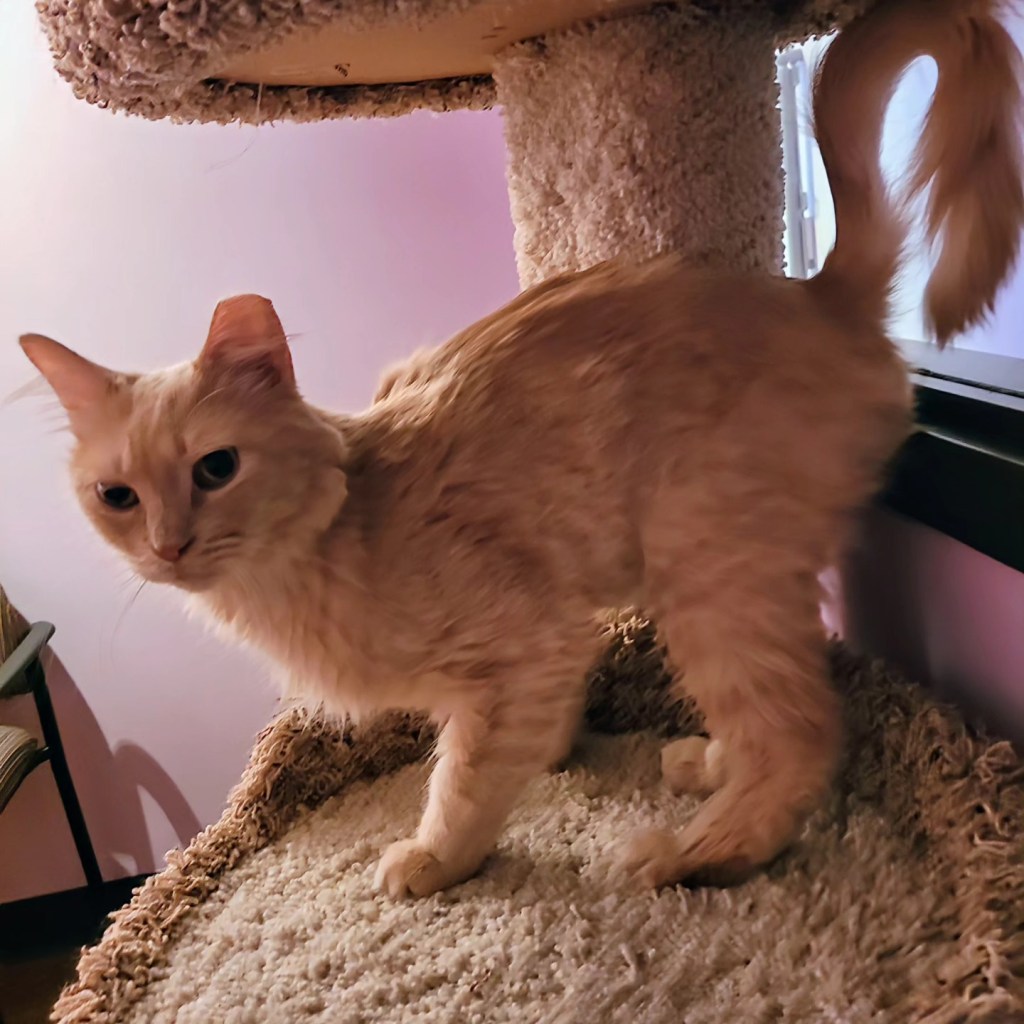
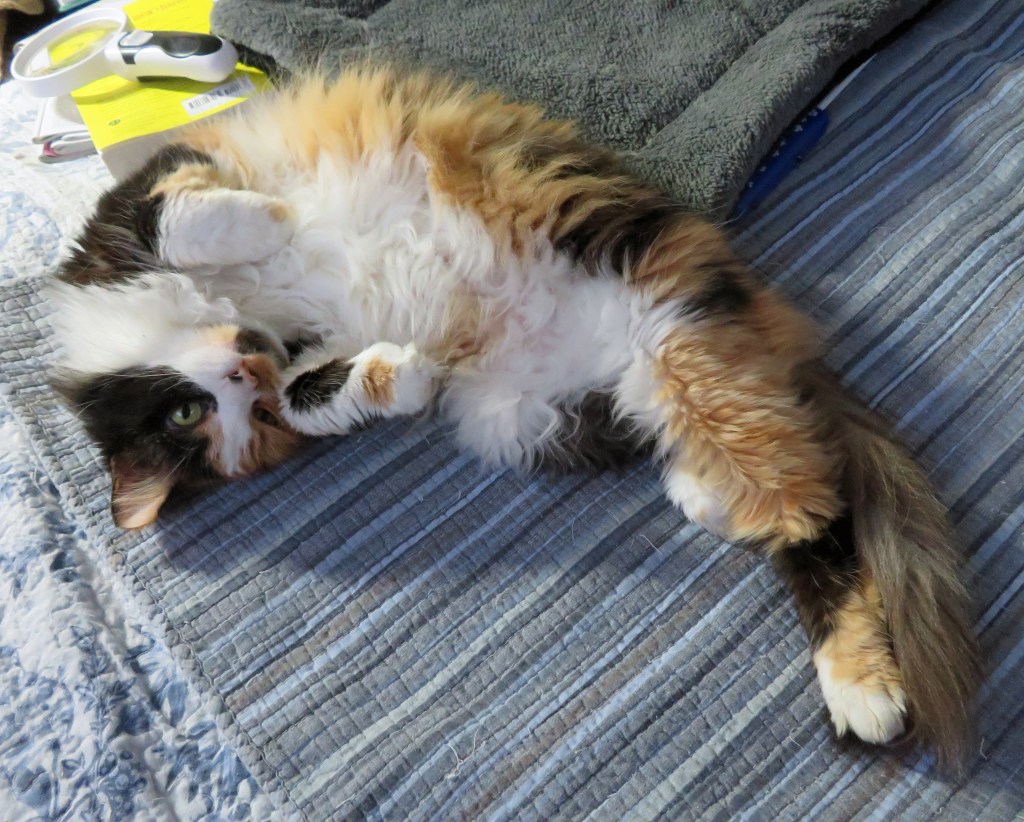
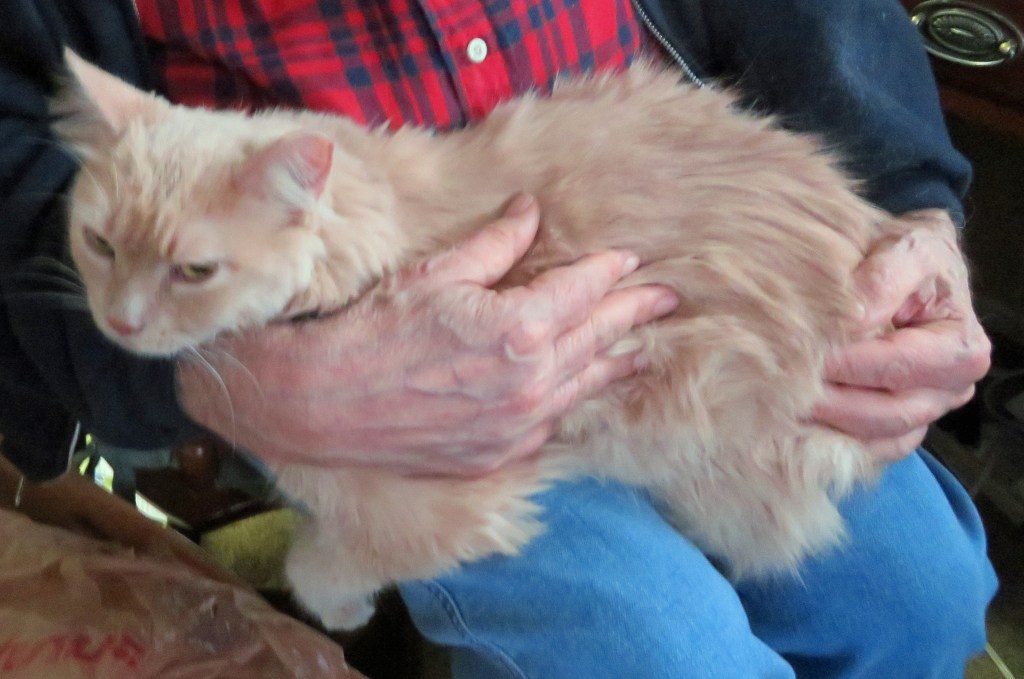
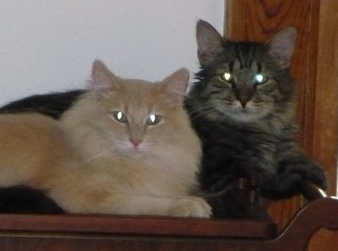
And … just in time for Christmas, the Animal Protection League has allowed us to adopt two new little blessings. The gorgeous “tortico” (a combination of torti and calico) is Queen Elizabeth. The handsome yellow guy is Bryce. We met them at the Cat’s Pyjamas Cat Café, a new business in town with lounges and refreshments for people who want to relax by petting cute kitties. Their cats are all adoptable through the APL. We’re sure these two will make our house theirs before too long.

If the past couple of years have taught us nothing else, they’ve taught us to appreciate the “boring” days we used to take for granted, or even complain about. Sometimes there’s nothing more wonderful than an uneventful day. No distressing symptoms. No rides to the emergency room in the back of an ambulance. No test results with nasty surprises. Just laundry, vacuuming, groceries, church committee meetings and other soothingly routine activities. 

I’ve been blown away by Pete’s extraordinary strength and courage as he has plowed through chemotherapy, major surgery, hospitalizations due to infections and other complications, and finally, immunotherapy treatments that are working so far. And now he joins me for my cardiac rehab exercise program at the Prairie Heart Center twice a week. He’s also been a great “therapy skunk” for me, coming with me to my medical appointments and backing me up when I need a doctor to take me seriously or answer my questions.

We are both beyond grateful for the mountain of get-well wishes and prayers, the delicious meals sent to our house when we didn’t feel like cooking, the cat photos and baby goat videos and bad puns posted to our Facebook pages to cheer us up, and the many other things our wonderful family members and friends did during our “walk through the valley” to help us feel supported and loved. The steady stream of prayers, cards and visits helped us more than people know.

Here’s hoping everyone has a merry Christmas and a happy and healthy New Year full of grace and peace!

Ostkaka

This Swedish dessert is a favorite at our house during the Christmas season, and has been passed down in my family for several generations.

The name ostkaka can be roughly translated as “cheesecake” – “ost” meaning “cheese” and “kaka” meaning “cake.” But the dessert is a bit different from American cheesecake, not quite as sweet and with a slightly different texture.
To make it, older generations of my family used curdled milk, produced by adding rennet to a mixture of warm milk and flour. They then added heavy cream, sugar and eggs to make a batter. My parents’ generation simplified the recipe, using cottage cheese in place of curdled milk, and it tastes the same (at least to me). Needless to say, the latter version is much easier to make.

Over the years, my mother and I developed a few additional recipe adjustments to accommodate diabetes and other dietary restrictions. I use fat-free cottage cheese, substitute egg beaters for the eggs, substitute half and half or even whole lactose-free milk for the heavy cream, and replace sugar with an equivalent amount of sugar substitute. Rice flour can be used to make the recipe gluten free. The result is still delicious.

Our family likes to serve the ostkaka with lingonberries, but if these prove hard to find, strawberry jam or sliced strawberries can also be used.

Ingredients

  • 4 eggs or 1/2 cup egg beaters
  • 3 cups fat-free cottage cheese
  • 2 cups half & half or whole milk
  • 1/3 cup regular or rice flour
  • 1 teaspoon vanilla or almond extract
  • Sweetener equivalent to 1/2 cup sugar
  • Lingonberries, strawberry jam or sliced strawberries

Directions

Blend together the eggs, sweetener, cream or milk, flour and extract until smooth.

Stir in the cottage cheese until well-blended and pour the mixture into a cake pan.

Bake in a 350-degree oven for an hour, or until it rises a bit and is slightly brown on top.

Allow the dessert to cool at least four hours or overnight in the refrigerator.

Top each individual serving with about a tablespoon of lingonberries, strawberry jam or sliced strawberries.

Nutrition information

My version, made with egg beaters, whole milk and sugar substitute, topped with a tablespoon of lingonberries.

Serving size: 3/4 cup | Calories: 120 | Carbohydrates: 14 g | Protein: 10 g | Fat: 2 g | Saturated Fat: 1 g | Cholesterol: 13 mg | Sodium: 300 mg | Potassium: 240 mg | Fiber: 1 g | Sugar: 9 g | Vitamin A: 9% | Vitamin C: 0% | Calcium: 17% | Iron: 1%

A prayer of thanksgiving for a beloved little friend

Dear God,

My husband Pete and I are heartbroken! Last night we had to say good-bye to our sweet, ornery and lovable Champaign Le Chat.

I firmly believe animals are one of your greatest gifts to us, God, and I thank you for every day of the nearly 17 years this furry little friend and constant companion graced our lives.

When we first encountered our sweet Champ, the very beautiful and very frightened little domestic longhair, with fur the color of champagne, was hiding under a chair at an Animal Protective League shelter.

My husband Pete and I were already planning to adopt Champie’s brother, Olaf DaVinci, who insisted on coming home with us. And I do mean insisted. Oley was crawling into both our laps and giving us persistent head-butts. When we told the shelter staff we wanted Oley, they told us, “He has a friend.”

They then introduced us to Champaign, who spent most of his time hiding under the above-mentioned chair to avoid being bullied by other cats. Little Champie trembled as I reached under the chair to pet him, but when I stroked his fur, he leaned into my hand, as if drinking in the affection. There was no way, however, that he planned to come out from his hiding place.

Champie and Oley had formed a tight bond at the shelter and the staff said it would be really nice if they could be adopted together. So home we went, with two long-haired tomcats. We never regretted that decision, despite a lot of shedding. That was in 2006, and they were inseparable right up until Oley’s passing two years ago.

We had reason to believe Champie had been abused in a previous home and it took time and lots of love to heal his fear of people. But, as we would discover, love wins. Every time.

For the first two weeks after we brought him home, Champ hid in the basement, only coming up to eat when Pete and I were gone. Fortunately, Oley cheerfully served as his guardian angel. The two liked to hang out together, and they loved to chase each other around the house while yowling loudly – especially at 3 a.m.

Slowly but surely, Champie finally came out of his shell. And when he did, he became quite the little character. Here he sat, on his throne, the king of all he surveyed.

There’s nothing like being ignored by a cat, but he let us know we’d better not ignore him! This little guy would actually hiss at us to let us know we needed to pet him. Sometimes in the morning when I was getting dressed, he would walk up to me, hiss at me, and then immediately hop up on the bed and rub up against me, clamoring for attention. Too funny!

He had a talent for finding the sunniest spots in the house. Here he was, rolling over and playing cute, as he basked in a shaft of light in the sunroom.

Le Champster made it known that a cat bed was whatever he decided it should be. (Cat beds purchased specifically for that purpose from Chewy? Boring!)

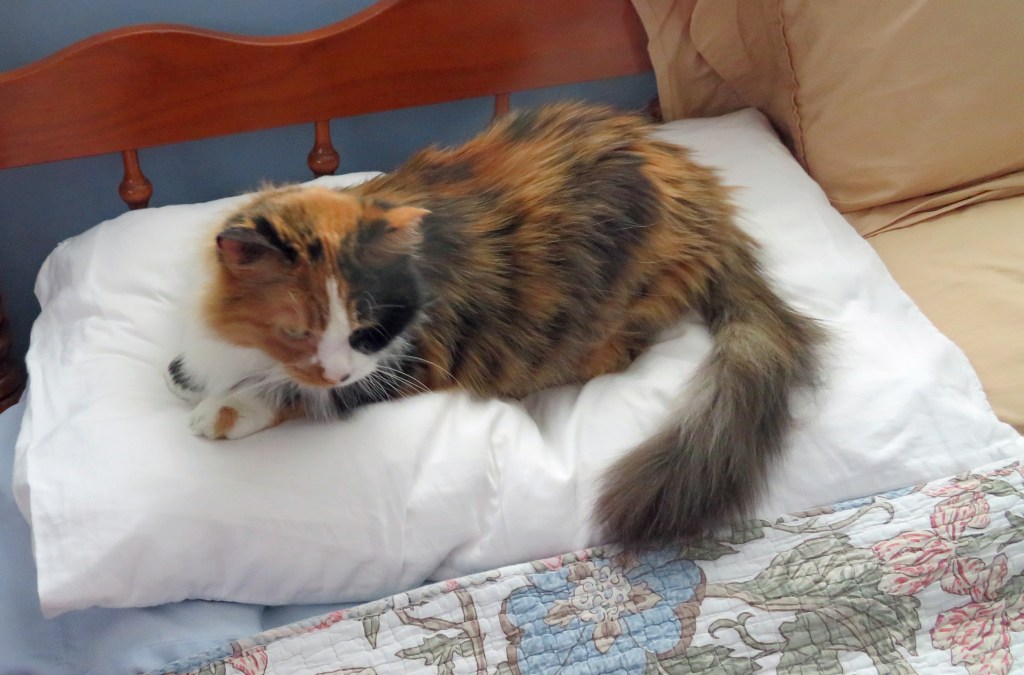
He loved to turn pillows into cat beds. This is one of my favorite photos – I like to call it “the Prince and the Pea.”
Speaking of cat beds, people clothes were the absolute best. He may have had the whole bed to snooze on here, but Pete’s clothes proved too irresistible.

In the early days, he often liked to station himself in my office as well, and did a superb job of monitoring me while I sat at my computer. Also, note where he’s sitting in relation to the sunny spot on the table.

Champaign was never a “lap cat,” even after deciding that Pete and I were safe. The few times I tried putting him on my lap, he scrambled back off as quickly as he could.

But he did enjoy snuggling next to Pete and me in the evenings, and we got to take turns cuddling him. The former little scaredy-cat loved the attention. It’s like he was making up for lost time.

One of his favorite snuggle-time activities was “helping” me read. He curled up next to me most nights while I was reading myself to sleep, and sometimes in the afternoon during nap time.

Our little Champie was such a source of comfort to Pete and I, as we walked through our harrowing medical journey in 2023, that we took to calling him our furry little comforter. He kept Pete company and rubbed noses with him as Pete was recuperating from his surgery and multiple hospital stays. He cuddled up with me on those lonely nights when Pete was in the hospital and I had to sleep alone at home.

Even at the ripe old age of 18, he continued to be his sweet, ornery, adorable little self.

The Bible in several places talks about animals on the other side of eternity – lions lying down with lambs, cows and bears grazing together and children safely playing with all of them. I just know that both Champie and Oley are there right now, clamoring for Jesus to pet them.

God, I will always be grateful for the wonderful gift you gave us when you blessed us with our beautiful little Champaign Le Chat. Today, just two days shy of Thanksgiving, as I try through my tears to count my blessings, I certainly count this magnificent little creature to be one of those blessings.

With love and gratitude,

How did we get so polarized?

Note: I first posted this article shortly after the 2020 U.S. presidential election. But with another election season in progress, I’d like to run it again with just a couple of small updates, because it still reflects my feelings about the polarization ripping apart our society. If anything, the situation has gotten worse.

Some blame the news media. Some blame our political leaders. Many blame folks on the other side of our Culture Wars divide. But my research shows that a variety of interrelated factors contribute to the extreme polarization in our society, including some influences that creep in beneath our conscious awareness:

Social media. If there’s one thing most people actually agree on, it is that social media can exacerbate polarization. Platforms such as Facebook and X (formerly known as Twitter) provide the ideal forum for the moral grandstanding and flame-throwing that fuel our Culture Wars. Some folks love a good fight and make a hobby of keeping everyone stirred up through deliberate trolling. For more of us, the relative anonymity of a screen allows us to share sentiments we’d never dream of expressing out loud to someone in a face-to-face conversation. 

Ideological bubbles and echo chambers. In his book The Big Sort, journalist Bill Bishop describes a demographic trend in which Americans have segregated themselves into homogenous communities, choosing everything from cable news networks to civic organizations and church denominations compatible with their lifestyles and beliefs. We have even separated geographically from those who differ from us ideologically. The result, Bishop says, is “a country that has become so polarized, so ideologically inbred, the people don’t know and can’t understand those who live a few miles away.” Meanwhile, on the Internet, sophisticated algorithms create “echo chambers” that ensure we are exposed mostly to people and sites promoting our own worldview and shielded from conflicting ideas or viewpoints.

Manipulation. We are relentlessly manipulated, often without realizing it, by folks who profit handsomely from keeping us polarized. Social media advertisers know the most salacious headlines get the most clicks – and generate the most ad revenue. Politicians whip us into an us-versus-them frenzy to secure our votes. Cable news networks boost their ratings by keeping people angry and divided. Online businesses appeal to our partisan divisions with in-your-face merchandise – a Deplorable University coffee mug or Safe Spaces Are for Snowflakes bumper sticker for conservatives, a Jesus was Progressive car magnet or Democrats Cleaning Up Republican Messes Since 1933 dog sweater for progressives (or their pets). 

Groupthink and our need for belonging. Kids begin forming in-groups as early as kindergarten and our cliquish behavior unfortunately doesn’t end when we leave high school. “The human mind is exquisitely tuned to group affiliation and group difference,” says political analyst Ezra Klein in his book Why We’re Polarized. “It takes almost nothing for us to form a group identity, and once that happens, we naturally assume ourselves in competition with other groups.” The more we identify with a group, the more we feel pressured to agree with its dogma – a party line that seems to include 650 boxes which must all be checked or we risk rejection by our chosen peers. The deeper our commitment to an identity group, the more vulnerable we are to the effects of “group polarization” – the tendency for the group as a whole to adopt attitudes or actions that are more extreme than the initial inclination of its individual members.

Projection and scapegoating. We humans have a distressing tendency to project our own less-than-admirable thoughts, behaviors and forbidden impulses onto others. Christians and non-Christians alike “are at times behaving horribly in the ways they engage in our political discourse,” says the Rev. Eugene Cho in his book Thou Shalt Not Be a Jerk. “We want to preach to others, but we don’t preach to ourselves. We love to flip tables, but not our own. We love to expose the privilege in others, while rarely considering our own.” The concept of scapegoating first appears in Leviticus 16:8-10 – a goat would literally be cast into the desert to carry away the community’s sins – and the word “scapegoat” has since developed to indicate a person or group of people blamed and punished for the sins of others. Once we’ve blamed someone for all of society’s problems, it’s a short step toward demonizing and dehumanizing them.

Our soundbite culture. One problem that keeps us from discussing and resolving issues appropriately is our modern emphasis on brevity, which is often designed to accommodate our increasingly short attention spans. According to the Rev. Cho, our failure to engage issues more intelligently prevents us from fully understanding the “why” behind our convictions. (“Don’t just be a headline reader,” he urges us.) It is nearly impossible to give an issue the depth it deserves when we limit our communication to bumper stickers, 15-second sound bites and 280-character tweets.

Our inability to tolerate ambiguity or acknowledge moral complexity. Moral and ethical questions don’t always lend themselves to simplistic answers, and honest people can honestly disagree about the best way to resolve complex issues. An example of this dilemma has been our recent struggle over the best way to handle the COVID-19 pandemic. At the beginning of the pandemic, we wrestled with the question, “How can we protect people who are more vulnerable to severe illness or death without destroying the jobs that allow other people to feed their families, keep a roof over their heads and afford basic health care?” When we didn’t have enough of a life-saving vaccine to go around, who got priority? As things have returned to normal, scientists’ changing understanding of the virus has made it difficult for public health experts to offer consistent advice on the need for continuing safety measures. But rather than remain open to new research, too many of us have chosen to dig in our heels and stick with whatever our identity group decrees to be “the truth.”

Our oppositional mindset. We often hear how it’s easier to unite Americans against something than to unite them for something. In her now-classic book The Argument Culture, linguistics professor Deborah Tannen describes “a pervasive warlike atmosphere that makes us approach public dialogue, and just about anything we need to accomplish, as if it were a fight.” She explains that our society constantly urges us to engage the world in an adversarial frame of mind: “The best way to discuss an idea is to set up a debate; the best way to cover news is to find spokespeople who express the most extreme, polarized views and present them as ‘both sides’; the best way to settle disputes is litigation that pits one party against the other; the best way to begin an essay is to attack someone; and the best way to show you’re really thinking is to criticize.” Our use of language reflects this mindset, she adds: “The war on drugs, the war on cancer … war metaphors pervade our talk and shape our thinking.” 

Relentless pressure to take sides. Our determination to pursue truth by setting up a fight between two sides leads us to believe every issue has two sides – no more and no less, Tannen says. But opposition “does not lead to truth when an issue is not composed of two opposing sides but is a crystal of many sides. Often the truth is in the complex middle, not the oversimplified extremes.” In other words, an issue may not actually have two sides, but rather, three or four or seventeen sides. Pressure to choose between the two sides presented to us keeps us from recognizing and remaining open to other options.

Negative partisanship and defining-by-opposition. Partisan behavior is often driven not by positive feelings toward the political party we support but by negative feelings toward the party we oppose, according to Klein. You might be guilty of negative partisanship, he says, “if you’ve ever voted in an election feeling a bit bleh about the candidate you backed, but fearful of the troglodyte or socialist running against her.” Charles C. Camosy describes “the politics of defining-by-opposition” in his book Resisting Throwaway Culture. “We almost always view the ideological communities to which we belong through the lens of a narrow progressive/conservative binary – a binary into which all issues, regardless of their complexity, are shoved and made to fit,” he explains. “We define ourselves by our opposition to ‘the other side’ well before we even engage their ideas and arguments.”

Logical fallacies. The dualistic, oppositional, either/or mindset outlined above is an example of a logical fallacy – a thinking error that distorts our perceptions and leads to inaccurate conclusions. Other logical fallacies that contribute to polarization include zero-sum thinking (we insist that one side’s gain must be the other side’s loss); fundamental attribution error (when bad things happen to other people, we believe they are personally at fault, but when bad things happen to us, we blame the situation and circumstances beyond our control); confirmation bias (we embrace information that supports our viewpoints, while ignoring information that doesn’t); and all-or-nothing thinking (if we change our mind about one issue, it will mean everything we’ve ever believed in is wrong, so we’ll be forced to change our entire worldview). 

Addiction to outrage and contempt. There certainly are plenty of issues to be legitimately angry about in our society right now. But face it, outrage and contempt can help us feel so superior to others that many of us are hopelessly addicted. We live in a culture of contempt, says Arthur C. Brooks in his book Love Your Enemies. Brooks variously defines contempt as “anger mixed with disgust,” “an enduring attitude of complete disdain,” and “the unsullied conviction of the worthlessness of another.” While most of us hate what unbridled outrage and contempt are doing to our society, he says many of us “compulsively consume the ideological equivalent of meth from elected officials, academics, entertainers and some of the news media.” 

Our sinful nature. Many Christians believe sin can ultimately be defined as separation. And what word would describe extreme polarization better than separation? Several “sins of separation” contribute to the polarization tearing our society apart. We commit idolatry when we turn the conservative/progressive movements into quasi-religions and place our loyalty to a political ideology or party ahead of our loyalty to God. We take God’s name in vain when we use it to promote hatred toward people or groups we oppose. We bear false witness against our neighbors when we deliberately twist their words and distort their positions on various issues so we can portray them as terrible people. We ignore the plank in our own eye while focusing obsessively on the speck in our perceived opponent’s eye. Most of all, we fail to love our neighbors as ourselves, especially if they voted for the wrong candidate in the last election.

Unfortunately, polarization can be self-reinforcing, creating an endless feedback loop, according to Klein. To appeal to a polarized public, political institutions, cable news networks and other public entities behave in more polarized ways. As the political institutions and other actors behave in more polarized ways, they further polarize the public. To appeal to a further polarized public, institutions must polarize even more. The cycle becomes a downward spiral.

If we want to stop this depressing cycle, a good first step might be paying attention to the ways we are pressured and manipulated to take sides in situations where taking sides may not be the best idea, as well as recognizing the logical fallacies that encourage polarized thinking and behavior. I’m also thinking those of us who identify as Christians may need to renew our commitment to follow the Lamb rather than the elephant or the donkey.

Questions for readers: What factors do you see leading to the extreme polarization in our society? What would help alleviate this? I’d love to hear your responses to these questions, as well as your comments on this article. Just hit “Leave a Reply” below. When responding, please keep in mind the guidelines I’ve outlined on my Rules of Engagement page (link HERE).

Dieting made easier

As I try to stay on track with my healthy eating plan, I keep hoping I’ll discover how to make this decadent chocolate confection with cauliflower.

Alas! I have yet to find the recipe.

But I have found some other dishes that are almost guaranteed to make resisting temptation easier. Can I turn down these offerings and stay off the naughty list? No problem!

Recipe: Kale salad with walnuts and cranberries

Who says salads have to be boring? This one is as chock full of deliciousness as it is full of nutrients.

The kale is rich in Vitamin C, while the cranberries add fiber and the walnuts and blue cheese crumbles contribute protein. As with all my recipes, I use products and ingredients that reduce the amount of sugar, salt and fat content.

This recipe makes a 1½-cup serving or two ¾-cup servings. Use the smaller serving as a side dish or the larger serving as a light lunch by itself.

Ingredients

  • 1 cup chopped fresh kale
  • 2 tablespoons chopped unsalted walnuts
  • 2 tablespoons reduced-sugar dried cranberries
  • 2 tablespoons reduced-fat blue cheese dressing
  • 2 tablespoons reduced-fat blue cheese crumbles (optional)

Directions

Remove large stems from the kale, rinse thoroughly and chop or rip into bite-size pieces.

Add walnuts, cranberries and dressing to the kale in a medium-size mixing bowl, and toss until everything is thoroughly covered with the dressing.

Pour into a salad bowl (for the main dish) or divide evenly into two smaller bowls (for the side dish) and sprinkle with the blue cheese crumbles.

Nutrition information

Serving size: ¾ cup | Calories: 112 | Carbohydrates: 13 g | Protein: 5 g | Fat: 6 g | Saturated Fat: 1.5 g | Cholesterol: 6 mg | Sodium: 160 mg | Potassium: 205 mg | Fiber: 4 g | Sugar: 5.5 g | Vitamin A: 65% | Vitamin C: 65% | Calcium: 10% | Iron: 3% 

Serving size: 1½ cups | Calories: 225 | Carbohydrates: 26 g | Protein: 10 g | Fat: 12 g | Saturated Fat: 3 g | Cholesterol: 12 mg | Sodium: 320 mg | Potassium: 410 mg | Fiber: 8 g | Sugar: 11 g | Vitamin A: 130% | Vitamin C: 130% | Calcium: 20% | Iron: 6% 

A clarification and some definitions

Note: I first posted this article shortly after the 2020 U.S. presidential election. But with another election season in progress, I’d like to run it again with just a couple of small updates, because it still reflects my feelings about the polarization ripping apart our society.

When I express my desire to step back from the Culture Wars and find less-polarizing ways of addressing societal problems or controversies, I get a pair of common responses.

Some folks who identify as progressive will say sarcastically, “Oh, I see. You think we should all be NICE.” They practically spit out the word nice, then accuse me of wanting to look the other way in the face of injustice. Some who identify as conservative will suggest that what I really want is for everyone to simply ignore sinful behavior and “wink at sin.”

My first spiritual director – a wise woman who had a talent for posing questions most people don’t think to ask – challenged me with this question: “What, exactly, do you mean by Culture Wars?” And this one: “What would you consider to be polarizing behavior?” She made an important point. Those words may not mean the same thing to everyone who hears them.

So I’d like to clarify: When I speak of the Culture Wars and the resulting polarization in our society, I’m not talking about honest disagreements between people of good will who just happen to have differing ideas about the best way to resolve issues. I’m not saying we should look the other way in the face of injustice or cease discussing sin in sermons, Bible study sessions and religious education classes. I’m not suggesting we should retreat from the political arena, refrain from sharing our opinions about issues we feel strongly about, forsake our favorite causes or stop working to resolve problems such as poverty and hunger.

When I speak of the Culture Wars and the resulting polarization in our society, I am talking about the trolling, the name-calling, the insults, the character assassination, the demonizing and scapegoating, and the gratuitous rudeness that have become a mind-numbingly routine part of our daily conversations and social media interactions. I’m talking about activist groups doctoring videos and jerking quotes out of context to make ideological opponents look sinister, candidates for public office deliberately playing on fears and divisions to score political points and get votes, ordinary folks combing through comments on Facebook or X (formerly known as Twitter) looking for “gotcha” opportunities so they can pounce, and extremists phoning in death threats to people who say or do something they disagree with.

Dictionary.com defines Culture War as “a conflict or struggle for dominance between groups within a society, or between societies, arising from their differing beliefs and practices.” Wikipedia points out that “in American usage the term culture war may imply a conflict between those values considered traditionalist or conservative and those considered progressive or liberal.” Dictionary.com defines polarization as “a sharp division, as of a population or group, into opposing factions.” Urban Dictionary defines culture warrior as “a member of one of the two major political tribes who have come to dominate political discussion in the U.S. with their divisive, polarizing conflict.”

A key concept for me in these definitions is dominance. All too often, the competing factions in our Culture Wars aren’t so much concerned with actually resolving issues as they are with winning – at any cost – by humiliating and annihilating people perceived to be their opponents. These “opponents” are no longer simply misguided or mistaken, they are stupid, crazy or just plain evil.

When I express my desire to step back from the Culture Wars, I also get another common response. Some equally exhausted folks enthusiastically nod their heads and suggest I should turn off the TV, log off the Internet and disengage from the larger society. Some will argue that even talking about politics or hot-button social issues is poor etiquette. That getting involved in causes is the province of people afraid to look too closely at their personal problems. That marches, rallies and boycotts are inherently divisive. That civil discussion is a waste of time since most of us already have our minds made up. That special interests control our government to the point where voting is futile, so why bother?

I would respectfully disagree with the idea of simply “dropping out.” The Constitution guarantees our right to petition our government for the redress of grievances. Participating in the political process is not only a right, but one of our responsibilities as citizens. Supporting a good cause with our time or money beats sitting in front of our screens mindlessly doomscrolling on the Internet or using our social media posts for performative virtue signaling that substitutes for rolling up our sleeves. Too many problems need addressing for us to move in the direction of apathy and disconnection. We do need to stay engaged.

But could we please, please, please stop the vitriol? If we really want to change hearts and minds, we must stop the name-calling, the scapegoating and the demonizing. It’s one thing to write a politely-worded letter to an elected official. It’s another to send a profanity-laced screed containing death threats. It’s one thing to attend a candidate forum or town hall meeting and ask an intelligent question when it’s our turn to do so. It’s another to shout down a lawmaker or candidate who is trying to speak. It’s one thing to participate in a march or rally in which organizers have obtained all the proper permits. It’s another to vandalize property, set fire to a police station or bomb a clinic.  

Name-calling and other rude behavior stop genuine discussion and problem solving in their tracks. Lashing out gives others an excuse to ignore our concerns, discount us and dismiss our issues. For those of us who claim to be people of faith, spewing snarky insults gives people ammunition to call us hypocrites and declare they want nothing to do with either us or our religion. And violence only begets more violence.

In my own case, I actually have changed my mind now and then over the years, even on some fairly important issues. When I did so, it was because someone presented factual information in such a way that I could listen without becoming defensive. It also helped if the other person was willing to hear my side of the story, shared their personal experience of the issue in question, or showed me how I could come around to their way of thinking without sacrificing important values.

But I can promise I have never, EVER changed my mind about anything because someone called me names, insulted me or tried to convince me they were morally superior to me. All yelling and character assassination ever did for me was encourage me to dig in my heels or walk away. People of all political stripes have let me know I’m not alone in this regard.

In our current environment, we are so often presented with only two alternatives – be “in-your-face” reactionary or be apathetic. I’d like to see a third option. I’d like to see all of us eliminate the name-calling, the trolling and the flaming, and have a respectful discussion about serious issues. We need to replace our desire to be right and come out on top with a desire to solve problems. That way, instead of “our side” winning, perhaps we can all win.

Questions for readers: Have you found a constructive way to address pressing social issues without getting caught up in the vitriol that characterizes the Culture Wars? I’d love to hear your response to this question, as well as your comments on this article. Just hit “Leave a Reply” below. When responding, please keep in mind the guidelines I’ve outlined on my Rules of Engagement page (link HERE).

Why do I write?

I often ask myself, “What on earth possessed me to be a writer? Besides being a total masochist.”

Writing can be enormously frustrating, especially when my drive to create gets paired with the attention span of a toddler some days. In fact, to be perfectly honest, sometimes I really HATE writing. 

I often promise myself I will start writing in earnest at some future date – New Year’s Day, my birthday, as soon as I get through whatever crisis hijacks my energy at the moment. Beginning on that date, I will devote at least one hour each day to writing, no matter what.

Alas, I have a gazillion excuses for not putting pen to paper. I need to clean house. Pay bills. Get groceries. Cook supper. Check Facebook to see what’s going on with my friends and relatives. When my resolve to start writing in earnest fails to translate into action, I’m tempted to give up and say, “Oh well, what’s the use?” Curses! Foiled again!

But if writing is such a royal pain, why do I write?

Writing is my “voice.” When I was a child – actually, well into my teen years – making two-way conversation was a supreme challenge. I could write well before I could speak well. Even today, writing comes more easily to me than speaking when I need to share important thoughts or strong feelings. I can express myself without yelling, and without someone interrupting me and making me lose my train of thought.

I have things I want to say. I want to do my part to change the world by writing on behalf of a favorite cause. I have ideas I want to contribute to the public conversation. I want others to know what it’s like to be me or why I think the way I do.

Writing has been somewhat lucrative. From young adulthood on, my writing ability has assured me I would never starve. During my career as a journalist, then as a public relations consultant and finally as a human services provider, lots of people knew I could write a coherent sentence better than the average person and wanted me to help them get their own ideas/messages on paper. Or help their organizations get donors. Even more enticingly, people offered to pay me real money for this assistance.

Writing beat other professions I could have chosen. As hard as writing could be at times, journalism – or even preparing grant proposals – sure beat waiting tables or flipping burgers for a living. Courses in mathematical information systems or data analytics would have bored me silly, even if they led to one of those “hot” tech careers. And I sure as heck was not a public speaker or numbers cruncher.

Writing helps me develop a filter. Instead of allowing my mouth to run faster than my brain, I can look over each word or sentence and ask myself, “How is this going to sound to others?” Is this what I really want to say? Can it be misinterpreted? Is there a way to get my point across more clearly? Or nicely?

Writing serves as a safety valve. When I find myself walking around with random anxieties, fears and resentments competing for rent-free space in my head, putting it all down on paper helps me let go of some of that anger, anxiety and frustration. 

I love having actually written something. I love the feeling of accomplishment I get when I finally put pen to paper and come up with something well-reasoned and rational, then polish it like a brilliant little gem. I’m still thrilled to see my by-line in a magazine or newspaper, and it would be even more of a thrill to see my name on a book.

Writing can serve as a form of prayer. Writing helps me focus my thoughts in an organized way, even when I’m communicating with God. I feel much more “centered” after journaling during my morning meditation. Keeping a journal also encourages me to record the fruits of prayer, which in turn reminds me that God does answer prayer from time to time. 

My writing ability is a gift from God. I’ve known since third grade that writing would play some role in my life’s purpose, whatever that turned out to be. I’ve known this is a talent I must not waste. I want to make good use of my gifts, rather than hiding my light under a bushel. 

Since I have all these marvelous reasons to write, what keeps me from doing so in a more disciplined fashion? What gets in my way? What makes writing such a pain?

One problem is, I frequently have so many ideas floating around in my mind I don’t know where to start. Then I end up staring into space and writing nothing. When I do manage to commit something to paper, I tend to flit from one subject to another, so I have piles and piles of random notes written on yellow or white legal pads. Most of these end up buried under a mound of other papers in my office, or in one of the 68 boxes in the basement marked “miscellaneous.” 

I suspect another problem as well. “Is it because I’m afraid?” I ask myself. “What am I afraid of?” That I won’t get answers to the questions I’m asking? That someone will disagree with what I write? That I’ll end up looking foolish or awful in print? That people will reject not only my writing, but me as a person? 

So how do I get past these barriers and motivate myself to write? 

In the end, I know it all boils down to self-discipline. Feet to the fire. Derriere in the chair. Just do it. Write already! 

And another thought: What if I never get around to writing? Someday I’ll die without ever having said what I really wanted to say. Lately that’s been reason enough to overcome writer’s block.

Wait a minute … the cat’s litter box really needs cleaning, doesn’t it?