Thoughts on turning 70

Unlike many people “of a certain age,” I still get excited about birthdays. I have always considered my birthday to be a personal holiday. This year I’m celebrating a major milestone birthday – I’m turning 70.

So here are some thoughts as I embark on a bright, shiny new decade of living:

Time is limited. Of course, I’ve always known – intellectually, at least – that we’re not immortal. But in recent years, this has started to register on a deep-down level with the loss of both my parents and several good friends my own age, not to mention my own heart attack two years ago, and my husband’s cancer diagnosis. Bottom line: Nothing is guaranteed. I need to let family and friends know how important they are to me and how they’ve impacted my life. I need to do this now.

I survived adolescence once already, thank-you. These days, I swear I’m experiencing more bodily changes than I did as a teenager. Even my toes have arthritis. My husband and I have acquired a new pastime – looking up medical problems on the Internet after one of our many doctors send us for tests based on the latest unnerving symptoms. At least my biggest priority is no longer “be popular.”

Perfection is an illusion. All my life I’ve struggled with perfectionism in areas ranging from my diet and my housekeeping to my career ambitions. But I probably need to face the fact that our home will always look like real people – and pets – live here. No matter how much time I spend cleaning, there will never be a time when my house is in perfect order inside and out, including the closets, the garage and the basement.

So is eternal youth. Is 70 really the new 50, as some Baby Boomers proclaim? Some say my generation is redefining old age. But truth be known, I have wrinkles. I have gray hair. There are some things I can’t do anymore – like burn the figurative candle at both ends and get away with it. Actually, I wasn’t getting away with it when I was younger either. I just thought I was.

Perhaps I should say I’ve survived adolescence twice. I did have one of those midlife crises the shrinks talk about – a second adolescence complete with acne at age 45, identity struggles and acting out behaviors (red car, drastic career change). As I’ve become firmly ensconced in this new territory called Senior Citizenhood, I’m thinking maybe it’s time for my flaming midlife crisis to be over already! On the other hand, a friend sent me a Facebook meme that advised, “If you haven’t grown up by the time you’re 60, you don’t have to bother.” Whew! Maybe I’m off that hook.

Believe it or not, I do not spend all my time wishing I were younger. Yes, there are days when I wish I had my 20-year-old body back – especially when my arthritis flares, but only if I could keep my 70-year-old mind and all the experience and wisdom about life that I’ve accumulated. I’m old enough to know what’s important and young enough to still act on at least some of it. Besides, when I am 90, I will most likely wish I still had my 70-year-old body, so I might as well appreciate it now.

 “Respect your elders!” never sounded so good. I can tell I’m getting older whenever I’m tempted to direct that admonition toward a 25- or 30-year-old kid. Oops! I mean young adult. It’s gotten somewhat scary to encounter young adults who regard their elders as people who either need to move out of the way or be thrown away rather than as people to learn from and respect. Fortunately, I’m lucky to have plenty of young people in my life who respect others, including their elders.

It’s time to let go of regrets. If I had it to do over again, I wouldn’t have picked up that first cigarette. I would have spent fewer of my younger years striving and competing for that brass ring that didn’t seem so shiny once I succeeded in grabbing it. Alas, I can’t change what happened decades ago. What I can do is make better decisions in this 24 hours. When my father turned 75, he said, “I honestly wouldn’t change a thing.” I hope I can say that when I’m 75! I’m getting closer, Dad.

I have set some boundaries with the fashion world: 1. Clothes must be easy to care for. If they need dry-cleaning, forget it. 2. They must be comfortable – nothing that binds or scratches. 3. They must look good on a 70-something woman who’s never been a size 0 and never will be. 4. Since I don’t have the time or inclination to constantly shop, my wardrobe must stay in fashion for longer than a month. If clothes don’t fit all these criteria, they don’t go into my closet, no matter how many cute young things are wearing them!

I have set some boundaries with other social rules as well. Especially the notion that we old folks need to hide our age. After the previously-mentioned heart attack and loss of same-age contemporaries, why on earth should I feel embarrassed by my age? No, I’m not planning to color my hair to cover the gray. No, I’m not planning to waste my money on foundation or other make-up with names like “Age Rewind.” By golly, I’ve earned every one of those wrinkles and gray hairs, and I see no reason whatsoever to hide them.

I’m much less materialistic than I used to be. If there’s one thing I don’t need, it’s more THINGS!!! If I need to be reminded of this fact, I can go to my basement and gaze upon the 48 boxes marked “miscellaneous” that make me scream when I think about sorting whatever is in them.

But there are some things I continue to wantI want to spend more time on what’s important – enjoying life with my husband, entertaining family and friends (even if only on FaceTime and Zoom these days) – and less time mindlessly surfing the Internet. I want the courage to stand up for my beliefs and values and let the chips fall where they may. I want to stop worrying so much about what other people think, as long as I’m not actively doing anything to hurt them. I want to stop fighting with my own body.

Yes, I still have dreams. Now that I’m retired, I have never been in a better position to achieve dreams like writing a book or making a constructive contribution to our society through meaningful volunteer work.

There’s no time like the present. The time to pursue my dreams is right now, not at some future date when everything will have settled down and fallen into place so I can start living my life in earnest. Especially since writing a book has been on my bucket list since age 10. There’s still time to finish that book – if I keep my nose to the grindstone, my feet to the fire and my derriere to the chair.

I have entered the Age of Wisdom – and still have questions. When I was in my 20s, I had the world all figured out. Then, the older I got, the smarter my parents got, just as Mark Twain predicted. However, now that I’m 70, I understand that human wisdom has its limits no matter how many birthdays we’ve seen. These days I’m convinced only God has all the answers, and it’s my job to keep asking the questions.

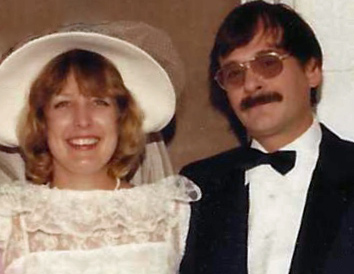
I have a LOT to be grateful for. I have a terrific 40-year marriage to the best man on the planet (I’m only slightly biased here). I have wonderful enduring friendships. I have a beautiful home and – for the first time in my life – some real financial stability. I’ve had a successful writing career, followed by a challenging career in human services, followed by fulfilling volunteer work. Pete and I have managed to stay active despite our health issues. And I’m thankful God has given me another year.

Conscious contact with God

Note: I’ve been taking a short break from writing the past few weeks to focus on a couple of important offline projects, so I’m reposting one of my personal favorites from a couple of years ago. This was first posted in September of 2023, and I still refer to it from time to time when looking for inspiration for my prayer life.

For several years now, my number one priority has been to develop a better understanding of God, so I can fulfill God’s purpose for my life, discern what my core values should be and live accordingly. As I have sought to improve my relationship with God, a key part of my spiritual direction journey has involved exploring prayer.

My Bible study has yielded an abundance of models for how to pray – Matthew 6:9-16 gives us the Lord’s prayer, of course, and the Psalms provide dozens of other examples. At church, I’m invited to join the congregation in liturgical prayer. My 12-step groups introduced me to the Serenity Prayer, and my parents and grandparents taught me still others, from table grace to my favorite childhood bedtime prayer.

My first spiritual director was fond of pointing out that prayer is – quite simply – a conversation with God, and there is an almost infinite variety of ways to pray. We can offer up confessional prayers and liturgical prayers, prayers of intercession and prayers of thanksgiving, foxhole prayers and prayers of lament, nature prayer and even crowd-sourced prayers.

Types of prayer

Here are several types of prayer that I’ve personally engaged in.

  • Foxhole prayer. A popular saying posits that “there are no atheists in foxholes.” While the Bible doesn’t explicitly mention the term “foxhole prayer,” Scripture is chock-full of desperate prayers from people in distress or danger. I must acknowledge that my prayer life during a crisis is quite often of the “foxhole” variety. Many of my prayers this past year happened in doctors’ offices and hospital rooms, and to say I was scared would be an understatement. So, this type of prayer is definitely part of my repertoire.
  • Prayers of petition and intercession. When it comes to praying on behalf of ourselves or others, I know there is some concern about regarding God as a magic genie to whom we bring our shopping list. However, the Bible is jam-packed with prayers of petition and intercession, so I’m assured this type of prayer is perfectly appropriate. In fact, Philippians 4:6 encourages us to “let your requests be known to God,” and one could say most of the Lord’s Prayer qualifies as a prayer of petition.
  • Confessional prayer. The Bible frequently emphasizes the importance of confession in seeking reconciliation with God. Proverbs 28:13 reminds us that “whoever conceals their sins does not prosper, but the one who confesses and renounces them finds mercy.” I’ve engaged in confessional prayer both privately, during morning meditation or as part of an evening Examen, and with others, as part of the prayer of confession and absolution during Sunday church services.
  • Liturgical prayer. Liturgical prayers follow a prescribed order and include specific rituals and readings from sacred texts. Examples during Sunday services at my church include the invocation, confession and absolution, the collect, prayers of intercession, the Lord’s prayer and the benediction. I have always found the ritual aspect appealing, because it is conducive to contemplation and reflection. Plus, I feel a historical connection to other Christians who have been saying these same prayers for hundreds of years.
  • Lament. Prayers of lament allow us to fully face and name the pain in our lives, and we need look no further than the Bible for numerous examples. The Psalms brim with prayers about pain, anguish, fear and grief. Jesus wept. More than once. Chapter 3 of Ecclesiastes reminds us that for everything, there is a season – a time to weep and a time to mourn are sanctified, right along with a time to laugh and a time to dance.
  • Crowd-sourced prayer. This is what I like to call the prayers solicited on Facebook and other social media. Often responders not only pledge to offer up prayers themselves, but promise to put the original poster on their church’s prayer lists. When I’m the one asking for prayers, I like to visualize all those prayers wending their way up to heaven – prayers from my family, my friends and the folks who respond to the prayer lists at all the different churches my family and friends attend. Talk about feeling loved and supported!
  • Nature prayer. Nature prayer – encountering and being attentive to God’s presence in creation – has been my most consistently reliable way to address my occasional doubts about God’s existence. For me, it involves experiencing God’s handiwork with all my senses – seeing the vibrant colors of spring blossoms and fall leaves, listening to birds singing and cicadas humming, drinking in the scent of lilacs or honeysuckle, feeling a gentle breeze against my face, tasting the sweetness of a vine-ripened strawberry. 
  • Listening prayer. This form of prayer involves quieting ourselves and intentionally seeking to hear God’s voice by being still and receptive. As Psalm 46:10 tells us, “Be still and know that I am God.” One of my spiritual directors suggested that I say or write a prayer, then be completely silent for a few minutes while I quiet my mind and wait for God’s response. Then ask myself, “What is God saying to me right now?”
  • Prayers of thanksgiving. 1 Chronicles 16:13 says: “Give thanks to the Lord, for he is good; his steadfast love endures forever.” Even in tough times – or maybe I should say, especially in tough times – expressing gratitude for answered prayers and other blessings can help lift me out of despair. I also remind myself that, while prayers of petition and intercession are fine, I must not forget to thank God when those prayers are answered.

Some prayer techniques worth trying

There are also several techniques designed to facilitate prayer that I’ve personally found helpful – some of them suggested by my spiritual directors and some that I’ve employed for nearly as long as I can remember:

  • Memorization. Ever since I was a child and learned the bedtime prayer that begins with “now I lay me down to sleep,” there has been a place in my life for “rote” – or memorized – prayers. When I am too overwhelmed to think straight, rote prayers such as the Lord’s Prayer or the Serenity Prayer can help calm me and give me the words I need. The fact that a prayer is memorized, or is being recited in unison with others, or has been offered a gazillion times before, need not mean it’s “empty” as long as I pay attention to the words while I say them.
  • Meditation. Morning meditation has been a vital part of my daily routine for more than a quarter century. I might journal about my priorities for the coming day, or make a gratitude list, or work on a homework assignment my spiritual director has given me. While the content may vary from one day to the next, I’ve found that I often feel more “centered” after a meditation session and sense that something is missing if I skip it.
  • Writing/journaling. Writing, which has been a major part of my morning meditation sessions for years, helps me focus my thoughts in an organized way. This makes it a valuable tool, even when I’m communicating with God. Keeping a journal also encourages me to record the fruits of my prayers, which in turn reminds me that God does answer prayer more often than I appreciate.
  • Photography. I’ve found that photography can serve as a potent medium for reflection and contemplation. It invites me to slow down and take notice of my surroundings, increases my awareness of the visual richness in ordinary objects such as an acorn or a flower blossom, and cultivates receptivity to God’s beauty all around me. Most of all, it demands that I pay attention and stay in the moment.
  • Music. St. Augustine has been quoted as saying, “Whoever sings, prays twice.” I’ve long considered both making and listening to music conducive to prayer. For me, music has the power to cut through mental chatter and quiet my mind. Making music is a great way to offer a positive contribution to other Christians as well. For years, Pete and I sang in the church choir and sometimes Pete even serenades me with his dulcimer while I engage in morning meditation.
  • Mindfulness. 1 Thessalonians 5:17 tells us to “pray without ceasing.” For me, this has come to mean mindfulness – living with a moment-by-moment awareness of God’s presence as I go about my daily activities, or at least trying not to get distracted by my own random thoughts while immersed in Bible study or listening to a sermon. I’ve found that mindfulness is definitely a learned skill, more easily said than done!
  • Lectio divina. A Latin phrase meaning “sacred reading,” lectio divina is a form of prayer that can help us get more from our personal Bible study. This technique, suggested by my first spiritual director, encourages us to ask questions as we carefully and mindfully read scripture: What does the text say? What do I want to ask God about this text? What will be different in my daily life as a result of reading this passage, and how can I put its teaching into action?
  • Examen. This technique, also suggested by one of my spiritual directors, is a time specifically set aside for reflective prayer. It may involve an examination of my conscience, prayerful reflection on the events of the day to detect God’s presence, expressions of thanksgiving and gratitude, or a request for the grace I will need to get through the following day. It’s a great way to wrap up my day before I go to sleep.

I’ve used some of these prayers and techniques off and on for years, while others have been added to my repertoire more recently. I’d like to commit to doing them all on a more regular, disciplined basis as I continue my spiritual journey.

A de facto theist

Note: I’ve been taking a short break from writing this month to focus on a couple of pressing offline projects (which I will write about shortly), so I’m reposting one of my personal favorites from earlier days when I only had a dozen or so people following my blog. This was first posted in June of 2018, and I still share it from time to time when an atheist acquaintance asks, “How can someone with your education still believe in a God?”

Science has not been able to prove there is a God, but it hasn’t proven there isn’t one either.

Modern science says the universe started with a Big Bang. But if the universe indeed started that way, who or what caused the Big Bang to happen? Who or what created the original matter involved in the Big Bang?

Scientists promote the theory of evolution to explain how life on earth in all its amazing forms developed. But if evolution is indeed a valid concept, who or what created the initial life form that evolved into other life forms?

One geneticist even claims there’s specific gene, VMAT2, that predisposes some people to have spiritual or mystical experiences. But if we have a “God gene,” who or what put it there?

According to astronomers at Ohio State University, the Milky Way contains more than 200 million stars, and there are more than 100 billion galaxies in the observable universe. Science Daily reports that the earth contains more than 8.7 million species of plants, animals and other living organisms. Could all of that have really happened through a coincidental fluke?

I often feel the presence of a God in the changing seasons.

I’ll never forget riding along a thoroughfare through Atlanta one Easter Sunday with my husband and his parents. A profusion of trees and vines bloomed simultaneously: dogwoods, redbuds, wisteria, peach trees. Each side street treated us to a riot of color: white, pink, purple, yellow, red. Nature’s fireworks, I thought. Each time we encountered another side street, we’d say in unison, “Ooo! Ahh!”

In the summer, I can sit in our backyard swing and gaze upon a lush green carpet of grass, interspersed with the vibrant hues of my flower beds. Hummingbirds hang suspended in mid-air, their tiny wings moving so fast they appear to not be moving at all while they sip nectar from bright red bee balm blossoms. Cicadas sing in harmony in the twilight. Fireflies flick their tiny lights on and off. Butterflies flit from bloom to bloom. Life asserts itself even in the face of lingering drought.

I recall taking a twilight walk one beautiful fall day when I suddenly stopped short. Before me stretched a scene that prompted me to gasp. The leaves had turned yellow-brown-orange-crimson, and light from the setting sun bounced off the tops of the trees in even more vivid colors. The sky competed with the leaves for sheer outrageousness, with the sun painting the clouds red, orange, yellow and pink. A still-warm breeze blew across my face. I had to extend my walk by several blocks so I could drink it all in.

Even the winter can be pretty. As I sit in front of the fireplace in my “swaddling clothes” (flannel nightgown, sweatpants and blanket), feeling warm and protected, a delicate coat of snow covers the tree branches. Perched in the middle of the pear tree in our backyard, a pair of cardinals add tiny splashes of color to a black and white landscape. One of my cats settles in my lap, purring loudly as I stroke his fur.

In my mind, Someone or Something had to create all this extravagant seasonal beauty.

I think about the miracle of birth. We start with one cell, then two, then four, then eight. At some point these cells know to differentiate into brain cells, heart cells, blood cells, muscle cells. How do these cells know to do this? If our cells are programmed this way, then who or what programmed them?

I think about the magnificent way our bodies are made. According to the Scientific American Book of the Brain, an adult brain, which weighs about 3 pounds, has more than 100 billion cells. The Franklin Institute says that in an average person’s lifetime, the heart beats more than two and a half billion times, pushing blood through more than 60,000 miles of blood vessels. There are 206 bones in the adult body, according to Wikipedia, including 54 bones in the hands, 52 bones in the feet and 6 tiny bones in our middle ears. According to the Human Genome Project Information Page, a human genome, which carries all of an individual’s DNA, contains anywhere from 20,000 to 25,000 genes.

As Shakespeare declared in Hamlet, “What a piece of work is man!”

“I will praise you, for I am fearfully and wonderfully made,” says Psalm 139:14.

I see all this as evidence of God.

From the macro (galaxies, endless galaxies) to the micro (human cells, atoms, quarks) – the universe seems too intricate and too perfect for there not to be a Creator of some kind behind it. Logic tells me the original matter involved in the Big Bang and the original life form that evolved into all the life forms we have today had to come from somewhere. Logic tells me Somebody or Something had to create the sheer splendor, beauty and intricate orderliness.

To me, the idea that everything started with a random Big Bang and that life and matter all evolved by chance is more of an intellectual stretch than the idea that there is a Creator behind it all. Who, after all, created all those laws of nature?

Albert Einstein has been quoted as saying, “Science without religion is lame, religion without science is blind.”

Blaise Pascal said, “If there is a God, He is infinitely incomprehensible, since, having, neither parts nor limits, He has no affinity to us. We are then incapable of knowing either what He is or if He is. [So] you must wager. Let us weigh the gain and the loss in wagering that God is. Let us estimate these two chances. If you gain, you gain all; if you lose, you lose nothing. Wager then without hesitation that he is.”

That’s Pascal’s Wager, and I’m inclined to go with it.

Richard Dawkins, the author of The God Delusion, proclaims himself a “de facto atheist” and writes, “I think God is very improbable, and I live my life on the assumption that he is not there.” (I want to ask how something that doesn’t exist can have a gender. But I digress.)

I’d call myself a “de facto theist.” I’m inclined to believe that God exists, and I’ve decided to live my life as if there is a God and life is not absurd, but rich in meaning.

Puntastic!

With all the craziness going on these days, I could use a humor break. Luckily, I’ll admit I’m a sucker for good puns … and even some bad ones. I figure it must be the company I keep. Yes, I have that kind of friends and relatives.

Pretty early in our marriage, I discovered that my husband and his cousins could hold an entire conversation that consisted of nothing but one pun after another. The first time I met them, one of the cousins warned me, “Don’t groan. It just encourages them.” Instead, she instructed me, just say “Oh.”

Some of my friends are nearly as bad. My animal-loving friends share some pretty doggone cat-astrophic puns. My more nerdy friends like to serve up mathematical pi. On a different note … my musician friends like puns as much as my in-laws do. Even church friends can’t seem to resist puntificating.

Sometimes I may tell one or another of them, “Get thee to a punnery!” But mostly, I’m surrounded. So I figure if you can’t beat ’em, might as well join ’em.

After seeing the last pair of offerings on this post, I suspect even Jesus himself might say, “Oh.”

God’s other book: Pastel hallelujah

Thanks be to God for blooming trees!

This time of year, our trees are loaded with blossoms and the whole yard, front and back, is awash in lovely spring colors — as if singing a pastel hallelujah.

The trees pictured here, from top to bottom, are crabapple, black cherry, pink and white dogwood, pear, redbud, and a small tree we call “the clubhouse” because dozens of little brown birds gather in its branches for their own choir practice.

Recipe: Vegetable beef barley soup

One of my best-loved comfort foods is homemade soup, and vegetable beef barley is one of my favorites. 

As I almost always do with home-cooked meals, I’ve tweaked the traditional recipe to make it healthier. I leave out the teaspoon or so of salt the recipe usually calls for, use reduced-salt or no-added-salt ingredients, and substitute a bit more spice to retain flavor. I also cut the amount of meat in half to lower both the calorie count and the cholesterol/saturated fat levels and double the veggies. The result is nutritious as well as delicious.  

The soup is super easy to make. As a bonus, it freezes well for up to three months, and therefore lends itself to batch cooking. This recipe makes approximately 10 one-cup servings.

Ingredients

  • 1 pound beef cubes or crumbled ground beef, browned and drained
  • 2 32-ounce cartons unsalted beef broth
  • 2-3 cups water, as needed
  • 16-ounce can no-added-salt diced tomatoes with juice
  • 16-ounce can no-added-salt whole kernel corn, drained
  • 6 carrots, peeled and diced
  • 6 stalks celery, diced
  • 1 medium onion, diced
  • 1 cup quick pearled barley
  • 1 teaspoon minced garlic
  • 1 teaspoon dried basil
  • 1 tablespoon oregano
  • 1/4 teaspoon black pepper
  • 2-3 small bay leaves

Directions

Cut beef into 1/2-inch cubes, or crumble and brown ground beef, and drain well.

Peel and dice carrots, celery and onion.

Combine all ingredients in a large pot or dutch oven and bring to a boil. Turn down the heat and allow to simmer, stirring occasionally, for approximately a half hour, or until the meat, barley and vegetables are tender.

If the soup begins to get too thick, add water a cup at a time, as needed, to achieve desired consistency.

Nutrition information

Serving size: 1 cup | Calories: 168 | Carbohydrates: 23 g | Protein: 12 g | Fat: 4 g | Saturated fat: 2 g | Cholesterol: 28 mg | Sodium: 78 mg | Potassium: 475 mg | Fiber: 4 g | Sugar: 5 g | Vitamin A: 128% | Vitamin C: 24% | Calcium: 3% | Iron: 6% 

Meet our newest family members

Two furry little friends joined our household shortly before Christmas, and they certainly have made life interesting around here as they bless us with their unique personalities.

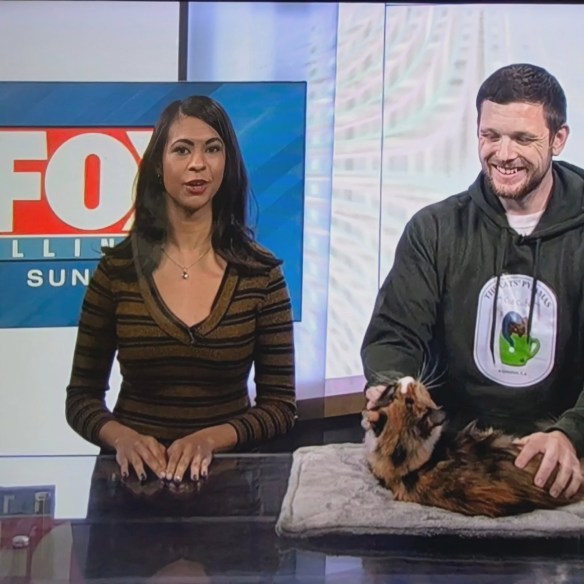
We first met Bryce and Elizabeth at The Cat’s Pyjamas, a new “cat cafe” in our community that we were visiting regularly in an attempt to soothe our broken hearts after losing our beloved Champie.

For those who have never been to one, a cat cafe is a coffee shop where people can interact with cats who are available for adoption. The Cat’s Pyjamas works closely with the Animal Protective League, a nonprofit no-kill animal rescue and adoption organization.

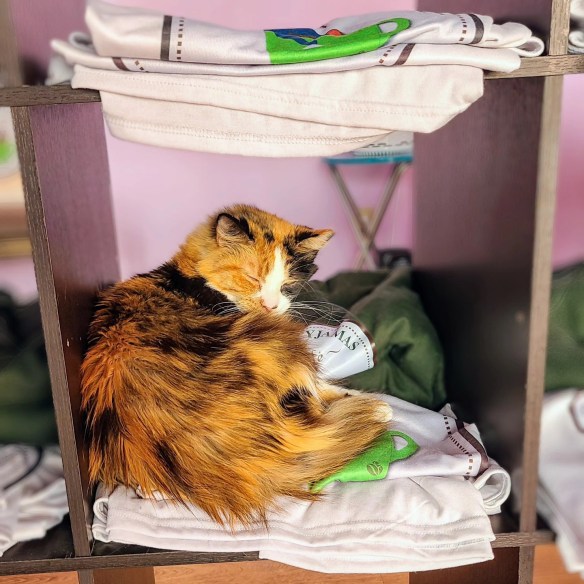
At the cafe, I immediately fell in love with Elizabeth, a gorgeous 10-year-old “tortico” (a combination calico and tortoiseshell). This adorable creature knew how to be the center of attention. We’ve decided her full name should be Queen Elizabeth III.

Here’s Bryce posing for the camera on one of the cat trees at the cafe. This cutie was quite a bit more shy than Elizabeth, but he did allow me to pet him and tickle his tummy on one of our visits. Staff told us the reason for his shyness around humans was that he had been rescued from a hoarding situation where he was often bullied by other cats.

As soon as we got our kitties home, Elizabeth spent the first several minutes sniffing every square inch of the house before making herself right at home on our bed. She has been affectionate and engaging and utterly irrepressible from the start.

Within a half hour of arrival at her new home, Lizzie was already rolling over and playing cute for us, and we knew this little girl was going to be quite a character! She loves to hop up on the kitchen table and beg for food, or sit on the back of my chair while I’m at my computer. She also joins me for morning meditation in front of the fireplace.

Alas, for the first several weeks, our little Bryce seemed most comfortable when he was hiding. He disappeared into a pile of boxes in Pete’s office and would not come out as long as either one of us was in the room. We took to calling him Sir Bryce of Boxington Manor and were advised by friends that we should let him get to know us at his own pace.

Elizabeth has fully made our house her own, except for Pete’s office, which we’ve decided is Bryce’s territory. Lizzie is obviously convinced our bed belongs to her, but thankfully she shares it with us.

Pete’s tummy, and mine, make perfect cat beds. At least Lizzie thinks so.

After several weeks of attempts on our part to coax little Brycie out of hiding, the co-owner of the Cat’s Pyjamas — who had managed to gain our kitty’s trust while he was living at the cafe — came out to our house and captured the little guy. He placed Bryce on each of our laps so we could finally hold him and pet him. This seems to have prompted a breakthrough.

Brycie has finally begun to get a little more bold. While he continues to stay in Pete’s office, he now comes out of hiding long enough to eat, use his litter box and play with his toys while Pete and I are in the room. I was able to snap this photo of him cuddling up with Pete a couple of weeks ago. What a sweet sight! I hope to see more of this soon and get my own chance to cuddle him.

I consider this photo of Brycie — stretched out on the floor at the Cat Cafe — to be aspirational. Sir Bryce does look like a little lion, doesn’t he? Staff at the cafe said it took several weeks for him to feel comfortable with folks there. So we’re hoping that, with time, he will feel secure and brave enough to lounge in the middle of our living room floor as he learns to feel at home with us.

Meanwhile, Queen Elizabeth has made one of my pillows her throne. Or is this a scene from the Princess and the Pea?

The camera just loves this sweet adorably ornery little girl. Doesn’t she look like the Queen of all she surveys?

At any rate, our newest family members have been such a blessing! They’re both so beautiful and adorable. We thank God for them. And we thank the Cat’s Pyjamas and the Animal Protective League for bringing them into our lives.

One small step

As I’ve studied the polarization problem caused by our endless Culture Wars and the negative impact on both ourselves and our society, I’ve begun asking myself these questions:

How do we engage people who disagree with us, while keeping in mind God’s commandment to love our neighbors as ourselves? 

How can we be part of the solution and avoid becoming part of the problem as our society grows ever more partisan and angry?

I’ve decided one of the first small steps I can personally take is to examine my relationship with social media. As I’ve begun doing so, I’ve come to an inescapable conclusion: I need to pay much more conscientious attention to what I post, share and “like” on sites like Facebook and X (formerly known as Twitter). 

If there’s one thing many conservatives and progressives agree on, it’s that social media have played a huge role in keeping the Culture Wars going. In one survey by the Pew Research Center (link HERE), 55 percent of adult social media users said they felt “worn out” by how many combative political posts and discussions they see on these platforms. 

Seven in 10 respondents also said they found it “stressful and frustrating” to communicate on social media with people they disagree with about politics. The sense of exhaustion and frustration held true across political parties, according to the report. 

Several culprits contribute to social media’s role in dividing us. Algorithms that create “echo chamber” bubbles of one-sided information and opinions. Viral spread of false or misleading information in “fake news” stories with click-bait headlines. Political “discussions” that amount to little more than judgmental blaming and shaming, name-calling, insults, character assassination and demonization of opponents. Endless memes promoting hateful and inflammatory messages.

The worst part? I have to admit I’ve been part of the problem from time to time. Too often in recent years, I’ve found myself getting sucked into social media fights – even with people I ordinarily like – over politics and contentious “hot-button” ideological issues.

Whenever a Facebook skirmish erupts – whether the trigger is a Supreme Court decision, a political candidate’s suitability for office, or a crisis playing out on the news – my first instinct is to try and stay out of the fray. 

Alas, I tend to have strong opinions about a lot of issues (imagine that!) and sooner or later, someone will post a meme that I just can’t seem to resist sharing against my better judgment. Okay, I know it’s a bit snarky. Maybe a bit judgmental or even mean. But it’s SO clever. Then, of course, someone on “the other side” will beg to differ with my assessment of the meme’s cleverness, and before I know it, I’m bogged down in another argument.

One evening, I realized I had just spent the better part of a whole day arguing with total strangers on a Christian Facebook page over this question: “Is it racist to make jokes about lutefisklefse and jello at Lutheran potlucks?” (No, I’m afraid I’m not making this up.) I further realized it wasn’t the first time something like this had happened.

So what can I start doing differently?

I’m not ready to go “off the grid” when it comes to social media. With family and friends scattered over two continents, I would not be able to stay connected so well without Facebook. This was especially true during the recent pandemic. 

However, I’ve decided I can take some constructive steps to avoid getting lured into flame wars and to be part of the solution rather than part of the problem when it comes to divisive social media behavior.

I can fact-check articles I want to share before posting them. I personally see nothing wrong with sharing thoughtful, well-researched articles about issues I care about. But I have a responsibility to double-check these for accuracy. Some good sites for fact-checking my sources include Snopes.com (link HERE), FactCheck.org (link HERE) and PolitiFact (link HERE).

I can respect people who don’t agree with me. I’ve learned it’s best to resist lecturing people on their lack of personal integrity or intelligence, even if I think what they’ve shared is just plain wrong. I can’t remember ever changing anyone’s mind about an issue because I sufficiently shamed them. If a Facebook friend posts an inaccurate or misleading article, meme or video, I can skip the snark and simply respond with a link to a Snopes.com article debunking the item in question.

I can practice selective attention. If I don’t agree with someone’s post, I always have the option to keep on scrolling and not respond at all. (What a thought!) 

I can set my own standards of behavior for my own posts. When the vitriol starts, I’ve begun deleting comments from people who choose not to respect others, and even blocking some of the worst offenders. I have blocked or “snoozed” both conservative and progressive Facebook friends who insist on insulting my other Facebook friends.

I can be aware of what I enable. What am I encouraging others to post by hitting the “like” button? Am I inadvertently rewarding name-calling, character assassination or polarizing comments? 

I can resist “click bait.” Sometimes I can tell from the headline that an article is pure negative spin. (Watch Politician A school Politician B on life in the real world.) Given the fact that clicks generate ad revenue, do I really need to contribute one more click in response to that scurrilous article? 

I can avoid using memes to convey complex ideas. One of the problems that keeps us all from resolving issues appropriately is our modern emphasis on brevity. It is nearly impossible to give an issue the depth it deserves when our communication is limited to 15-second sound bites, 280-character tweets, bumper stickers and t-shirt slogans – and all those endless memes.

I can reduce mindless surfing. If I go online with a specific purpose in mind – to check emails, research a blog article or catch up with the latest updates from Facebook friends – and limit my time on social media, I’m less likely to absent-mindedly click on headlines like 21 of the Biggest Political Scandals in History.

Finally, I can use Facebook for its original purpose – to help me keep up with family and friends. How are all my nieces and nephews and dozens of cousins doing? Who’s getting married? Who just had a baby? Which friend got a promotion at work or went on a fabulous vacation? Who just went to the emergency room and needs prayers?

Or I can share cute photos of all the adorable pets Pete and I have shared our home with since we first got married nearly 40 years ago. I’m happy to report I have never had anyone threaten to block or “snooze” me because I posted too many photos of these little sweethearts. 

Fortunately, my Facebook friends over the years have loved Elizabeth, Bryce, Champie, Oley, Angie and Torbjorn as much as my camera and I have.

Questions for readers: How has our society’s polarization impacted you personally? (If you live outside the U.S., is there similar polarization going on in your country?) How do we become part of the solution rather than part of the problem? I’d love to hear your responses to these questions, as well as your comments on this article. Just hit “Leave a Reply” below. When responding, please keep in mind the guidelines I’ve outlined on my Rules of Engagement page (link HERE).

God’s other book: Winter wonder

When the weather turns cold, I’m usually tempted to stay inside and hibernate. Alas, God creates such breathtaking beauty with snow (and even ice!) that I’ve been richly rewarded whenever I bring my camera and immerse myself in the great outdoors instead. Here are some of my favorite winter scenes that I’ve managed to capture over the years.