Our Christmas letter for 2025

Merry Christmas! Love and cheer to everyone this holiday season. We actually had a pretty good year in 2025 – one that has us feeling blessed and grateful.

This October, we celebrated our 40th wedding anniversary!!! And I’m wondering, where did the time go?? When we vowed to take each other for better or worse, we embarked on a journey, and what an amazing journey it’s been! After all that time together, Pete is still at the very top of my gratitude list. I love that man to the moon and back, and I truly consider him to be a gift from a kind and loving God.

We’ve had some very good news on the health front. (Knock wood.) Pete has been getting CT scans every three months since he went through his chemo and surgery in early 2023. For two years now, his scans have been coming back “unremarkable” (no signs of recurring cancer). I can’t begin to express how grateful I am for this – both to God and his amazing oncologist! We did have a bit of a scare at the beginning of this year when Pete’s immunotherapy treatments started going after his kidneys. Thankfully, that situation has been brought under control, at least for now. His oncologist has been practically ecstatic as he expresses cautious optimism about Pete’s prognosis.

Besides the great news about Pete, I received some good news of my own this month: I was finally able to have a cardiac ablation in the fall for an arrhythmia problem that had been going on for years and leading to occasional scary trips to the ER. I’ve had a heart monitor implanted and at my follow-up appointment in early December, my cardiologist said I’ve had no episodes of either SVT or A-fib since the surgery. I continue to participate in my cardiac rehab exercise program and Pete has joined me. We are even pretty much sticking to our healthy eating plans prescribed by the rehab program’s dietician.

After what seemed like an endless siege of homebound isolation lasting until mid-2024 – first because of the pandemic and then because of our health issues – we’ve been able to return to in-person church services and get-togethers with family and friends. This year we even started eating out at restaurants again, though we choose places with outdoor tables or, when the weather is cold, times when a restaurant is relatively empty. And we’re up to our eyeballs in volunteer commitments. In other words, our lives have begun returning to normal. For a long while, I wasn’t sure that would ever happen.

Our involvement at church keeps us quite busy these days. For the past year, I’ve been serving as congregation vice-president and began my first term on the church council. I continue to chair our congregation’s community service committee and do my part to help keep our church’s micro pantry filled with food. Pete has been chairing the faith formation committee and co-facilitates our Dwelling in the Word Bible study group that meets after the church service each Sunday. And Pete and I are about to begin our fifth year of leading Sundays@6, an adult faith formation class which meets on Zoom. The group has about a dozen regulars who “attend” each week and the discussions are quite lively.

For our third year now, we’ve been involved in an anti-racism committee created by our community’s Dominican Sisters Associates program. The group, which meets on Zoom every other month, brings together people of different races to discuss how to recognize and address racism both in ourselves and in our society’s institutions. Participating in this group has been an amazing learning experience and we’ve been honored to be part of it.

We also continue to participate in spiritual direction with one of the Dominican Sisters. Spiritual direction – for those unfamiliar with the concept – is a partnership in which one Christian helps another grow in a personal relationship with God. Monthly one-on-one meetings have involved examining our prayer life, our personal values and various lifestyle choices. Another amazing learning experience for both of us!

On a very sad note, we had to say goodbye in August to our beautiful Queen Elizabeth after having her with us only eight months, due to complications from a heart condition. Lizzie came to us from our local cat café just before Christmas last year and captivated our hearts immediately. She fit nicely into laps, loved begging for treats, purred loudly while cuddling in bed with us, and had an irrepressible personality. I know some people shy away from adopting an older pet, especially one with “special needs.” But we would do it again in a heartbeat. Our little “senior” brought us so much joy. She was definitely one of our blessings, even though our time with her was so heartbreakingly brief.

The good news is, our little Brycie – whom we adopted at the same time we adopted Elizabeth – is thriving. For the first several weeks, Bryce disappeared into a pile of boxes in Pete’s office and seemed most comfortable when he was hiding. We took to calling him Sir Bryce of Boxington Manor and were advised by friends that we should let him get to know us at his own pace. Now, though, he has gotten completely bold and has made the house thoroughly his own. He loves to cuddle with us in bed, begs for food when we sit down for meals, sits in my lap when Pete and I are watching movies or podcasts, and loves to scamper at a high rate of speed around the house at 3 a.m. Hence, his new nickname “Scamperpuss.” We love the little bandersnatch.

Here’s hoping everyone has a merry Christmas and a happy and healthy New Year full of grace and peace!

Thoughts on turning 70

Unlike many people “of a certain age,” I still get excited about birthdays. I have always considered my birthday to be a personal holiday. This year I’m celebrating a major milestone birthday – I’m turning 70.

So here are some thoughts as I embark on a bright, shiny new decade of living:

Time is limited. Of course, I’ve always known – intellectually, at least – that we’re not immortal. But in recent years, this has started to register on a deep-down level with the loss of both my parents and several good friends my own age, not to mention my own heart attack two years ago, and my husband’s cancer diagnosis. Bottom line: Nothing is guaranteed. I need to let family and friends know how important they are to me and how they’ve impacted my life. I need to do this now.

I survived adolescence once already, thank-you. These days, I swear I’m experiencing more bodily changes than I did as a teenager. Even my toes have arthritis. My husband and I have acquired a new pastime – looking up medical problems on the Internet after one of our many doctors send us for tests based on the latest unnerving symptoms. At least my biggest priority is no longer “be popular.”

Perfection is an illusion. All my life I’ve struggled with perfectionism in areas ranging from my diet and my housekeeping to my career ambitions. But I probably need to face the fact that our home will always look like real people – and pets – live here. No matter how much time I spend cleaning, there will never be a time when my house is in perfect order inside and out, including the closets, the garage and the basement.

So is eternal youth. Is 70 really the new 50, as some Baby Boomers proclaim? Some say my generation is redefining old age. But truth be known, I have wrinkles. I have gray hair. There are some things I can’t do anymore – like burn the figurative candle at both ends and get away with it. Actually, I wasn’t getting away with it when I was younger either. I just thought I was.

Perhaps I should say I’ve survived adolescence twice. I did have one of those midlife crises the shrinks talk about – a second adolescence complete with acne at age 45, identity struggles and acting out behaviors (red car, drastic career change). As I’ve become firmly ensconced in this new territory called Senior Citizenhood, I’m thinking maybe it’s time for my flaming midlife crisis to be over already! On the other hand, a friend sent me a Facebook meme that advised, “If you haven’t grown up by the time you’re 60, you don’t have to bother.” Whew! Maybe I’m off that hook.

Believe it or not, I do not spend all my time wishing I were younger. Yes, there are days when I wish I had my 20-year-old body back – especially when my arthritis flares, but only if I could keep my 70-year-old mind and all the experience and wisdom about life that I’ve accumulated. I’m old enough to know what’s important and young enough to still act on at least some of it. Besides, when I am 90, I will most likely wish I still had my 70-year-old body, so I might as well appreciate it now.

 “Respect your elders!” never sounded so good. I can tell I’m getting older whenever I’m tempted to direct that admonition toward a 25- or 30-year-old kid. Oops! I mean young adult. It’s gotten somewhat scary to encounter young adults who regard their elders as people who either need to move out of the way or be thrown away rather than as people to learn from and respect. Fortunately, I’m lucky to have plenty of young people in my life who respect others, including their elders.

It’s time to let go of regrets. If I had it to do over again, I wouldn’t have picked up that first cigarette. I would have spent fewer of my younger years striving and competing for that brass ring that didn’t seem so shiny once I succeeded in grabbing it. Alas, I can’t change what happened decades ago. What I can do is make better decisions in this 24 hours. When my father turned 75, he said, “I honestly wouldn’t change a thing.” I hope I can say that when I’m 75! I’m getting closer, Dad.

I have set some boundaries with the fashion world: 1. Clothes must be easy to care for. If they need dry-cleaning, forget it. 2. They must be comfortable – nothing that binds or scratches. 3. They must look good on a 70-something woman who’s never been a size 0 and never will be. 4. Since I don’t have the time or inclination to constantly shop, my wardrobe must stay in fashion for longer than a month. If clothes don’t fit all these criteria, they don’t go into my closet, no matter how many cute young things are wearing them!

I have set some boundaries with other social rules as well. Especially the notion that we old folks need to hide our age. After the previously-mentioned heart attack and loss of same-age contemporaries, why on earth should I feel embarrassed by my age? No, I’m not planning to color my hair to cover the gray. No, I’m not planning to waste my money on foundation or other make-up with names like “Age Rewind.” By golly, I’ve earned every one of those wrinkles and gray hairs, and I see no reason whatsoever to hide them.

I’m much less materialistic than I used to be. If there’s one thing I don’t need, it’s more THINGS!!! If I need to be reminded of this fact, I can go to my basement and gaze upon the 48 boxes marked “miscellaneous” that make me scream when I think about sorting whatever is in them.

But there are some things I continue to wantI want to spend more time on what’s important – enjoying life with my husband, entertaining family and friends (even if only on FaceTime and Zoom these days) – and less time mindlessly surfing the Internet. I want the courage to stand up for my beliefs and values and let the chips fall where they may. I want to stop worrying so much about what other people think, as long as I’m not actively doing anything to hurt them. I want to stop fighting with my own body.

Yes, I still have dreams. Now that I’m retired, I have never been in a better position to achieve dreams like writing a book or making a constructive contribution to our society through meaningful volunteer work.

There’s no time like the present. The time to pursue my dreams is right now, not at some future date when everything will have settled down and fallen into place so I can start living my life in earnest. Especially since writing a book has been on my bucket list since age 10. There’s still time to finish that book – if I keep my nose to the grindstone, my feet to the fire and my derriere to the chair.

I have entered the Age of Wisdom – and still have questions. When I was in my 20s, I had the world all figured out. Then, the older I got, the smarter my parents got, just as Mark Twain predicted. However, now that I’m 70, I understand that human wisdom has its limits no matter how many birthdays we’ve seen. These days I’m convinced only God has all the answers, and it’s my job to keep asking the questions.

I have a LOT to be grateful for. I have a terrific 40-year marriage to the best man on the planet (I’m only slightly biased here). I have wonderful enduring friendships. I have a beautiful home and – for the first time in my life – some real financial stability. I’ve had a successful writing career, followed by a challenging career in human services, followed by fulfilling volunteer work. Pete and I have managed to stay active despite our health issues. And I’m thankful God has given me another year.

God’s other book: Winter wonder

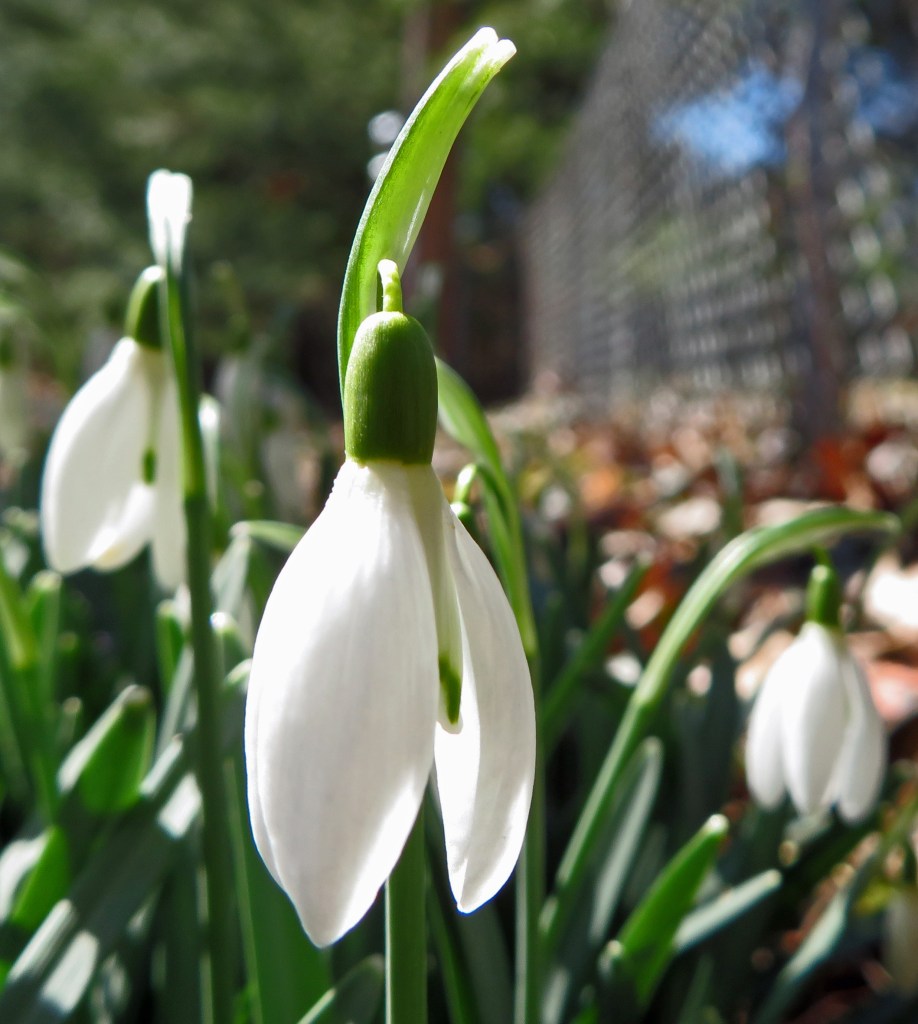
When the weather turns cold, I’m usually tempted to stay inside and hibernate. Alas, God creates such breathtaking beauty with snow (and even ice!) that I’ve been richly rewarded whenever I bring my camera and immerse myself in the great outdoors instead. Here are some of my favorite winter scenes that I’ve managed to capture over the years.

Our annual Christmas letter

This past year, Pete and I have been truly blessed.

As most of you know, my husband has been battling Stage 4 cancer for two years. In November, Pete’s oncologist pointed out that his every-three-month scans have been coming back “unremarkable” (translation – no signs of recurring cancer) for at least a year. This means his immunotherapy treatments appear to be working, and even better, with minimal side effects. The doctor was practically ecstatic as he expressed cautious optimism about Pete’s prognosis.

Besides the good news about Pete, I received some good news of my own earlier this year: My cardiologist said tests show my heart sustained only minor damage from the heart attack I had in December of 2022. I continue to participate in cardiac rehab, and Pete has even joined me for the exercise portion. He has the honor of having been accepted into the hospital’s Stay Fit exercise program for both pulmonary and cardiac rehab. (Ah, the joys and perks of old age! We get to have Medicare pay for our fitness workouts.)

So, 2024 has given us a blessed reprieve from the ring-tailed monster of a year we experienced in 2023, thanks be to God, and life is slowly returning to … dare I say it? … normal. In other words, we have a LOT to be grateful for this year.

On a very sad note, we had to say goodbye in November to our lovable, ornery, beautiful Champaign Le Chat. Champie was a “rescue kitty” we adopted from the Animal Protective League shelter 17 years ago, but there could be a definite debate about who rescued whom. He was such a sweet little buddy to us as we endured our roller-coaster medical saga. We often referred to him as our furry little comforter. He had us utterly wrapped around his paw and we loved him SO MUCH!!!! We are SO grateful to have had him in our lives for so many years.

Here is one of my all-time favorite photos of our little Champster, which I like to call “The Prince and the Pea.” He was definitely one of our blessings.

After what seemed like an endless siege of homebound isolation – first because of the pandemic and then because of our health issues – we’ve been able to return to in-person church services and get-togethers with family and friends, and we’re up to our eyeballs in volunteer commitments.

We’ve committed to help keep our church’s micro pantry filled with food we either buy with generous grant money or pick up from food drives conducted by various civic groups around the community. This year, I took on the role of chairing our congregation’s community service committee, and I’ve been asked to serve on the church council beginning in 2025.

We’re about to begin our fourth year of leading Sundays@6, an adult faith formation class which meets on Zoom. So far, we’ve covered subjects ranging from the 10 Commandments to evangelism to how our faith should impact the way we address current issues. The group has about a dozen regulars who “attend” each week, and the discussions are quite lively. We absolutely love this group, and it has played a vital role in keeping members who are homebound connected to our congregation, including ourselves until May of this year when Pete’s oncologist finally let us come out and play with the other kids.

For the past two years, we’ve been involved in an anti-racism committee created by our community’s Dominican Sisters Associates program. The group, which meets on Zoom every other month, brings together people of different races to discuss how to recognize and address racism both in ourselves and in our society’s institutions. Participating in this group has been an amazing learning experience and we’ve been honored to be part of it.

We also continue to participate in spiritual direction with one of the Dominican Sisters. Spiritual direction – for those unfamiliar with the concept – is a partnership in which one Christian helps another grow in a personal relationship with God. Monthly one-on-one meetings have involved examining our prayer life, our personal values and various lifestyle choices. Another amazing learning experience for both of us!

For several years now, we’ve been working to make our yard an urban sanctuary for wildlife and turn our flower beds into a welcome center for hummingbirds, bees and butterflies. We try to add a few native perennials each year, as well as planting an abundance of annuals and avoiding lawn chemicals. I’ve found gardening to be therapeutic, and the yard is looking beautiful! Pete and I like to think of this project as “God’s work, our hands.”

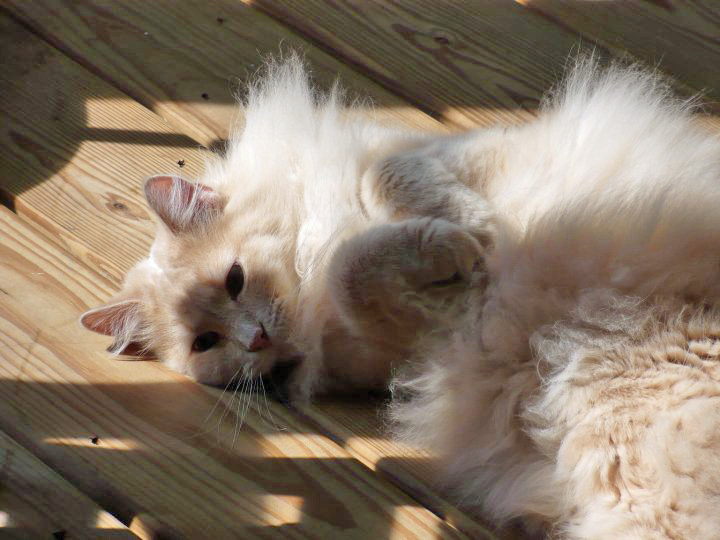
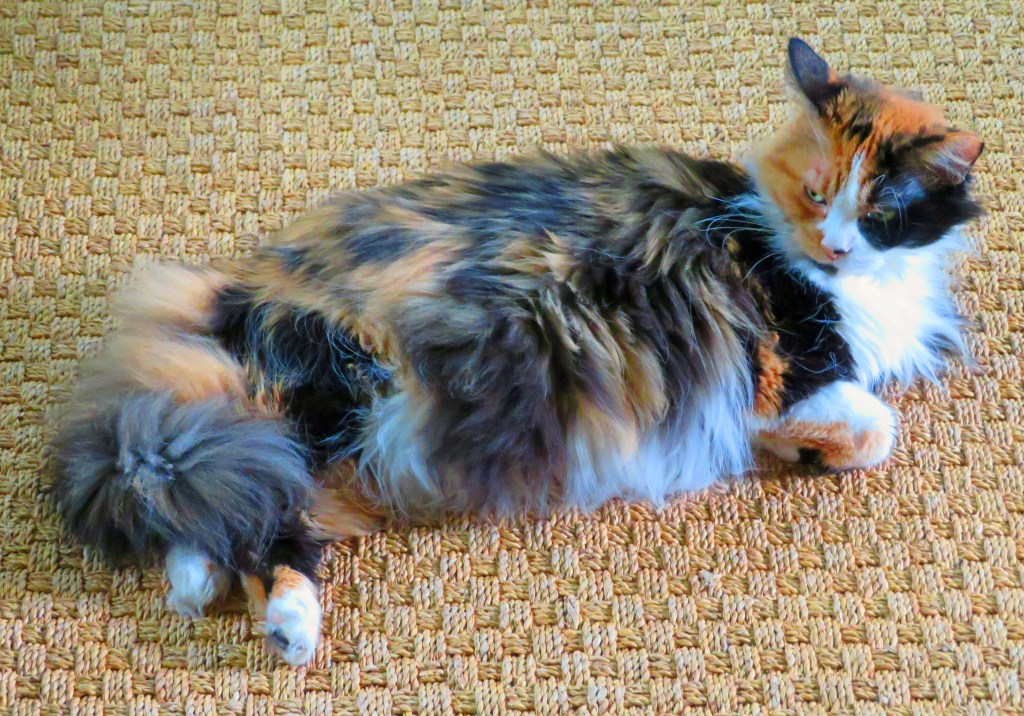
And … just in time for Christmas, the Animal Protection League has allowed us to adopt two new little blessings. The gorgeous “tortico” (a combination of torti and calico) is Queen Elizabeth. The handsome yellow guy is Bryce. We met them at the Cat’s Pyjamas Cat Café, a new business in town with lounges and refreshments for people who want to relax by petting cute kitties. Their cats are all adoptable through the APL. We’re sure these two will make our house theirs before too long.

If the past couple of years have taught us nothing else, they’ve taught us to appreciate the “boring” days we used to take for granted, or even complain about. Sometimes there’s nothing more wonderful than an uneventful day. No distressing symptoms. No rides to the emergency room in the back of an ambulance. No test results with nasty surprises. Just laundry, vacuuming, groceries, church committee meetings and other soothingly routine activities. 

I’ve been blown away by Pete’s extraordinary strength and courage as he has plowed through chemotherapy, major surgery, hospitalizations due to infections and other complications, and finally, immunotherapy treatments that are working so far. And now he joins me for my cardiac rehab exercise program at the Prairie Heart Center twice a week. He’s also been a great “therapy skunk” for me, coming with me to my medical appointments and backing me up when I need a doctor to take me seriously or answer my questions.

We are both beyond grateful for the mountain of get-well wishes and prayers, the delicious meals sent to our house when we didn’t feel like cooking, the cat photos and baby goat videos and bad puns posted to our Facebook pages to cheer us up, and the many other things our wonderful family members and friends did during our “walk through the valley” to help us feel supported and loved. The steady stream of prayers, cards and visits helped us more than people know.

Here’s hoping everyone has a merry Christmas and a happy and healthy New Year full of grace and peace!

Book excerpt: Our children are watching

Note: This is an excerpt from my book in progress, which examines the polarization ripping apart our society and shares my personal search for an appropriate Christian response. For an overview of the book and to read my other excerpts, click HERE.

It would be bad enough if the tide of anger and disrespect fueled by the Culture Wars served merely to put people in a surly, antisocial mood. Unfortunately, the damage doesn’t stop there. On a societal level, our finger-pointing outrage epidemic leads to everything from loss of trust in our institutions to violence against individuals who belong to maligned groups. On a personal level, people report damaged friendships and stress at family gatherings.

Perhaps worst of all, however, is the fact that our children are watching us. 

Of course, adults have been lamenting youthful attitudes and behavior ever since Socrates complained that the younger generation of his day disrespected their elders and lacked proper manners. Twenty-first century adults gripe that kids feel entitled, want instant gratification, lack a proper work ethic, spend so much time glued to their devices they no longer have basic communication skills, and are generally rude and inconsiderate of others.

The school shootings that occur with numbing regularity in the U.S. have called attention to a problem pervasive in most school districts – student cliques, outcasts and bullying. Children begin forming cliques as early as grade school. High school jocks pick on geeks. Middle school mean girls single out scapegoats for gratuitous abuse because their hair is wrong.

Many of these students aren’t content to simply avoid or exclude certain kids. Insiders often treat outsiders in ways that seem inexplicably cruel. Insults, harassment and scapegoating abound. Almost any perceived difference – race or ethnicity, language, social class, disability, size, wardrobe, personal style – serves as useful fodder for hurtful words and actions. Tragically, some students have been driven to suicide by cyberbullying.

Yet we must remember that children aren’t born with social graces. Getting along with others requires skills that, for most kids, don’t come naturally – the ability to listen, negotiate, compromise, and look at a situation from another’s point of view. Youngsters need to be guided toward healthy behavior, and the best guide is adult example. “Train children in the right way, and when old, they will not stray,” Proverbs 22:6 reminds us.

So what kind of example are we showing them?

Cliques, bad attitudes and hypocrisy, oh my!

A cynic might suggest that cliques and cyberbullying provide excellent practice for life in adult society. Several parallels could be drawn between student cliques and adult culture war “tribes” – social sorting, an Us vs. Them mentality, in-group conformity and out-group stigmatization, and peer pressure to align with the in-group’s norms, beliefs and behaviors in order to gain acceptance and avoid isolation.

We live in echo chambers that ensure we are exposed mostly to people who share our own worldview and are shielded from conflicting ideas or viewpoints. The more we identify with a group, the more we feel pressured to agree with its dogma – a party line that seems to include 650 boxes which must all be checked, lest we risk rejection by our chosen peers.

Kids who take their cues from adults in our highly polarized society might be excused for thinking rudeness is clever. Parents and teachers share concerns about allowing younger children to watch political debates because of the name-calling, insults and other loutish behavior on the part of the candidates. Comedians and talk show hosts derive perverse delight from their crude and uncontrolled behavior toward people perceived as opponents. Cable news programs feature guests who constantly interrupt each other and engage in shouting matches.

Young people looking to adults for examples of how to behave might also get the message that values like kindness and compromise are passé. Elected officials who work across the aisle often risk losing support from their base or face opposition in their party’s next primary election. In our private relationships, people who insist on maintaining friendships across ideological lines may be accused of selling out.

Politically progressive folks who should be old enough to know better accuse us of “tone policing” if we object to their profanity-laced tirades directed toward anyone who disagrees with them. Supposedly mature conservatives tell us we’ve overdosed on “political correctness” if we dare to suggest that consideration for others is still a virtue worth cultivating, especially if we suggest those people should be the recipients.

Kids adept at spotting adult hypocrisy don’t have to look far to find it. Do we think our kids don’t notice the mudslinging we’ve come to regard as routine for political campaigns? Or the car with the middle-aged driver and the bumper sticker that tells us what we can eat if we don’t like the owner’s driving? Or the (alleged) adults who consider flaming a popular sport on social media sites?

A Gallup poll found that a majority of Americans think our lack of manners in everyday life is a somewhat or very serious problem, and that the problem is getting worse. However, when asked whether they had displayed road rage themselves (shouted, cursed or made gestures to other drivers), 61 percent of the same survey respondents admitted doing so.

Sadly, those of us who identify as Christians are in no position to judge secular society when it comes to adults behaving badly. For years now, church folks have been locked in “worship wars” – an unyielding struggle over whether a congregation’s music and worship style should be traditional or contemporary. Progressive and conservative Christians regularly skewer each other on Web sites such as Patheos in diatribes complete with insults, name-calling and expletives NOT deleted.

In short, when one looks at the divisions between various groups in our culture, not to mention the general incivility that seems so pervasive everywhere, is it any wonder that our kids form cliques and behave in inconsiderate ways toward their peers? Should we be surprised if our young people roll their eyes or ignore us when we lecture them about their manners?

In Ezekiel 18:2, we find an ancient Hebrew proverb: “The parents have eaten sour grapes, and the children’s teeth are set on edge.” Seems that some things haven’t changed much in the past 3,000 years or so.

Let’s watch our own manners

The fact that our society has become more relaxed in recent years – and more open-minded about what constitutes proper etiquette – is not a totally bad thing. Who cares whether we wear white after Labor Day? And modern courtesy demands respect for the fact that different cultures may have different rules about how to set a table.

But perhaps we could refrain from spilling beer all over the fans in front of us at sports events, constantly checking our mobile phones or other devices during face-to-face encounters, or interrupting and shouting down speakers at public forums. Common sense would dictate that verbal abuse and harassment, belittling others, and using intimidation tactics to get our own way constitute inappropriate behavior in any culture.

School districts have tried various means to encourage more respectful behavior among students – anti-bullying programs, social skills incorporated into lesson plans, even etiquette classes. Many parents try to do their part by encouraging their children to avoid cliquishness and show empathy for others, as well as letting their kids know they disapprove of hurtful behavior.

But families and schools can only go so far in an era of road rage, political scapegoating and so-called “news” shows that glorify shouting matches. If we really want to encourage younger generations to be polite rather than insolent, and inclusive rather than cliquish, we need to look at what’s going on in our adult communities.

Exodus 34:7 warns us that the sins of the parents shall be visited upon the children unto the third and fourth generations. In other words, children often suffer the consequences of their parents’ sins, especially when young people adopt the sinful behavior for themselves.

While it’s true that children are not born with social graces, it would be interesting to contemplate how much better our kids might behave if everyone over 21 observed a few rules of basic courtesy – the kind that go beyond which fork to use at the dinner table:

• Say “please” and “thank-you.”

• Avoid name-calling, insults and character assassination, even when posting on social media or running for public office.

• Refrain from flashing obscene gestures at other drivers, whether or not your kids are in the back seat.

• Resist dropping F bombs on the heads of people who fail to check all your ideological boxes.

• Keep in mind that political differences are no excuse for rudeness.

Syndicated columnist Judith Martin, a.k.a. Miss Manners, reminds us, “To have a pleasant society, you must control yourself.” Especially if we want our kids to control themselves. When we forget or overlook our manners, so, it seems, does everyone else – including our children.

Questions for readers: Do you feel that rudeness has gotten worse in recent years? How does one “train children in the right way” when we have so many examples of adults behaving badly? I’d love to hear your response to these questions, as well as your comments on this article. Just hit “Leave a Reply” below. When responding, please keep in mind the guidelines I’ve outlined on my Rules of Engagement page (link HERE).

Thoughts on sacrifice

Each Lenten season, as I contemplate the subject of sacrifice, a favorite childhood memory comes to mind.

My sisters and I were sitting around the kitchen table one afternoon after school discussing what we planned to give up for Lent that year – cake, ice cream, candy, chocolate – when my father added his two cents to the conversation. “I’ve never been a fan of sacrifice just for the sake of it,” he said thoughtfully. “Not when life itself gives us so many opportunities to make real sacrifices. If you’re going to give something up, your sacrifice should actually make a difference.”

We all looked at him quizzically.

Dad grinned from ear to ear. “Instead of cake and ice cream, why don’t you kids give up fighting for Lent?”

“That’s a wonderful idea,” Mom chimed in. “Just imagine – six whole weeks with no kids fighting!

Being charitable toward a sibling guilty of looking at me the wrong way proved a bit more challenging than forgoing a candy bar. Nevertheless, I think my sisters and I may have accomplished this feat for a whole day or two.

A story circulating on Facebook quotes an anonymous priest whose approach to Lenten sacrifice echoes my father’s: “Jesus would probably laugh at us for giving up chocolate or coffee – things that bring us joy and make us happy. What he might suggest instead is giving up things that make us miserable – jealousy, greed, gossip.”

Both Dad’s observation and the priest’s seem to fit pretty well with what the Bible teaches about sacrifice.

“For I desire mercy and not sacrifice,” says Hosea 6:6, “and the knowledge of God more than burnt offerings.”

Isaiah 58:6-7 offers an example of sacrifice that really makes a difference. “Is not this the fast that I choose: to loose the bonds of injustice, to undo the straps of the yoke, to let the oppressed go free, and to break every yoke? Is it not to share your bread with the hungry and bring the homeless poor into your house; when you see the naked, to cover them and not to hide yourself from your own kin?”

Micah 6:8 elaborates. “And what does the Lord require of you but to do justice and to love kindness and to walk humbly with your God?”

In other words, not all sacrifices are created equal.

At its best, sacrificial giving offers an amazing way to show love for our neighbors, whether we do something small like filling a neighborhood micro pantry with groceries, or something major like assuming the caregiving role for a family member with dementia. At its worst, “sacrifice” can go horribly wrong – suicide bombers come to mind.

Even the best of us can make somewhat misguided sacrifices. We’ve all known parents who give their children everything – everything, that is, but their time and attention. Or we commit too much of our time to things that don’t really matter because we can’t say “no.” Such self-sacrifice often leads to resentment and, ironically, may not truly benefit anyone in the long run.

Then we have performative sacrifice – giving that lets us feel self-righteous and is designed more for our own benefit than for others. Some businesses make charitable contributions that seem like nothing more than a cynical ploy to keep their brand in front of the public. Or someone buys a meal for a homeless person and takes a selfie to post on social media. This virtue signaling may be what Jesus had in mind when he said in Matthew 6:2, “Whenever you give alms, do not sound a trumpet before you, as the hypocrites do … so that they may be praised by others.”

And how much sacrifice is enough? In recent years, some of us were only half-joking when we said it felt like Lent had been going on since Ash Wednesday in 2020, which came just days before the pandemic shut everything down. “Haven’t we given up enough already?” we asked plaintively.

In all seriousness, we may rightly decide a particular goal isn’t worth the sacrifices we would need to make in order to achieve it. Earlier in my life, I learned the hard way that we should not sacrifice too much of what is important to us at the altar of career success, only to discover that the brass ring isn’t so shiny once we’ve grabbed it.

Most of us don’t mind a certain amount of sacrifice as long as the expectations are fair. For example, we might agree that asking others to make sacrifices we wouldn’t make ourselves is manipulative and hypocritical. I’m thinking of corporate executives who exhort employees to “make sacrifices for the company” in the form of substandard pay and abysmal working conditions while awarding themselves exorbitant salaries and bonuses.

The scriptures in several places suggest tithing – sacrificing 10 percent of our income. In Mark 10:20, Jesus also tells a rich young man to “go, sell what you own, and give the money to the poor.” So far, I have yet to meet anyone who has actually followed the advice given to the rich young man, and many of us (myself included) have tended to regard tithing as “aspirational.”

Most of us would probably agree that those who have more should give more. Mark 12:41-44 comes to mind here: Jesus sat down and “watched the crowd putting money into the treasury. Many rich people put in large sums. A poor widow came and put in two small copper coins, which are worth a penny. Then he called his disciples and said to them, ‘Truly I tell you, this poor widow has put in more than all those who are contributing to the treasury.’” 

So if we’re giving up something for Lent – or making sacrifices any other time of the year, for that matter – what kinds of sacrifices are appropriate, reasonable and acceptable to God?

Like my father said, life itself presents us with plenty of opportunities to make real sacrifices. Examples that come to mind include our need to always be right, our desire to retaliate when someone offends us, our compulsion to multitask when someone needs our undivided attention, our mindless screen time that crowds out activities with family and friends.

In recent years, some of my friends, both Catholic and Protestant, have added a new tradition to their Lenten discipline. Instead of – or in addition to – giving something up, they approach Lent as a time to “take something on” and acquire a new positive habit. This could include anything from healthy eating and exercise to daily prayer and meditation to a new charitable commitment.

Since Ephesians 4:22-24 tells us to put off the “old self” and put on a “new self,” including such “add-ons” during Lent makes sense. Adding positive new habits often entails moving beyond our comfort zone, which can be a sacrifice in itself. Psychologists say it takes about 30 days for a new behavior to become a habit, so Lent gives us a bonus of 10 extra days to make a new habit our own.

Last year, my spiritual director suggested coming up with a list of fun or relaxing activities my husband and I could do together, which required both of us to pry ourselves away from our computers and sacrifice time spent doom-scrolling for salacious reporting about the latest political scandal. 

If we’re at all honest, we have to admit that we actually receive significant benefits from self-sacrifice. Giving to others helps us feel empowered and good about ourselves. This became more clear to me during the pandemic, when my husband and I found ourselves looking for ways to keep giving to others despite the COVID restrictions and our respective health problems. It reminded us that the world still needed what we had to offer. We need to feel needed.

We’ve also found that letting people give to us can, believe it or not, be a form of sacrifice. Doing so can mean surrendering our illusions of self-sufficiency, while at the same time giving others a chance to feel good about themselves. When Pete and I were both recuperating from hospital stays in the same month, friends and relatives were quick to offer various kinds of help. Our first impulse was to say, “We’re fine. We don’t need anything.” Instead, our cancer support group facilitator suggested, “Let them help.” The result was several delicious meals delivered to our door at a time when neither of us felt up to cooking.

Finally, in this era of relentless culture wars, I’m reminded of the Biblical passage about making peace with our neighbors before bringing our offering to the altar. Matthew 5:23-24 says, “When you are offering your gift at the altar, if you remember that your brother or sister has something against you, leave your gift there before the altar and go; first be reconciled to your brother or sister, and then come and offer your gift.”

It would seem that Dad was right after all: We need to give up incessant and pointless fighting. Then – maybe – let’s talk about forgoing chocolate ice cream.

Our annual Christmas letter

The past year at our house has been … eventful.

Pete was diagnosed with bladder cancer in October of 2022 and I had a heart attack just before Christmas of last year. So we’ve spent much of 2023 juggling doctor appointments and making some major lifestyle changes. Whoever said aging is not for the faint-of-heart wasn’t kidding.

I’ve been blown away by Pete’s extraordinary strength and courage as he has plowed through chemotherapy, major surgery, hospitalizations due to infections and other complications, and finally, immunotherapy treatments. The good news: The oncologist assures us the cancer remains treatable, and so far (knock wood!) the side effects from the immunotherapy have been minimal. A major milestone was Pete “ringing the bell” when he finished chemo.

Meanwhile, I’ve spent the past year doing cardiac rehab therapy, trying to fit more exercise into my schedule and working at eating healthier food. The heart attack was definitely a wake-up call – I’ve decided my dietary habits and sedentary lifestyle need some serious revision.

We are both beyond grateful for the mountain of get-well wishes and prayers, the delicious meals sent to our house when we didn’t feel like cooking, the cat photos and baby goat videos and bad puns posted to our Facebook pages to cheer us up, and the many other things our wonderful family members and friends have done to help us feel supported and loved. The steady stream of prayers, cards and visits have helped us more than people know. Everyone’s continued prayers are especially appreciated!!

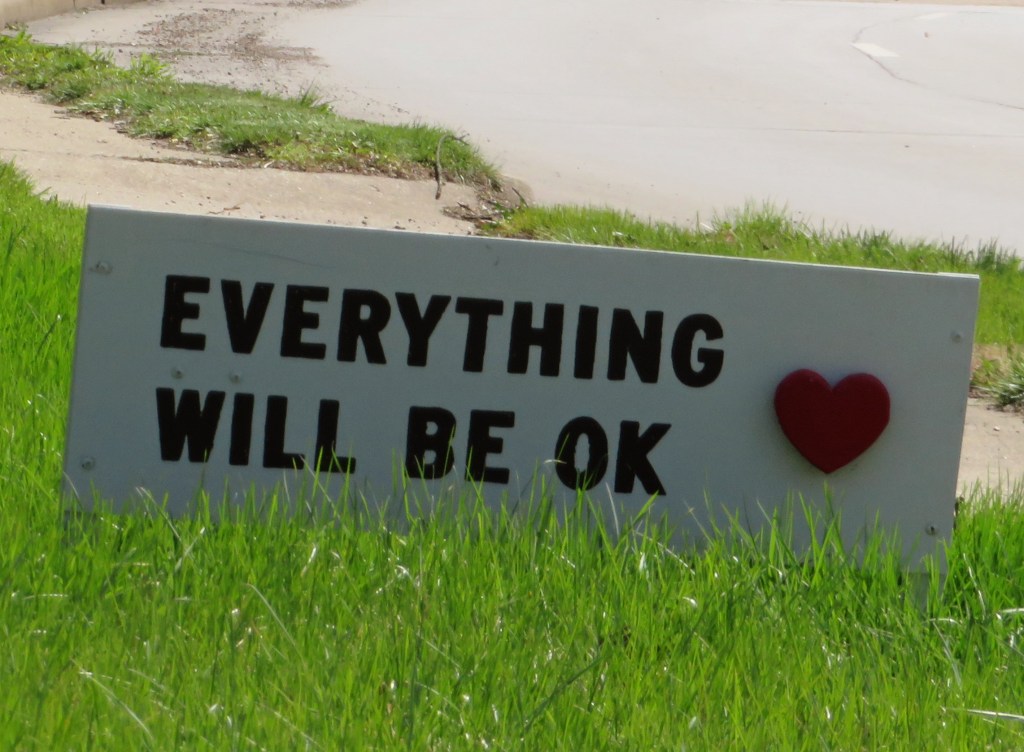
And we love this sign, which we make a point of driving by when we’re on our way to appointments.

One of our goals has been to keep our health issues from completely taking over and dominating our lives, and we’ve been at least moderately successful in this regard.

We continue to be involved with our church. Because of the immunosuppression caused by Pete’s cancer treatment, we’ve been “attending” Sunday services online and participating in committee meetings via Zoom. (Pete’s been joking that his immune system is a welcome mat for every contagion that comes along.) We miss being there in person! But we’re finding other ways to contribute our time and talents to our congregation.  

Our church built its own micro food pantry a couple of years ago. About the size of a large kitchen cabinet, it sits in a well-lit area next to the sidewalk leading up to one of our front entrances. People can safely access it 24 hours a day, seven days a week, no questions asked. We love the idea, so we’ve committed to help keep it filled with food we either buy ourselves or pick up from food drives conducted by various civic groups around the community.

We’re about to begin our third year of leading Sundays@6, an adult faith formation class which meets on Zoom. So far, we’ve covered subjects ranging from the 10 Commandments to evangelism to how our faith should impact the way we address current issues. The group has about a dozen regulars who “attend” each week, and the discussions are quite lively. We absolutely love this group, and it has played a vital role in keeping those of us who are homebound connected to our congregation.

For the past year, we’ve been involved in an anti-racism task force created by our community’s Dominican Sisters Associates program. The group, which meets on Zoom every other month, brings together people of different races to discuss how to recognize and address racism both in ourselves and in our society’s institutions. Participating in this group has been an amazing learning experience and we’ve been honored to be part of it.

We also continue to do spiritual direction with one of the Dominican Sisters. Spiritual direction – for those unfamiliar with the concept – is a partnership in which one Christian helps another grow in a personal relationship with God. Monthly one-on-one meetings have involved examining our relationship with God, our prayer life, our personal values and various lifestyle choices. Another amazing learning experience for both of us!

For several years now, we’ve been working to make our yard an urban sanctuary for wildlife and turn our flower beds into a welcome center for hummingbirds, bees and butterflies. We try to add a few native perennials each year, as well as planting an abundance of annuals and avoiding lawn chemicals. We’ve found gardening to be therapeutic, and the yard is looking beautiful! We like to think of this project as “God’s work, our hands.”

Our lovable, ornery, beautiful Champie has been such a sweet little buddy to us as we’ve survived this roller-coaster of a year. We often refer to him as our furry little comforter. He was a “rescue kitty” we adopted from a shelter 16 years ago, but there could be a definite debate about who’s rescued whom. We love him so much, and he has us utterly wrapped around his paw! How much cuteness can a camera possibly capture?

On a sad note, we had to say goodbye this year to some very lovely people. Chuck, who was part of our dulcimer group for a dozen years, could be delightfully cantankerous when it came to politics and always brought his famous adobo chicken when he came to our house. Sister Kathleen was our spiritual director through some very trying times. My “Bonus Aunt” Marian was a lifelong friend of my mother’s and a fixture in my life since childhood. Evie was one of the first people to befriend me when I joined our church 20 years ago.

We definitely consider these amazing people to be among our personal “cloud of witnesses” and thank God for their presence in our lives.

Here’s hoping everyone has a merry Christmas and a happy and healthy New Year full of grace and peace!

Cute animal therapy

Pete continues to recuperate from chemotherapy and heal from the surgery he had earlier this spring. Though he’s had a couple more hospital stays to address complications, he’s hopefully starting to mend.

Meanwhile, I’ve begun cardiac rehab therapy, and family and friends have been wonderfully supportive, sending lots of healing wishes and delicious meals our way.

They’ve also been filling our Facebook pages with cute kitty photos and baby goat videos to keep our spirits up. Plus a few bad puns, because they know a certain someone in this household loves them.

So I can’t resist sharing some of my favorites.

We’ve also got our own sweet furry comforter. Champie has been through a lot, with sudden absences on our part happening for repeated hospital stays. He seems to have figured out that we do come back, though. Thank God for this little guy.

Of course, continued prayers are always welcome and appreciated!