
As I’ve studied the polarization problem caused by our endless Culture Wars and the negative impact on both ourselves and our society, I’ve begun asking myself these questions:
How do we engage people who disagree with us, while keeping in mind God’s commandment to love our neighbors as ourselves?
How can we be part of the solution and avoid becoming part of the problem as our society grows ever more partisan and angry?
I’ve decided one of the first small steps I can personally take is to examine my relationship with social media. As I’ve begun doing so, I’ve come to an inescapable conclusion: I need to pay much more conscientious attention to what I post, share and “like” on sites like Facebook and X (formerly known as Twitter).
If there’s one thing many conservatives and progressives agree on, it’s that social media have played a huge role in keeping the Culture Wars going. In one survey by the Pew Research Center (link HERE), 55 percent of adult social media users said they felt “worn out” by how many combative political posts and discussions they see on these platforms.
Seven in 10 respondents also said they found it “stressful and frustrating” to communicate on social media with people they disagree with about politics. The sense of exhaustion and frustration held true across political parties, according to the report.
Several culprits contribute to social media’s role in dividing us. Algorithms that create “echo chamber” bubbles of one-sided information and opinions. Viral spread of false or misleading information in “fake news” stories with click-bait headlines. Political “discussions” that amount to little more than judgmental blaming and shaming, name-calling, insults, character assassination and demonization of opponents. Endless memes promoting hateful and inflammatory messages.
The worst part? I have to admit I’ve been part of the problem from time to time. Too often in recent years, I’ve found myself getting sucked into social media fights – even with people I ordinarily like – over politics and contentious “hot-button” ideological issues.
Whenever a Facebook skirmish erupts – whether the trigger is a Supreme Court decision, a political candidate’s suitability for office, or a crisis playing out on the news – my first instinct is to try and stay out of the fray.
Alas, I tend to have strong opinions about a lot of issues (imagine that!) and sooner or later, someone will post a meme that I just can’t seem to resist sharing against my better judgment. Okay, I know it’s a bit snarky. Maybe a bit judgmental or even mean. But it’s SO clever. Then, of course, someone on “the other side” will beg to differ with my assessment of the meme’s cleverness, and before I know it, I’m bogged down in another argument.
One evening, I realized I had just spent the better part of a whole day arguing with total strangers on a Christian Facebook page over this question: “Is it racist to make jokes about lutefisk, lefse and jello at Lutheran potlucks?” (No, I’m afraid I’m not making this up.) I further realized it wasn’t the first time something like this had happened.
So what can I start doing differently?
I’m not ready to go “off the grid” when it comes to social media. With family and friends scattered over two continents, I would not be able to stay connected so well without Facebook. This was especially true during the recent pandemic.
However, I’ve decided I can take some constructive steps to avoid getting lured into flame wars and to be part of the solution rather than part of the problem when it comes to divisive social media behavior.
I can fact-check articles I want to share before posting them. I personally see nothing wrong with sharing thoughtful, well-researched articles about issues I care about. But I have a responsibility to double-check these for accuracy. Some good sites for fact-checking my sources include Snopes.com (link HERE), FactCheck.org (link HERE) and PolitiFact (link HERE).
I can respect people who don’t agree with me. I’ve learned it’s best to resist lecturing people on their lack of personal integrity or intelligence, even if I think what they’ve shared is just plain wrong. I can’t remember ever changing anyone’s mind about an issue because I sufficiently shamed them. If a Facebook friend posts an inaccurate or misleading article, meme or video, I can skip the snark and simply respond with a link to a Snopes.com article debunking the item in question.
I can practice selective attention. If I don’t agree with someone’s post, I always have the option to keep on scrolling and not respond at all. (What a thought!)
I can set my own standards of behavior for my own posts. When the vitriol starts, I’ve begun deleting comments from people who choose not to respect others, and even blocking some of the worst offenders. I have blocked or “snoozed” both conservative and progressive Facebook friends who insist on insulting my other Facebook friends.
I can be aware of what I enable. What am I encouraging others to post by hitting the “like” button? Am I inadvertently rewarding name-calling, character assassination or polarizing comments?
I can resist “click bait.” Sometimes I can tell from the headline that an article is pure negative spin. (Watch Politician A school Politician B on life in the real world.) Given the fact that clicks generate ad revenue, do I really need to contribute one more click in response to that scurrilous article?
I can avoid using memes to convey complex ideas. One of the problems that keeps us all from resolving issues appropriately is our modern emphasis on brevity. It is nearly impossible to give an issue the depth it deserves when our communication is limited to 15-second sound bites, 280-character tweets, bumper stickers and t-shirt slogans – and all those endless memes.
I can reduce mindless surfing. If I go online with a specific purpose in mind – to check emails, research a blog article or catch up with the latest updates from Facebook friends – and limit my time on social media, I’m less likely to absent-mindedly click on headlines like 21 of the Biggest Political Scandals in History.
Finally, I can use Facebook for its original purpose – to help me keep up with family and friends. How are all my nieces and nephews and dozens of cousins doing? Who’s getting married? Who just had a baby? Which friend got a promotion at work or went on a fabulous vacation? Who just went to the emergency room and needs prayers?
Or I can share cute photos of all the adorable pets Pete and I have shared our home with since we first got married nearly 40 years ago. I’m happy to report I have never had anyone threaten to block or “snooze” me because I posted too many photos of these little sweethearts.


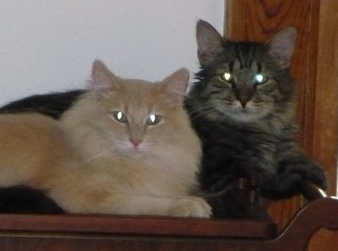


Fortunately, my Facebook friends over the years have loved Elizabeth, Bryce, Champie, Oley, Angie and Torbjorn as much as my camera and I have.
Questions for readers: How has our society’s polarization impacted you personally? (If you live outside the U.S., is there similar polarization going on in your country?) How do we become part of the solution rather than part of the problem? I’d love to hear your responses to these questions, as well as your comments on this article. Just hit “Leave a Reply” below. When responding, please keep in mind the guidelines I’ve outlined on my Rules of Engagement page (link HERE).
 Seriously Seeking Answers
I like your steps! The only social media account I have is my blog here on WordPress.com, so it’s much easier for me to avoid some of the things you mention. However, even so, I need to be careful how I word my own posts, and I need to carefully “like” and “comment” on other people’s posts.
LikeLiked by 2 people
I know I’ve had to edit some of my blog posts while taking the perspective of those who are reading it. I’ll ask myself, “How might what I’m saying come across to this person?”
LikeLiked by 1 person
Sad that social media has become an antisocial venue of non-mediation so much of the time! I’m afraid my way of dealing with it has been to simply leave Facebook and X. I keep up with family and friends in other ways — the ones I’m closest to are still in touch, though I do miss that contact with a wider circle.
Your guidelines are very sensible for those who want to stay in the fray. The problem of achieving an unbiased and rational approach to current events is huge and increasingly seems insolvable, but we can all do our part in that direction.
LikeLiked by 1 person
My family is so spread out, Facebook is the main way of keeping in tough. I could sure do without the nastiness, though.
LikeLiked by 1 person
I do not get involved, if I can help it. Why put that stress on myself? There’s nothing I can say that will convince someone who is brainwashed and determined to be right. I trust in God.
LikeLiked by 1 person
I agree!
LikeLike
I do not post anything, including pictures that I am not willing for everyone to see and copy. If I post anything, I agree to bear the consequences of any and all responses. I know how to use the little X in the right hand corner.
LikeLiked by 1 person
Yep.
LikeLike
Sound advice for all of us.
LikeLiked by 2 people
Thanks
LikeLiked by 2 people
Very good points…respecting other people and their opinions tops the list! I love your pet pictures. Awesome!
LikeLiked by 1 person
Thanks!
LikeLiked by 1 person
I too try to avoid political issues, especially since so many lies are perpetrated as truth by news sources people have trusted for years. Viewers/readers don’t even realize how much “misinformation” they’re receiving. Even when proof to the contrary of the lies is exposed, mainstream media rarely if ever apologize. I’ve been relieved to hear that only 30-some percent of Americans trust these media outlets anymore. They’re starting to wake up.
LikeLiked by 1 person
I think all the cable news networks on both the right and left these days are biased. Even if they’re not lying, they’re often leaving out context or telling only half the truth, which is still misleading.
LikeLiked by 1 person
You’re right Debi Sue. We have to be wary of bias, missing context, and half-truths also!
LikeLiked by 1 person
That’s an excellent plan! Social media actually encourages us to be aggressive towards those who are different, and that’s not doing our country a bit of good. By being intentional and civil on social media and walking away from the “internet wars” we are helping ourselves and others at the same time!
LikeLiked by 1 person
Amen.
LikeLiked by 1 person
Great advice about navigating the perils of online pitfalls. I love the photos of all your beautiful bubbas! 🐈⬛🐈💕
LikeLiked by 1 person
They’re my little buddies! ❤
LikeLiked by 1 person
First, very cute photos. 🙂
I think you are very wise to come to the conclusions you have. Your plan for going forward is well thought out, and I agree with you.
For me, I try to remain neutral. I never comment on or like political posts or tweets for any political party. My favorite blogger might be posting something I 100% agree with, and I still won’t like or comment. The same applies if I 100% disagree.
I have many friends I don’t see eye-to-eye with when it comes to politics and religion. The simple solution has always been to not engage in hotbed topics. Instead, we embrace our friendships and enjoy one another and our time together.
In the face of being totally honest, when it comes to social media, I realized that if our country is truly split 50-50, why in the world would I want to be opinionated and alienate half the people who might be interested in my books. It’s been a good decision to remain neutral online, and I’ve made wonderful friends from all over.
Nice post, Debi Sue. 🙂
LikeLiked by 1 person
Thanks, I’m also friends with people on both sides of the aisle and try to stay out of politics when talking with them.
LikeLiked by 1 person
I empathize with your frustration, Debi. Indoctrination by evil and lies is insidious in all the platforms of media, Being aware of that is half the battle.
LikeLike
Sorry I’ve taken so long to respond. Not sure why WordPress is sending your responses to the spam folder, but I need to check it more often! Thanks for your thoughtful replies.
LikeLiked by 1 person
You’re welcome! 😁
LikeLike
This is a very tough issue for me, as well. My presence on social media, at least as far as posting goes, is one of trying to be gracious and positive (I typically share devotional blogs and gratitude lists, asking people what I can pray for them). Lately, I have gotten the feeling that perhaps I should pay more attention to what I “like” and comment on, as far as other peoples’ posts. Like you, I have some strong opinions, but those opinions are not part of my “job description” as a Christ follower. I’m supposed to love God and love people. The catch is that I’m supposed to love all the people, including the ones who are disrespectful and insulting to those who disagree with them. I’m still working on how to do that. My pastor, in one conversation, advised me to not look for “specks,” referencing Jesus’s parable about specks and logs and judging people. I am trying to take her words to heart, there.
Honestly, I vote for the cat pictures.
LikeLiked by 1 person
Hard to go wrong with cute critter photos.
LikeLiked by 1 person
Amazing as always.
Marilyn Jean Runkel
LikeLiked by 1 person
Thanks!
LikeLike
Wanna fight!?😂 I do not trust Snopes much; they are more left-leaning than https://mediabiasfactcheck.com/ suggests. Same for PolitFact; FactCheck is the most balanced, according to Media Bias Fact Check, but then we have to ask, “Quis custodiet ipsos custodes?” Who watches the watchers!?😉
I think that beside the “silo mentality” of listening or reading only that with which one agrees, one of the biggest dangers is the knee-jerk reaction. When I read Epoch News or CNN, I wait a few days to let any dust settle. Sometimes reacting to a “developing story” is to miss what actually comes to light. That helps.
❤️&🙏, c.a.
LikeLiked by 1 person
I agree about the dangers of knee-jerk reaction. With much of the press, getting it first seems more important than getting it right.
LikeLiked by 1 person
Because I only use a laptop and don’t have a mobile phone, my only social media interactions are as I choose to interact on FB, by purposefully picking out notification I may want to read. Therefore I rarely get sucked into the fascinating world of people’s lives in general.
Unfortunately that means I sometimes miss some news that I could respond encouragingly to, but it saves me hours! On the odd occasion when the ‘home’ page has appeared and all the feeds appear, it is easy to be sucked in.
I rarely interact with political memes, mostly cos I don’t understand most of them!
LikeLiked by 1 person
I try not to interact with political memes either.
LikeLiked by 1 person
I say social media is one of the worse culprits for everyone being a victim and encouraging self centeredness. I avoid it like the plague
LikeLiked by 1 person
There definitely is a lot of that going on with social media.
LikeLike